The Amygdala
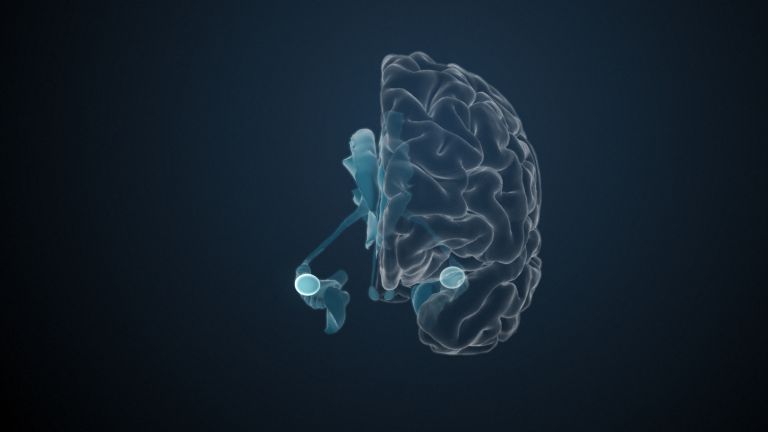
In many textbooks, it is simply called the amygdala. However, the term amygdala complex is more accurate, as the amygdala is made up of several sub-nuclei. In the index of many books, the amygdala can only be found under its full name, corpus amygdaloideum. But whatever name it goes by, as part of the limbic system it influences emotion and memory in many different ways. Its role in fear and anger has been particularly well studied.
Scientific support: Prof. Dr. Herbert Schwegler, Prof. Dr. Anne Albrecht
Published: 22.12.2023
Difficulty: serious
As part of the limbic system, the amygdala, or Amygdala complex, plays a role above all in the development and recognition of fear and in the physical reaction to it.
Amygdala
corpus amygdaloideum
An important core area in the temporal lobe that is associated with emotions: it evaluates the emotional content of a situation and reacts particularly to threats. In this context, it is also activated by pain stimuli and plays an important role in the emotional evaluation of sensory stimuli. Inaddition, it is involved in linking emotions with memories, emotional learning ability, and social behavior. The amygdala is part of the limbic system.
Location and structure
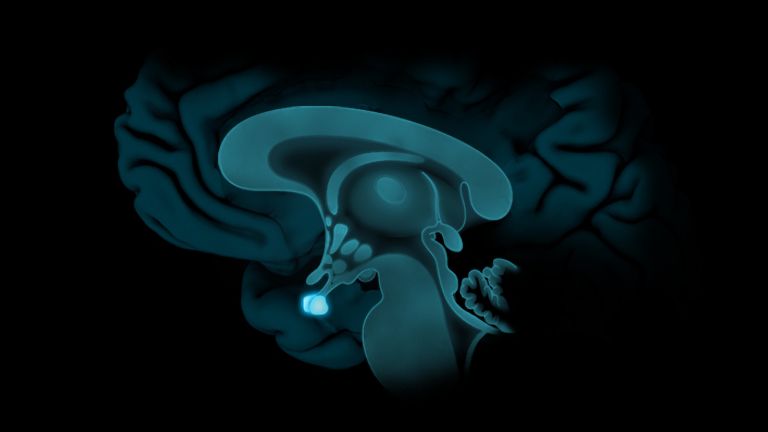
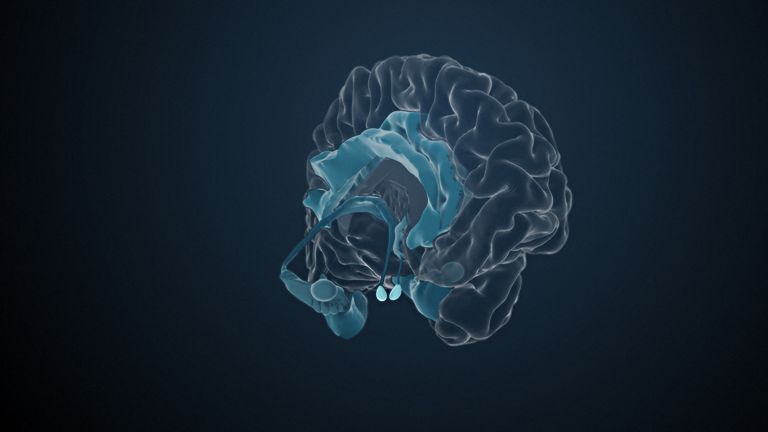
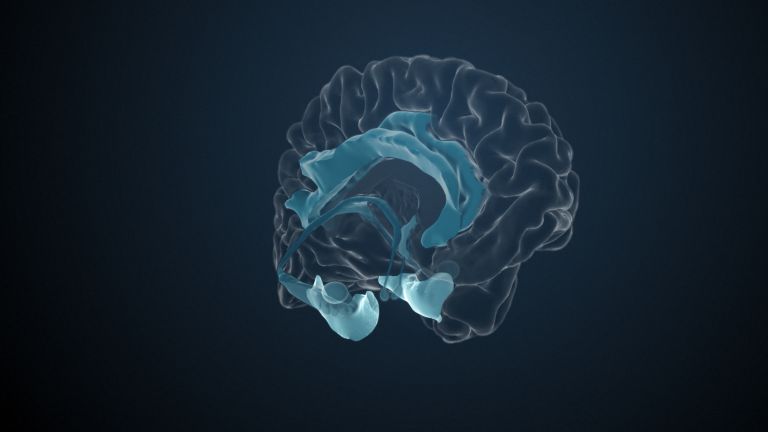
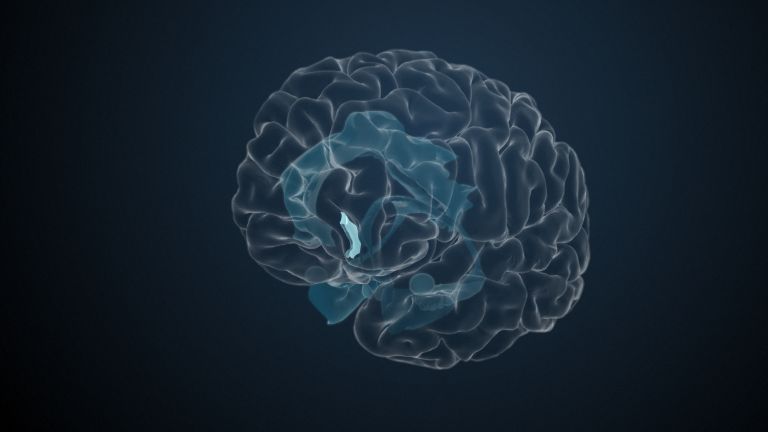
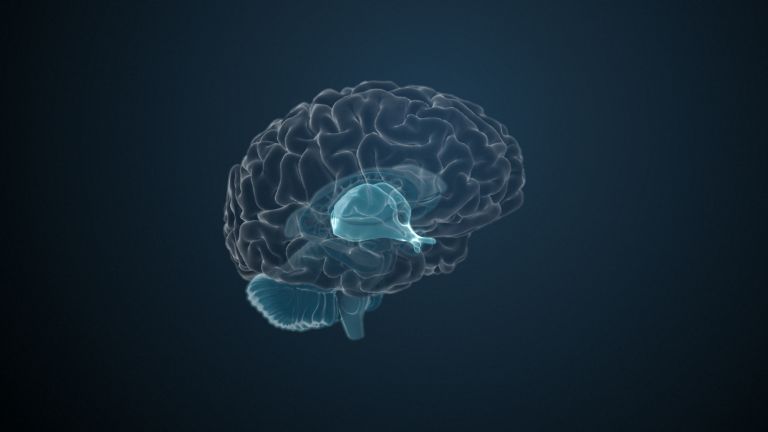
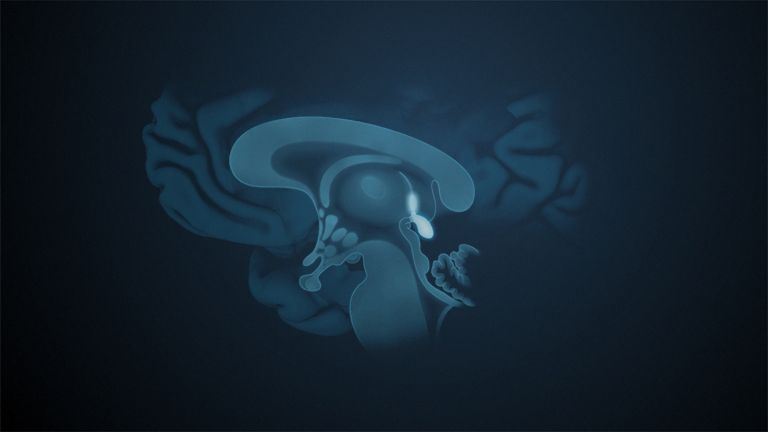
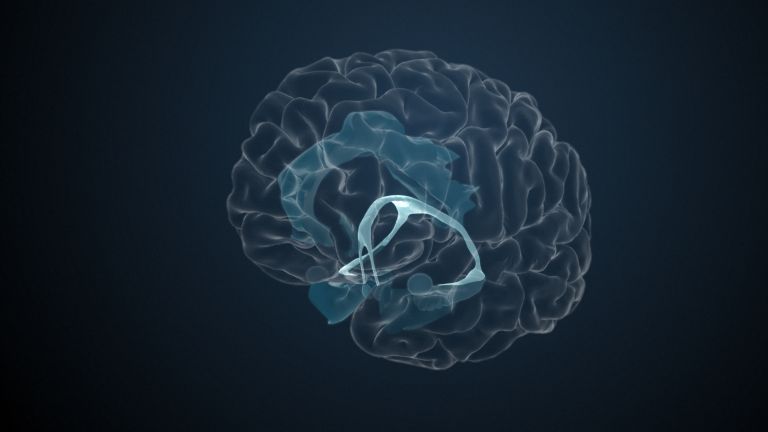
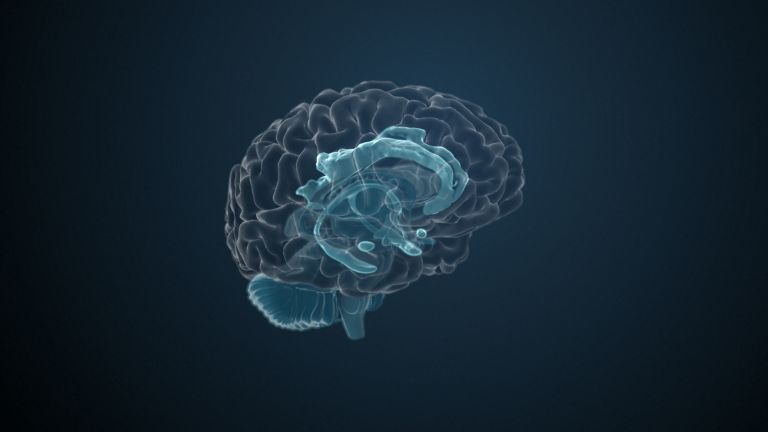
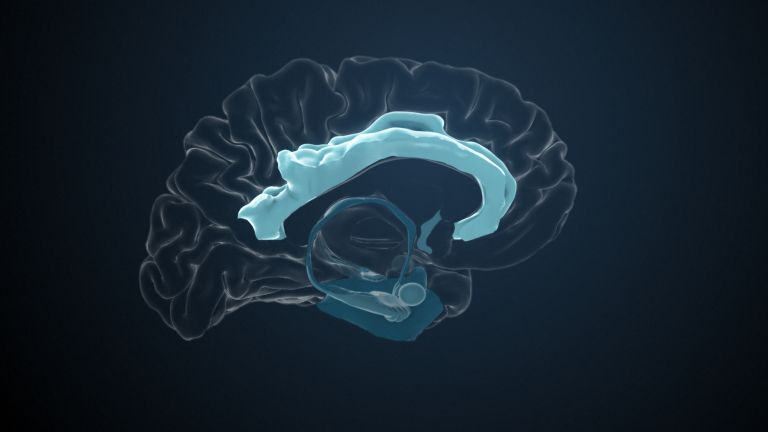
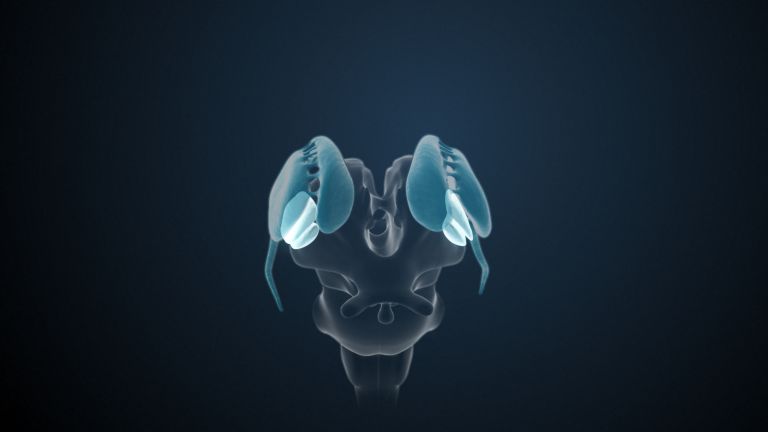
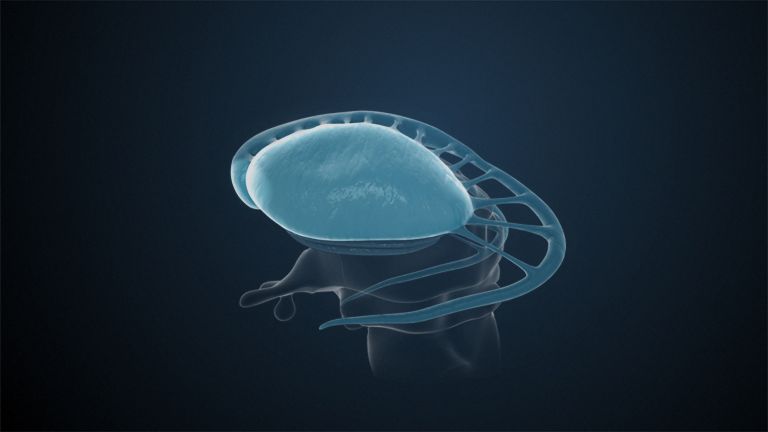
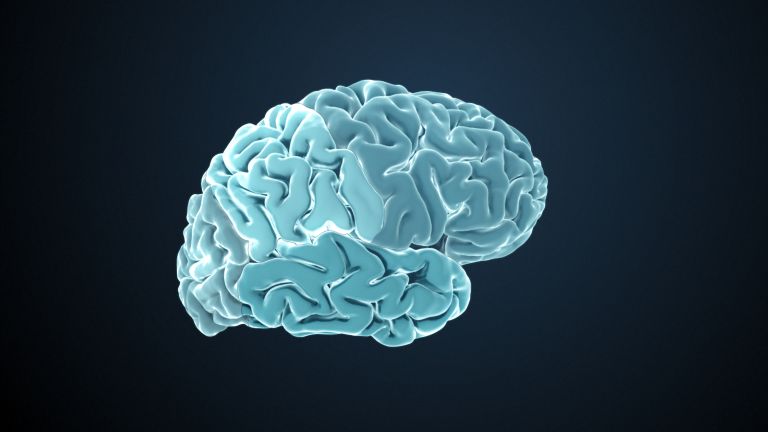
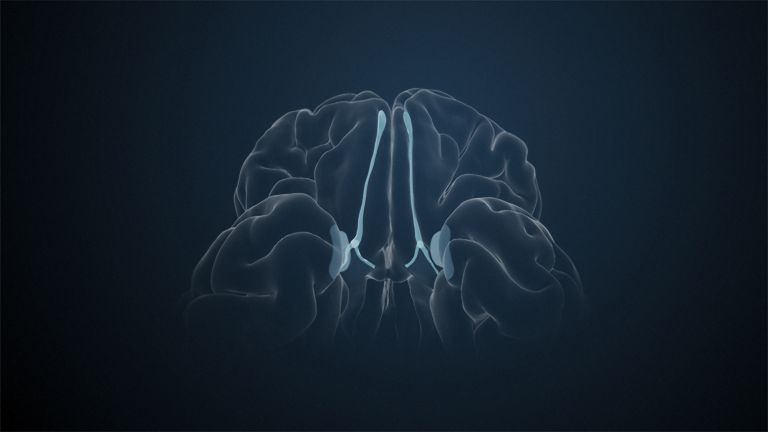
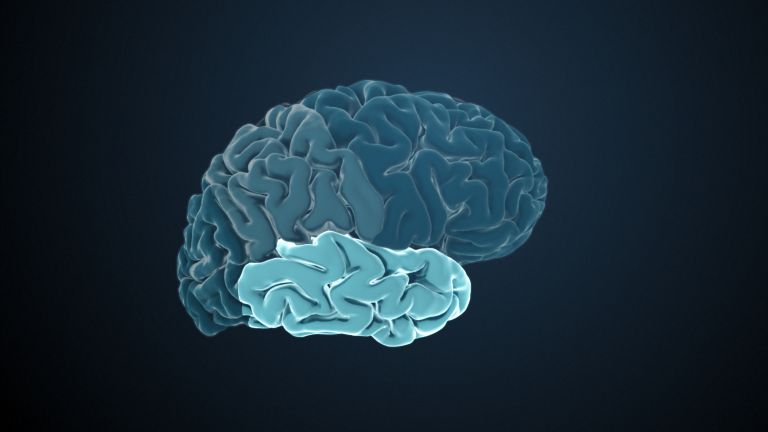
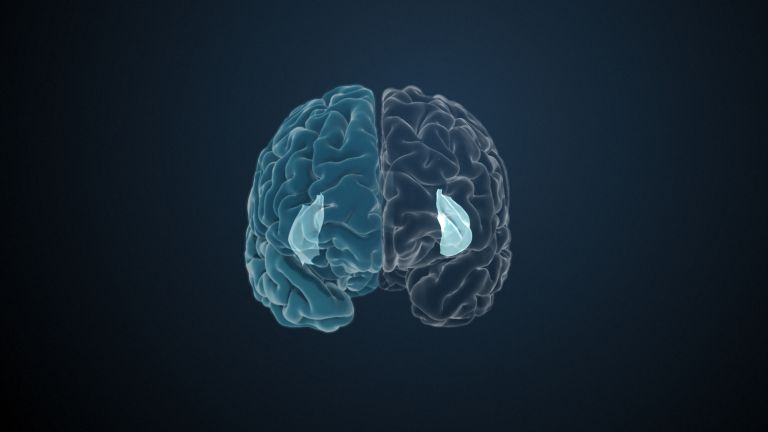
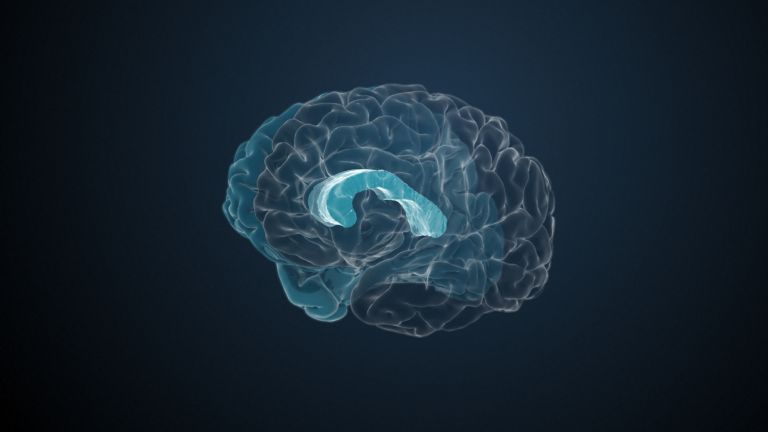
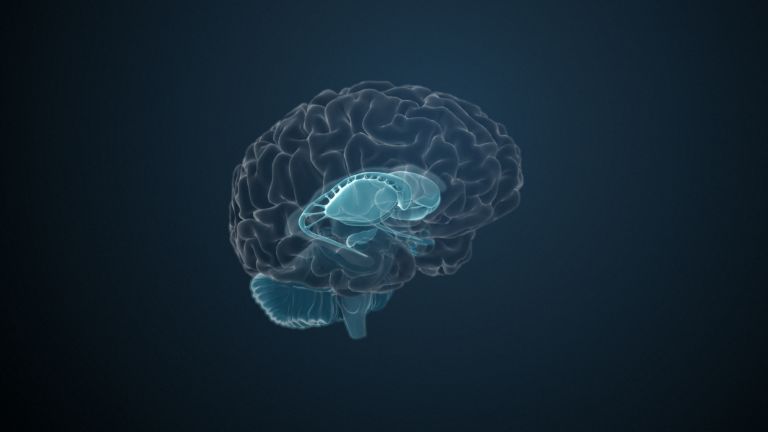
The Amygdala complex is located in the anterior part of the temporal lobe, directly in front of the tail of the Caudate nucleus and the inferior horn of the lateral ventricle. However, the complex also includes a piece of cerebral Cortex. The amygdala is therefore both: cortex and Nucleus - and a transition zone in between.
The amygdala complex is generally divided into three different areas: Firstly, the centromedial core group, including the nuclei centralis and medialis - both descendants of the Striatum. Then there is the basolateral complex, with the nuclei nucleus lateralis, nucleus basalis – which also splits into a small-cell inner part and a large-cell lateral part – and nucleus basolateralis. And thirdly, the cortical core group with the cortical nucleus.
This sounds complex and it becomes even more complex because each individual amygdala nucleus has its own neuropeptides and circuits. However, they cooperate closely with each other: numerous nerve fibers with relatively short axons run between the nuclei.
Amygdala
corpus amygdaloideum
An important core area in the temporal lobe that is associated with emotions: it evaluates the emotional content of a situation and reacts particularly to threats. In this context, it is also activated by pain stimuli and plays an important role in the emotional evaluation of sensory stimuli. Inaddition, it is involved in linking emotions with memories, emotional learning ability, and social behavior. The amygdala is part of the limbic system.
Caudate nucleus
nucleus caudatus
Part of the basal ganglia, it forms the striatum together with the putamen. Anatomically, the caudate nucleus is located frontally in the center of the brain and extends backward, forming a C shape. It consists of a head (caput nuclei caudati), a body (corpus nuclei caudati), and a tail (cauda nuclei caudati). In contrast to the more motor-related parts of the basal ganglia, this area is strongly connected to the prefrontal cortex in addition to its motor functions. As a result, this part of the striatum is also heavily involved in cognition, motivation, and emotion.
inferior
An anatomical position designation – inferior means located further down, the lower part.
lateral
A positional term – lateral means "towards the side." In relation to the nervous system, it refers to a direction at right angles to the neural axis, i.e., to the right or left.
Cortex
cortex cerebri
Cortex refers to a collection of neurons, typically in the form of a thin surface. However, it usually refers to the cerebral cortex, the outermost layer of the cerebrum. It is 2.5 mm to 5 mm thick and rich in nerve cells. The cerebral cortex is heavily folded, comparable to a handkerchief in a cup. This creates numerous convolutions (gyri), fissures (fissurae), and sulci. Unfolded, the surface area of the cortex is approximately 1,800cm².
Nucleus
In cell biology, the nucleus in a cell is the cell nucleus, which contains the chromosomes, among other things. In neuroanatomy, the nucleus in the nervous system refers to a collection of cell bodies – known as gray matter in the central nervous system and ganglia in the peripheral nervous system.
Striatum
Corpus striatum
The striatum is a central structure of the basal ganglia. It consists of the caudate nucleus and putamen; the nucleus accumbens is also functionally part of it as its ventral portion. As the most important input structure of the basal ganglia, the striatum plays an essential role in controlling movement sequences as well as in cognition, motivational processes, and the reward system.
Well networked
The superficial part of the Amygdala primarily influences autonomic functions of the body – such as breathing and circulation – via a strong connection with the Brain stem and adapts them to the respective situation. This core area ensures, for example, that our heart beats up to our throat when we are afraid. A particularly thick, macroscopically visible bundle of nerves also runs from here to the Hypothalamus in the Diencephalon: the stria terminalis. It crosses the thalamus and reaches its destination in a wide arc. The hypothalamus, as the center of the autonomic nervous system, thus learns when it needs to stimulate Adrenaline production in the adrenal glands: After all, the anxiety must have a reason for which the body is better prepared. The US psychologist and neuroscientist Joseph LeDoux put it this way: "As soon as you are in danger, you react. Evolution thinks for you."
Last but not least, the medial Nucleus is connected to the Olfactory cortex areas for odor Perception – a phylogenetic legacy from the time when predators revealed themselves through their scent.
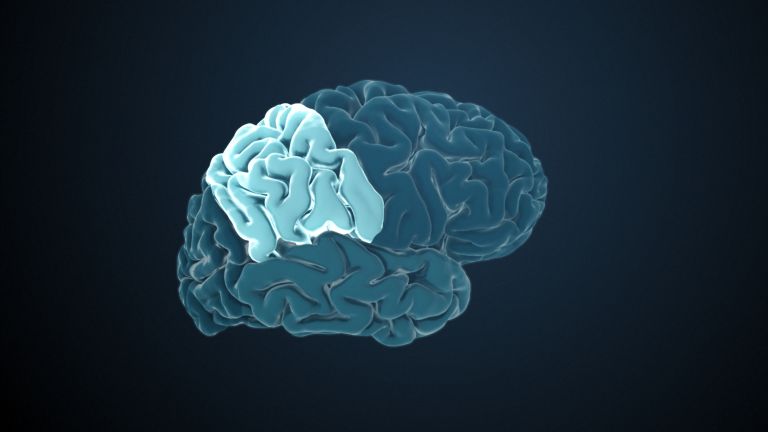
The basolateral, phylogenetically younger core group, on the other hand, receives information from the posterior thalamus – which is concerned with reflexes – as well as practically all sensory Cortex areas and thus the five senses of smell, taste, sight, hearing and touch. The basolateral core group also transmits back to these cortical areas. It is additionally connected to the prefrontal cortex via the thalamus. This integrates sensory signals with Memory content and emotional judgements. In case of doubt, it can inhibit the activity of the amygdala via its lowest section – the orbitofrontal cortex.
If we suddenly see a spider and are startled, we literally flinch. Responsible for this is a nerve connection between the amygdala complex – like the nucleus centralis – and the Basal ganglia – connecting the amygdala to the motor system.
Amygdala
corpus amygdaloideum
An important core area in the temporal lobe that is associated with emotions: it evaluates the emotional content of a situation and reacts particularly to threats. In this context, it is also activated by pain stimuli and plays an important role in the emotional evaluation of sensory stimuli. Inaddition, it is involved in linking emotions with memories, emotional learning ability, and social behavior. The amygdala is part of the limbic system.
Brain stem
truncus cerebri
The "trunk" of the brain, to which all other brain structures are "attached," so to speak. From bottom to top, it comprises the medulla oblongata, the pons, and the mesencephalon. It transitions into the spinal cord below. It is a center for vital functions such as breathing and heartbeat and contains ascending and descending pathways between the cerebrum, cerebellum, and spinal cord.
Hypothalamus
The hypothalamus is considered the center of the autonomic nervous system, meaning it controls many motivational states and regulates vegetative aspects such as hunger, thirst, and sexual behavior. As an endocrine gland (which, unlike an exocrine gland, releases its hormones directly into the blood without a duct), it produces numerous hormones, some of which inhibit or stimulate the pituitary gland to release hormones into the blood.In this function, it also plays an important role in the response to pain and is involved in pain modulation.
Diencephalon
The diencephalon (midbrain) includes the thalamus and hypothalamus, among other structures. Together with the cerebrum, it forms the forebrain. The diencephalon contains centers for sensory perception, emotion, and the control of vital functions such as hunger and thirst.
Adrenaline
Along with dopamine and norepinephrine, it belongs to the catecholamines. Adrenaline, also known as epinephrine, is the classic stress hormone. It is produced in the adrenal medulla and causes an increase in heart rate and heartbeat strength, thus preparing the body for increased stress. In the brain, adrenaline also acts as a neurotransmitter (messenger substance), where it binds to so-called adrenoreceptors.
medial
A positional term – medial means "towards the middle." In relation to the nervous system, it refers to a direction toward the body, away from the sides.
Nucleus
In cell biology, the nucleus in a cell is the cell nucleus, which contains the chromosomes, among other things. In neuroanatomy, the nucleus in the nervous system refers to a collection of cell bodies – known as gray matter in the central nervous system and ganglia in the peripheral nervous system.
Olfactory cortex
The olfactory cortex comprises the structures of the cerebrum that are responsible for processing olfactory information. The primary olfactory cortex is the prepiriform cortex, an evolutionarily ancient part of the cortex (paleocortex) with a three-layer structure.
Perception
The term describes the complex process of gathering and processing information from stimuli in the environment and from the internal states of a living being. The brain combines the information, which is perceived partly consciously and partly unconsciously, into a subjectively meaningful overall impression. If the data it receives from the sensory organs is insufficient for this, it supplements it with empirical values. This can lead to misinterpretations and explains why we succumb to optical illusions or fall for magic tricks.
posterior
A positional term – posterior means "towards the back, located at the rear." In relation to the nervous system, it refers to a direction towards the tail.
Cortex
cortex cerebri
Cortex refers to a collection of neurons, typically in the form of a thin surface. However, it usually refers to the cerebral cortex, the outermost layer of the cerebrum. It is 2.5 mm to 5 mm thick and rich in nerve cells. The cerebral cortex is heavily folded, comparable to a handkerchief in a cup. This creates numerous convolutions (gyri), fissures (fissurae), and sulci. Unfolded, the surface area of the cortex is approximately 1,800cm².
prefrontal cortex
Prefrontal cortex
The prefrontal cortex (PFC) forms the front part of the frontal lobe and is one of the brain's most important integration and control centers. It receives highly processed information from many other areas of the cortex and is responsible for planning, controlling, and flexibly adapting one's own behavior. Its central tasks include executive functions, working memory, emotion regulation, and decision-making. In addition, the PFC plays an important role in the cognitive evaluation and modulation of pain.
Memory
Memory is a generic term for all types of information storage in the organism. In addition to pure retention, this also includes the absorption of information, its organization, and retrieval.
Basal ganglia
Nuclei basales
The basal ganglia are a group of subcortical nuclei (located beneath the cerebral cortex) in the telencephalon. The basal ganglia include the globus pallidus and the striatum, and, depending on the author, other structures such as the substantia nigra and the subthalamic nucleus. The basal ganglia are primarily associated with voluntary motor function, but they also influence motivation, learning, and emotion.






Stimulation and lesions
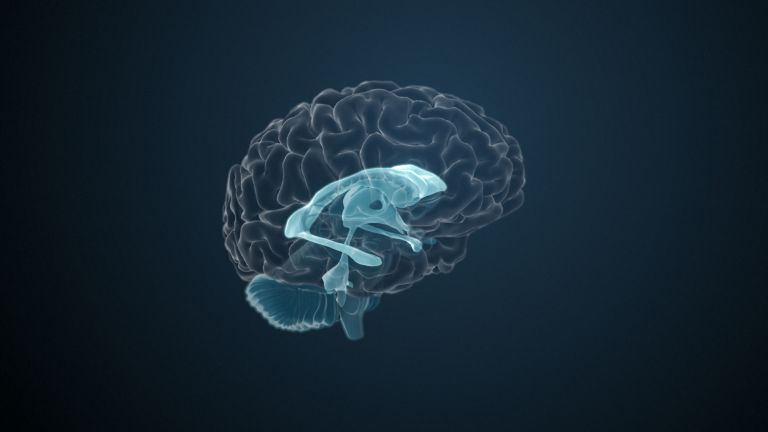
Experiments show just how diverse the functions of the Amygdala are: if you stimulate the amygdala complex in test animals with an electrode, the reaction depends on which area you hit: if it is the superficial nucleus, the animal will start to smack its lips or make chewing or licking movements. Salivation is also stimulated. If, on the other hand, the electrode stimulates the deep part of the amygdala, the animal raises its head, its pupils dilate, and it looks around attentively. With stronger stimuli, the increased attention turns into fear or anger.
The amygdala acts primarily as an emotional amplifier. The reaction to stimulation in humans therefore also depends on the mood of the test subject at the time. They also report having memory-like hallucinations when stimulating the amygdala, or a déjà vu experience, i.e. the feeling of having experienced a situation before.
The best way to understand the amygdala is to look at what happens when it is missing – for example in monkeys in which the amygdala has been deliberately destroyed in both hemispheres of the brain. As a result, the animals appear more emotionless than before. Above all, however, they lack any aggressive or defensive behavior. The monkeys show not a trace of fear – not even when they encounter a real danger, such as a snake. They do perceive the external stimulus of the snake, but without the amygdala complex, the corresponding startle reflex is absent.
And that's not all: without the amygdala, the animals have difficulty learning emotional associations, such as linking a certain object with a reward or a punishment. In addition, they no longer seek contact with other monkeys and are therefore soon isolated in the group.
The situation is very similar in humans. The British psychiatrist Robin Jacobsen described a patient in whom the amygdala complex had been surgically removed on both sides due to illness. As a result, the person had difficulty recognizing faces and, above all, correctly interpreting the Facial expressions of the person opposite. As a result, the person's social behavior was also severely impaired.
Urbach-Wiethe syndrome, a rare hereditary disease in which, among other things, the amygdala calcifies, causes a similar disorder. Sufferers are also severely restricted in their emotional and social life. They cannot assign any meaning to the word ‘fear’.
The amygdala complex also plays a role in memory, or more precisely, emotional Memory. Normally, we can remember a situation better if strong emotions were involved – especially fear or anxiety. However, people with a damaged amygdala complex do not show this effect: they remember repulsive, neutral and pleasant scenes – for example in a film – equally well.
Amygdala
corpus amygdaloideum
An important core area in the temporal lobe that is associated with emotions: it evaluates the emotional content of a situation and reacts particularly to threats. In this context, it is also activated by pain stimuli and plays an important role in the emotional evaluation of sensory stimuli. Inaddition, it is involved in linking emotions with memories, emotional learning ability, and social behavior. The amygdala is part of the limbic system.
attention
Attention
Attention serves as a tool for consciously perceiving internal and external stimuli. We achieve this by focusing our mental resources on a limited number of stimuli or pieces of information. While some stimuli automatically attract our attention, we can select others in a controlled manner. The brain also unconsciously processes stimuli that are not currently the focus of our attention.
Facial expressions
Five muscle groups control the visible movements on the surface of our faces – and this applies to everyone in the world. Neuroscientists emphasize universal, evolutionarily anchored reactions as the reason for this. For this reason, the basic emotions of fear, anger, disgust, sadness, surprise, and joy leave similar traces on the face everywhere, which we can usually identify reliably even in strangers.
Memory
Memory is a generic term for all types of information storage in the organism. In addition to pure retention, this also includes the absorption of information, its organization, and retrieval.
emotions
Neuroscientists understand "emotions" to be complex response patterns that include experiential, physiological, and behavioral components. They arise in response to personally relevant or significant events and generate a willingness to act, through which the individual attempts to deal with the situation. Emotions typically occur with subjective experience (feeling), but differ from pure feeling in that they involve conscious or implicit engagement with the environment. Emotions arise in the limbic system, among other places, which is a phylogenetically ancient part of the brain. Psychologist Paul Ekman has defined six cross-cultural basic emotions that are reflected in characteristic facial expressions: joy, anger, fear, surprise, sadness, and disgust.
Published on September 22, 2011
Updated on December 22, 2023