
The Medulla Oblongata
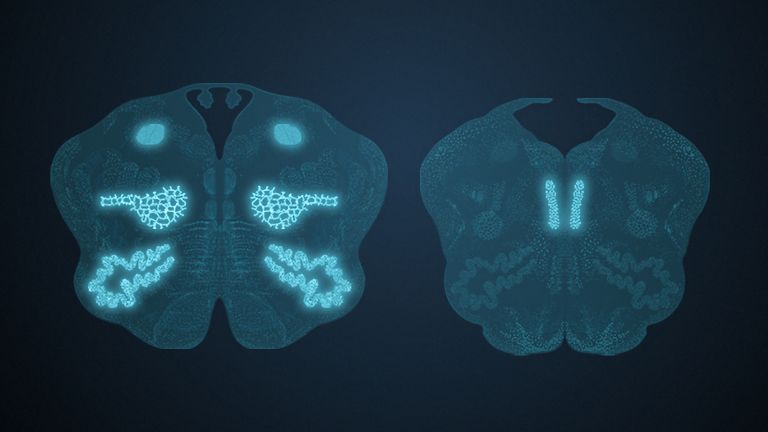
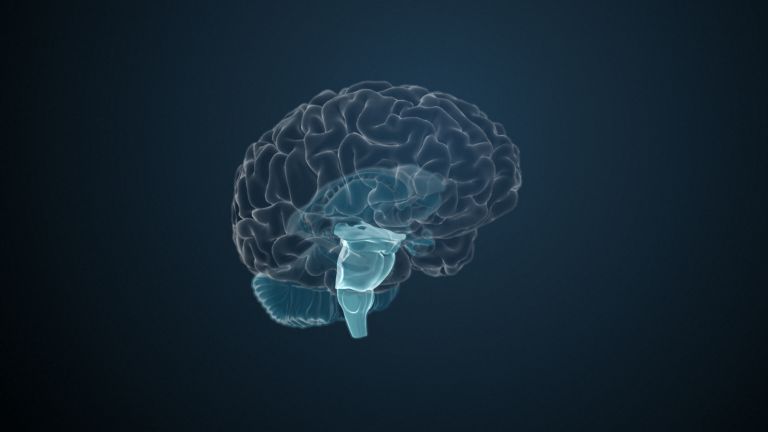
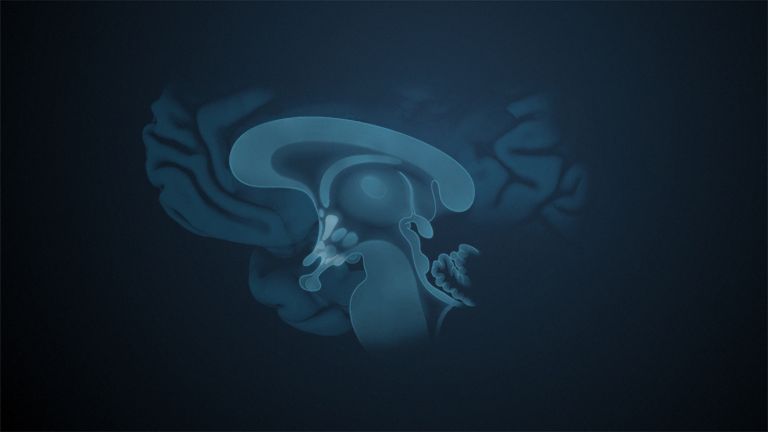
In the medulla oblongata, the spinal cord gradually transitions into the brain stem. And between all the fibers lie numerous important nuclear areas. Reflexes such as coughing and inhaling are controlled here, as well as taste and fine motor skills.
Scientific support: Dr. Björn Spittau
Published: 01.10.2025
Difficulty: intermediate
- The Spinal cord transitions into the Brain stem at the Medulla oblongata This is where the brain begins.
- The medulla oblongata contains numerous nuclei and core areas, some of which switch neurons between the brain and spinal cord, and some of which supply the Cranial nerve nuclei, as well as important centers for breathing and vomiting.
Spinal cord
medulla spinalis
The spinal cord is the part of the central nervous system located in the spine. It contains both the white matter of the nerve fibers and the gray matter of the cell nuclei. Simple reflexes such as the knee-jerk reflex are already processed here, as sensory and motor neurons are directly connected. The spinal cord is divided into the cervical, thoracic, lumbar, and sacral spinal cord.
Brain stem
truncus cerebri
The "trunk" of the brain, to which all other brain structures are "attached," so to speak. From bottom to top, it comprises the medulla oblongata, the pons, and the mesencephalon. It transitions into the spinal cord below. It is a center for vital functions such as breathing and heartbeat and contains ascending and descending pathways between the cerebrum, cerebellum, and spinal cord.
Medulla oblongata
Area of the brain that transitions into the spinal cord. The medulla oblongata comprises nerve pathways between the spinal cord and higher brain regions, as well as numerous core areas with functions that are in some cases vital, such as breathing, heartbeat, and certain reflexes.
cranial
A positional term – cranial means "towards the head." In relation to the nervous system, it refers to a direction along the neural axis, i.e., forward.
In animals (without upright gait), the designation is simpler, as it always means forward. Due to the upright gait of humans, the brain bends in relation to the spinal cord, where cranial also means "upward."
Cranial nerve
A group of 12 pairs of nerves that originate directly in the brain, mostly in the brain stem. They are numbered with Roman numerals (I–XII). Unlike the rest, the first and second cranial nerves (olfactory and optic nerves) are not part of the peripheral nervous system, but rather the central nervous system.
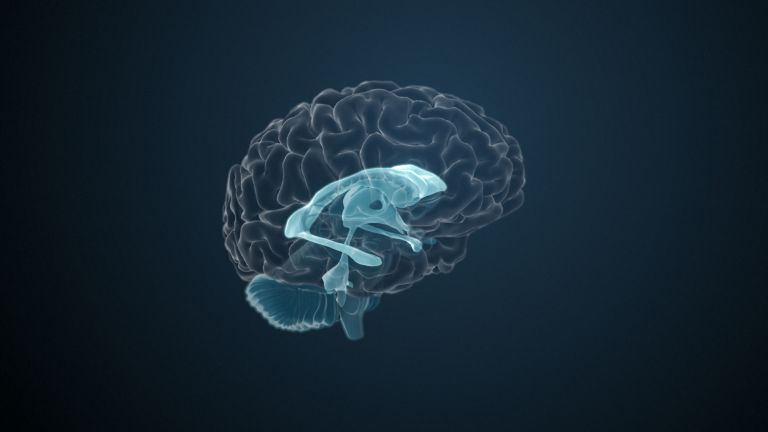
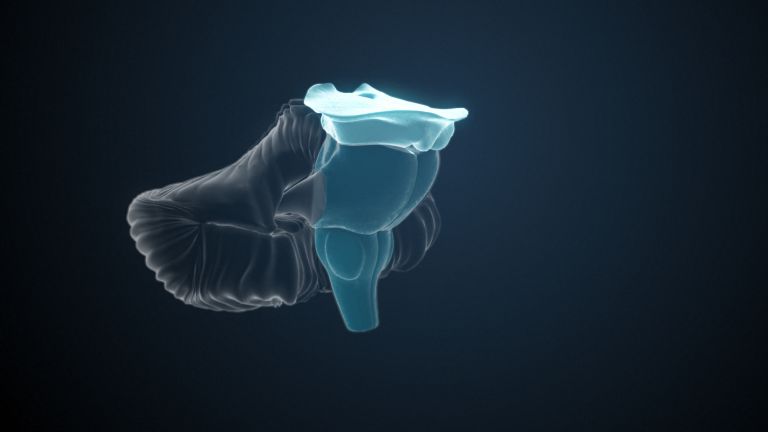
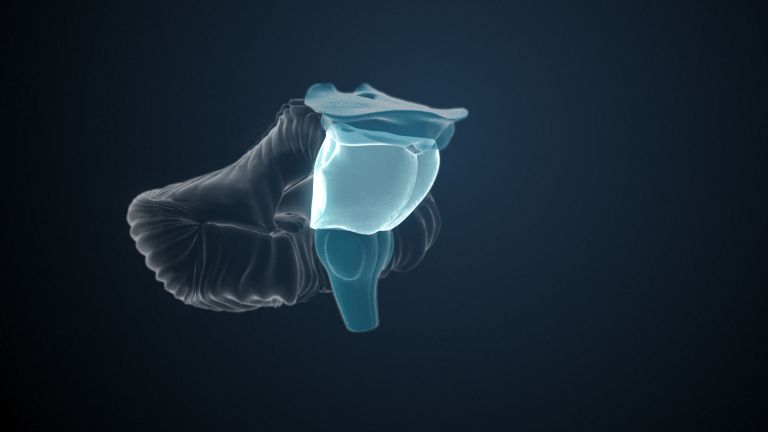
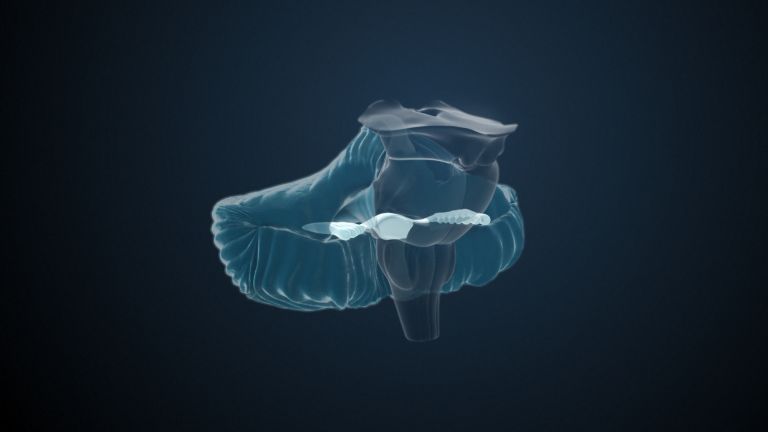
The Medulla oblongata is the lowest section of the Brain stem Translated, the name means “elongated marrow,” which is obvious, because this is where the Spinal cord transitions into the brain stem. It is difficult to define where one ends and the other begins, so the exit point of the uppermost pair of Spinal nerves is commonly taken as the boundary. This is where the medulla begins, and it ends two and a half to three centimeters further up at the Pons. Together with the pons and the cerebellum, the medulla oblongata is also referred to as the rhombencephalon, which refers to its embryonic development: all three sections of the brain develop from the same vesicle. The name rhombencephalon is based on its close proximity to the rhombic fossa, the floor of the fourth ventricle, which runs behind the medulla and pons.
Medulla oblongata
Area of the brain that transitions into the spinal cord. The medulla oblongata comprises nerve pathways between the spinal cord and higher brain regions, as well as numerous core areas with functions that are in some cases vital, such as breathing, heartbeat, and certain reflexes.
Brain stem
truncus cerebri
The "trunk" of the brain, to which all other brain structures are "attached," so to speak. From bottom to top, it comprises the medulla oblongata, the pons, and the mesencephalon. It transitions into the spinal cord below. It is a center for vital functions such as breathing and heartbeat and contains ascending and descending pathways between the cerebrum, cerebellum, and spinal cord.
Spinal cord
medulla spinalis
The spinal cord is the part of the central nervous system located in the spine. It contains both the white matter of the nerve fibers and the gray matter of the cell nuclei. Simple reflexes such as the knee-jerk reflex are already processed here, as sensory and motor neurons are directly connected. The spinal cord is divided into the cervical, thoracic, lumbar, and sacral spinal cord.
Spinal nerves
nervus spinalis
Spinal nerves are the nerves that emerge from the spinal cord. The cell bodies of their neurons are located in the gray matter of the spinal cord.
Pons
pons
Area in the brain stem between the medulla oblongata and the mesencephalon. It acts as a switching station for many nerve pathways between the brain and spinal cord and contains numerous nuclei, including cranial nerves and those involved in controlling motor function in cooperation with the cerebellum.
External features
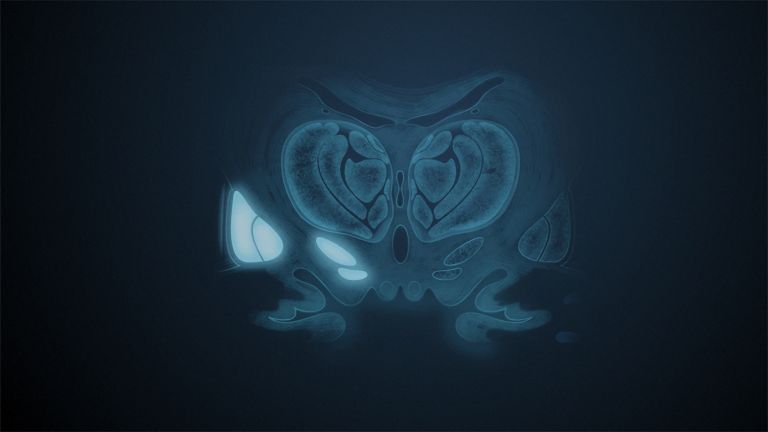
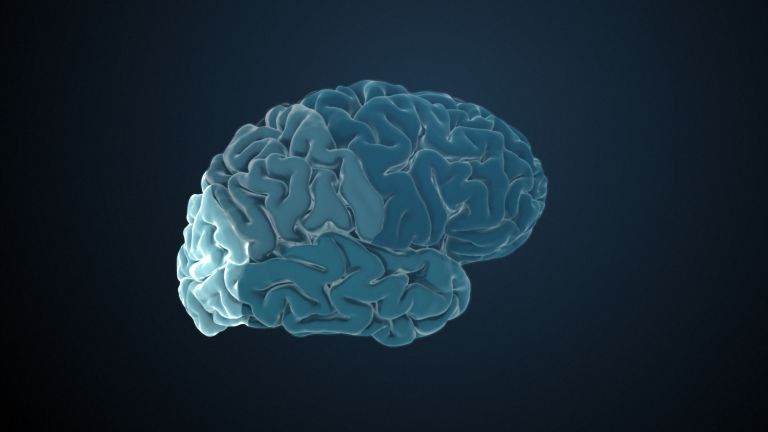
Structurally, the first features visible from bottom to top are two bumps on the right and left at the back, i.e., the dorsal medulla. They reveal the position of two nuclei: the gracile Nucleus and the cuneate nucleus. This is where the posterior column fibers of the Spinal cord – the epicritic pathways – end, which provide information about fine pressure and touch sensations, for example. The posterior column fibers ultimately end in the parietal Cortex. They are neatly separated according to the upper extremities in the cuneate nucleus and the lower extremities in the gracile nucleus.
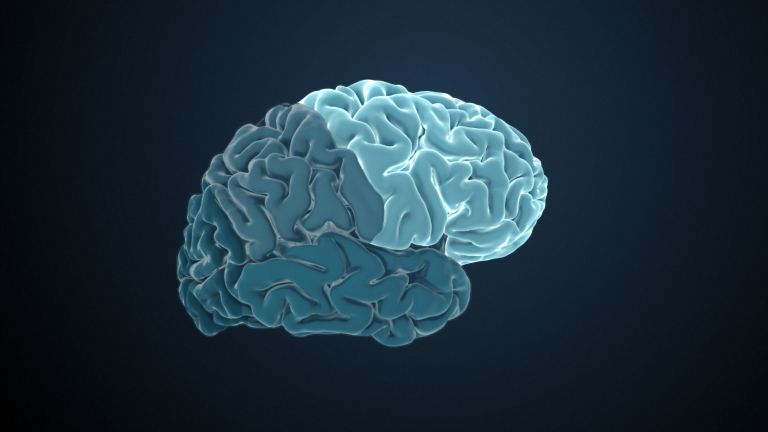
Another notable feature visible from the front are the pyramids. They are what give the pyramidal tract from the motor cortex its name – not the fact that its fibers are formed from the axons of motor pyramidal cells. Just below these pyramids lies the pyramidal tract crossing. On their way to the spinal cord, 90 percent of the fibers from the right and left pyramidal tracts change sides here and run contralaterally from this point on.
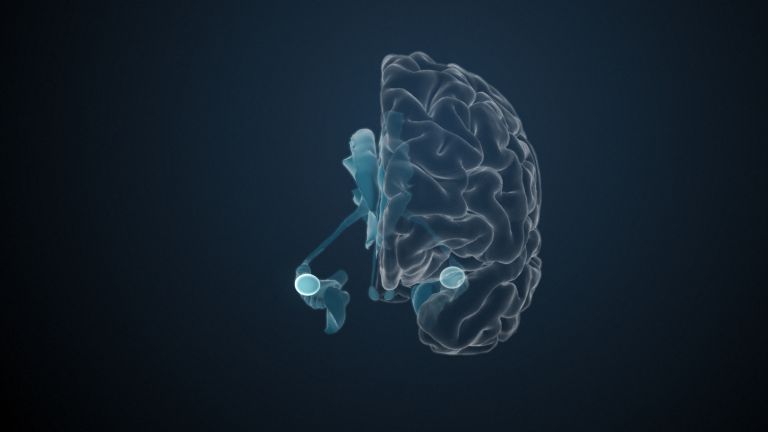
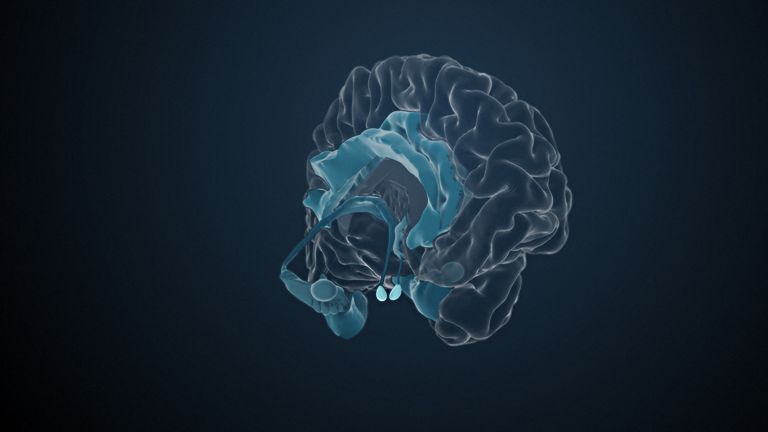
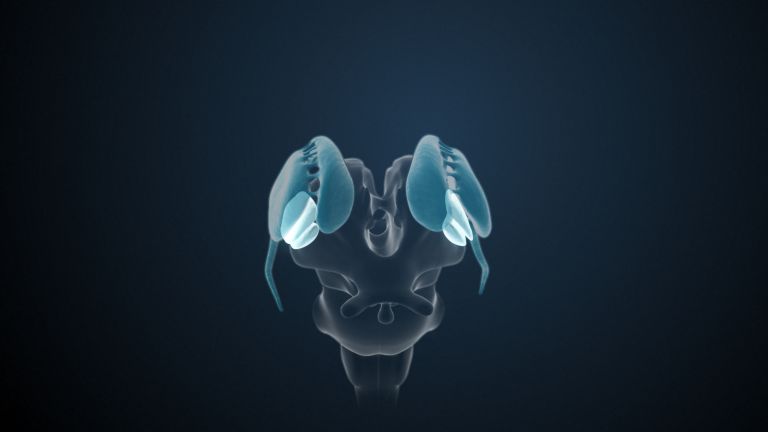
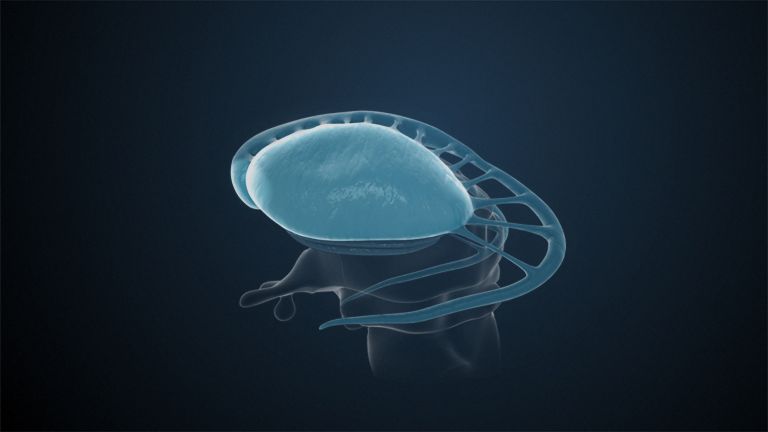
Enough about the pyramids. To the side of them lie the olives – a complex of nuclei that forms the interface between the motor areas of the Cerebrum and the Cerebellum. The lower olive – the Inferior olivary nucleus – sends its axons to the cerebellum, where they then “climb” the Purkinje cells as climbing fibers. The lower olive is therefore crucial for coordination and fine-tuning precise movements. In addition, the upper olive in the superior olivary nuclei forms an important switching station for the Auditory pathway Here, differences in transit time and level between the two ears are evaluated to enable the localization of sound sources.
dorsal
The positional term dorsal means "towards the back." In relation to the nervous system, it refers to a direction perpendicular to the neural axis, i.e., upwards towards the head or backwards.
In animals that do not walk upright, the term is simpler, as it always means toward the back. Due to the upright posture of humans, the brain bends in relation to the spinal cord, making dorsal mean "upward."
Nucleus
In cell biology, the nucleus in a cell is the cell nucleus, which contains the chromosomes, among other things. In neuroanatomy, the nucleus in the nervous system refers to a collection of cell bodies – known as gray matter in the central nervous system and ganglia in the peripheral nervous system.
posterior
A positional term – posterior means "towards the back, located at the rear." In relation to the nervous system, it refers to a direction towards the tail.
Spinal cord
medulla spinalis
The spinal cord is the part of the central nervous system located in the spine. It contains both the white matter of the nerve fibers and the gray matter of the cell nuclei. Simple reflexes such as the knee-jerk reflex are already processed here, as sensory and motor neurons are directly connected. The spinal cord is divided into the cervical, thoracic, lumbar, and sacral spinal cord.
Cortex
cortex cerebri
Cortex refers to a collection of neurons, typically in the form of a thin surface. However, it usually refers to the cerebral cortex, the outermost layer of the cerebrum. It is 2.5 mm to 5 mm thick and rich in nerve cells. The cerebral cortex is heavily folded, comparable to a handkerchief in a cup. This creates numerous convolutions (gyri), fissures (fissurae), and sulci. Unfolded, the surface area of the cortex is approximately 1,800cm².
Cerebrum
telencephalon
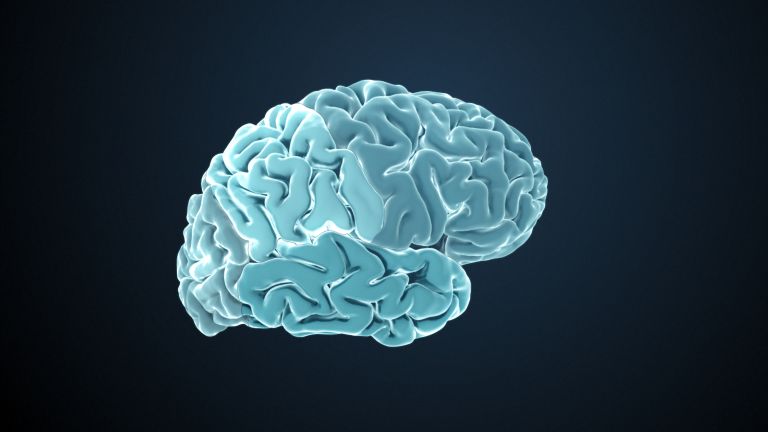
The cerebrum comprises the cerebral cortex (gray matter), the nerve fibers (white matter), and the basal ganglia. It is the largest part of the brain. The cortex can be divided into four cortical areas: the temporal lobe, frontal lobe, occipital lobe, and parietal lobe.
Its functions include the coordination of perception, motivation, learning, and thinking.
Cerebellum
Cerebellum
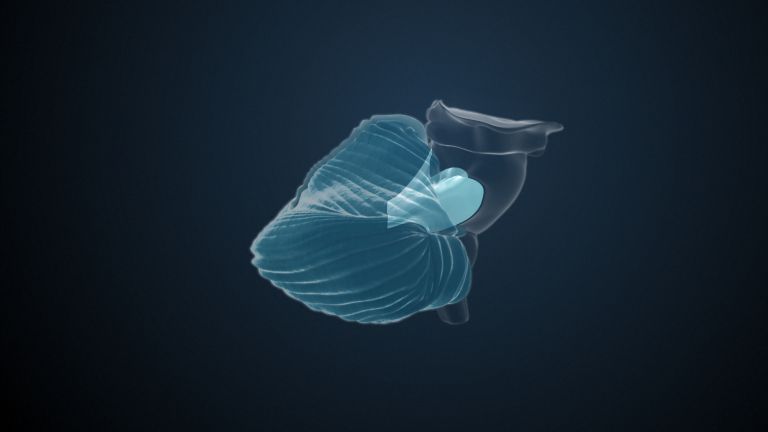
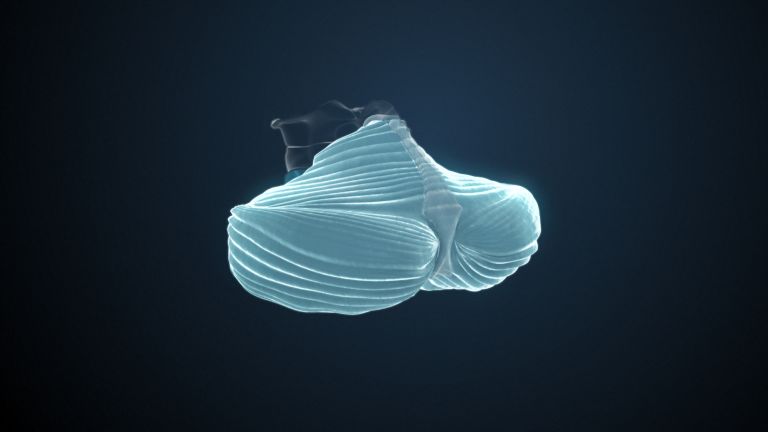
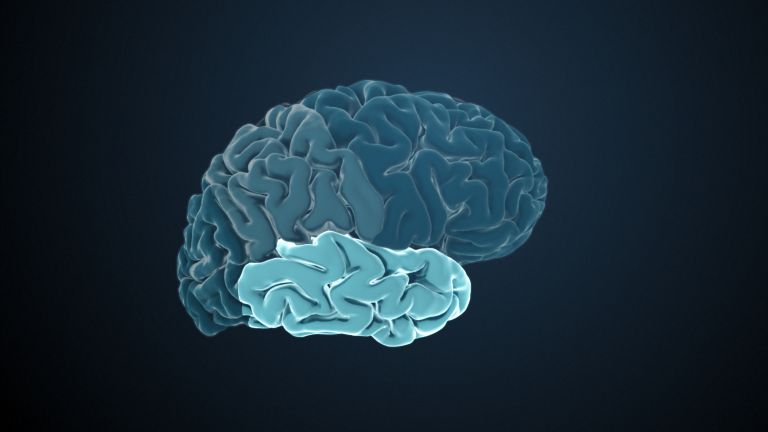
The cerebellum is an important part of the brain, located at the back of the brain stem and below the occipital lobe. It consists of two cerebellar hemispheres covered by the cerebellar cortex and plays an important role in motor processes, among other things. It develops from the rhombencephalon.
inferior
An anatomical position designation – inferior means located further down, the lower part.
Inferior olivary nucleus
Nuclei olivares inferiores
The inferior olive – more precisely, the olive nucleus complex – is one of the largest nucleus complexes in the brain stem. It plays an important role in fine-tuning motor skills, as it forms the connection between the motor cortex and the cerebellum.
Auditory pathway
The auditory pathway refers to the nerve fibers that transmit acoustic information from the inner ear to the primary auditory cortex. In humans, the auditory pathway consists of five switching points: the spiral ganglion, the auditory nuclei in the brainstem, the inferior colliculus, the medial geniculate body of the thalamus, and the primary auditory cortex.
Core areas
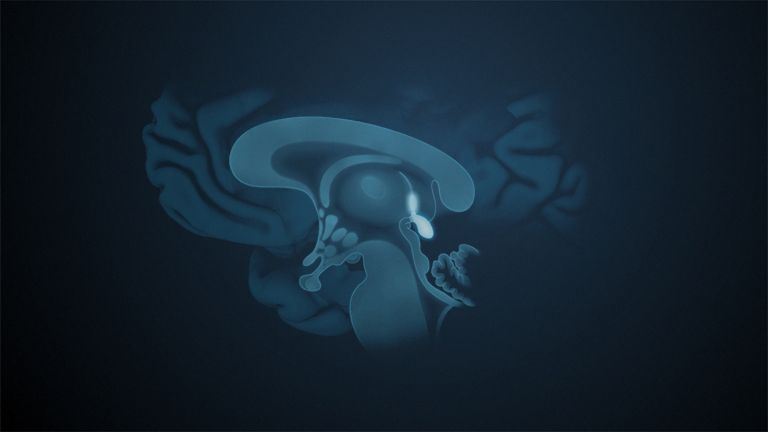
Numerous other core structures are located between all the fiber pathways in the Medulla oblongata On the one hand, there are various Cranial nerve nuclei, as the majority of the cranial nerves emerge from the medulla (IX to XII) and Pons. One example with a wide range of tasks is the Nucleus tractus solitarii, which extends almost the entire length of the medulla and is the projection site of three cranial nerves: number VII, the facial nerve; number IX, the glossopharyngeal nerve – a complicated name, responsible for the sensations of the tongue and the motor function of the throat; and the X cranial nerve, the vagus nerve, which supplies almost all internal organs parasympathetically and thus truly deserves its name “wandering nerve.” As mentioned above, the tasks of the Nucleus tractus solitarius are correspondingly diverse. These include inhalation and the cough reflex. It is probably best known for its central position in the Taste pathway.
The medulla is also where the Reticular formation begins, a complex network of nerve nuclei and fiber connections that runs through the entire Brain stem In many cases, it is difficult to distinguish between the individual nuclei, but their areas of responsibility include, for example, the centers for respiration and circulation, parts of the arousal center – the ascending reticular activating system (ARAS) – and, last but not least, the vomiting center.
Medulla oblongata
Area of the brain that transitions into the spinal cord. The medulla oblongata comprises nerve pathways between the spinal cord and higher brain regions, as well as numerous core areas with functions that are in some cases vital, such as breathing, heartbeat, and certain reflexes.
cranial
A positional term – cranial means "towards the head." In relation to the nervous system, it refers to a direction along the neural axis, i.e., forward.
In animals (without upright gait), the designation is simpler, as it always means forward. Due to the upright gait of humans, the brain bends in relation to the spinal cord, where cranial also means "upward."
Cranial nerve
A group of 12 pairs of nerves that originate directly in the brain, mostly in the brain stem. They are numbered with Roman numerals (I–XII). Unlike the rest, the first and second cranial nerves (olfactory and optic nerves) are not part of the peripheral nervous system, but rather the central nervous system.
Pons
pons
Area in the brain stem between the medulla oblongata and the mesencephalon. It acts as a switching station for many nerve pathways between the brain and spinal cord and contains numerous nuclei, including cranial nerves and those involved in controlling motor function in cooperation with the cerebellum.
Nucleus
In cell biology, the nucleus in a cell is the cell nucleus, which contains the chromosomes, among other things. In neuroanatomy, the nucleus in the nervous system refers to a collection of cell bodies – known as gray matter in the central nervous system and ganglia in the peripheral nervous system.
Nucleus tractus solitarius
nucleus tractus solitarii
A nucleus in the medulla oblongata that serves as an important integration center for visceral information. Among other things, it processes taste stimuli (via nerves VII, IX, and X) and transmits them via the thalamus (ventral posteromedial nucleus, VPM) to the primary gustatory cortex. The NTS is also involved in the motor functions of swallowing, coughing, and respiratory control by transmitting signals to motor nuclei such as the nucleus ambiguus. These reflexes serve to protect the respiratory tract and facilitate food intake.
Taste
The sensory impression we refer to as "taste" results from the interaction between our senses of smell and taste. In terms of sensory physiology, however, "taste" is limited to the impression conveyed to us by the taste receptors on the tongue and in the surrounding mucous membranes. It is currently assumed that there are five different types of taste receptors that specialize in the taste qualities sweet, sour, salty, bitter, and umami. In 2005, scientists also identified possible taste receptors for fat, whose role as a distinct taste quality is still being investigated.
Reticular formation
formatio reticularis
The reticular formation is a network of numerous nuclei in the brain stem. It has a variety of tasks, for example, it is responsible for alertness, the integration of motor, sensory, and vegetative processes, and the sleep-wake cycle.
Brain stem
truncus cerebri
The "trunk" of the brain, to which all other brain structures are "attached," so to speak. From bottom to top, it comprises the medulla oblongata, the pons, and the mesencephalon. It transitions into the spinal cord below. It is a center for vital functions such as breathing and heartbeat and contains ascending and descending pathways between the cerebrum, cerebellum, and spinal cord.
First published on August 23, 2011
Last updated on October 1, 2025