The Diencephalon
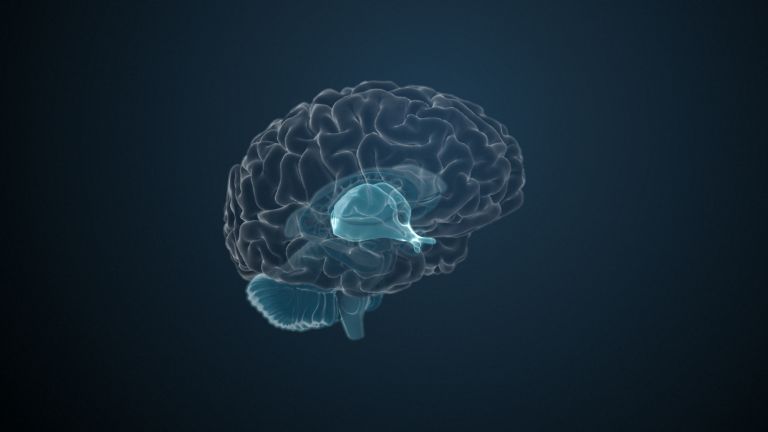
Thalamus means “chamber,” and the prefixes “hypo-,” “sub-,” and “epi-” specify its location. The functions of its four “floors” are heterogeneous: the hypothalamus communicates with the body's periphery, while the thalamus communicates with the cortex.
Scientific support: Prof. Dr. Horst-Werner Korf
Published: 28.11.2025
Difficulty: intermediate
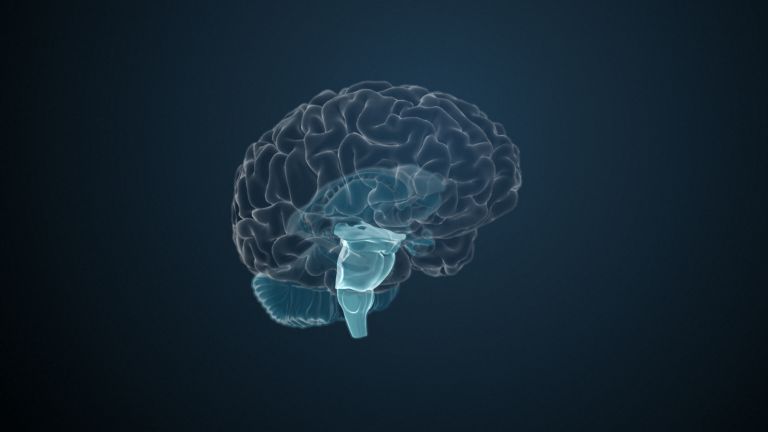
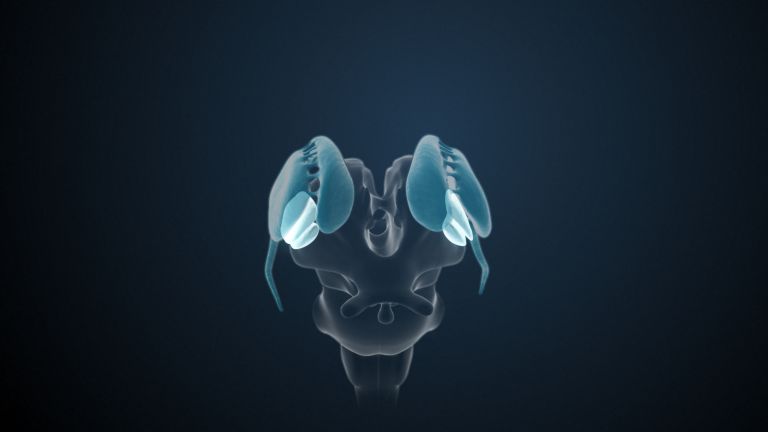
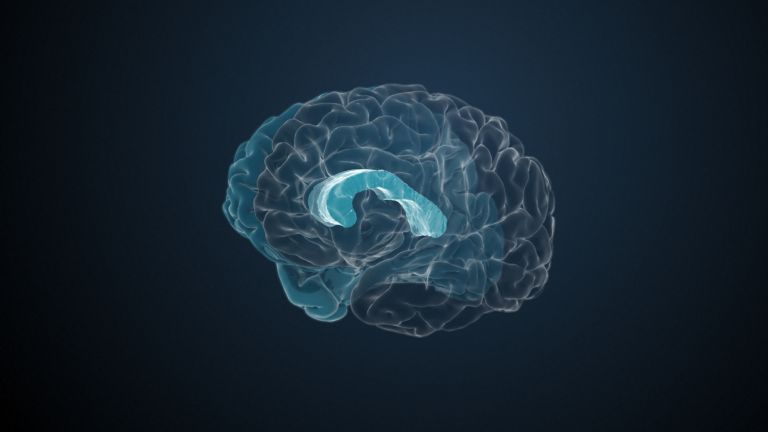
The Diencephalon is hidden in the center of the brain, almost completely covered by the lobes of the telencephalon. It is divided into four levels, all of which have very different functions. The two largest glands in the brain are attached to it, the pineal gland and the pituitary gland.
Diencephalon
The diencephalon (midbrain) includes the thalamus and hypothalamus, among other structures. Together with the cerebrum, it forms the forebrain. The diencephalon contains centers for sensory perception, emotion, and the control of vital functions such as hunger and thirst.
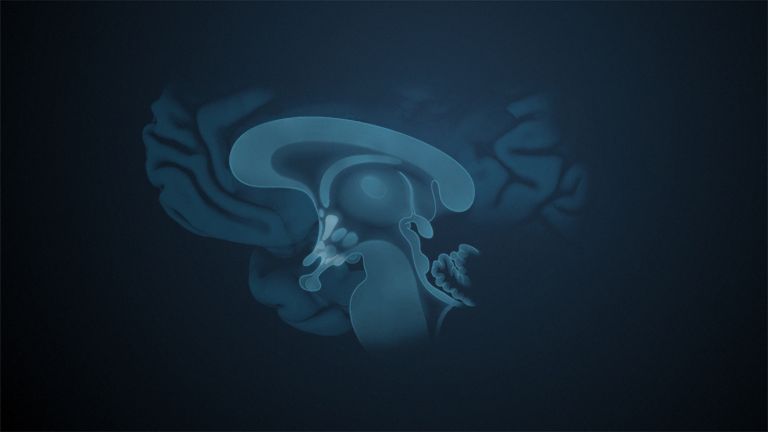
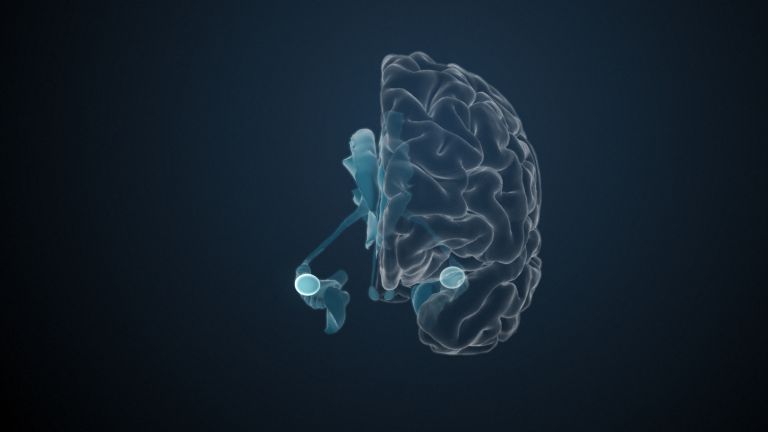
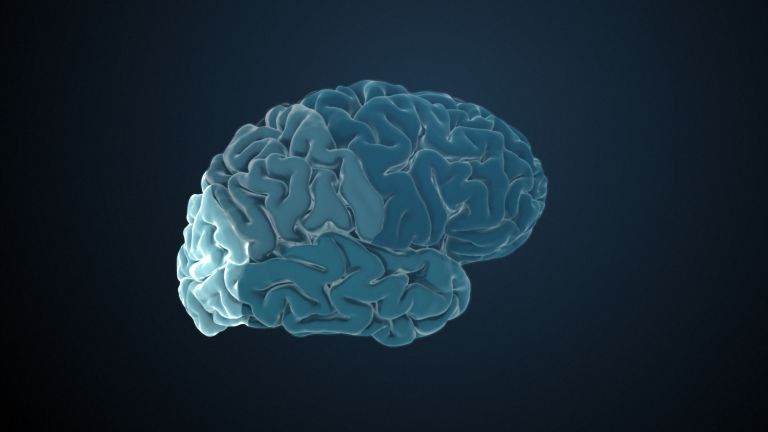
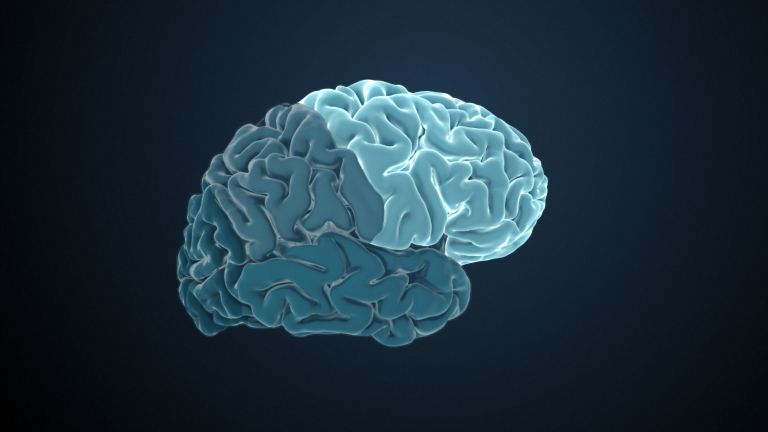
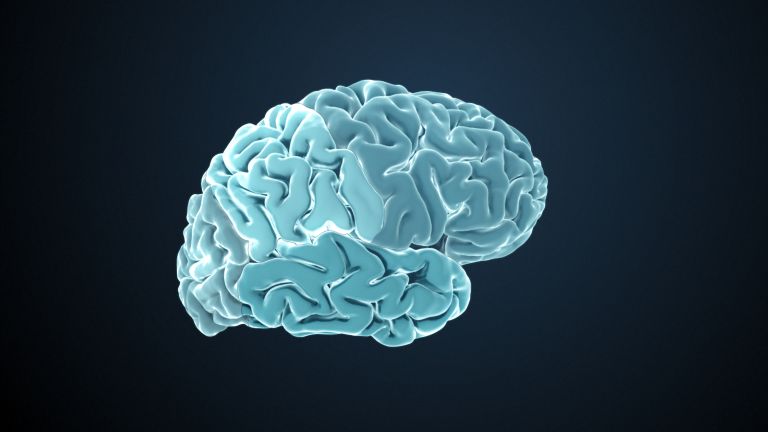
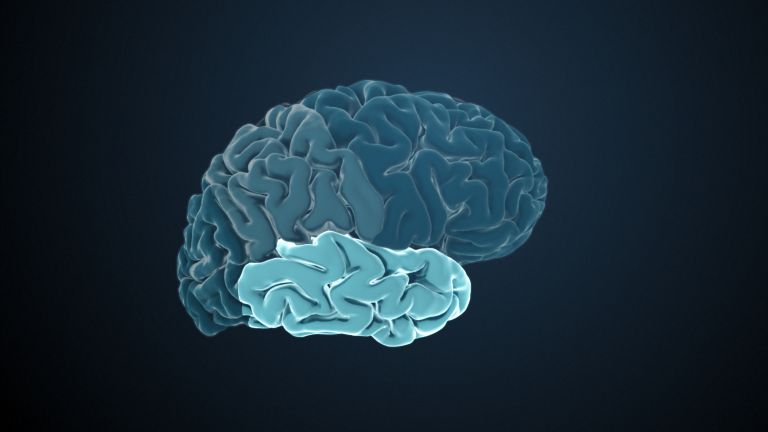
The Diencephalon – in English, the interbrain – is actually located in between, namely between the telencephalon and the Midbrain. In an intact brain, hardly anything of it can be seen except for its base; the rest is covered on all sides by the hemispheres of the telencephalon.
Diencephalon
The diencephalon (midbrain) includes the thalamus and hypothalamus, among other structures. Together with the cerebrum, it forms the forebrain. The diencephalon contains centers for sensory perception, emotion, and the control of vital functions such as hunger and thirst.
Midbrain
mecencephalon
The midbrain is the uppermost section of the brain stem. Its regions are located around the aqueduct, a canal filled with cerebrospinal fluid. Prominent structures include the tectum, tegmentum, and substantia nigra.
Rooms, walls, and floors
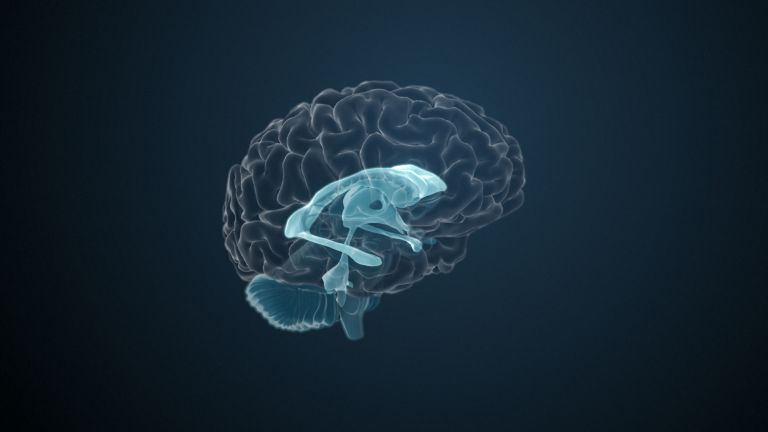
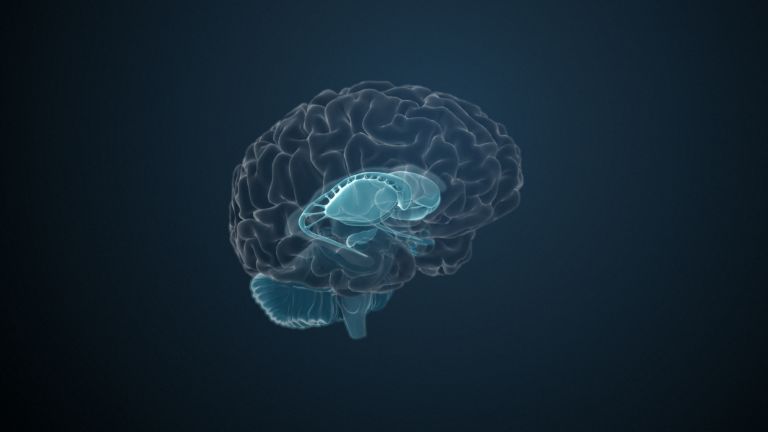
Inside the Diencephalon is an unpaired, vertically positioned, slit-shaped cavity called the third ventricle. The ancients called it the “thalamus,” which means “room” or “chamber.” Many structures in the diencephalon owe their names to this chamber – they were transferred from the ventricle to its walls. From bottom to top, these walls contain the “floors” of the diencephalon: the Hypothalamus – the basement, the Subthalamus – the ground floor, the Dorsal thalamus – the bel étage, and the Epithalamus – the attic.
Functionally, the diencephalon is one of the most heterogeneous sections of our brain, with its different floors having many very different functions. They are so many and so varied that we will discuss them in separate texts and limit ourselves here to keywords.
Diencephalon
The diencephalon (midbrain) includes the thalamus and hypothalamus, among other structures. Together with the cerebrum, it forms the forebrain. The diencephalon contains centers for sensory perception, emotion, and the control of vital functions such as hunger and thirst.
Hypothalamus
The hypothalamus is considered the center of the autonomic nervous system, meaning it controls many motivational states and regulates vegetative aspects such as hunger, thirst, and sexual behavior. As an endocrine gland (which, unlike an exocrine gland, releases its hormones directly into the blood without a duct), it produces numerous hormones, some of which inhibit or stimulate the pituitary gland to release hormones into the blood.In this function, it also plays an important role in the response to pain and is involved in pain modulation.
Subthalamus
subthalamus/-/subthalamus
The subthalamus is an area of the diencephalon located ventrally below the thalamus. It includes the subthalamic nucleus, which functionally belongs to the basal ganglia network. The subthalamus plays an important role in the regulation and inhibition of movement sequences and in impulse control.
dorsal
The positional term dorsal means "towards the back." In relation to the nervous system, it refers to a direction perpendicular to the neural axis, i.e., upwards towards the head or backwards.
In animals that do not walk upright, the term is simpler, as it always means toward the back. Due to the upright posture of humans, the brain bends in relation to the spinal cord, making dorsal mean "upward."
Dorsal thalamus
Thalamus dorsals
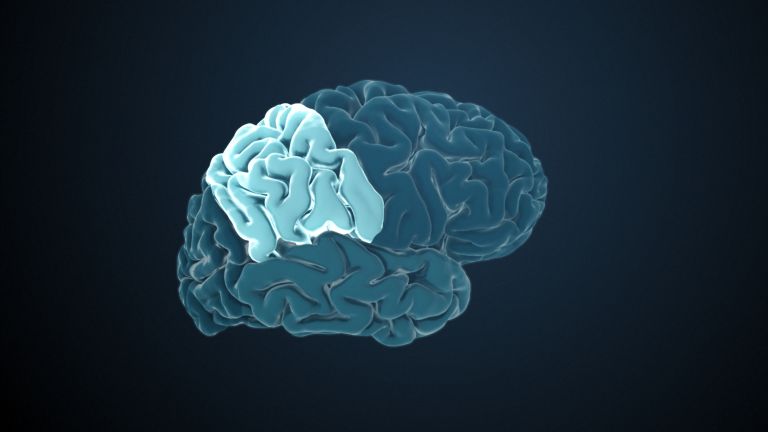
The thalamus is the largest structure in the diencephalon and is located above the hypothalamus. The thalamus is considered the "gateway to consciousness" because its nuclei are the transit station for all information to the cortex (cerebral cortex) – except for olfactory information, which first reaches the olfactory areas of the brain directly. At the same time, they also receive massive cortical inputs so it might be better to regard this a thalami-cortical system. The nuclei of the thalamus are grouped together. The term "gateway to consciousness" also refers to attention control, sleep-wake regulation, and consciousness modulation by the intralaminar nuclei.
Epithalamus
epithalamus
A part of the diencephalon (midbrain) located behind the thalamus (the largest part of the midbrain). It includes the habenulae and the epiphysis, among other structures.
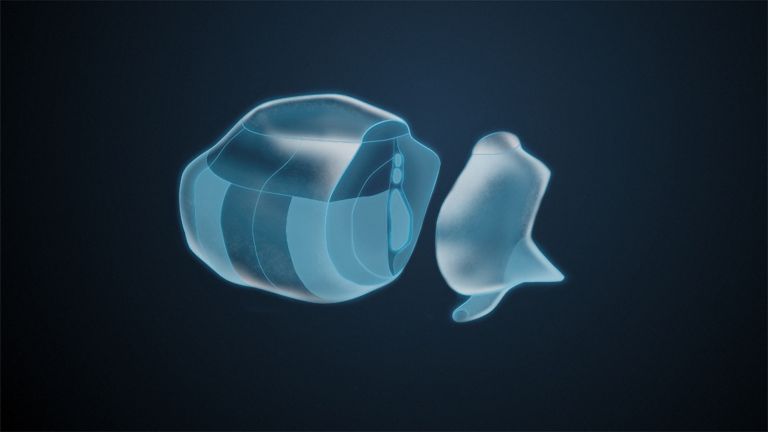
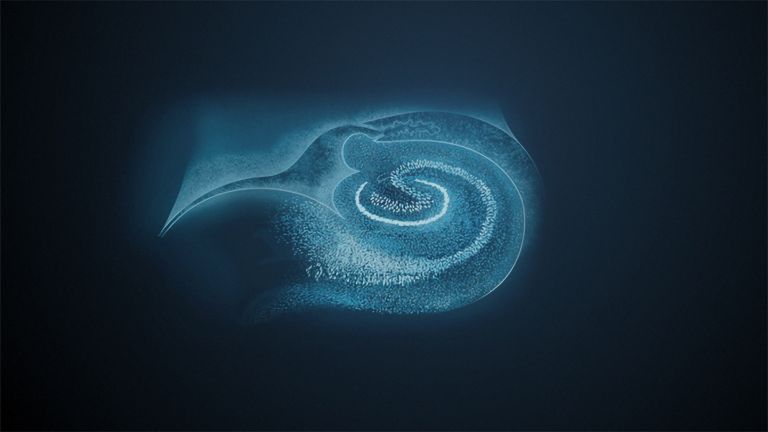
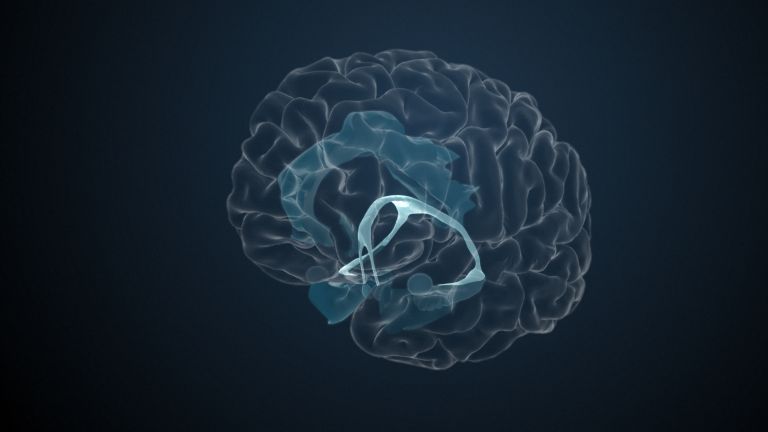
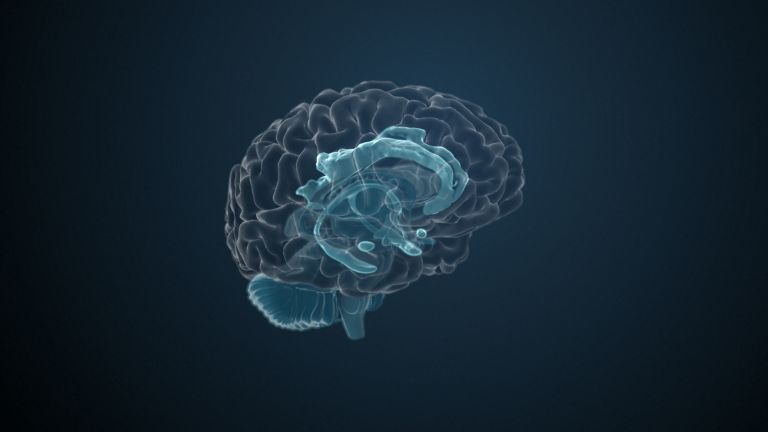
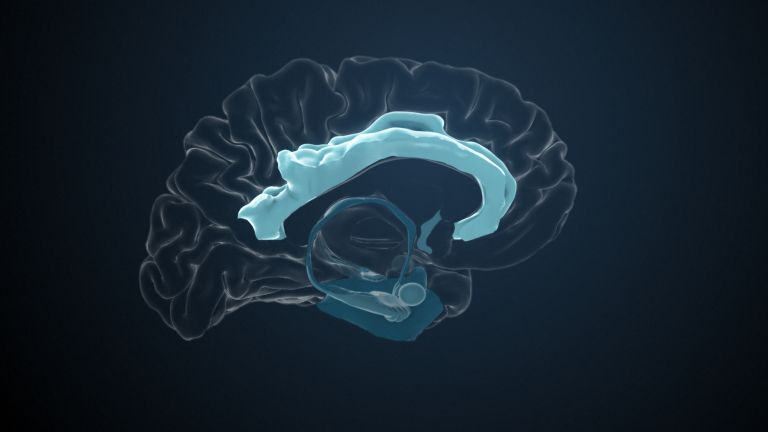
The house of the thalamus
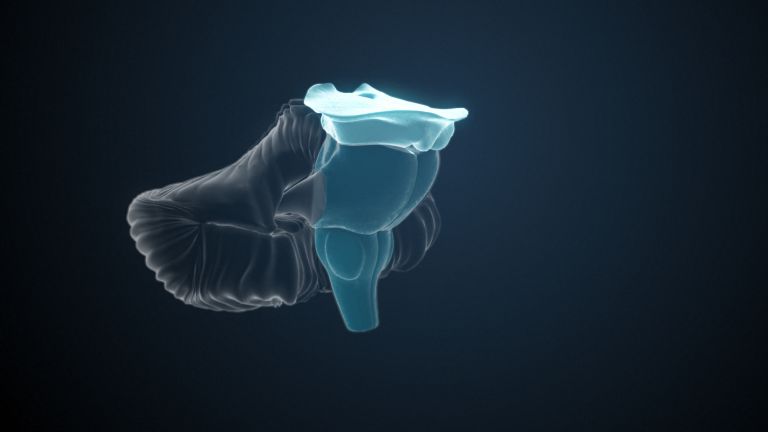
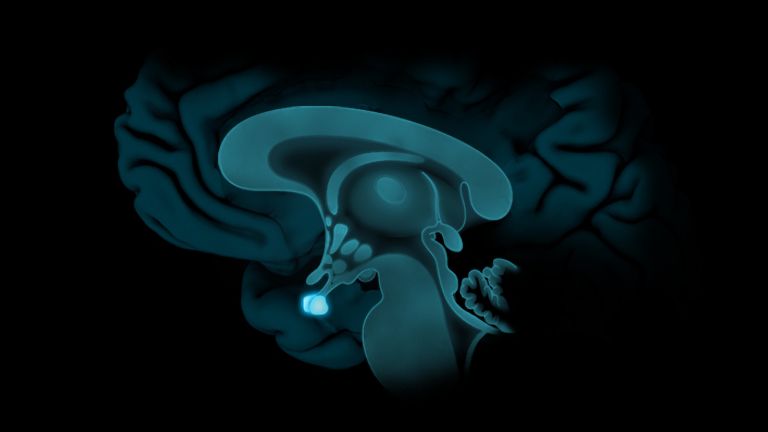
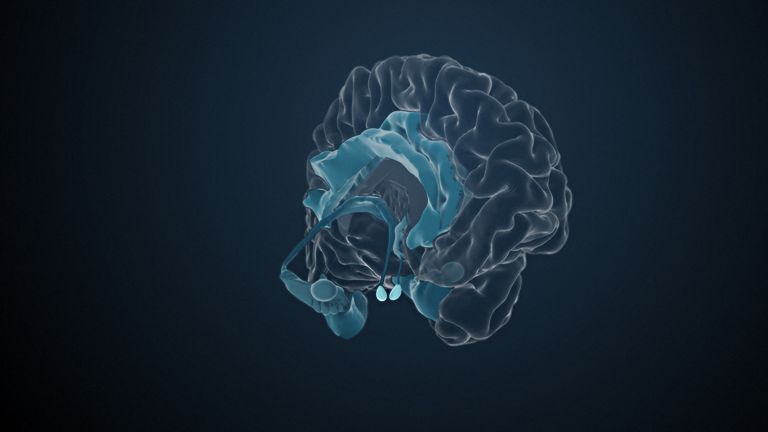
Let's start in the basement, with the Hypothalamus. It is the most important interface between the head and the body, the control center of the Autonomic nervous system Numerous individual nuclei regulate such important processes as hunger and thirst, waking, sleeping, and sexual desire. However, the hypothalamus cannot do all this on its own but needs to work together with the pituitary gland: it produces various hormones, which in turn trigger or inhibit the release of other hormones in the pituitary gland. At the front of the hypothalamus, you can see the optic chiasm.
However, this is only the front part of the hypothalamus, which is low in medulla and appears gray to the naked Eye. Its rear part appears whiter because it contains thick fibers rich in medulla. This is particularly true of the mammillary bodies, which are part of the limbic system.
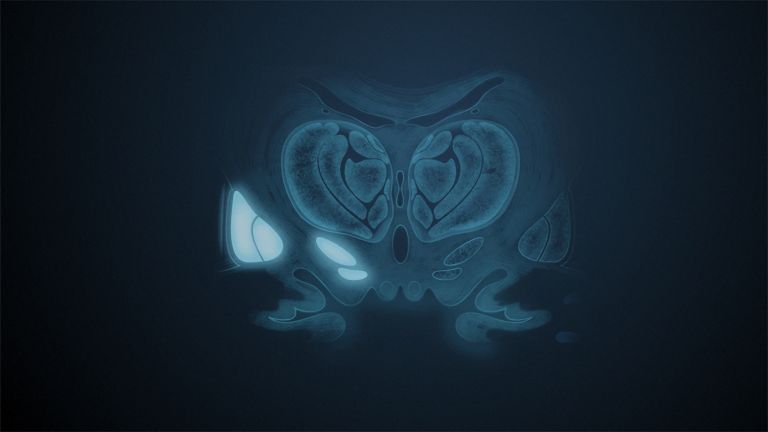
The subthalamus, the ground floor, cannot be seen from the ventricular surface. Its cell masses have migrated sideways “into the depths” and can only be seen if the brain is cut off-center, either transversely or longitudinally. Its most important structure is the subthalamic nucleus, which is connected to the Basal ganglia and is involved in controlling motor function.
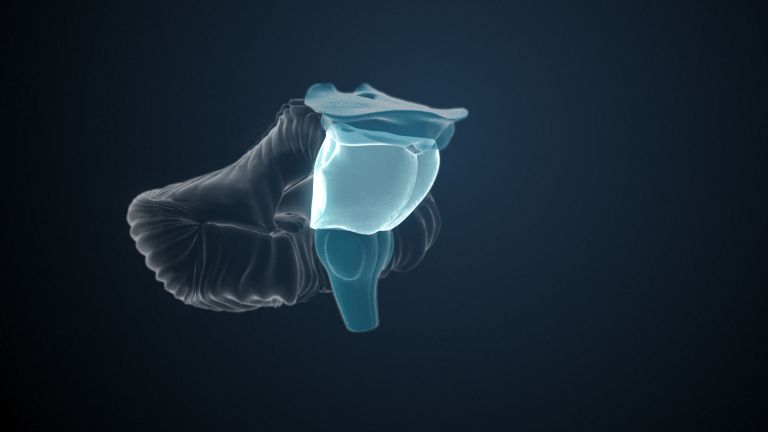
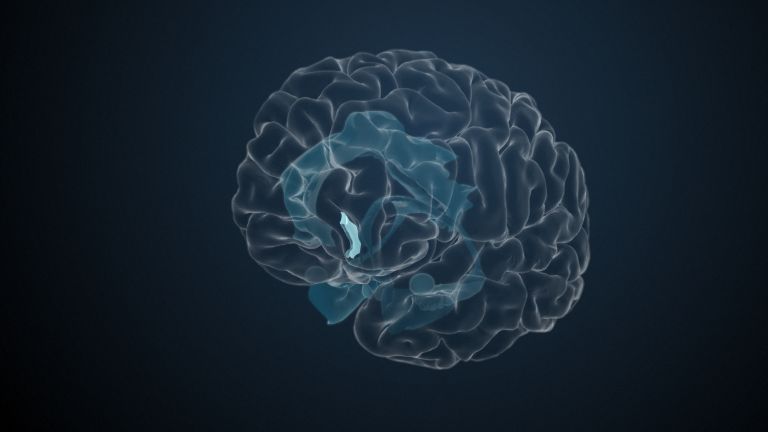
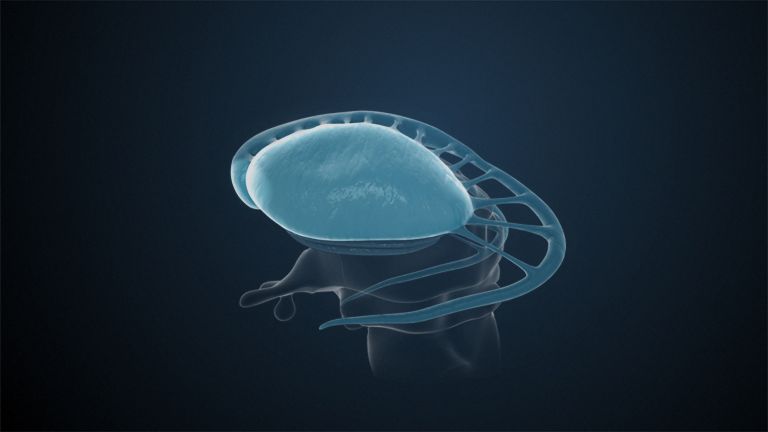
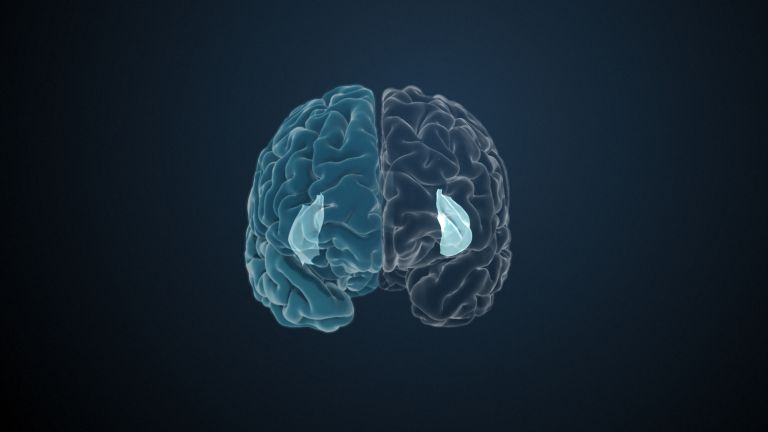
The “bel étage,” the dorsal thalamus, has inherited the name of the third ventricle and is often simply referred to as the “thalamus.” A shallow groove on the edge of the third ventricle, the sulcus hypothalamicus, separates it from the hypothalamus. The thalami on both sides, which protrude slightly toward the ventricle, are usually connected to each other by a tissue bridge of varying thickness across the ventricle. This bridge, the interthalamic adhesion, is not found in every brain; it may be absent, but this has no functional significance.
The numerous nuclei of the thalamus are reciprocally connected to the Cortex. Some of them are also responsible for “switching” sensory information (visual, acoustic, gustatory, and that of the skin and muscle senses) to the cortex. At least, that is the view taken in older textbooks. More recent findings reveal a very interesting systemic interaction between the thalamic nuclei and their cortical counterparts.
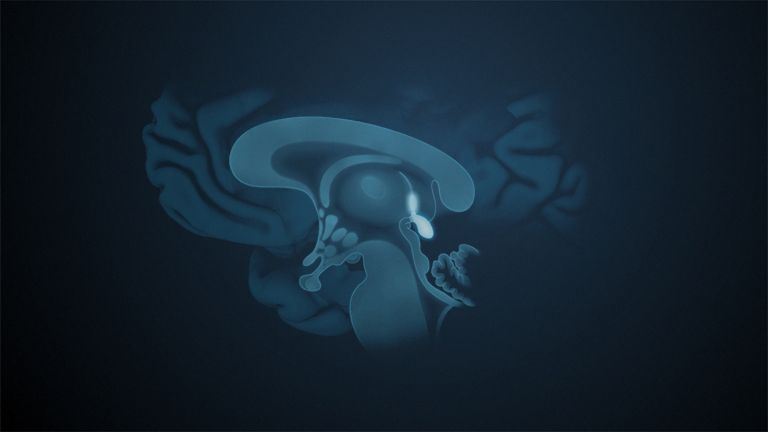
At the back and above the thalamus, the pineal gland – also known as the Epiphysis or glandula pinealis – catches the eye. Over the course of evolutionary history, it has transformed from a light-sensitive organ – a “third eye,” as it is also referred to in the literature – into an endocrine gland. At night, it produces the Hormone Melatonin. Together with the tiny habenulae, which presumably have olfactory functions, it forms the epithalamus, the attic.
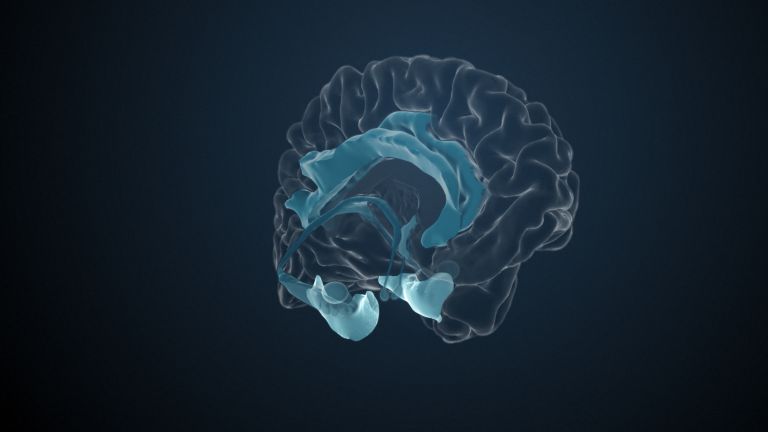
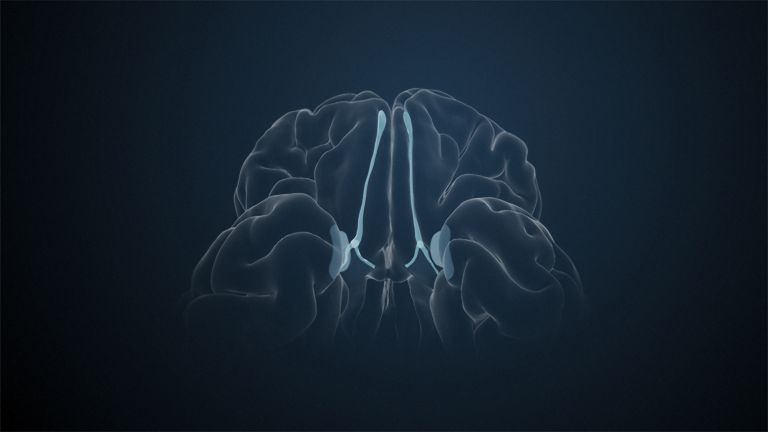
The Fornix (Latin for “arc”) spans the Dorsal thalamus and Epithalamus. It describes a steep, sloping arc toward the front, thus forming part of the anterior boundary of the Diencephalon. Just behind this arch – just before the tip of the dorsal thalamus – there is a hole through which the third ventricle connects to the lateral ventricles. Below, in the hypothalamic basement, just above the optic chiasm, a delicate tissue plate, the lamina terminalis, forms the anterior boundary of the diencephalon. Towards the rear – towards the Midbrain – the third ventricle narrows to form the hair-thin aqueduct of the brain, the “water conduit of the brain.” At its beginning lies the boundary line to the brain stem.
Hypothalamus
The hypothalamus is considered the center of the autonomic nervous system, meaning it controls many motivational states and regulates vegetative aspects such as hunger, thirst, and sexual behavior. As an endocrine gland (which, unlike an exocrine gland, releases its hormones directly into the blood without a duct), it produces numerous hormones, some of which inhibit or stimulate the pituitary gland to release hormones into the blood.In this function, it also plays an important role in the response to pain and is involved in pain modulation.
Autonomic nervous system
The part of the nervous system that primarily controls unconscious vital functions such as breathing, heartbeat, and blood pressure. The autonomic nervous system is divided into the sympathetic nervous system, which is active in performance and stress situations, and the parasympathetic nervous system, which is active during rest and recovery phases. In some cases, the enteric nervous system, which is responsible for gastrointestinal functions, is also considered part of the autonomic nervous system.
Eye
bulbus oculi
The eye is the sensory organ responsible for perceiving light stimuli – electromagnetic radiation within a specific frequency range. The light visible to humans lies in the range between 380 and 780 nanometers.
Basal ganglia
Nuclei basales
The basal ganglia are a group of subcortical nuclei (located beneath the cerebral cortex) in the telencephalon. The basal ganglia include the globus pallidus and the striatum, and, depending on the author, other structures such as the substantia nigra and the subthalamic nucleus. The basal ganglia are primarily associated with voluntary motor function, but they also influence motivation, learning, and emotion.
dorsal
The positional term dorsal means "towards the back." In relation to the nervous system, it refers to a direction perpendicular to the neural axis, i.e., upwards towards the head or backwards.
In animals that do not walk upright, the term is simpler, as it always means toward the back. Due to the upright posture of humans, the brain bends in relation to the spinal cord, making dorsal mean "upward."
Cortex
cortex cerebri
Cortex refers to a collection of neurons, typically in the form of a thin surface. However, it usually refers to the cerebral cortex, the outermost layer of the cerebrum. It is 2.5 mm to 5 mm thick and rich in nerve cells. The cerebral cortex is heavily folded, comparable to a handkerchief in a cup. This creates numerous convolutions (gyri), fissures (fissurae), and sulci. Unfolded, the surface area of the cortex is approximately 1,800cm².
Epiphysis
glandula pinalis/pineal gland
The epiphysis (pineal gland) is an unpaired component of the epithalamus (part of the diencephalon). It is a gland that secretes melatonin. Among other things, the epiphysis controls the "internal clock."
Hormone
Hormones are chemical messengers in the body. They serve to transmit information between organs and cells, usually slowly, e.g., to regulate blood sugar levels. Many hormones are produced in glandular cells and released into the blood. At their destination, e.g., an organ, they dock at binding sites and trigger processes inside the cell. Hormones have a broader effect than neurotransmitters; they can influence various functions in many cells of the body.
Melatonin
Melatonin is a hormone released by the pineal gland in the brain when it is dark. Melatonin levels are highest at night and then decrease throughout the day. This makes it an important messenger substance for the "internal clock" and it appears to play a particularly important role in regulating sleep.
Fornix
The fornix is a nerve pathway consisting of approximately 12 million fibers that connects the hippocampus (one of the oldest structures in the brain in evolutionary terms) and subiculum with the septum and mammillary bodies.
Dorsal thalamus
Thalamus dorsals
The thalamus is the largest structure in the diencephalon and is located above the hypothalamus. The thalamus is considered the "gateway to consciousness" because its nuclei are the transit station for all information to the cortex (cerebral cortex) – except for olfactory information, which first reaches the olfactory areas of the brain directly. At the same time, they also receive massive cortical inputs so it might be better to regard this a thalami-cortical system. The nuclei of the thalamus are grouped together. The term "gateway to consciousness" also refers to attention control, sleep-wake regulation, and consciousness modulation by the intralaminar nuclei.
Epithalamus
epithalamus
A part of the diencephalon (midbrain) located behind the thalamus (the largest part of the midbrain). It includes the habenulae and the epiphysis, among other structures.
Diencephalon
The diencephalon (midbrain) includes the thalamus and hypothalamus, among other structures. Together with the cerebrum, it forms the forebrain. The diencephalon contains centers for sensory perception, emotion, and the control of vital functions such as hunger and thirst.
lateral
A positional term – lateral means "towards the side." In relation to the nervous system, it refers to a direction at right angles to the neural axis, i.e., to the right or left.
Midbrain
mecencephalon
The midbrain is the uppermost section of the brain stem. Its regions are located around the aqueduct, a canal filled with cerebrospinal fluid. Prominent structures include the tectum, tegmentum, and substantia nigra.
First published on August 23, 2011
Updated on November 28, 2025