
The Advisors
Setting up and expanding a comprehensive information portal on a complex topic is a challenging task. To accomplish this in the best possible way, thebrain.info has access to the combined expertise of nearly twenty experts who advise the project and editorial management – in two advisory boards with different areas of responsibility.
Advisory Board for Neuroscience
Some of Germany's leading minds in brain research make up the Neuroscience Advisory Board. Its most important task is to ensure the technical accuracy of the content on thebrain.info. In addition, the editorial team's experts also provide advice and support in developing the topic of the month and searching for new and exciting stories from the world of brain research. The Neuroscience Advisory Board includes:
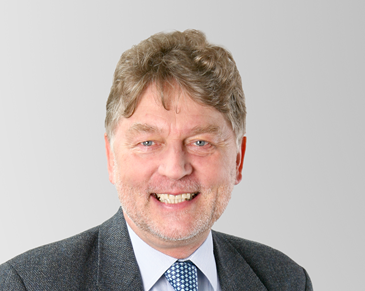
Prof. Dr. Eckhard Friauf
eckhard.friauf@biologie.uni-kl.de
Eckhard Friauf has headed the Animal Physiology Working Group in the Biology Department at the Technical University of Kaiserslautern from 1999-2025. From 1995 to 1999, he taught and conducted research in physiology at the University Hospital of Frankfurt. He studied biology at the University of Marburg, specializing in zoology, microbiology, pharmacology, and physics, and received his doctorate in 1987 from the University of Tübingen, where he also completed his habilitation in 1994. Before and after his doctorate, he spent one and two years respectively as a visiting scholar at New York University and Stanford University. His research interests lie in basic research in the field of the functional and structural organization of the central auditory system of mammals. One focus is on the characterization of synaptic transmission of inhibitory and excitatory neurons in the brainstem, which requires high temporal precision and ultra-fast processes. He was president of the German Neuroscience Society for the 2017-2019 term.
excitatory
Exciting synapses are described as excitatory when they depolarize the subsequent cell membrane and can thus lead to the formation of an action potential. An excitatory effect is usually produced by an exciting transmitter (messenger substance), such as glutamate. The opposite is an inhibitory synapse.
Prof. Dr. Mathias Bähr
Prof. Mathias Bähr, MD, heads the Department of Neurology at the University Medical Center of Georg August University in Göttingen. After studying human medicine in Tübingen and completing clinical and scientific training at the University Hospital in Düsseldorf, the Max Planck Institute for Developmental Biology in Tübingen, and Washington University in St. Louis, he headed a junior research group at the Max Planck Institute for Developmental Biology in Tübingen, where he also completed his specialist training at the University Neurological Clinic, obtained his postdoctoral qualification, and worked as a senior physician, senior consultant, and deputy to the clinic director (Prof. Dr. J. Dichgans) until 2001. His clinical and scientific focus is on researching the cellular and molecular basis of degeneration and regeneration processes in the adult nervous system and developing new neuroprotective therapeutic strategies for multiple sclerosis, Parkinson's disease, and stroke. Since his tenure as president of the NWG, he has been involved in setting up the internet portal thebrain.info.
stroke
Cerebral apoplexy
In a stroke, the brain or parts of it are no longer supplied with sufficient blood, which impairs the supply of oxygen and glucose. The most common cause is a blockage in an artery (ischemic stroke), less commonly a hemorrhage (hemorrhagic stroke). Typical symptoms include sudden visual disturbances, dizziness, paralysis, speech or sensory disturbances. Long-term consequences can include various sensory, motor, and cognitive impairments.
Prof. Dr. Peter Falkai
Peter.Falkai@med.uni-muenchen.de
After completing his specialist training and habilitation, Prof. Dr. Peter Falkai was a senior physician in the Department of Psychiatry at the University of Düsseldorf. From 1996 to 2002, he was Director of the Department of Medical Psychology and Senior Physician at the University of Bonn's Department of Psychiatry, and from 2002 to 2006, he was Director of the Clinic for Psychiatry and Psychotherapy at Saarland University. From 2006 to 2012, he served as Director of the Clinic for Psychiatry and Psychotherapy at the University of Göttingen. Since 2012, he has held the same position at the University of Munich. For the 2011-2012 term, he has been president of the German Society for Psychiatry, Psychotherapy and Neurology (DGPPN). His scientific focus is on structural imaging, molecular neuropathology and genetics for research into the pathophysiology of psychiatric disorders, particularly psychoses and dementias.

Prof. Dr. Herta Flor
Herta Flor studied psychology, American studies, journalism, and political science at the universities of Munich, Würzburg, and Tübingen, graduating with a degree in psychology in 1981. After completing her doctoral studies at Yale University, she received her Dr. rer. soc. degree from the Faculty of Social and Behavioral Sciences at the University of Tübingen in 1984. After conducting research at Yale University, the University of Bonn, the University of Pittsburgh, and the University of Tübingen, she habilitated in 1990 with a thesis on the psychobiology of pain. This was followed by visiting professorships at the University of Marburg and a Heisenberg Fellowship from the German Research Foundation. From 1993 to 2000, she was a professor and, from 1995, chair of clinical psychology at Humboldt University in Berlin. Since 2000, she has been Scientific Director of the Institute for Neuropsychology and Clinical Psychology at the Central Institute for Mental Health in Mannheim and Chair of Clinical Psychology at Heidelberg University. Her research focuses on the psychobiology and interdisciplinary therapy of chronic pain, brain Plasticity and mental disorders, and brain-computer interfaces.
Plasticity
Neuroplasticity
The term neuroplasticity describes the ability of synapses, nerve cells, and entire areas of the brain to change structurally and functionally depending on the degree to which they are used. Synaptic plasticity refers to the adaptation of the signal transmission strength of synapses to the frequency and intensity of incoming stimuli, for example in the form of long-term potentiation or depression. In addition, the size, interconnection, and activity patterns of different areas of the brain also change depending on their use. This phenomenon is referred to as cortical plasticity when it specifically affects the cortex.
Prof. Dr. Gerd Kempermann
gerd.kempermann@dzne.de
gerd.kempermann@crt-dresden.de
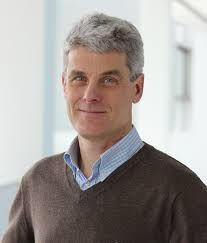
Gerd Kempermann is head of the Adult Neurogenesis working group at the German Center for Neurodegenerative Diseases (DZNE) and spokesperson for the DZNE's Dresden site. He is also professor of genomic basis of regeneration at the CRTD, the DFG Research Center for Regenerative Therapies at Dresden University of Technology. Gerd Kempermann is from Cologne and studied medicine in Freiburg im Breisgau. He earned his doctorate in neuropathology and also worked there for two years as an assistant physician and research assistant. From 1995 to 1998, he was a postdoctoral fellow with Fred H. Gage at the Salk Institute in La Jolla, where he and H. Georg Kuhn discovered that mice living in a stimulating environment form more new nerve cells in the Hippocampus. This led to his life's work on activity-dependent Plasticity and its significance for brain function in health and disease. After a brief interlude as a clinical neurologist in Regensburg, he was a group leader at the Max Delbrück Center for Molecular Medicine (MDC) Berlin-Buch and the Charité from 2001 to 2007. He is a member of the board of the German Neuroscience Society.
Hippocampus
The hippocampus is the largest part of the archicortex and an area in the temporal lobe. It is also an important part of the limbic system. Functionally, it is involved in memory processes, but also in spatial orientation and learning. It comprises the subiculum, the dentate gyrus, and the Ammon's horn with its four fields CA1-CA4.
Changes in the structure of the hippocampus due to stress are associated with chronic pain. The hippocampus also plays an important role in the amplification of pain through anxiety.
Plasticity
Neuroplasticity
The term neuroplasticity describes the ability of synapses, nerve cells, and entire areas of the brain to change structurally and functionally depending on the degree to which they are used. Synaptic plasticity refers to the adaptation of the signal transmission strength of synapses to the frequency and intensity of incoming stimuli, for example in the form of long-term potentiation or depression. In addition, the size, interconnection, and activity patterns of different areas of the brain also change depending on their use. This phenomenon is referred to as cortical plasticity when it specifically affects the cortex.
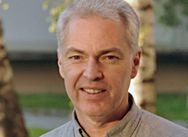
Prof. Dr. Helmut Kettenmann
Helmut Kettenmann was a research group leader at the Max Delbrück Center for Molecular Medicine and professor of neurobiology at Charité. His group focused on the function of Glial cells in normal and pathological brains. He is editor of the international scientific journal GLIA. He has long been involved in many projects to raise public awareness of brain research topics, for example at “Wissenschaft im Dialog” (Science in Dialogue) or the “Long Night of Science” in Berlin. From 2008 to 2010, he was president of FENS, the umbrella organization for neuroscience in Europe and president of the German Neuroscience Society for the 2013-2015 term.
Glial cells
Glia cells are the second largest group of cells in the brain after neurons. For a long time, they were considered inactive elements of the brain, referred to as "nerve cement." Today, we know that the different types of glia cells (astrocytes, oligodendrocytes, and microglia in the CNS; Schwann cells in the PNS) perform clearly defined tasks in the nervous system. For example, they respond to pathogens, play an important role in nourishing nerve cells, and insulate nerve fibers. They account for slightly more than 50 percent of the brain's cells, compared to neurons.
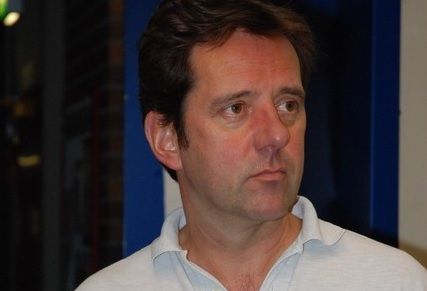
Prof. Dr. Michael Koch
Michael Koch studied biology and chemistry in Konstanz. After obtaining his doctorate (Dr. rer. nat., 1990), he conducted research at the University of Cambridge (UK). Research assistant at the Chair of Animal Physiology in Tübingen. In 1996, he completed his habilitation (animal physiology) and received a Heisenberg Fellowship from the DFG. Since 2000, he has been Professor of Neuropharmacology at the University of Bremen. Research interests: Neuropharmacology of cortical and subcortical brain structures in behavioral control and cognitive performance in mammals. Animal models of neuropsychiatric disorders.
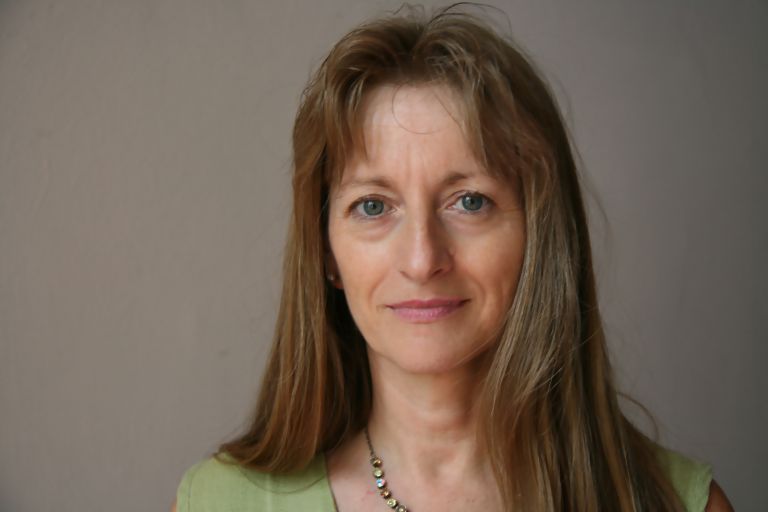
Prof. Dr. Siegrid Löwel
Since 2010, Siegrid Löwel has headed the Department of Systemic Neurobiology at the University of Göttingen, which was established as part of the Bernstein Focus on Neurotechnology. Her research group conducts basic neuroscientific research and aims to understand how the flexibility of the brain can be increased in old age and after lesions, and what mechanisms underlie this Plasticity. She hopes that her research will help to identify new avenues for clinically relevant concepts to improve regeneration and rehabilitation in the aging and diseased brain. Siegrid Löwel studied biology in Würzburg and Frankfurt am Main, completed her doctorate at the Max Planck Institute for Brain Research (Frankfurt, department of Prof. Dr. Wolf Singer), and habilitated in zoology at the University of Frankfurt in 1995. She then became a research group leader at the Institute of Neurobiology in Magdeburg, a research associate professor at the University of California in San Francisco (School of Medicine, Prof. Dr. Michael Stryker), Dorothea Erxleben Visiting Professor at the University of Magdeburg, and recipient of the Hertie Foundation's Excellence Scholarship in Neuroscience. In 2005, she became a W2 professor at the University of Jena and in 2010 a W3 professor in Göttingen. Siegrid Löwel has published over 80 scientific articles and given numerous lectures at national and international conferences.
Plasticity
Neuroplasticity
The term neuroplasticity describes the ability of synapses, nerve cells, and entire areas of the brain to change structurally and functionally depending on the degree to which they are used. Synaptic plasticity refers to the adaptation of the signal transmission strength of synapses to the frequency and intensity of incoming stimuli, for example in the form of long-term potentiation or depression. In addition, the size, interconnection, and activity patterns of different areas of the brain also change depending on their use. This phenomenon is referred to as cortical plasticity when it specifically affects the cortex.
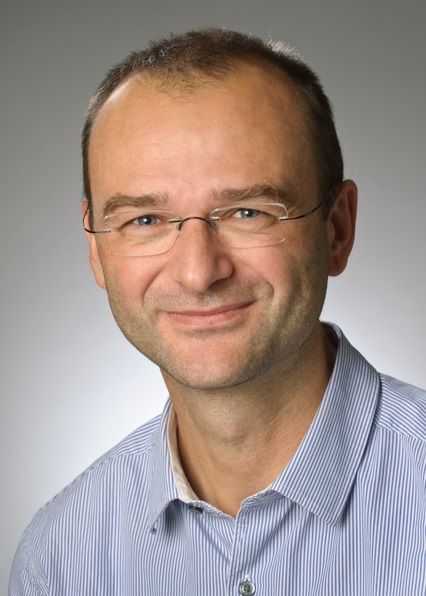
Prof. Dr. med. Tobias Moser
Prof. Dr. med. Tobias Moser is a specialist in otology, hearing researcher, and neuroscientist at the Ear, Nose, and Throat Clinic at the University of Göttingen. He grew up in Görlitz (Saxony) and studied medicine at the Universities of Leipzig and Jena/Erfurt from 1988 to 1994. In 1995, he received his doctorate from the University of Jena for his thesis on neurosecretion, which he completed at the MPI for Biophysical Chemistry in Göttingen under Nobel Prize winner Prof. Dr. Erwin Neher. He continued to work there as a research assistant until 1997. He then worked as an assistant physician under Prof. Dr. Wolfgang Steiner in the Department of Otolaryngology (ENT) in Göttingen. In 2002, he passed his ENT specialist examination and received his teaching qualification in 2003. In 2005, the University Medical Center Göttingen appointed him W2 professor and in 2007 W3 professor of auditory neuroscience.
Since 2015, he has headed the newly founded Institute for Neuroscience-Based Hearing Research at Göttingen University Medical Center and also leads research groups at the German Primate Center and the Max Planck Institute for Biophysical Chemistry. His scientific interests include neurosensory science and neuroscience-based hearing research, biophysics, optogenetics, and neuroprosthetics. Tobias Moser has published over 80 scientific articles, given numerous lectures at national and international conferences, and organized scientific meetings. In 2015, he received the Leibniz Prize from the German Research Foundation and a highly endowed research award from the European Research Council, and was appointed Max Planck Fellow of the Max Planck Society.
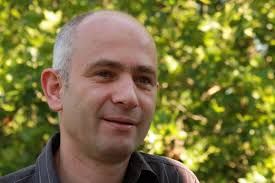
Prof. Dr. Stefan Rotter
stefan.rotter@biologie.uni-freiburg.de
Stefan Rotter is Professor of Computational Neuroscience at the Faculty of Biology at the University of Freiburg. He is currently Executive Director of the Bernstein Center Freiburg, an interdisciplinary research facility at the university, and a member of the board of the BrainLinks-BrainTools Cluster of Excellence. He holds a degree in mathematics, a doctorate in physics, and a postdoctoral qualification in neurobiology/biophysics. He leads an interdisciplinary working group of physicists, mathematicians, biologists, and engineers who, in close cooperation with colleagues working experimentally, investigate the properties of dynamic networks in the brain. The group's range of methods includes mathematical modeling of neurobiological structures and processes, numerical simulation of neural networks using high-performance computing methods, and advanced analysis of neurobiological data.
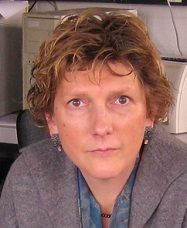
Prof. Dr. Petra Wahle
Prof. Dr. Petra Wahle has headed the Developmental Neurobiology Working Group at the Faculty of Biology and Biotechnology at Ruhr University Bochum since 1996. She studied biology in Göttingen and received her doctorate in 1987 with a thesis at the MPI for Biophysical Chemistry in the department of Prof. Otto Creutzfeldt at the University of Göttingen. This was followed by postdoctoral stays (Otto Hahn Fellowship of the MPG) at Rockefeller University, New York, and Yale University, New Haven, USA, as well as research stays in La Laguna, Spain, and Pisa, Italy. In 1990, she began leading her own group at the MPI in Göttingen and moved to Bochum in 1992 with a Heisenberg Fellowship from the DFG (1992-1996) to the Chair of General Zoology and Neurobiology. There, she completed her habilitation in zoology and neurobiology in 1994. Her scientific focus is on the ontogenesis of the cerebral Cortex and the role of neural activity and neurotrophic factors in morphological and neurochemical differentiation processes, particularly of cortical interneurons.
Cortex
cortex cerebri
Cortex refers to a collection of neurons, typically in the form of a thin surface. However, it usually refers to the cerebral cortex, the outermost layer of the cerebrum. It is 2.5 mm to 5 mm thick and rich in nerve cells. The cerebral cortex is heavily folded, comparable to a handkerchief in a cup. This creates numerous convolutions (gyri), fissures (fissurae), and sulci. Unfolded, the surface area of the cortex is approximately 1,800cm².
Interneurons
A small multipolar neuron that is neither sensory nor motor, connected between two other neurons and conducting impulses from one nerve cell to another. In the central nervous system, interneurons are mostly inhibitory and use the neurotransmitters GABA and glycine.
New Media Advisory Board
Ensuring the highest quality in technology, design, and operation – that is the responsibility of the New Media Advisory Board, our professionals in all things World Wide Web. Their expertise and ongoing advice ensure that the technology used and the artistic and creative signature of thebrain.info are both innovative and appropriate. The New Media Advisory Board includes:
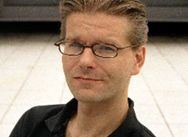
Prof. Bernd Lintermann
Chair
linter@zkm.de
Bernd Lintermann has been head of the Institute for Visual Media at the ZKM | Center for Art and Media Karlsruhe since 2005 and has been teaching at the Karlsruhe University of Arts and Design since 2006. As an artist and scientist, he works in the field of real-time computer graphics with a special focus on interactive and generative systems. Bernd Lintermann is also co-founder of the company greenworks, which further develops his software “xfrog,” a software system for procedural modeling and animation of organic objects, which is used, for example, by companies in the entertainment industry such as Electronic Arts, Lucas Digital, and Digital Domain.

Prof. Daniel Fetzner
Professor of Media Design and Theory
fetzner@metaspace.de
Daniel Fetzner, professor of media design and theory in Furtwangen since 2002, accepted a professorship in Cairo in 2009 for reasons of neural Plasticity. He is interested in embodied forms of Memory and has been teaching artistic research at Offenburg University of Applied Sciences since 2014. http://www.metaspace.de
Plasticity
Neuroplasticity
The term neuroplasticity describes the ability of synapses, nerve cells, and entire areas of the brain to change structurally and functionally depending on the degree to which they are used. Synaptic plasticity refers to the adaptation of the signal transmission strength of synapses to the frequency and intensity of incoming stimuli, for example in the form of long-term potentiation or depression. In addition, the size, interconnection, and activity patterns of different areas of the brain also change depending on their use. This phenomenon is referred to as cortical plasticity when it specifically affects the cortex.
Memory
Memory is a generic term for all types of information storage in the organism. In addition to pure retention, this also includes the absorption of information, its organization, and retrieval.
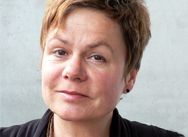
Prof. Sabine Hirtes
Professor of Audiovisual Post-Production and Visual Effects
sabine.hirtes@fh-offenburg.de
Prof. Sabine Hirtes has been teaching audiovisual post-production and 2D/3D VFX at Offenburg University of Applied Sciences since 2010.
After completing her studies in visual communication at the Aachen University of Applied Sciences, she worked in design and education with digital media in print and moving images, focusing on computer animation and VFX in various companies, studios, and schools in Germany and abroad, at the Film Academy Baden-Württemberg, and at the ZKM | Center for Art and Media Karlsruhe.

Kurt Jansson
The question of the connection between consciousness and being preoccupied Kurt Jansson even during his sociology studies. He has been involved with German Wikipedia since 2001 and was the project's spokesperson for many years. Together with others, he founded the Wikimedia Germany association in 2004 and was its chairman for five years. He has been working for Der Spiegel since 2008.
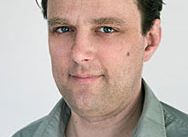
Dirk Lüsebrink
He was involved in founding ART+COM while still studying computer science. Since the late 1980s, he has been working on technical concepts for and the realization of media installations and spaces. Dirk Lüsebrink is a co-founder of other companies specializing in 3D visualization and IT development. After a break, during which he primarily developed web applications, he returned to ART+COM in 2008 as head of “Mobile Platforms and Telecommunications.” In March 2011, he was appointed to the management board and is actively involved in our projects in his role as head of “Development and Research.” By now he works at VERTAMA GmbH.
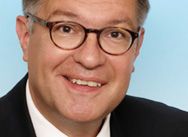
Prof. Dr. Rupert Vogel
rv@vogel-partner.eu
Rupert Vogel is a lawyer, specialist in IT law, and partner at the law firm Vogel & Partner in Karlsruhe, which specializes in IT law. He teaches copyright law at the University of Mannheim and is managing director of the German Society for Law and Information Technology (DGRI). As a long-standing legal advisor to the ZKM | Center for Art and Media Karlsruhe and other cultural institutions and artists, he has particular expertise in issues at the intersection of copyright law, art law, and new media law.