The Brain Stem
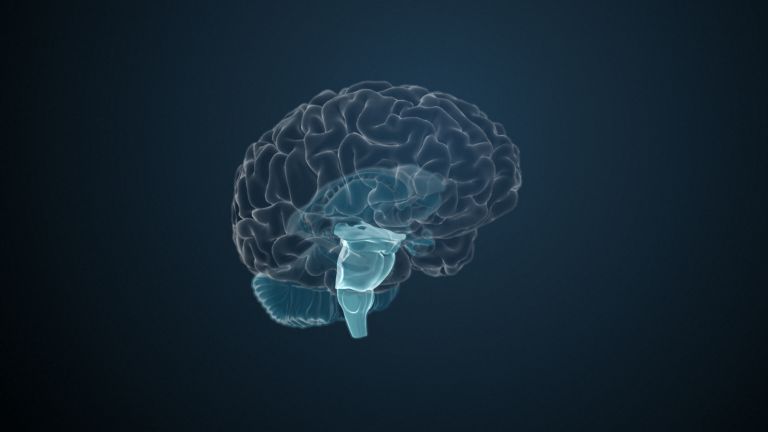
It is about the size of a thumb and quite inconspicuous, but the brain stem is vital for survival: whether it is circulation, breathing, or sleep, it is the brain stem that controls and regulates the body's vital systems.
Scientific support: Prof. Dr. Jochen F. Staiger
Published: 05.08.2025
Difficulty: intermediate
ven though the human brain's impressive achievements are mainly performed elsewhere, survival would be impossible without the Brain stem Not only is it the hub that connects the parts of the central nervous system, but it also controls numerous unconscious but vital processes in the body.
Brain stem
truncus cerebri
The "trunk" of the brain, to which all other brain structures are "attached," so to speak. From bottom to top, it comprises the medulla oblongata, the pons, and the mesencephalon. It transitions into the spinal cord below. It is a center for vital functions such as breathing and heartbeat and contains ascending and descending pathways between the cerebrum, cerebellum, and spinal cord.
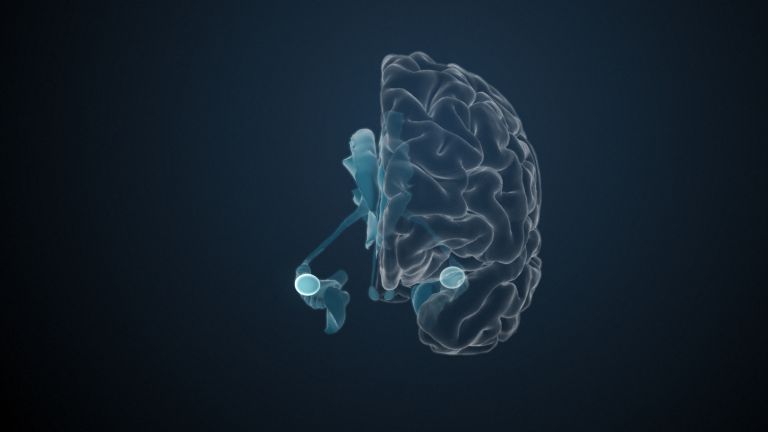
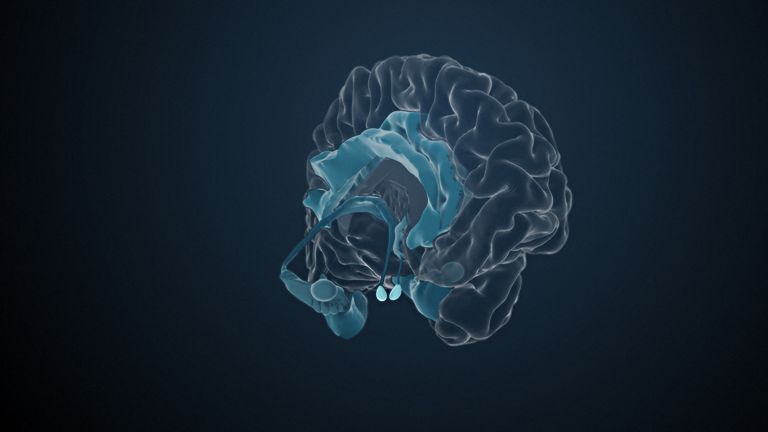
In addition to the Spinal nerves of the spine, there are twelve cranial nerves that emerge directly from the brain. They are numbered with Roman numerals and primarily supply the head and neck area. The olfactory nerve (I), for example, is the nerve of smell, while the Optic nerve (II) transmits signals from the Retina to the metathalamus. Basically, the optic nerve is part of the brain, just like the retina, which is why the I and II cranial nerves are also referred to as pseudo-cranial nerves. Apart from these two, all other cranial nerves originate in the brain stem, supplying the eyes (III, IV, VI), the throat (IX, X), certain neck muscles (XI), and the tongue (XII) with motor impulses, provide touch and pain sensations (V), balance and hearing perceptions (VIII), and control Facial expressions (VII). Only the vagus nerve (X) extends beyond the neck into the internal organs of the body.
The Cranial nerve nuclei belong to the cranial nerves. The relationship between cranial nerves and cranial nerve nuclei is very complex: sometimes there is one Nucleus per nerve, sometimes there are several, and sometimes one nucleus supplies several nerves. This topic is not very popular with anatomy students.
Spinal nerves
nervus spinalis
Spinal nerves are the nerves that emerge from the spinal cord. The cell bodies of their neurons are located in the gray matter of the spinal cord.
cranial
A positional term – cranial means "towards the head." In relation to the nervous system, it refers to a direction along the neural axis, i.e., forward.
In animals (without upright gait), the designation is simpler, as it always means forward. Due to the upright gait of humans, the brain bends in relation to the spinal cord, where cranial also means "upward."
Optic nerve
nervus opticus
The axons (long fiber-like extensions) of the retinal ganglion cells form the optic nerve, which leaves the eye at the back of the optic disc. It comprises approximately one million axons and has a diameter of approximately seven millimeters.
Retina
The retina is the inner layer of the eye covered with pigment epithelium. The retina is characterized by an inverse (reversed) arrangement: light must first pass through several layers before it hits the photoreceptors (cones and rods). The signals from the photoreceptors are transmitted via the optic nerve to the processing areas of the brain. The reason for the inverse arrangement is the evolutionary development of the retina, which is a protrusion of the brain.
The retina is approximately 0.2 to 0.5 mm thick.
Facial expressions
Five muscle groups control the visible movements on the surface of our faces – and this applies to everyone in the world. Neuroscientists emphasize universal, evolutionarily anchored reactions as the reason for this. For this reason, the basic emotions of fear, anger, disgust, sadness, surprise, and joy leave similar traces on the face everywhere, which we can usually identify reliably even in strangers.
Cranial nerve
A group of 12 pairs of nerves that originate directly in the brain, mostly in the brain stem. They are numbered with Roman numerals (I–XII). Unlike the rest, the first and second cranial nerves (olfactory and optic nerves) are not part of the peripheral nervous system, but rather the central nervous system.
Nucleus
In cell biology, the nucleus in a cell is the cell nucleus, which contains the chromosomes, among other things. In neuroanatomy, the nucleus in the nervous system refers to a collection of cell bodies – known as gray matter in the central nervous system and ganglia in the peripheral nervous system.
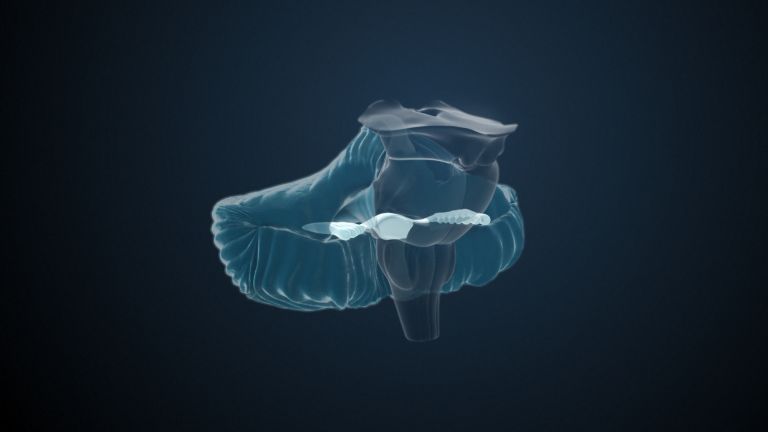
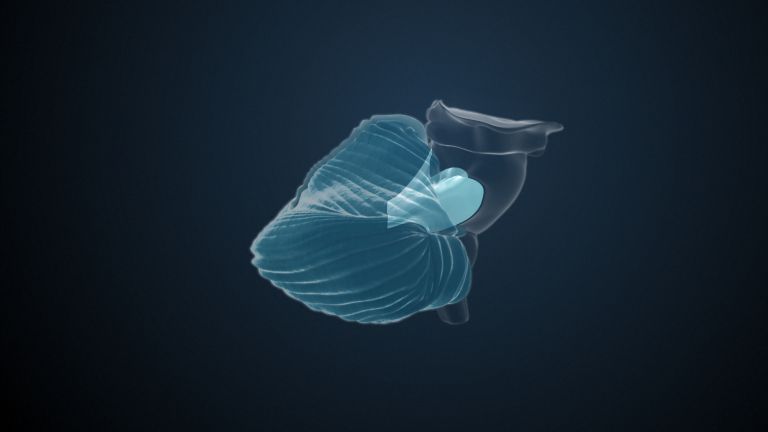
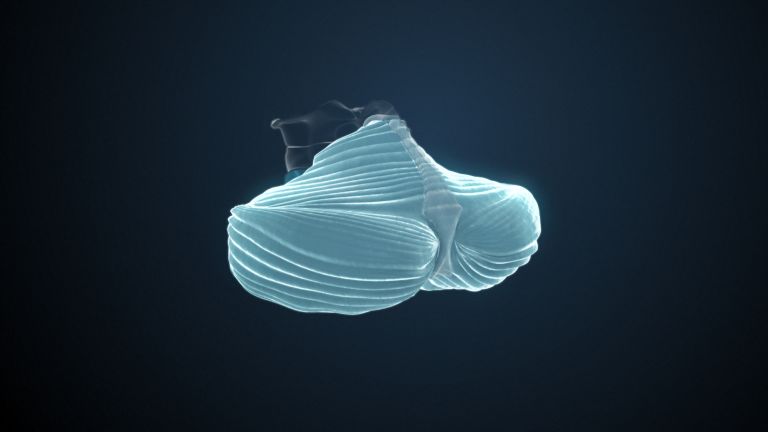
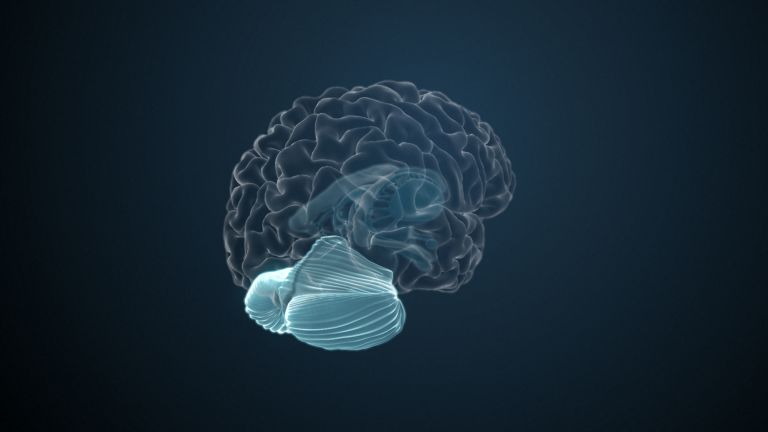
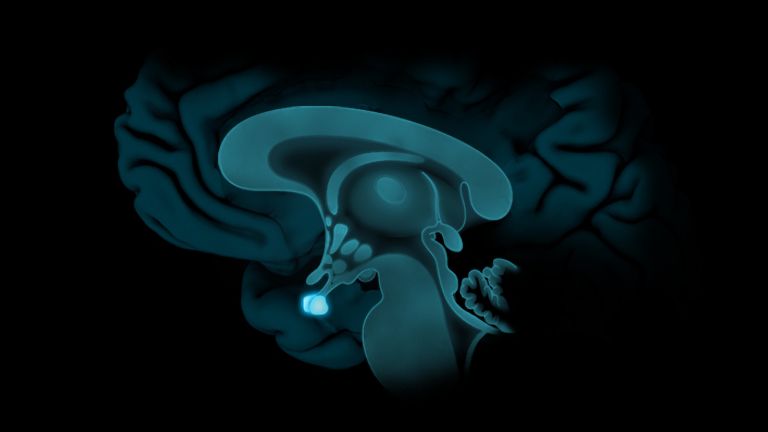
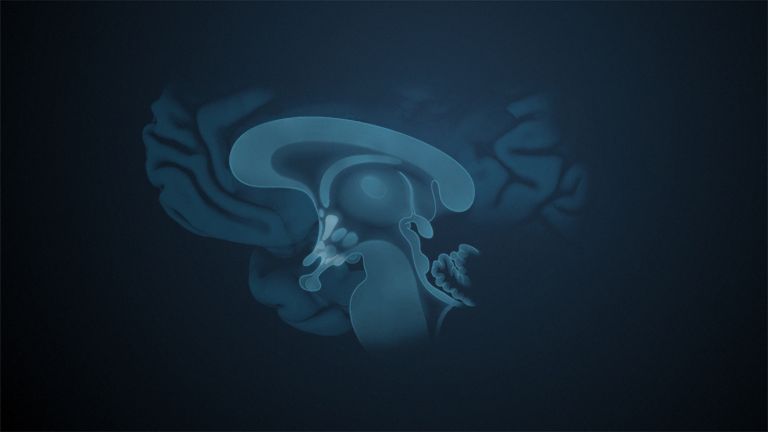
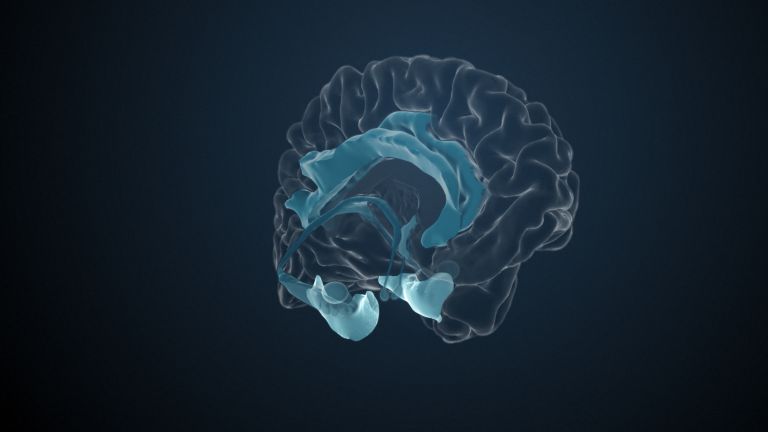
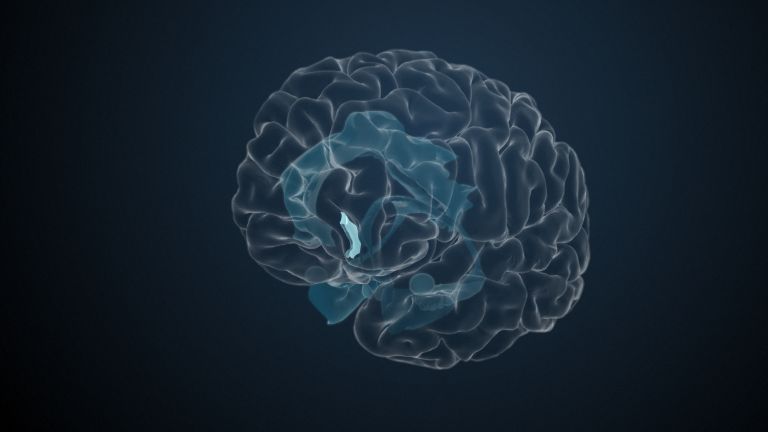
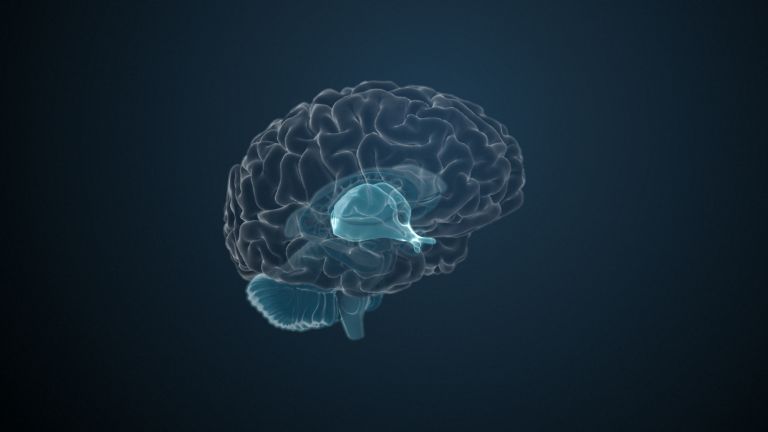
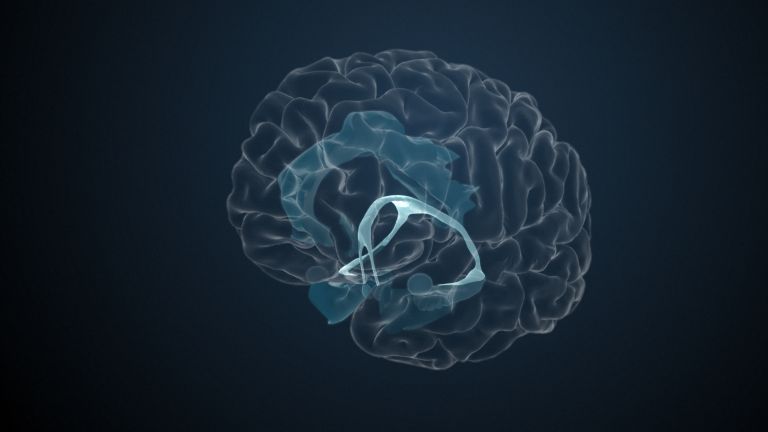
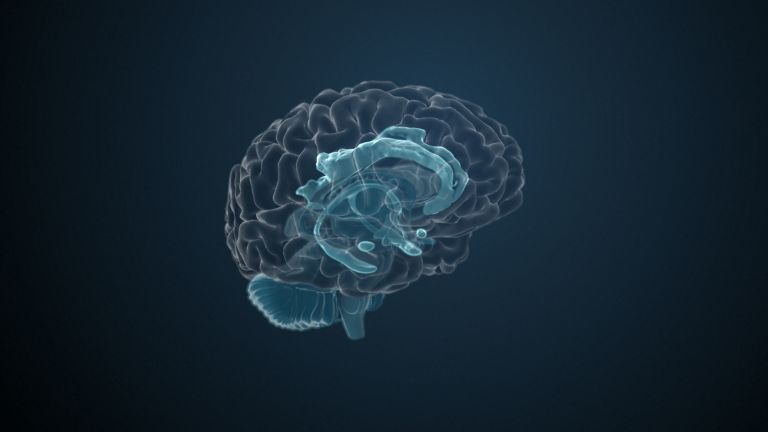
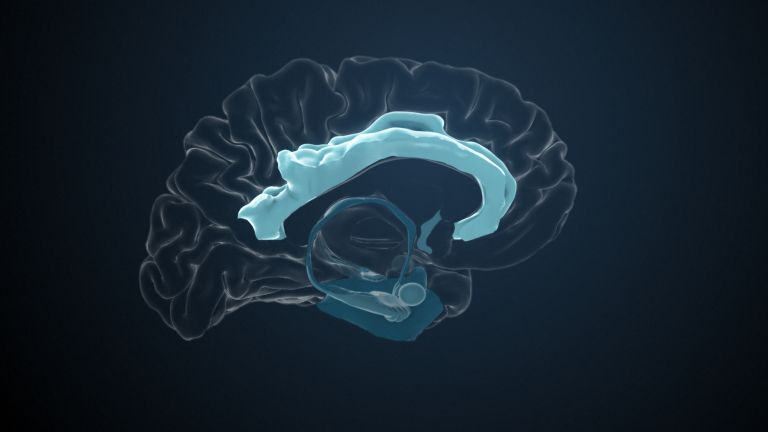
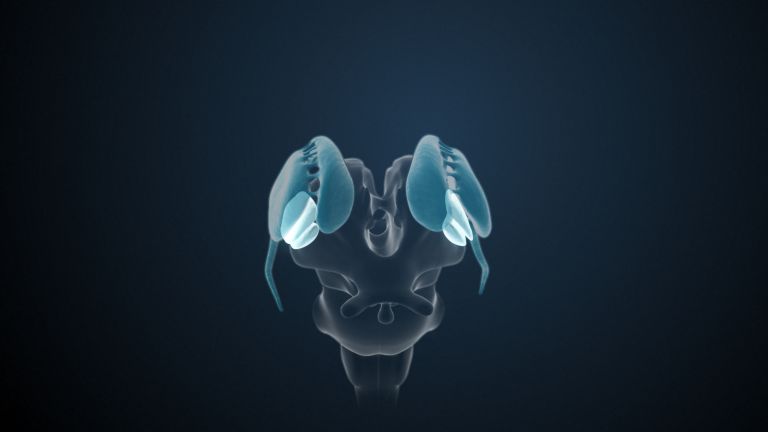
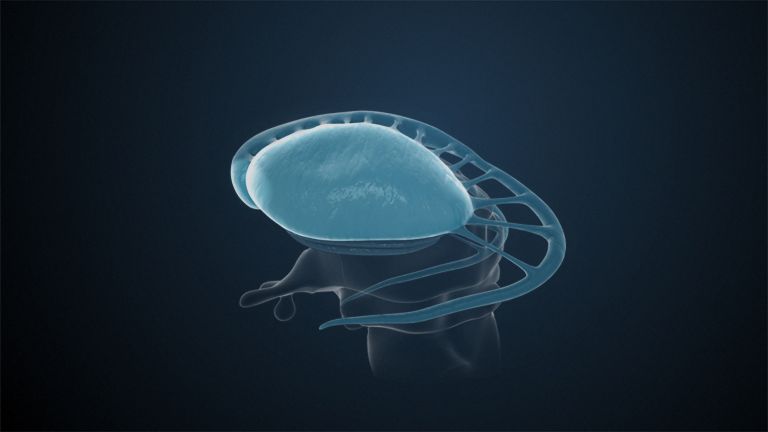
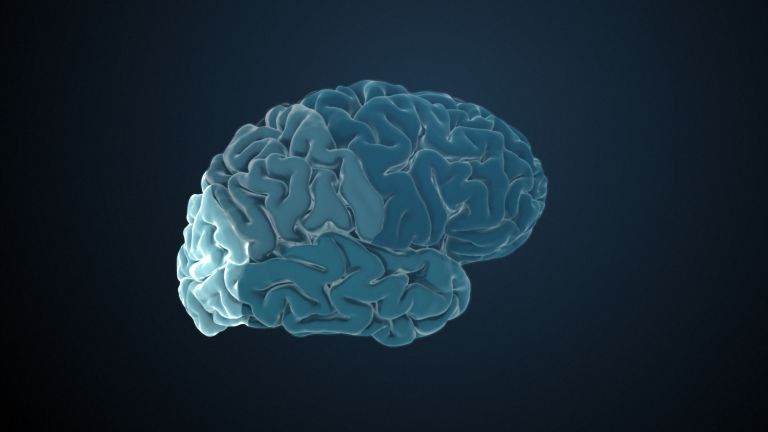
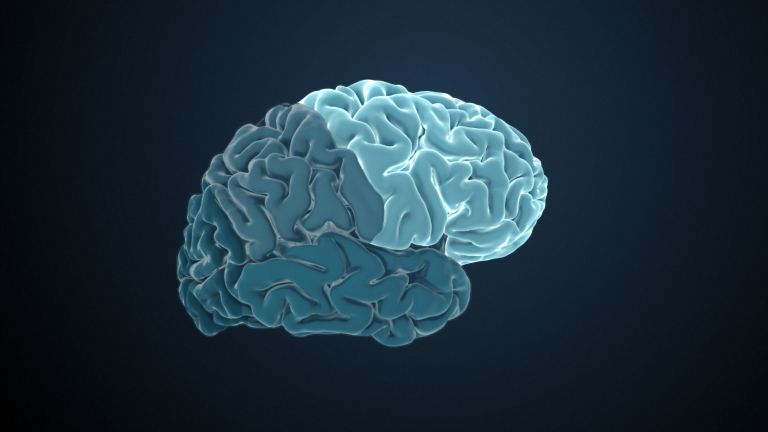
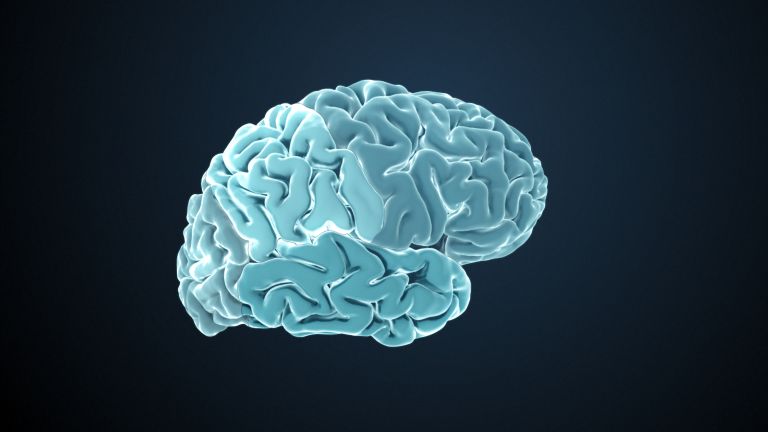
The brain stem, the truncus cerebri, is only about the size of a thumb, but the comparison with a tree trunk is quite apt: just as the trunk is often barely visible beneath all the foliage, the Brain stem is also partially concealed by the Cerebrum and Cerebellum. And like a tree trunk, it also has a supporting function, because the brain stem connects the parts of the central nervous system: the Midbrain and cerebrum connect at the top, and the cerebellum connects at the back.
At the bottom, the brain stem merges seamlessly into the Spinal cord This lowest area is called the medulla oblongata, or elongated spinal cord, and as the name suggests, it is difficult to draw a clear boundary. Some anatomists see it where the first spinal nerve branches off. Others draw the line slightly above, at the “pyramid junction”. There, many nerve pathways coming from the left Hemisphere of the brain switch to the right and vice versa.
In terms of evolutionary development, the brain stem is the oldest part of the brain, and so the differences between humans and animals are comparatively small. Its functions are manifold – as inconspicuous as it may seem, the brain stem is central to the functioning of the brain and the entire organism. Frankfurt anatomist Helmut Wicht even refers to it as the “technical center” of the brain.
Brain stem
truncus cerebri
The "trunk" of the brain, to which all other brain structures are "attached," so to speak. From bottom to top, it comprises the medulla oblongata, the pons, and the mesencephalon. It transitions into the spinal cord below. It is a center for vital functions such as breathing and heartbeat and contains ascending and descending pathways between the cerebrum, cerebellum, and spinal cord.
Cerebrum
telencephalon
The cerebrum comprises the cerebral cortex (gray matter), the nerve fibers (white matter), and the basal ganglia. It is the largest part of the brain. The cortex can be divided into four cortical areas: the temporal lobe, frontal lobe, occipital lobe, and parietal lobe.
Its functions include the coordination of perception, motivation, learning, and thinking.
Cerebellum
Cerebellum
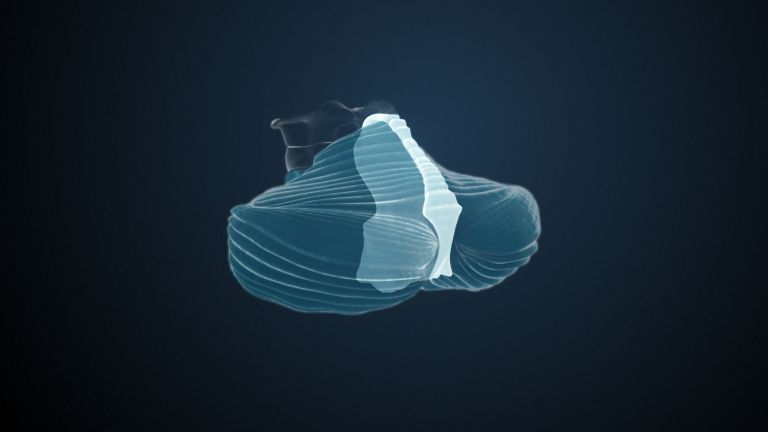
The cerebellum is an important part of the brain, located at the back of the brain stem and below the occipital lobe. It consists of two cerebellar hemispheres covered by the cerebellar cortex and plays an important role in motor processes, among other things. It develops from the rhombencephalon.
Midbrain
mecencephalon
The midbrain is the uppermost section of the brain stem. Its regions are located around the aqueduct, a canal filled with cerebrospinal fluid. Prominent structures include the tectum, tegmentum, and substantia nigra.
Spinal cord
medulla spinalis
The spinal cord is the part of the central nervous system located in the spine. It contains both the white matter of the nerve fibers and the gray matter of the cell nuclei. Simple reflexes such as the knee-jerk reflex are already processed here, as sensory and motor neurons are directly connected. The spinal cord is divided into the cervical, thoracic, lumbar, and sacral spinal cord.
Hemisphere
The cerebrum and cerebellum each consist of two halves – the right and left hemispheres. In the cerebrum, they are connected by three pathways (commissures). The largest commissure is the corpus callosum.
Composition and structure
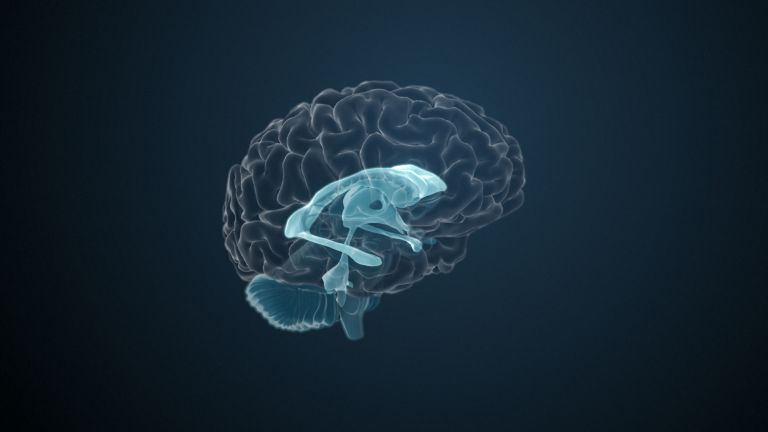
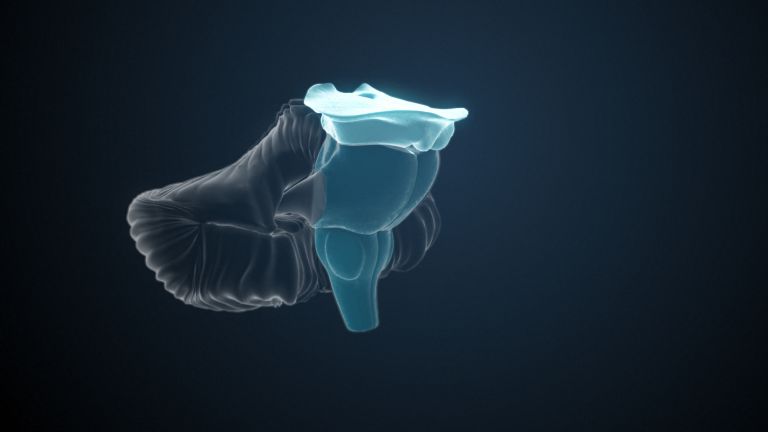
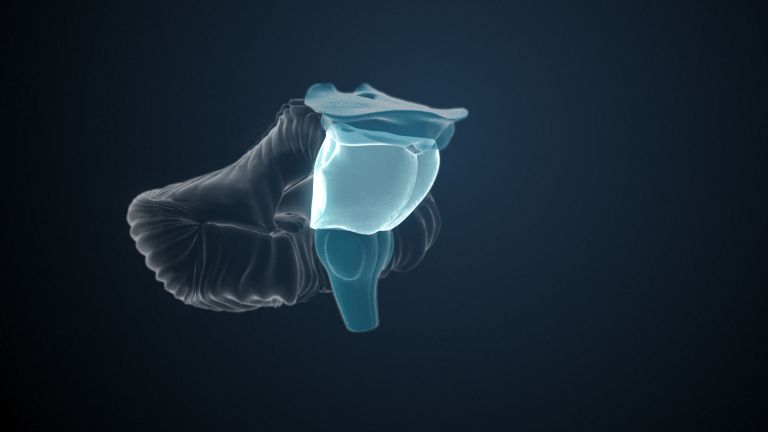
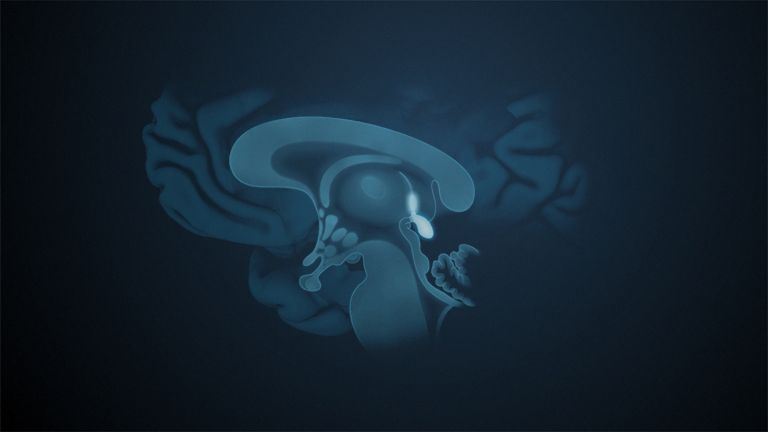
And indeed, if you take a closer look at the brain stem, this image of a complex technical center with its many cables and switch cabinets fits very well. It is difficult for the untrained observer to discern any order. However, anatomists distinguish between three main parts: the aforementioned extended Spinal cord (also known as the myelencephalon), the Pons (part of the metencephalon), and the Midbrain (mesencephalon). They all consist of diverse substructures with names that sometimes sound poetic, such as cap, olive kernel, or cerebral peduncle.
Similar diversity prevails at the microscopic level. Numerous nerve pathways run through the brain stem, including many fiber tracts that conduct sensory signals to the Diencephalon and motor signals from the Cortex to the spinal cord.
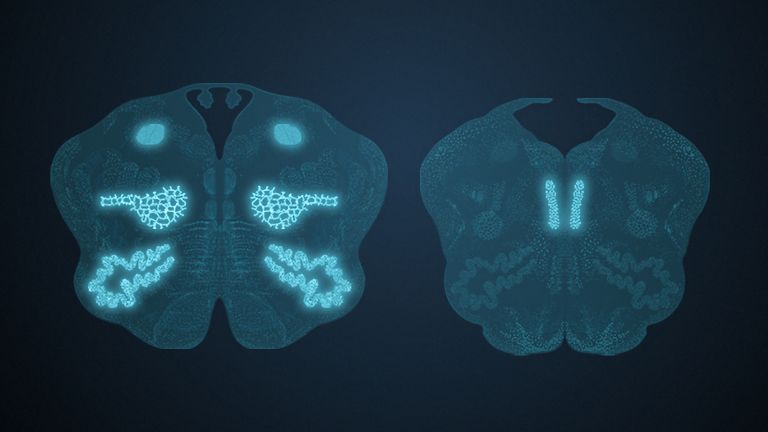
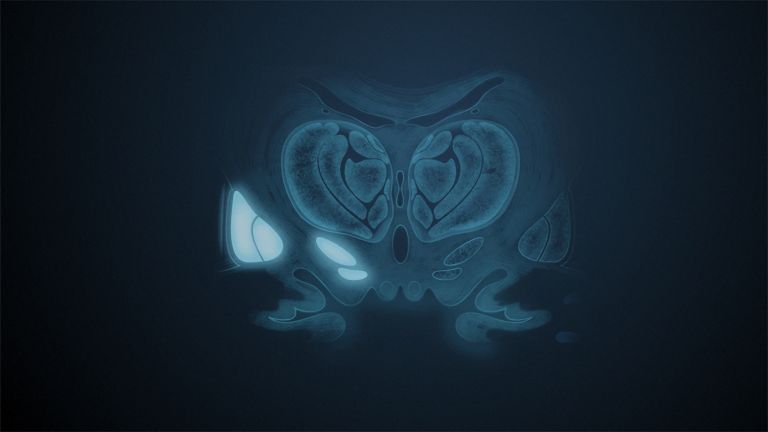
In addition to the reticular formation, which runs through the entire brain stem, there are discrete accumulations of Gray matter at certain points, known as nuclei, which consist of the cell bodies of neurons. Some of these act as switching stations, while others are responsible for controlling many bodily functions. Examples of such nuclei would be the red nucleus, which is conspicuous due to its high iron content, or the substantia nigra, which is darkly colored by the body pigment melanin, both of which play an important role in motor function.
Spinal cord
medulla spinalis
The spinal cord is the part of the central nervous system located in the spine. It contains both the white matter of the nerve fibers and the gray matter of the cell nuclei. Simple reflexes such as the knee-jerk reflex are already processed here, as sensory and motor neurons are directly connected. The spinal cord is divided into the cervical, thoracic, lumbar, and sacral spinal cord.
Pons
pons
Area in the brain stem between the medulla oblongata and the mesencephalon. It acts as a switching station for many nerve pathways between the brain and spinal cord and contains numerous nuclei, including cranial nerves and those involved in controlling motor function in cooperation with the cerebellum.
Midbrain
mecencephalon
The midbrain is the uppermost section of the brain stem. Its regions are located around the aqueduct, a canal filled with cerebrospinal fluid. Prominent structures include the tectum, tegmentum, and substantia nigra.
Diencephalon
The diencephalon (midbrain) includes the thalamus and hypothalamus, among other structures. Together with the cerebrum, it forms the forebrain. The diencephalon contains centers for sensory perception, emotion, and the control of vital functions such as hunger and thirst.
Cortex
cortex cerebri
Cortex refers to a collection of neurons, typically in the form of a thin surface. However, it usually refers to the cerebral cortex, the outermost layer of the cerebrum. It is 2.5 mm to 5 mm thick and rich in nerve cells. The cerebral cortex is heavily folded, comparable to a handkerchief in a cup. This creates numerous convolutions (gyri), fissures (fissurae), and sulci. Unfolded, the surface area of the cortex is approximately 1,800cm².
Gray matter
Grey matter refers to a collection of nerve cell bodies, such as those found in nuclei or in the cortex.
Tasks and risks
The Brain stem controls blood pressure and heart rate, as well as breathing and sweating, in the service of the entire organism. It also regulates waking and sleeping in detail, coordinating how active the brain is at any given moment and which phase of sleep we are in. And it acts as a crucial control center for some vital reflexes such as swallowing, vomiting, and coughing.
The central pacemaker for these numerous vital functions is the reticular formation, whose network-like structure extends throughout the entire brain stem. Particularly prominent here are the raphe nuclei, distributed throughout the reticular system, and projecting the Neurotransmitter Serotonin widely into the brain. Last but not least, the cerebral trunk contains the nuclei of ten of the twelve cranial nerves, which transmit Taste and hearing impressions to the brain, control the Eye and facial muscles, and regulate balance, for example. (See Detail on Demand)
When many functions converge, failure can cause great damage. Limited damage to the brain stem – for example, due to stroke or inflammation – can lead to paralysis or sensory disturbances in certain areas of the body, dizziness, or uncontrolled tremors. It becomes fatal when swelling stops blood flow, which can happen even after a severe concussion. When the brain stem fails, the vital bodily functions it controls also fail, which can lead to cardiac or respiratory arrest. Conversely, parts of the brain stem maintain vital functions in patients in a persistent vegetative state, while the Cerebrum – and with it all consciousness – may be severely damaged.
Brain stem
truncus cerebri
The "trunk" of the brain, to which all other brain structures are "attached," so to speak. From bottom to top, it comprises the medulla oblongata, the pons, and the mesencephalon. It transitions into the spinal cord below. It is a center for vital functions such as breathing and heartbeat and contains ascending and descending pathways between the cerebrum, cerebellum, and spinal cord.
Neurotransmitter
A neurotransmitter is a chemical messenger, an intermediary substance. It is released by the sender neuron at the sites of cell-cell communication and has an excitatory or inhibitory effect on the receiver neuron.
Serotonin
A neurotransmitter that acts as a messenger in the transmission of information between neurons at their synapses. It is primarily produced in the raphe nuclei of the brain stem and plays a key role in sleep and alertness, as well as emotional well-being.
cranial
A positional term – cranial means "towards the head." In relation to the nervous system, it refers to a direction along the neural axis, i.e., forward.
In animals (without upright gait), the designation is simpler, as it always means forward. Due to the upright gait of humans, the brain bends in relation to the spinal cord, where cranial also means "upward."
Taste
The sensory impression we refer to as "taste" results from the interaction between our senses of smell and taste. In terms of sensory physiology, however, "taste" is limited to the impression conveyed to us by the taste receptors on the tongue and in the surrounding mucous membranes. It is currently assumed that there are five different types of taste receptors that specialize in the taste qualities sweet, sour, salty, bitter, and umami. In 2005, scientists also identified possible taste receptors for fat, whose role as a distinct taste quality is still being investigated.
Eye
bulbus oculi
The eye is the sensory organ responsible for perceiving light stimuli – electromagnetic radiation within a specific frequency range. The light visible to humans lies in the range between 380 and 780 nanometers.
stroke
Cerebral apoplexy
In a stroke, the brain or parts of it are no longer supplied with sufficient blood, which impairs the supply of oxygen and glucose. The most common cause is a blockage in an artery (ischemic stroke), less commonly a hemorrhage (hemorrhagic stroke). Typical symptoms include sudden visual disturbances, dizziness, paralysis, speech or sensory disturbances. Long-term consequences can include various sensory, motor, and cognitive impairments.
Cerebrum
telencephalon
The cerebrum comprises the cerebral cortex (gray matter), the nerve fibers (white matter), and the basal ganglia. It is the largest part of the brain. The cortex can be divided into four cortical areas: the temporal lobe, frontal lobe, occipital lobe, and parietal lobe.
Its functions include the coordination of perception, motivation, learning, and thinking.
Published on July 26, 2011
Last updated on August 5, 2025