The Paleocortex
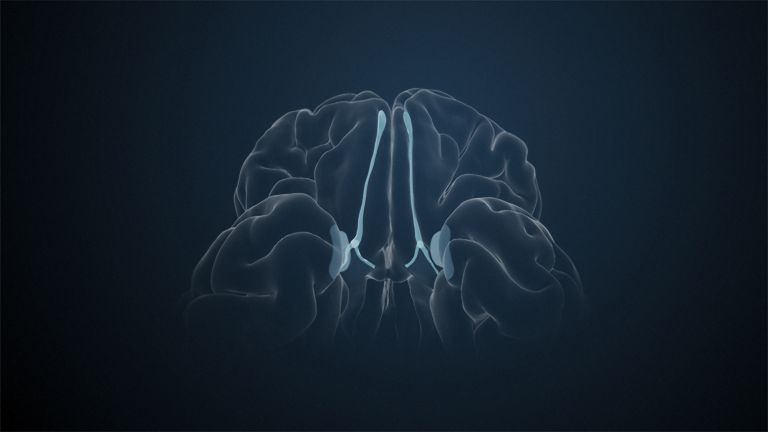
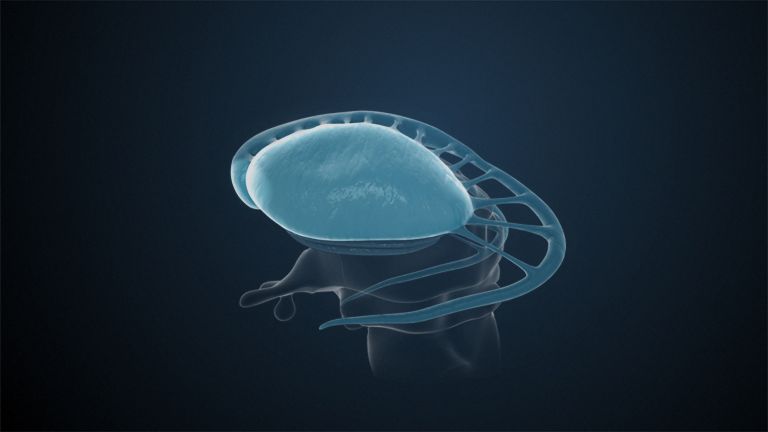
The oldest part of the cerebrum is responsible for smelling: the olfactory brain processes and discriminates between different smells. It includes the olfactory bulb, which resembles a butterfly's antennae. It also has a different structure to the rest of the cortex.
Scientific support: Dr. Björn Spittau
Published: 01.10.2025
Difficulty: intermediate
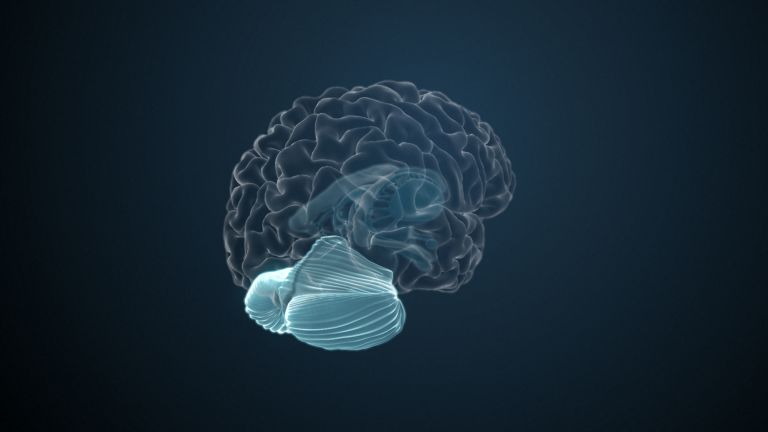
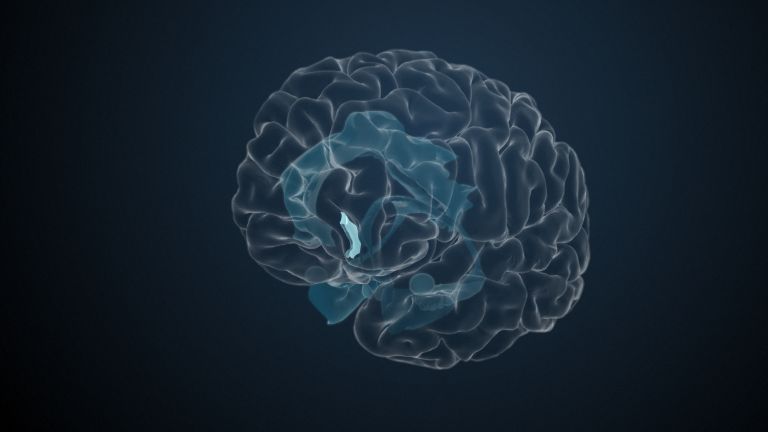
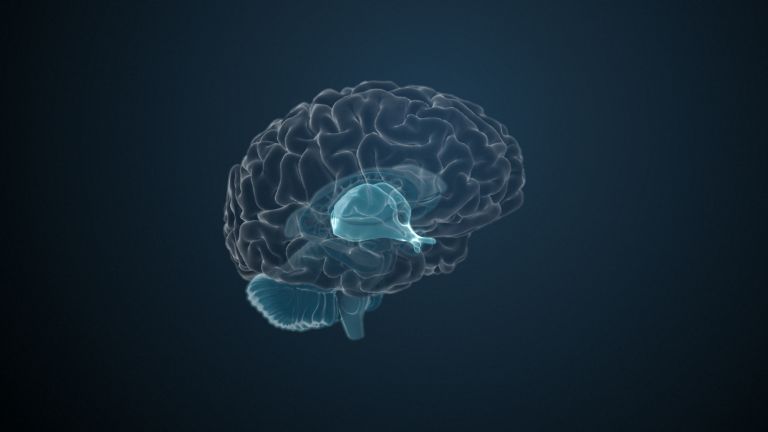
The Paleocortex is the oldest part of the Cerebrum and responsible for the sense of smell. Signals from the Receptor cells in the nasal mucosa travel via the Olfactory bulb to the primary Olfactory cortex without first being switched in the thalamus. This distinguishes the sense of smell from all other sensory impressions.
Paleocortex
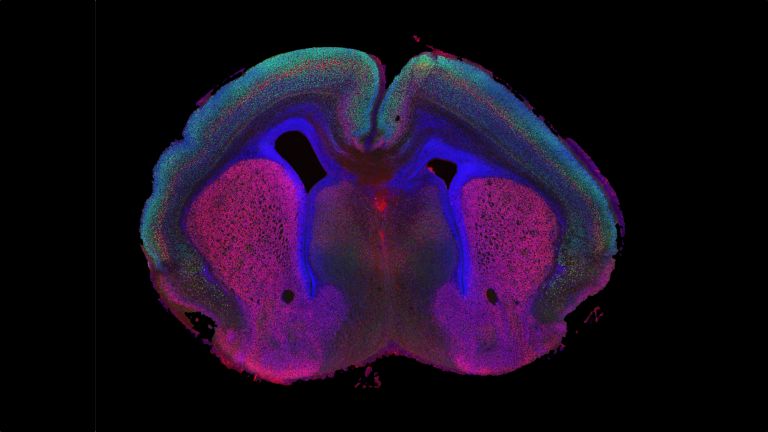
The paleocortex is a phylogenetically very old part of the telencephalon, which together with the olfactory bulb forms the olfactory brain. The paleocortex differs from the isocortex in that it does not have a six-layer structure.
Cerebrum
telencephalon
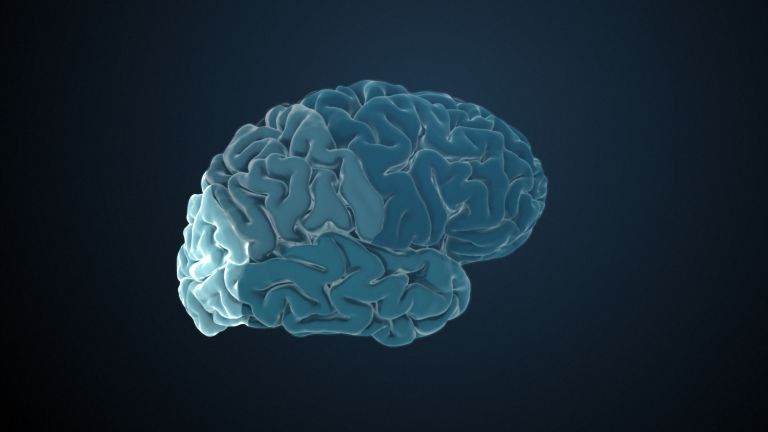
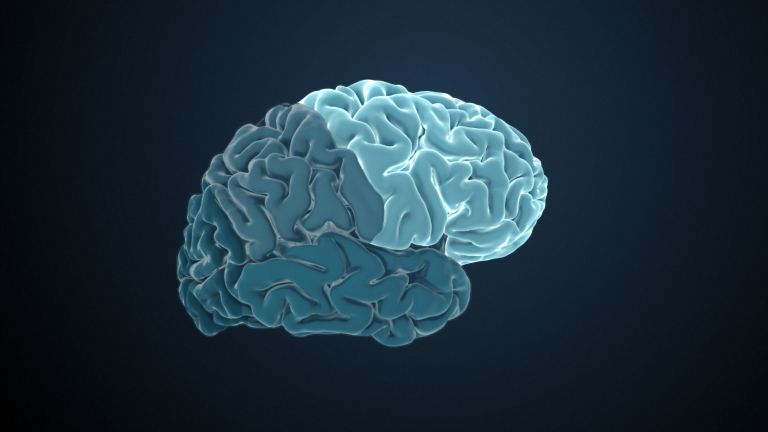
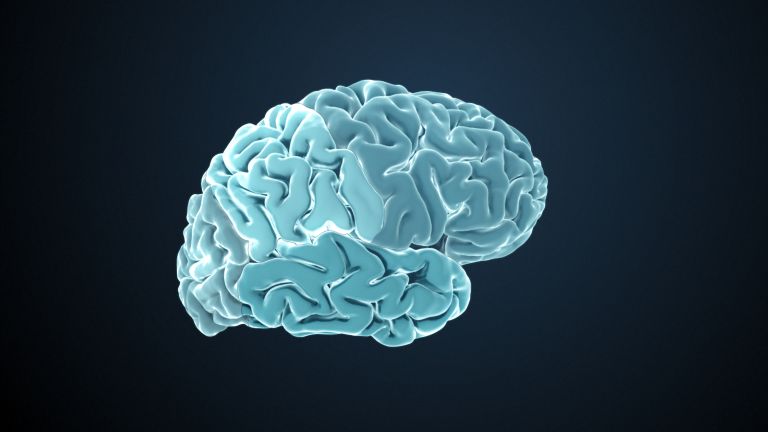
The cerebrum comprises the cerebral cortex (gray matter), the nerve fibers (white matter), and the basal ganglia. It is the largest part of the brain. The cortex can be divided into four cortical areas: the temporal lobe, frontal lobe, occipital lobe, and parietal lobe.
Its functions include the coordination of perception, motivation, learning, and thinking.
Receptor
A receptor is a protein, usually located in the cell membrane or inside the cell, that recognizes a specific external signal (e.g., a neurotransmitter, hormone, or other ligand) and causes the cell to trigger a defined response. Depending on the type of receptor, this response can be excitatory, inhibitory, or modulatory.
Olfactory bulb
bulbus olfactorius
The anterior part of the brain that transmits information from the olfactory nerves to the olfactory brain (rhinencephalon) after initial processing via the olfactory tract.
Olfactory cortex
The olfactory cortex comprises the structures of the cerebrum that are responsible for processing olfactory information. The primary olfactory cortex is the prepiriform cortex, an evolutionarily ancient part of the cortex (paleocortex) with a three-layer structure.
Nevertheless, from an evolutionary perspective, smell is a highly significant source of information. This is still evident today, because the sense of smell is something special. Unlike all other sensory impressions, odor information travels directly from the Nose to the cerebral cortex without first being switched in the thalamus.
Paleocortex
The paleocortex is a phylogenetically very old part of the telencephalon, which together with the olfactory bulb forms the olfactory brain. The paleocortex differs from the isocortex in that it does not have a six-layer structure.
Cortex
cortex cerebri
Cortex refers to a collection of neurons, typically in the form of a thin surface. However, it usually refers to the cerebral cortex, the outermost layer of the cerebrum. It is 2.5 mm to 5 mm thick and rich in nerve cells. The cerebral cortex is heavily folded, comparable to a handkerchief in a cup. This creates numerous convolutions (gyri), fissures (fissurae), and sulci. Unfolded, the surface area of the cortex is approximately 1,800cm².
Neocortex
The neocortex is the phylogenetically youngest part of the cerebral cortex. Since it is structured relatively uniformly in six layers, it is also referred to as the isocortex.
Nose
nasus
The olfactory organ of vertebrates. In the nasal cavity, the air is cleaned by cilia, and in the upper area is the olfactory epithelium, which detects odors.
From the nose to the brain
When a smell enters our nose, the olfactory Receptor cells in the nasal mucosa register odor molecules. This is special in that the olfactory neurons are the only sensory neurons in mammals that are located directly on the body surface – even if this particular body surface is deep inside the Nose. They transmit the information via their axons. And these axons – perhaps reflecting their evolutionary age – are not exactly the fastest. On the contrary: of all nerve fibers, the axons of the olfactory cells, the filae olfactoria, are the slowest. But slow or not, they form the actual olfactory nerve, the nervus olfactorius. This nerve extends to the olfactory bulb, the bulbus olfactorius – a protruding, flat, oval part of the Cerebrum. Since this is the first switching station of the olfactory nerve, it can certainly be considered its Cranial nerve nucleus.
The Olfactory bulb lies on the cribriform plate of the anterior cranial fossa, so that the filae olfactoria must first wind their way through the many small holes in this bony sieve. Only then can they unite to form the nervus olfactorius. In the olfactory bulb, it forms synapses with the dendrites of the mitral cells – so named because their nerve cell bodies look like little bishop's head covering. The place of encounter – and thus of switching – is the glomeruli. How well a living being can smell is decided here: In humans, the axons of many olfactory cells end at the dendrites of a mitral cell, meaning that the information converges. This makes us microsmatics, and our sense of smell is rather moderate. In dogs, which are macrosmatics, one sensory cell reaches several mitral cells; the odor signals are therefore distributed over a large area, and the olfactory “resolution” is higher.
Receptor
A receptor is a protein, usually located in the cell membrane or inside the cell, that recognizes a specific external signal (e.g., a neurotransmitter, hormone, or other ligand) and causes the cell to trigger a defined response. Depending on the type of receptor, this response can be excitatory, inhibitory, or modulatory.
Nose
nasus
The olfactory organ of vertebrates. In the nasal cavity, the air is cleaned by cilia, and in the upper area is the olfactory epithelium, which detects odors.
Cerebrum
telencephalon
The cerebrum comprises the cerebral cortex (gray matter), the nerve fibers (white matter), and the basal ganglia. It is the largest part of the brain. The cortex can be divided into four cortical areas: the temporal lobe, frontal lobe, occipital lobe, and parietal lobe.
Its functions include the coordination of perception, motivation, learning, and thinking.
cranial
A positional term – cranial means "towards the head." In relation to the nervous system, it refers to a direction along the neural axis, i.e., forward.
In animals (without upright gait), the designation is simpler, as it always means forward. Due to the upright gait of humans, the brain bends in relation to the spinal cord, where cranial also means "upward."
Cranial nerve
A group of 12 pairs of nerves that originate directly in the brain, mostly in the brain stem. They are numbered with Roman numerals (I–XII). Unlike the rest, the first and second cranial nerves (olfactory and optic nerves) are not part of the peripheral nervous system, but rather the central nervous system.
Nucleus
In cell biology, the nucleus in a cell is the cell nucleus, which contains the chromosomes, among other things. In neuroanatomy, the nucleus in the nervous system refers to a collection of cell bodies – known as gray matter in the central nervous system and ganglia in the peripheral nervous system.
Olfactory bulb
bulbus olfactorius
The anterior part of the brain that transmits information from the olfactory nerves to the olfactory brain (rhinencephalon) after initial processing via the olfactory tract.
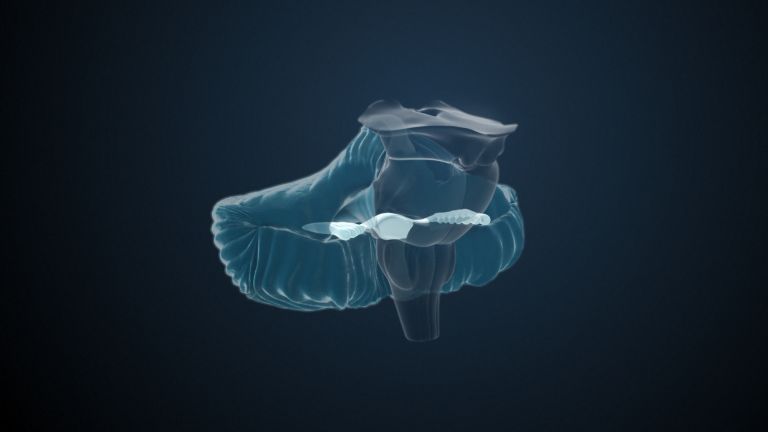
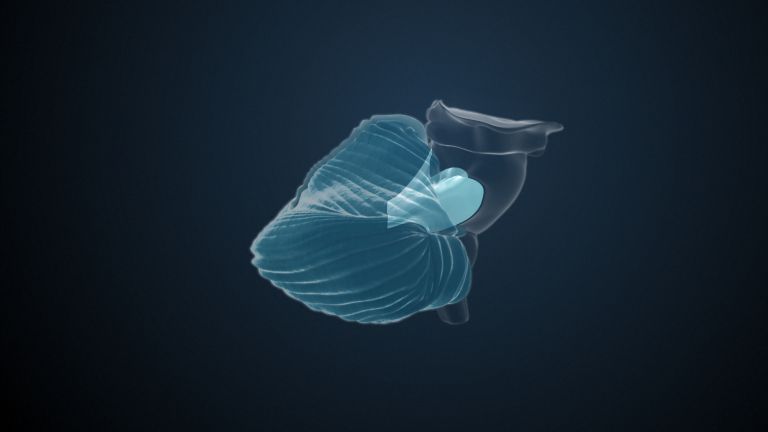
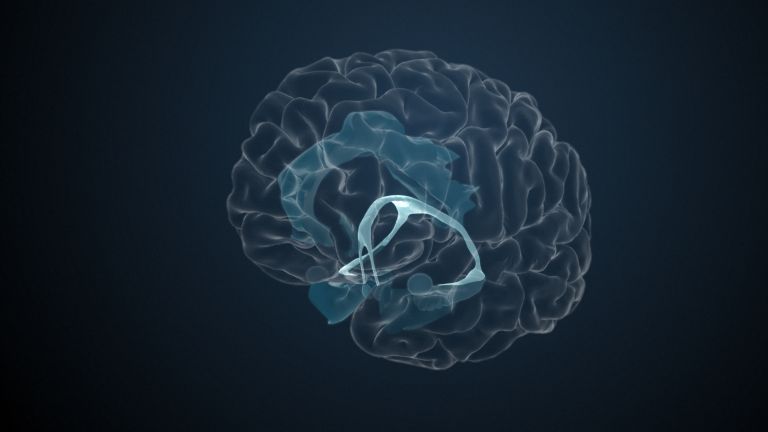
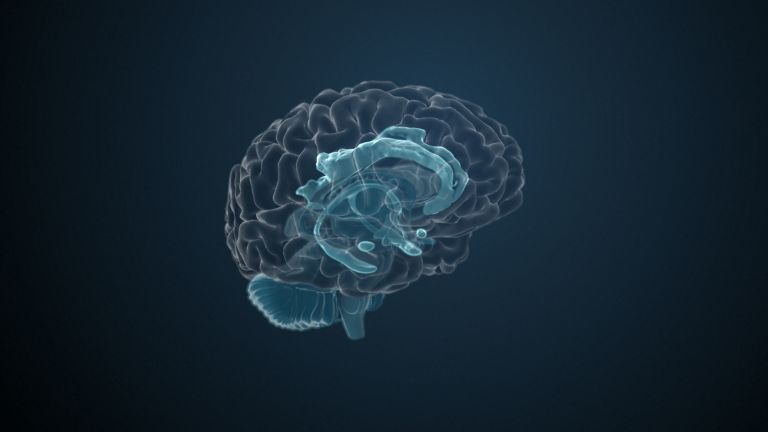
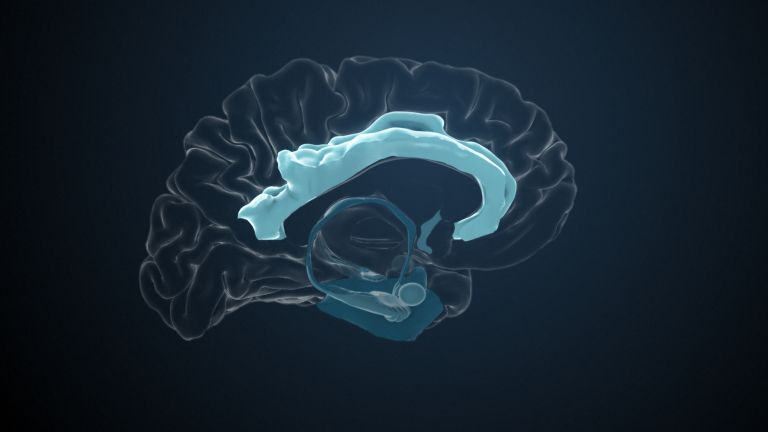
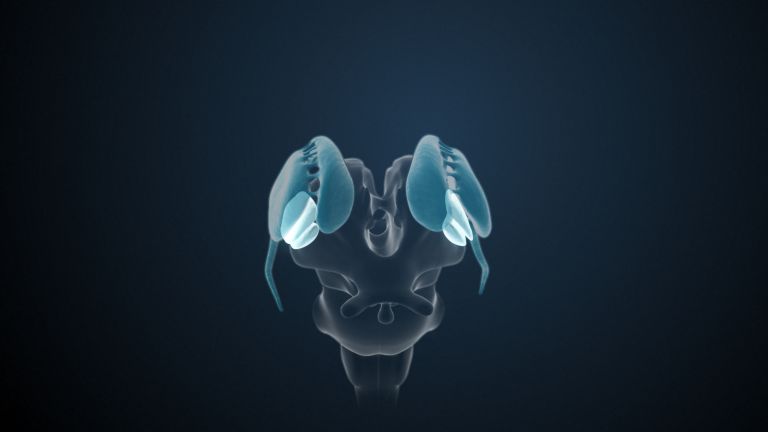
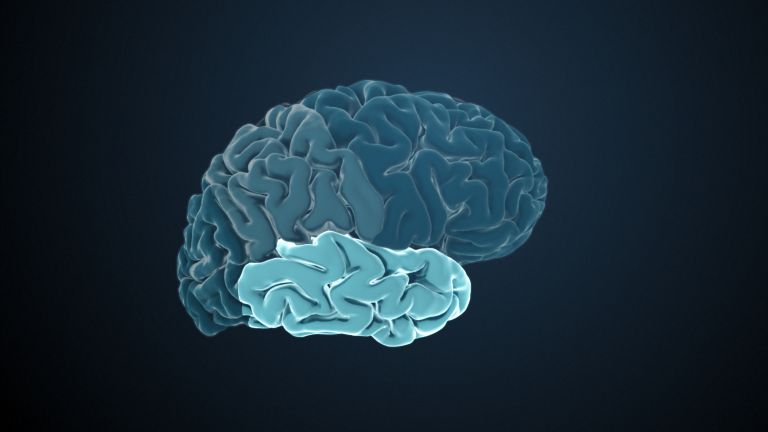
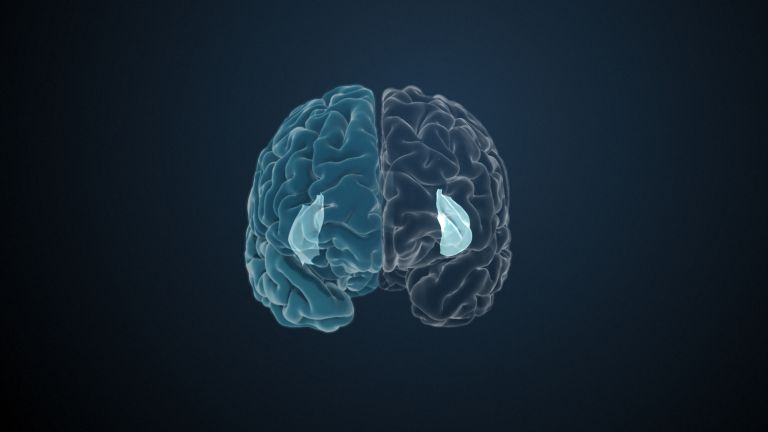
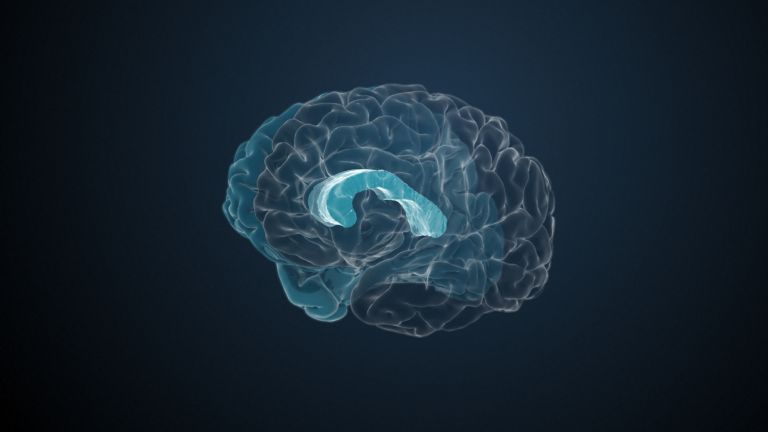
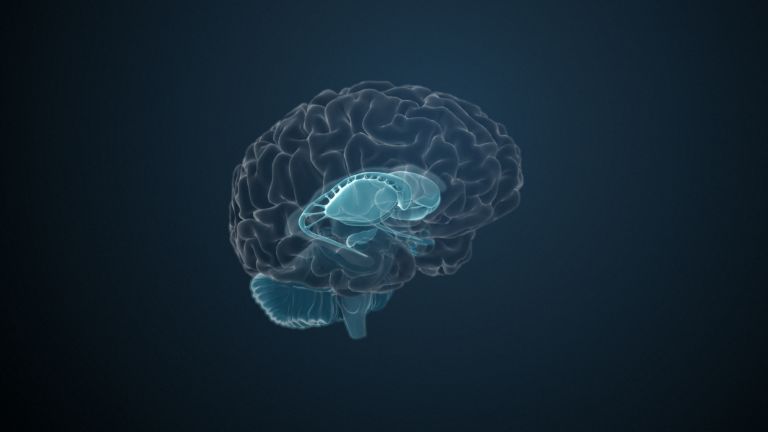
The path to the cortex
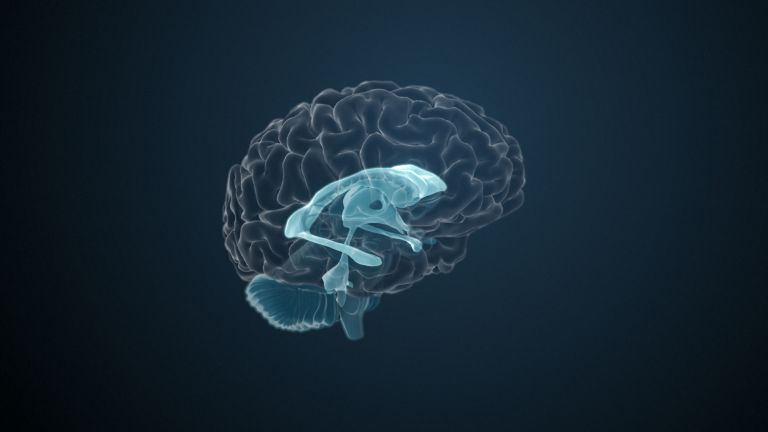
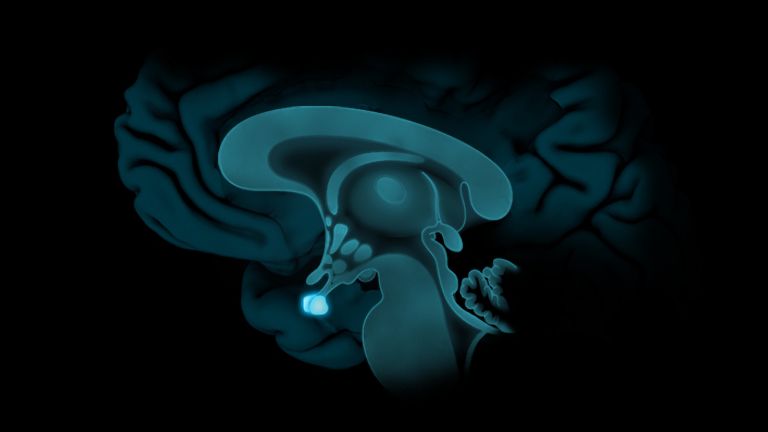
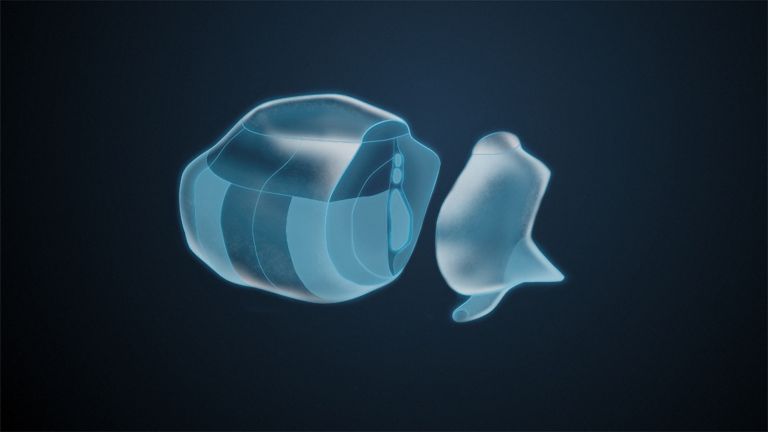
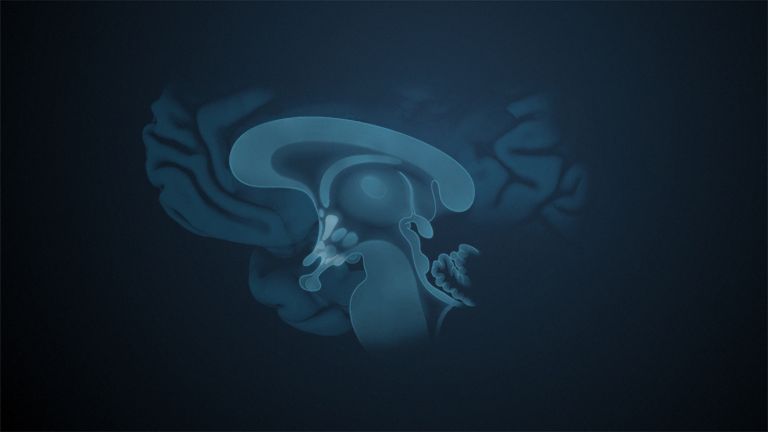
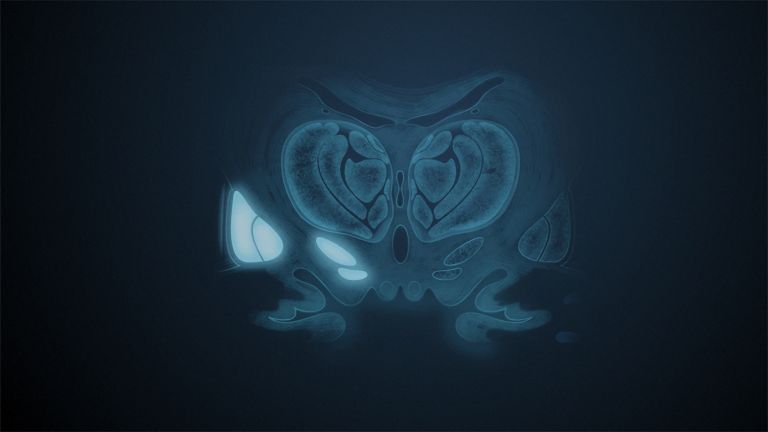
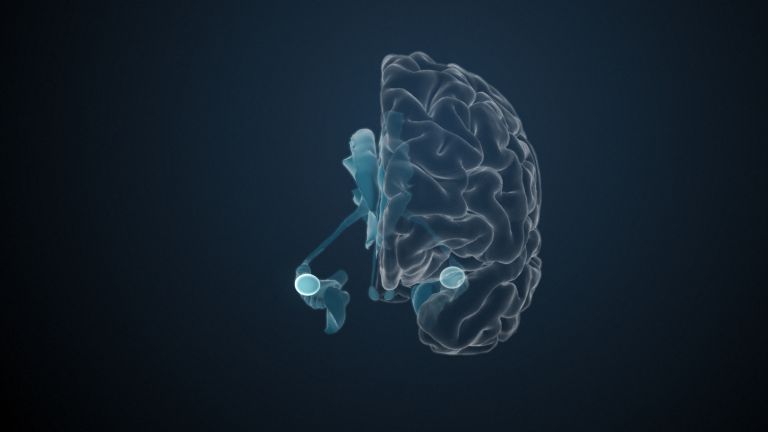
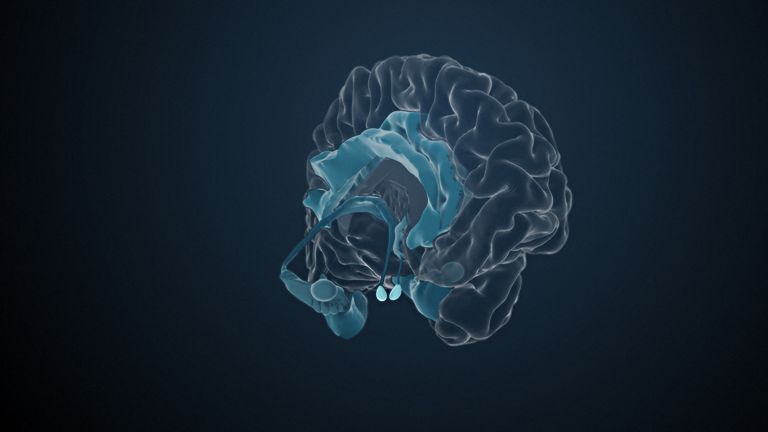
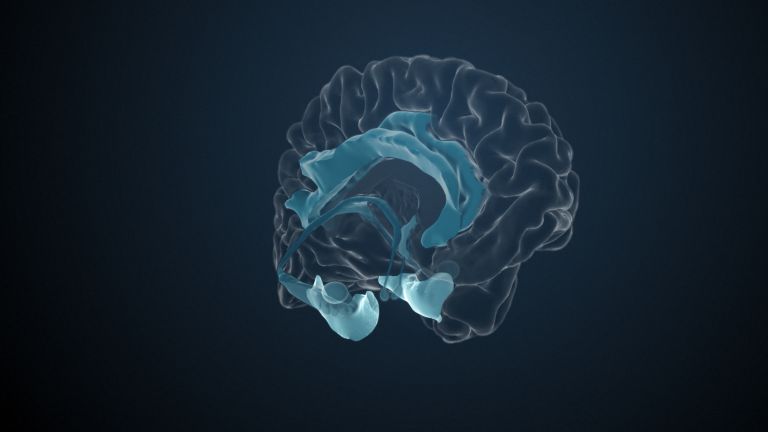
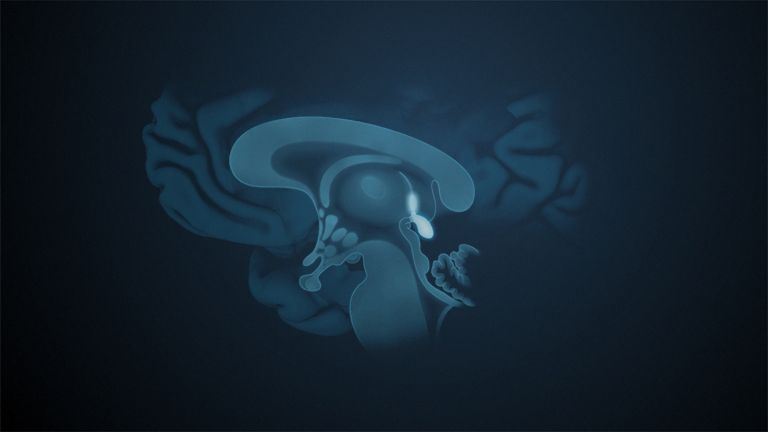
The axons of the mitral cells leave the Olfactory bulb as the Olfactory tract Looking at the brain from below, these two tracts, together with the bulbs, are clearly visible: they are almost reminiscent of two butterfly antennae embedded in the Frontal lobe from below.
After three to four centimeters, each of these antennae divides into the lateral and medial olfactory stria. At this fork, they form a triangle, the trigonum olfactorium, a thin layer of Gray matter This is where the anterior olfactory Nucleus is located: it is a switching station for some axons of the olfactory tract – namely those that travel to the olfactory bulb of the other Hemisphere. This means that both hemispheres constantly process the olfactory information from both nasal cavities, left and right.
However, most mitral cell axons remain in the same hemisphere of the brain. The majority run as a lateral strand to the praepiriform area, which is considered the primary Olfactory cortex The Cortex there is relatively thin and quite simple at the cellular level – we will come back to this later. Other fibers travel to the nuclei of the Septum and via the olfactory tubercle to the thalamus and Hypothalamus. Part of the Amygdala is also considered part of the olfactory cortex, and olfactory signals reach the Limbic system via this pathway. Last but not least, the olfactory cortex sends fibers directly to the hippocampus, which anchors smells in our memory.
With this network, it is no wonder that smells can trigger a variety of effects: disgusting smells make us feel nauseous, while the smell of tasty food makes our mouths water. We talk about not being able to “smell” another person, but when the chemistry is right, the smell of our partner arouses us sexually. And we never forget the smell of grandma’s apple pie.
Olfactory bulb
bulbus olfactorius
The anterior part of the brain that transmits information from the olfactory nerves to the olfactory brain (rhinencephalon) after initial processing via the olfactory tract.
Olfactory tract
Tractus olfactorius
Smell information travels via the olfactory tract from the olfactory bulb, located just above the nose, to the primary olfactory cortex.
frontal
An anatomical position designation – frontal means "towards the forehead," i.e., at the front.
Frontal lobe
Lobus frontalis
The frontal cortex is the largest of the four lobes of the cerebral cortex and its functions are correspondingly comprehensive. The front area, known as the prefrontal cortex, is responsible for complex action planning (known as executive functions), which also shapes our personality. Its development (myelination) takes up to 30 years and even then is not yet complete. Other important components of the frontal cortex are Broca's area, which controls our ability to express ourselves linguistically, and the primary motor cortex, which sends movement impulses throughout the body.
lateral
A positional term – lateral means "towards the side." In relation to the nervous system, it refers to a direction at right angles to the neural axis, i.e., to the right or left.
medial
A positional term – medial means "towards the middle." In relation to the nervous system, it refers to a direction toward the body, away from the sides.
Gray matter
Grey matter refers to a collection of nerve cell bodies, such as those found in nuclei or in the cortex.
Nucleus
In cell biology, the nucleus in a cell is the cell nucleus, which contains the chromosomes, among other things. In neuroanatomy, the nucleus in the nervous system refers to a collection of cell bodies – known as gray matter in the central nervous system and ganglia in the peripheral nervous system.
Hemisphere
The cerebrum and cerebellum each consist of two halves – the right and left hemispheres. In the cerebrum, they are connected by three pathways (commissures). The largest commissure is the corpus callosum.
Olfactory cortex
The olfactory cortex comprises the structures of the cerebrum that are responsible for processing olfactory information. The primary olfactory cortex is the prepiriform cortex, an evolutionarily ancient part of the cortex (paleocortex) with a three-layer structure.
Cortex
cortex cerebri
Cortex refers to a collection of neurons, typically in the form of a thin surface. However, it usually refers to the cerebral cortex, the outermost layer of the cerebrum. It is 2.5 mm to 5 mm thick and rich in nerve cells. The cerebral cortex is heavily folded, comparable to a handkerchief in a cup. This creates numerous convolutions (gyri), fissures (fissurae), and sulci. Unfolded, the surface area of the cortex is approximately 1,800cm².
Septum
area septalis
The septal nuclei are located medially in the basal forebrain, near the anterior tip of the cingulate gyrus. They are connected to the olfactory cortex and linked to other limbic structures via the fornix. Functionally, they play a role in emotional processes and reward processing.
Hypothalamus
The hypothalamus is considered the center of the autonomic nervous system, meaning it controls many motivational states and regulates vegetative aspects such as hunger, thirst, and sexual behavior. As an endocrine gland (which, unlike an exocrine gland, releases its hormones directly into the blood without a duct), it produces numerous hormones, some of which inhibit or stimulate the pituitary gland to release hormones into the blood.In this function, it also plays an important role in the response to pain and is involved in pain modulation.
Amygdala
corpus amygdaloideum
An important core area in the temporal lobe that is associated with emotions: it evaluates the emotional content of a situation and reacts particularly to threats. In this context, it is also activated by pain stimuli and plays an important role in the emotional evaluation of sensory stimuli. Inaddition, it is involved in linking emotions with memories, emotional learning ability, and social behavior. The amygdala is part of the limbic system.
Limbic system
The limbic system is a functional unit in the brain. It consists of interconnected structures, primarily in the cerebrum and diencephalon. The structures assigned to the system vary depending on the source, but the most important components are the hippocampus, amygdala, cingulate gyrus, septum, and mammillary bodies. The limbic system is involved in autonomic and visceral processes as well as in mechanisms of emotion, memory, and learning. Some authors mistakenly reduce the limbic system to the emotional world by referring to it as the "emotional brain."
Memory
Memory is a generic term for all types of information storage in the organism. In addition to pure retention, this also includes the absorption of information, its organization, and retrieval.
Cellular structure
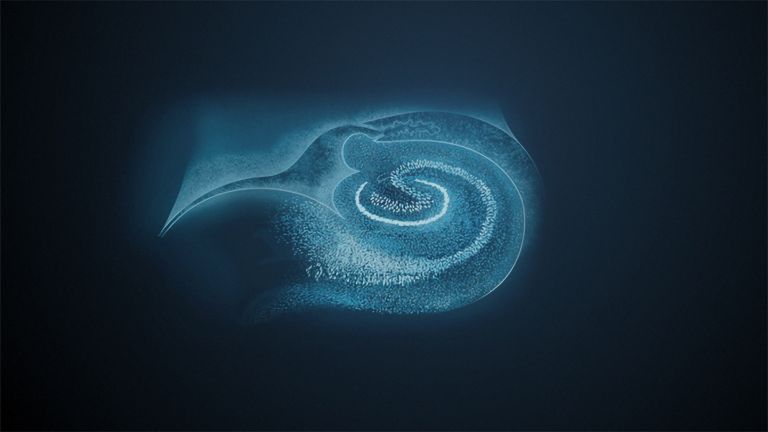
“Allo” means “different” – the Allocortex is therefore a cerebral Cortex that is different. In contrast to the isocortex, which is made up of six layers throughout, the allocortex consists – presumably – of only three layers. The outermost layer is the molecular layer, the lamina molecularis: this is where the dendrites of the pyramidal cells from the middle layer, the pyramidal cell layer (lamina pyramidalis), branch out. Their axons pass through the underlying lamina multiformis, which contains nerve cells of various shapes, into the Cerebrum. Between the lamina molecularis and the lamina multiformis, there is therefore only a single layer of nerve cells – in the isocortex, there are four: two layers of granule cells and two layers of pyramidal cells alternating with each other.
However, the number of layers in the allocortex can vary greatly. Even textbooks disagree on how many there normally are. Some say three to five, others say a maximum of four, and still others limit themselves to “usually three”. In humans, there are only two at the olfactory tubercle, where the outer molecular layer is partially missing.
Allocortex
A phylogenetically ancient region of the cortex (cerebral cortex) which, unlike the isocortex (also called neocortex), has fewer than six cell layers – in the hippocampus, for example, only three. The allocortex is divided into the paleocortex and archicortex, as well as the periallocortex, which is a transitional form between the allocortex and isocortex.
Cortex
cortex cerebri
Cortex refers to a collection of neurons, typically in the form of a thin surface. However, it usually refers to the cerebral cortex, the outermost layer of the cerebrum. It is 2.5 mm to 5 mm thick and rich in nerve cells. The cerebral cortex is heavily folded, comparable to a handkerchief in a cup. This creates numerous convolutions (gyri), fissures (fissurae), and sulci. Unfolded, the surface area of the cortex is approximately 1,800cm².
Cerebrum
telencephalon
The cerebrum comprises the cerebral cortex (gray matter), the nerve fibers (white matter), and the basal ganglia. It is the largest part of the brain. The cortex can be divided into four cortical areas: the temporal lobe, frontal lobe, occipital lobe, and parietal lobe.
Its functions include the coordination of perception, motivation, learning, and thinking.
First published on August 31, 2011
Last updated on October 1, 2025