The Flocculonodular Lobe
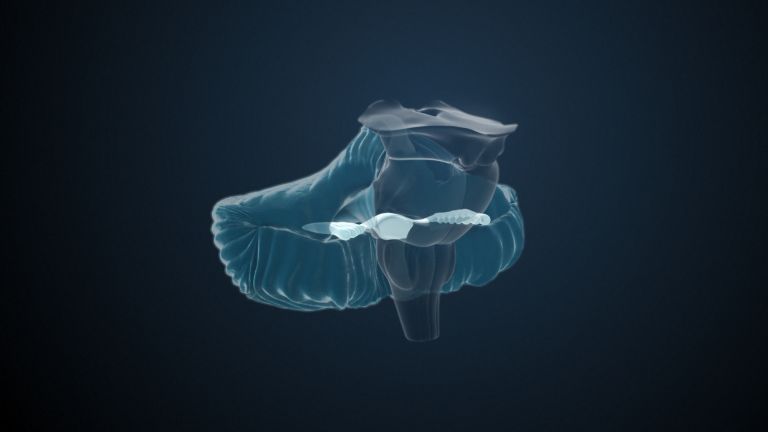
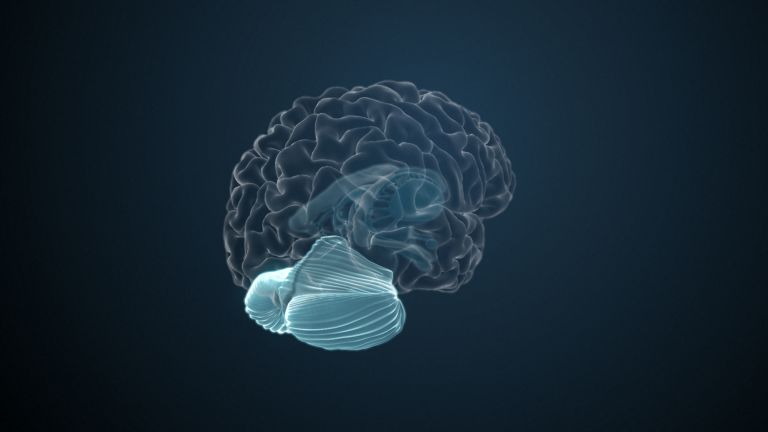
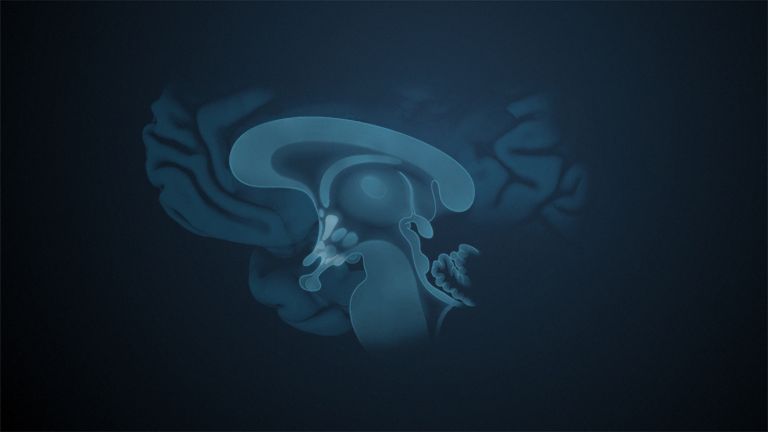
The flocculonodular lobe is the oldest part of the cerebellum – in lower vertebrates, it is actually the cerebellum. It regulates balance and coordinates eye movements, and its name literally translates as “flake nodule lobe.”
Scientific support: Prof. Dr. Jochen F. Staiger
Published: 05.08.2025
Difficulty: intermediate
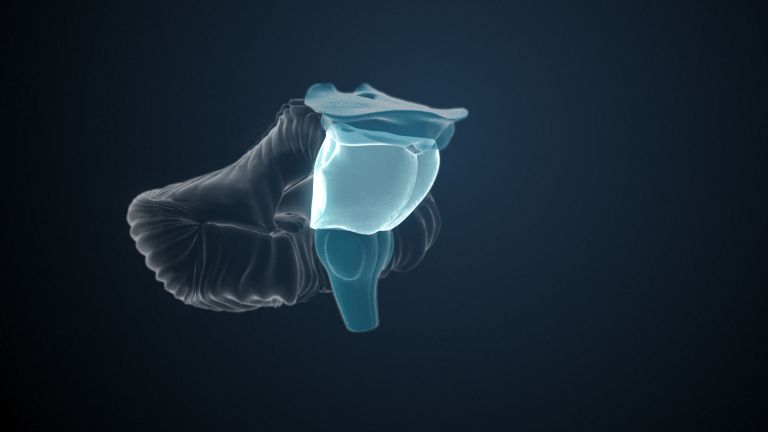
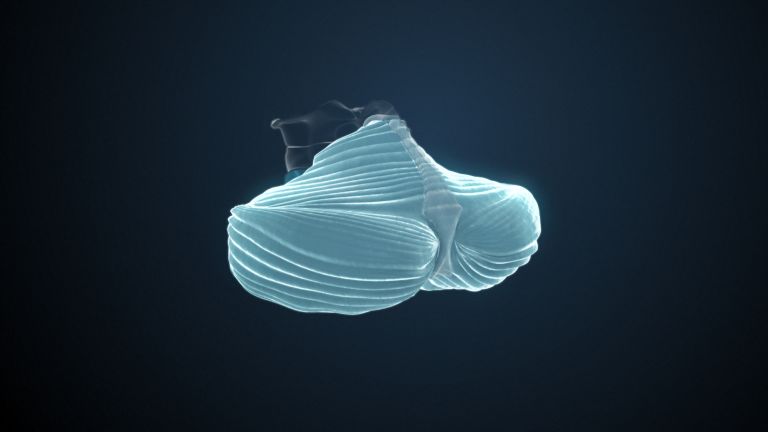
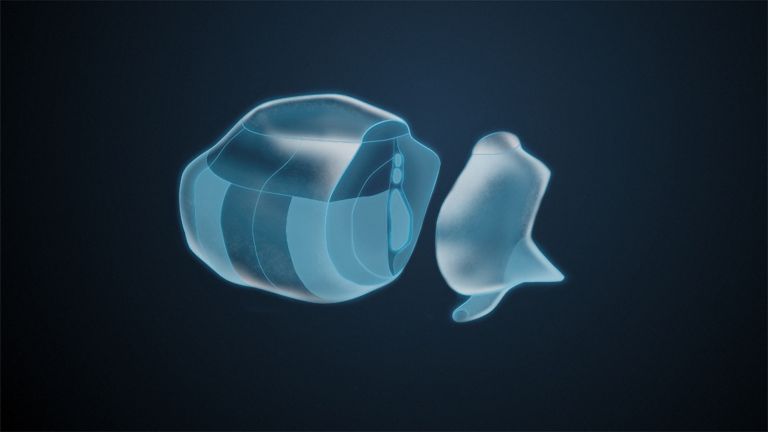
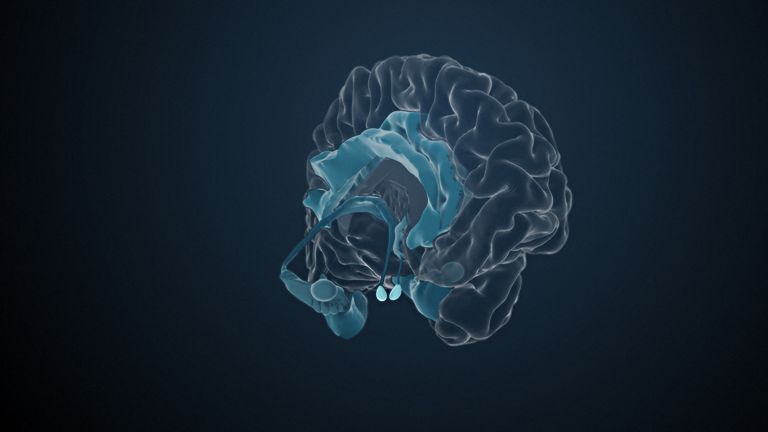
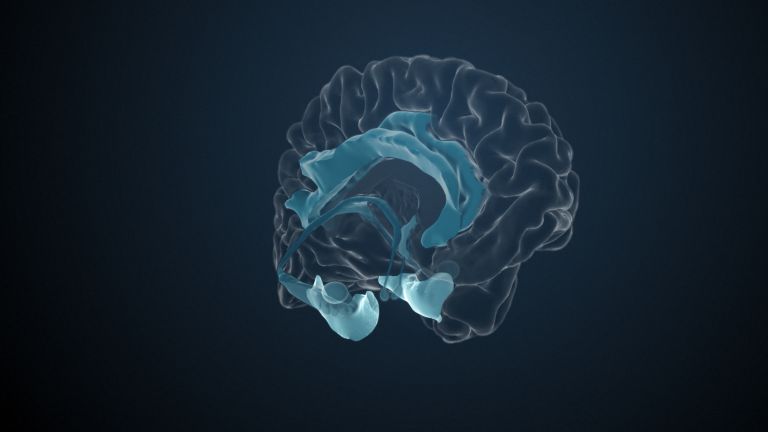
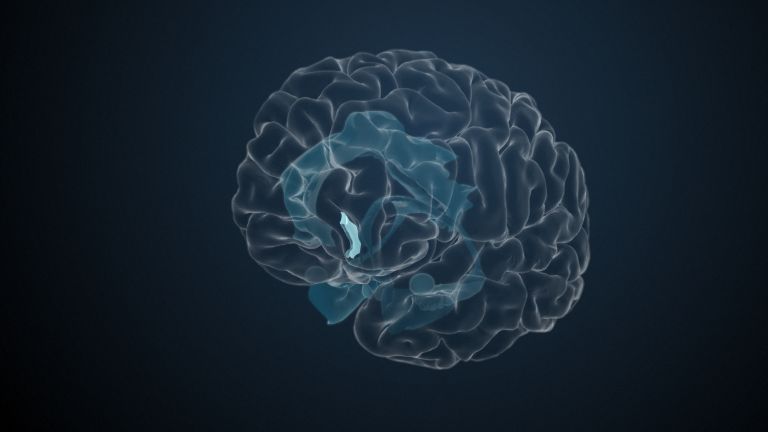
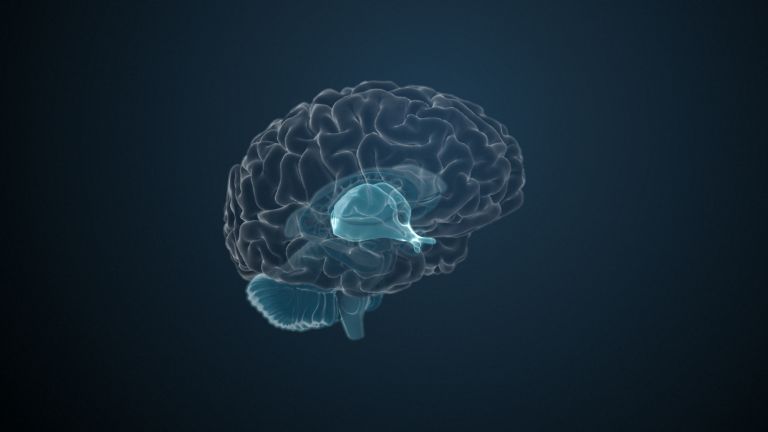
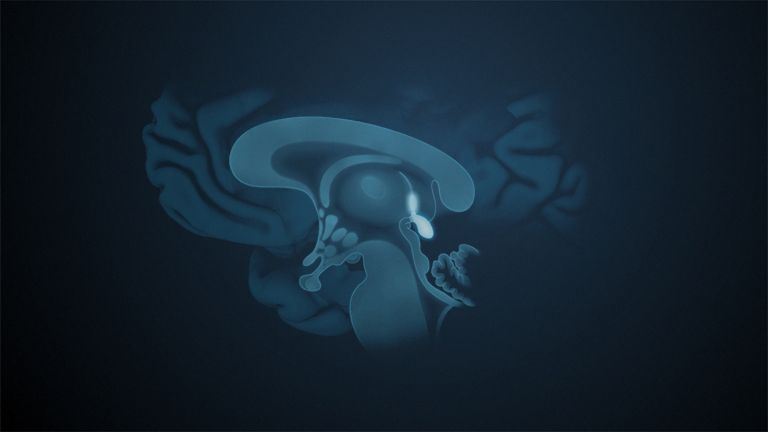
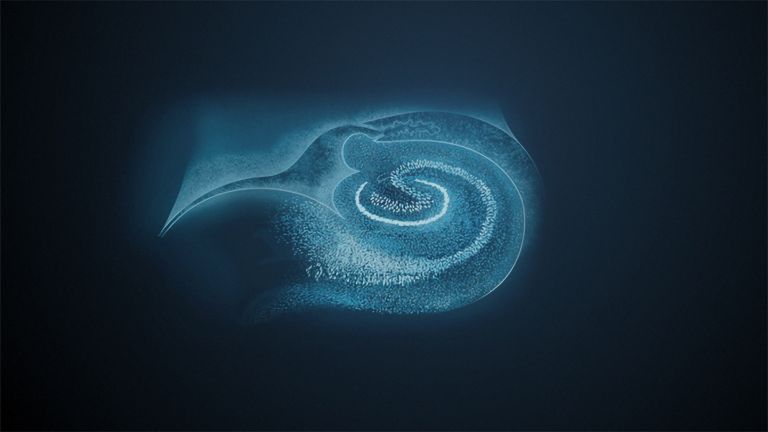
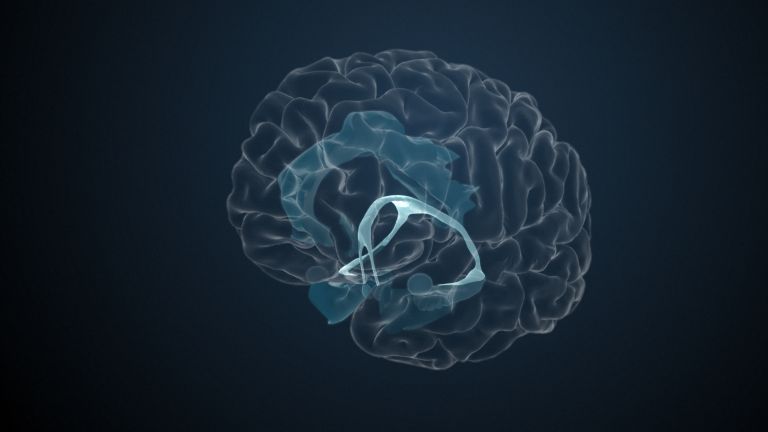
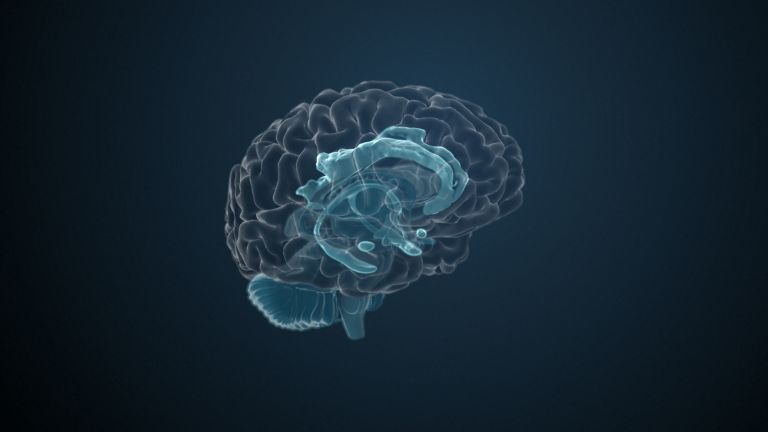
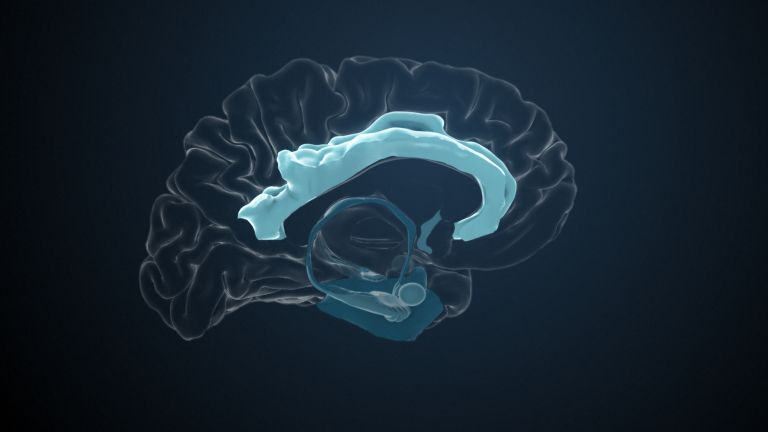
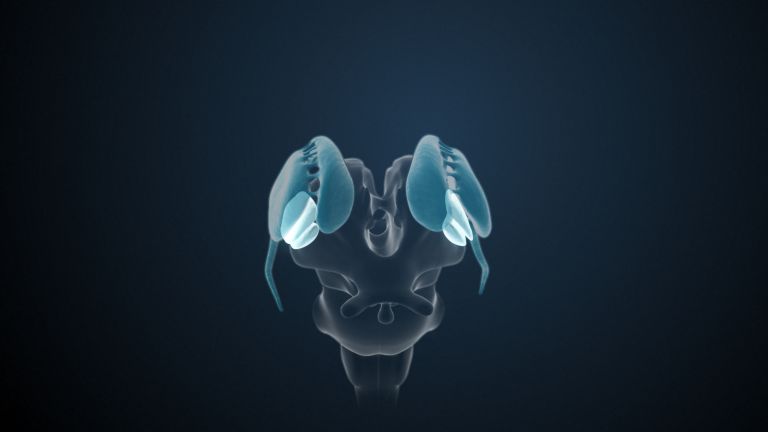
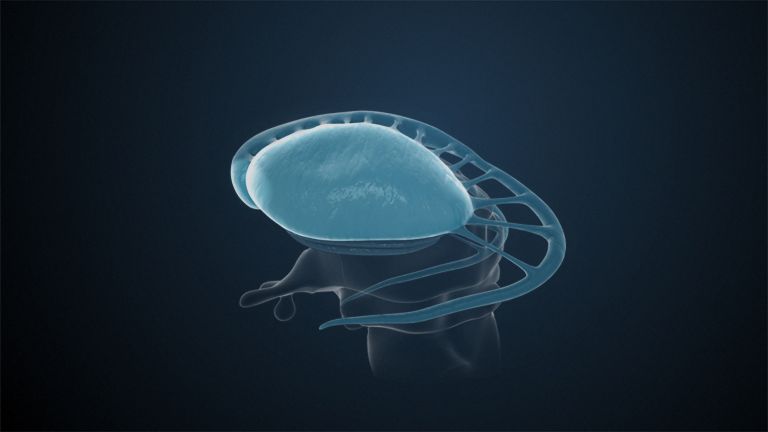
he flocculonodular lobe, with its paw-like protrusions, makes up only a small part of the cerebellum, but it is a very important one: it regulates balance.
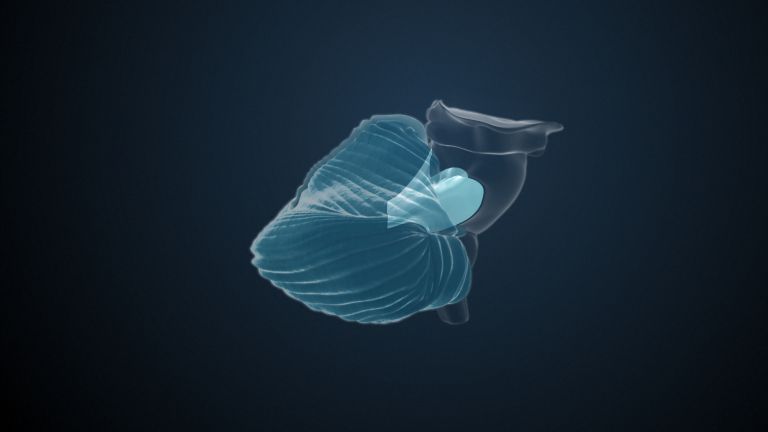
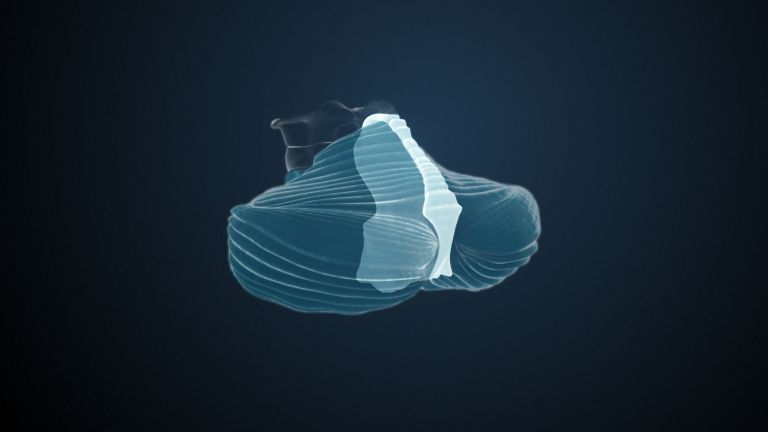
The Flocculonodular lobe is named after its two components, the paired flocculus (flake) and the unpaired nodulus (nodule). It is the oldest segment of the Cerebellum in terms of evolutionary development, which is why it is sometimes referred to as the archicerebellum.
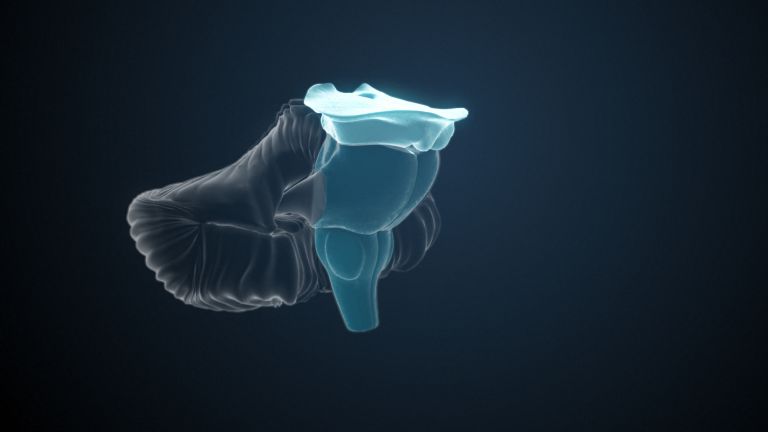
The nodulus is a slightly thickened part of the cerebellar vermis, located at its lowest point. Via the pedunculus flocculi, a lamina of white, medullary brain substance, it connects on both sides to the flocculus, which belongs to the hemispheres. However, it is quite difficult to find the flocculus in anatomical illustrations, as it is only a few centimeters wide and hidden under the Cerebellar peduncles on the side facing the Brain stem It is separated from the hemispheres by a deep groove, the fissura posterolateralis. Its shape is reminiscent of two cat paws: it is broad and flat and almost toe-shaped at the ends.
Flocculonodular lobe
lobus flocculonodularis
The flocculonodular lobe is an antero-inferior region of the cerebellum. It comprises two structures, the nodulus (nodule) and the flocculus (flocculus). It is involved in balance and spatial orientation, as well as in stabilizing and controlling eye movements. It corresponds to the vestibulocerebellum.
Cerebellum
Cerebellum
The cerebellum is an important part of the brain, located at the back of the brain stem and below the occipital lobe. It consists of two cerebellar hemispheres covered by the cerebellar cortex and plays an important role in motor processes, among other things. It develops from the rhombencephalon.
Cerebellar peduncles
pedunculi cerebelli
Three fiber connections on the right and left sides that connect the cerebellum to the brain stem. All afferent and efferent fibers of the cerebellum run through these connections.
Brain stem
truncus cerebri
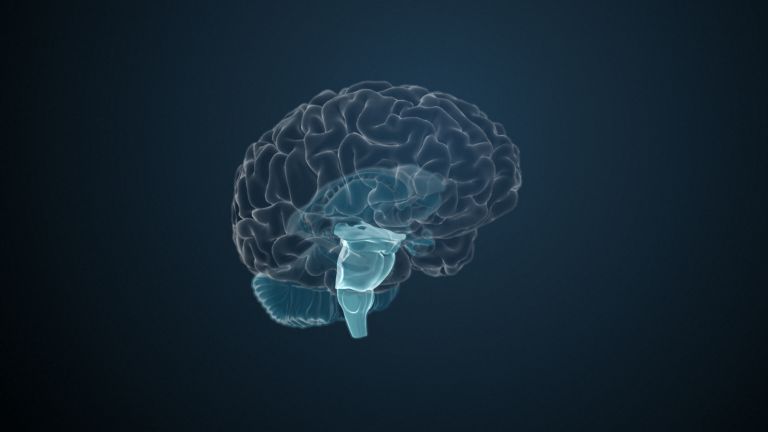
The "trunk" of the brain, to which all other brain structures are "attached," so to speak. From bottom to top, it comprises the medulla oblongata, the pons, and the mesencephalon. It transitions into the spinal cord below. It is a center for vital functions such as breathing and heartbeat and contains ascending and descending pathways between the cerebrum, cerebellum, and spinal cord.
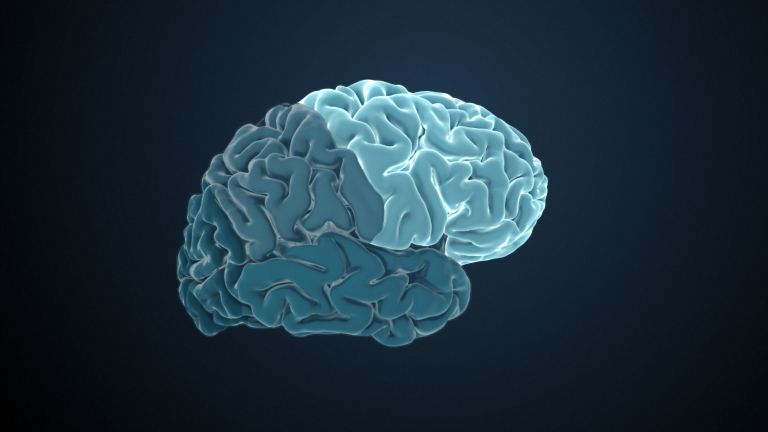
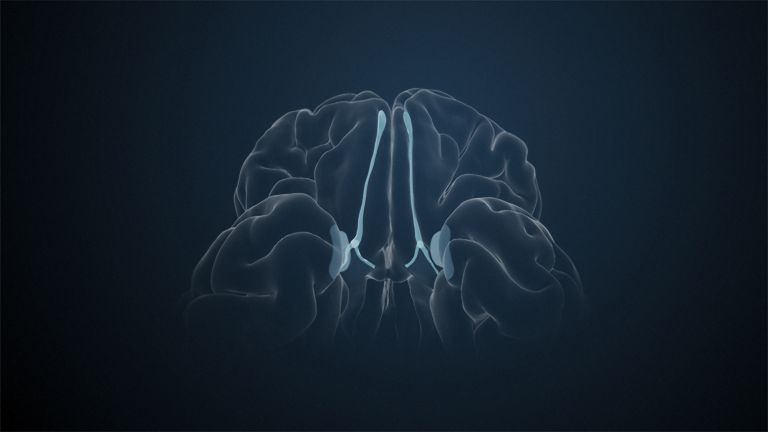
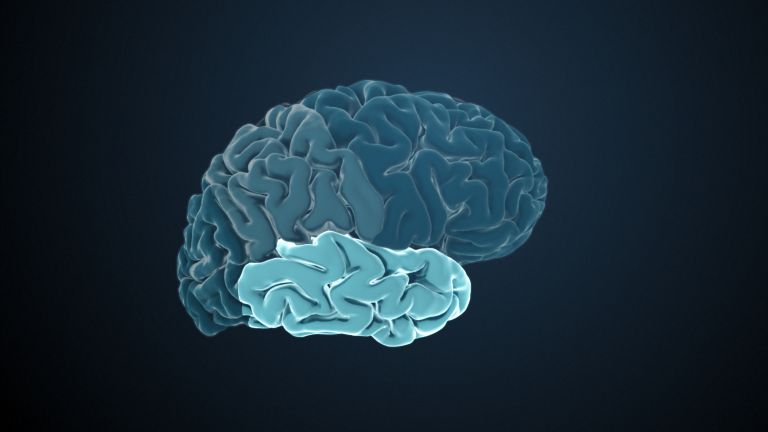
Coordination center for the sense of balance
The Flocculonodular lobe is where it all began for the Cerebellum: as its oldest part, it is found in all vertebrates – in lower representatives such as lampreys or hagfish (an early research subject of Sigmund Freud), it even constitutes the entire cerebellum. It always involves vestibular impulses, but in different forms. In frogs, for example, the flocculonodular lobe still appears as fairly large ear-shaped bulges, while in other reptiles and birds it is only an inconspicuous lateral appendage.
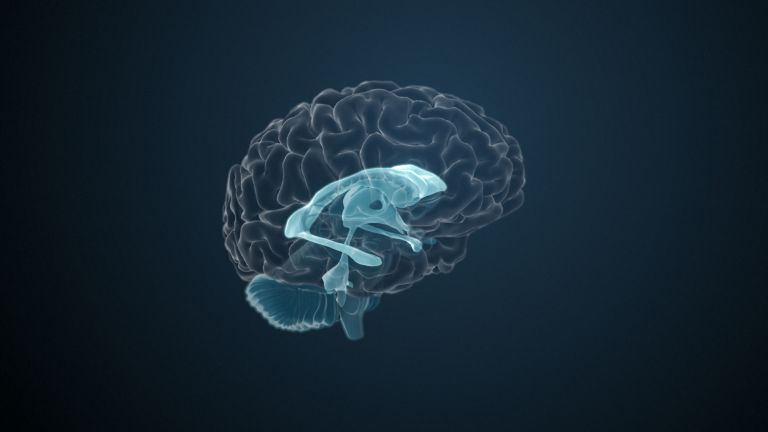
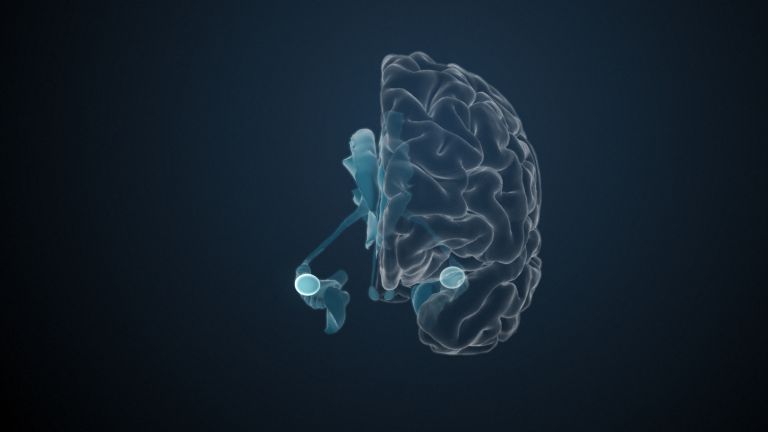
However, this does not mean that this ancient part of the cerebellum no longer plays an important role in modern humans – on the contrary: It forms the vestibulocerebellum, which ensures balance and stabilizes sitting, standing, and walking by influencing the trunk and limb extensor muscles. It also coordinates Eye movements, i.e., the muscles of the eyeball.
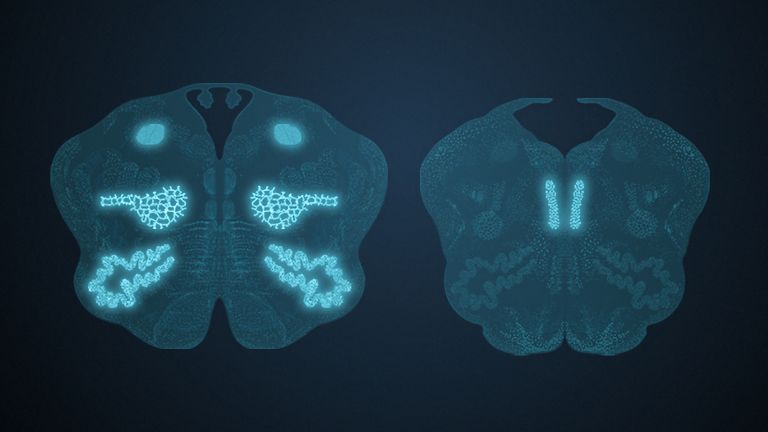
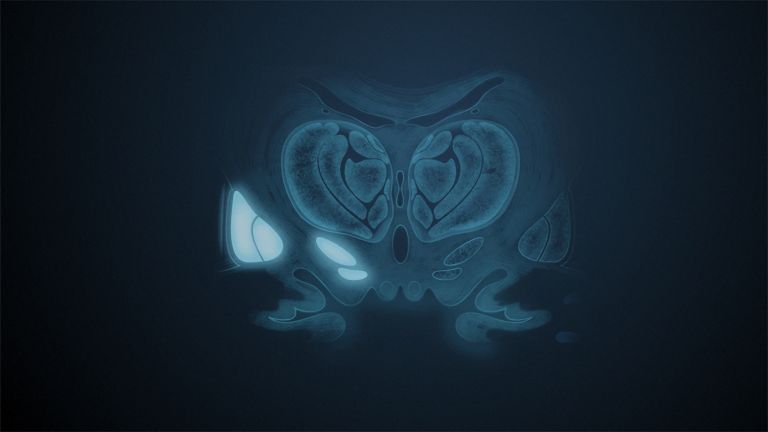
In order to perform this task, it receives processed balance information from the vestibular nuclei and even directly from the balance organ in the inner ear. This is remarkable because no other sensory channel sends such primary sensory information to the cerebellum. Via the inputs from the vestibular nuclei, the flocculonodular lobe keeps track of whether the head is tilted downwards or turning to the right at that moment, for example. It sends its signals to the fastigial Nucleus in the Medulla oblongata below the upper cerebellar vermis, which in turn activates the vestibular nuclei. At the same time, some fibers from its Cortex – always inhibitory – also run directly to the vestibular nuclei without first being switched in a cerebellar nucleus –another example of the close connection between the sense of balance and the cerebellum.
If the flocculonodular lobe fails, an important reflex arc of balance is disrupted; the patient experiences dizziness and vomiting. In addition, they can no longer sit or stand upright, but sway constantly. Eye movements are also disrupted, with the eyeball twitching rhythmically and uncontrollably back and forth. The neurologist refers to this phenomenon as pathological nystagmus.
Flocculonodular lobe
lobus flocculonodularis
The flocculonodular lobe is an antero-inferior region of the cerebellum. It comprises two structures, the nodulus (nodule) and the flocculus (flocculus). It is involved in balance and spatial orientation, as well as in stabilizing and controlling eye movements. It corresponds to the vestibulocerebellum.
Cerebellum
Cerebellum
The cerebellum is an important part of the brain, located at the back of the brain stem and below the occipital lobe. It consists of two cerebellar hemispheres covered by the cerebellar cortex and plays an important role in motor processes, among other things. It develops from the rhombencephalon.
lateral
A positional term – lateral means "towards the side." In relation to the nervous system, it refers to a direction at right angles to the neural axis, i.e., to the right or left.
Eye
bulbus oculi
The eye is the sensory organ responsible for perceiving light stimuli – electromagnetic radiation within a specific frequency range. The light visible to humans lies in the range between 380 and 780 nanometers.
ear
auris
The ear is not only the organ of hearing, but also of balance. A distinction is made between the outer ear with the auricle and external auditory canal, the middle ear with the eardrum and ossicles, and the actual hearing and balance organ, the inner ear with the cochlea and semicircular canals.
Nucleus
In cell biology, the nucleus in a cell is the cell nucleus, which contains the chromosomes, among other things. In neuroanatomy, the nucleus in the nervous system refers to a collection of cell bodies – known as gray matter in the central nervous system and ganglia in the peripheral nervous system.
Medulla oblongata
Area of the brain that transitions into the spinal cord. The medulla oblongata comprises nerve pathways between the spinal cord and higher brain regions, as well as numerous core areas with functions that are in some cases vital, such as breathing, heartbeat, and certain reflexes.
Cortex
cortex cerebri
Cortex refers to a collection of neurons, typically in the form of a thin surface. However, it usually refers to the cerebral cortex, the outermost layer of the cerebrum. It is 2.5 mm to 5 mm thick and rich in nerve cells. The cerebral cortex is heavily folded, comparable to a handkerchief in a cup. This creates numerous convolutions (gyri), fissures (fissurae), and sulci. Unfolded, the surface area of the cortex is approximately 1,800cm².
First published on August 23, 2011
Last updated on August 5, 2025