The Temporal Lobe
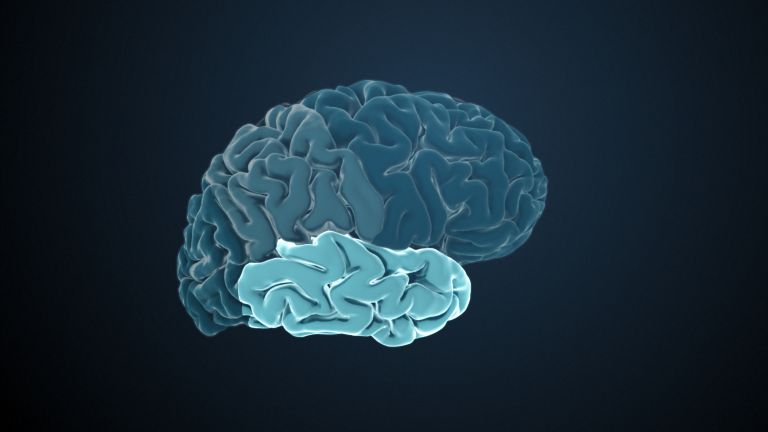
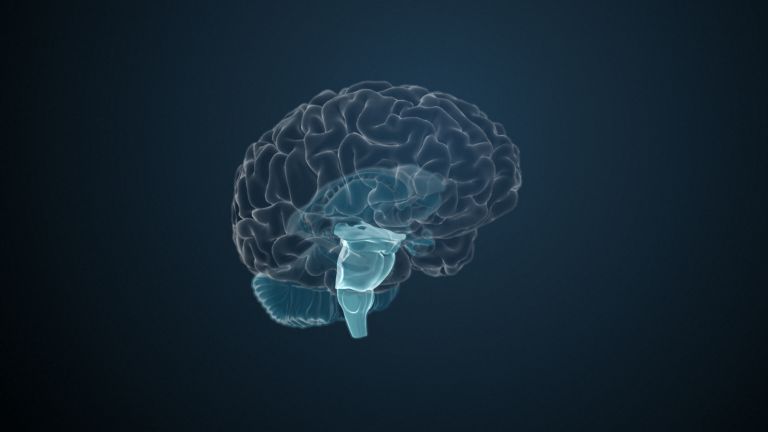
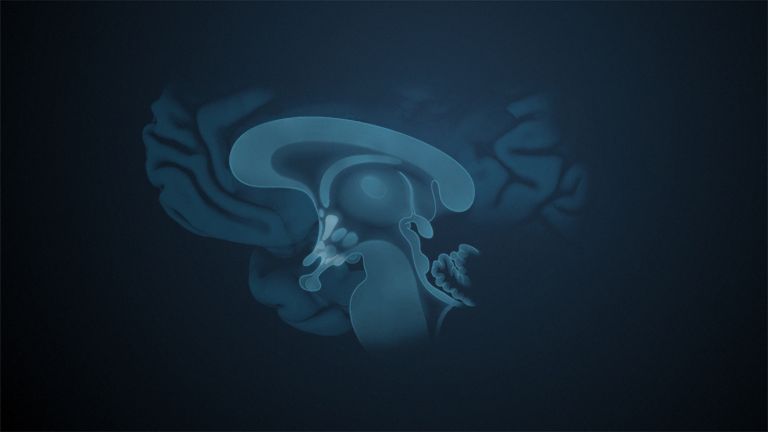
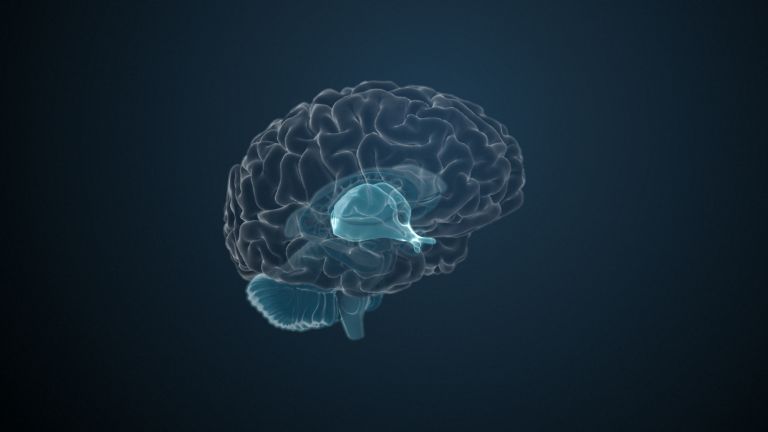
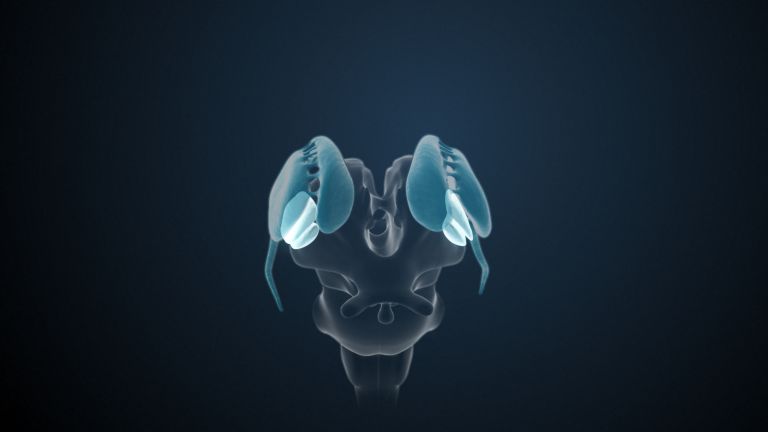
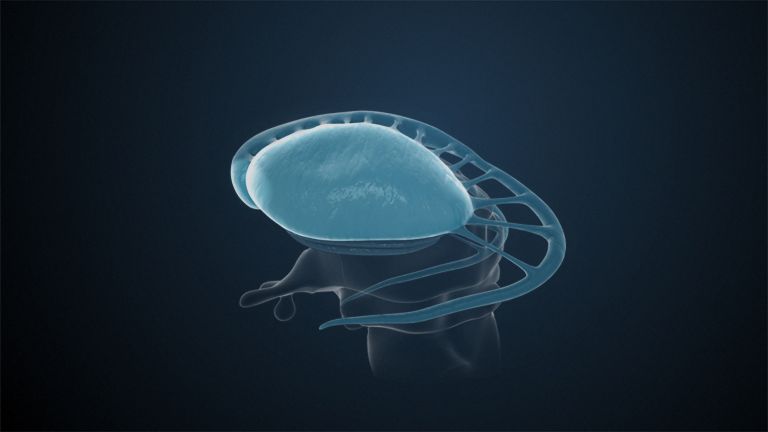
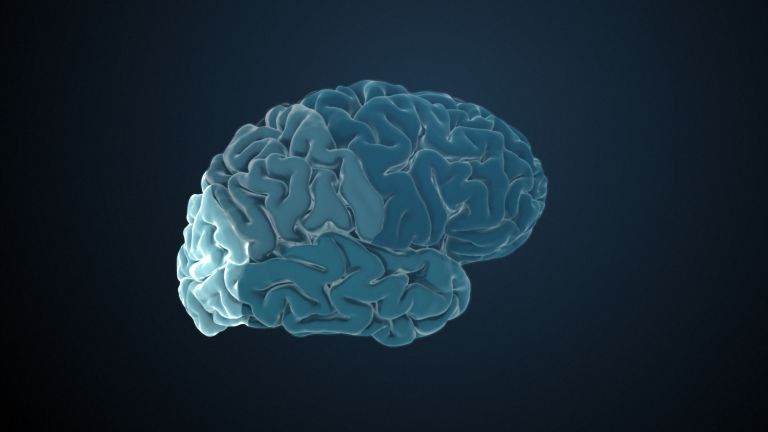
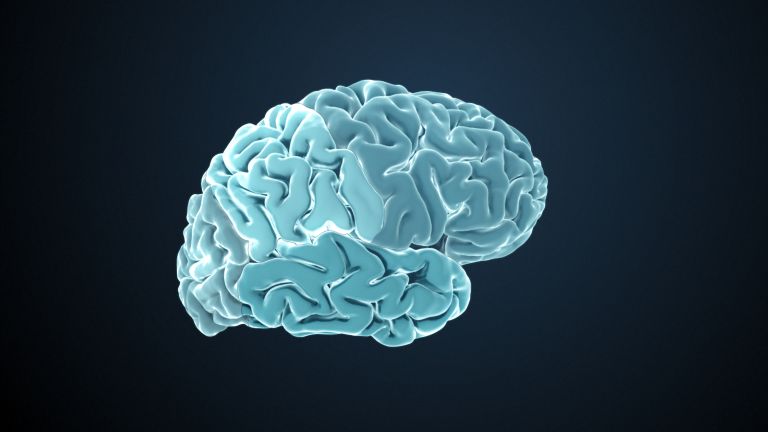
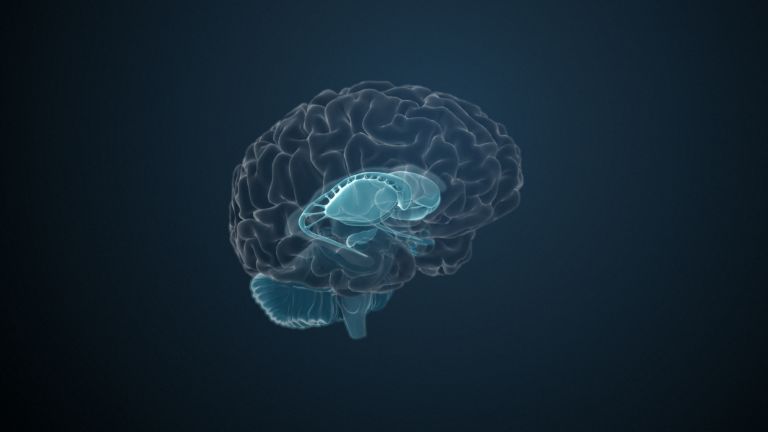
The two temporal lobes frame the brain stem. They consist of iso- and allocortical regions and also contain the non-cortical core areas of the amygdala. The temporal lobe is truly “multimodal,” serving numerous functions with many different centers: smelling, hearing, speaking, understanding, visual recognition, and memory formation.
Scientific support: Prof. Dr. Horst-Werner Korf
Published: 28.11.2025
Difficulty: intermediate
The two temporal lobes frame the Brain stem They consist of iso- and allocortical regions and also contain the non-cortical core areas of the Amygdala. The Temporal lobe is truly “multimodal,” serving numerous functions with many different centers: smelling, hearing, speaking, understanding, visual recognition, and Memory formation.
Brain stem
truncus cerebri
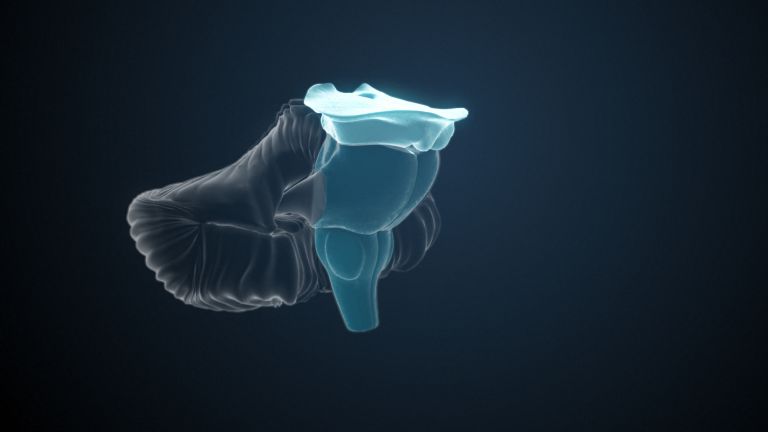
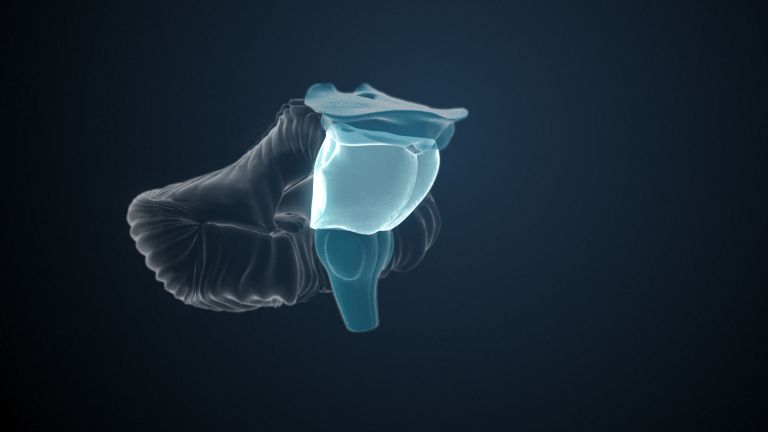
The "trunk" of the brain, to which all other brain structures are "attached," so to speak. From bottom to top, it comprises the medulla oblongata, the pons, and the mesencephalon. It transitions into the spinal cord below. It is a center for vital functions such as breathing and heartbeat and contains ascending and descending pathways between the cerebrum, cerebellum, and spinal cord.
Amygdala
corpus amygdaloideum
An important core area in the temporal lobe that is associated with emotions: it evaluates the emotional content of a situation and reacts particularly to threats. In this context, it is also activated by pain stimuli and plays an important role in the emotional evaluation of sensory stimuli. Inaddition, it is involved in linking emotions with memories, emotional learning ability, and social behavior. The amygdala is part of the limbic system.
Temporal lobe
Lobus temporalis
The temporal lobe is one of the four lobes of the cerebrum and is located laterally (on the side) at the bottom. It contains important areas such as the auditory cortex and parts of Wernicke's area, as well as areas for higher visual processing; deep within it lies the medial temporal lobe with structures such as the hippocampus.
Memory
Memory is a generic term for all types of information storage in the organism. In addition to pure retention, this also includes the absorption of information, its organization, and retrieval.
Before any misunderstandings arise, we should clarify one thing: in anatomy, the term “temple” refers to the region just in front of and directly above the ears. The largest part of the Temporal lobe lies beneath this area. The temple in colloquial language, on the other hand, is further forward. And beneath it lies the frontal lobe.
Temporal lobe
Lobus temporalis
The temporal lobe is one of the four lobes of the cerebrum and is located laterally (on the side) at the bottom. It contains important areas such as the auditory cortex and parts of Wernicke's area, as well as areas for higher visual processing; deep within it lies the medial temporal lobe with structures such as the hippocampus.
frontal
An anatomical position designation – frontal means "towards the forehead," i.e., at the front.
Regions and structure
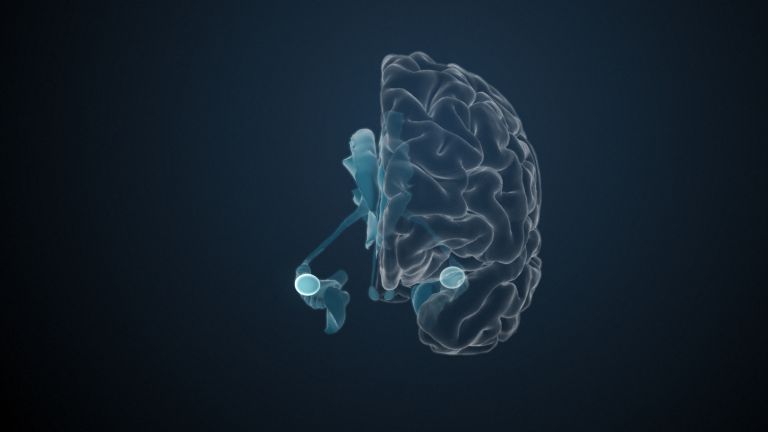
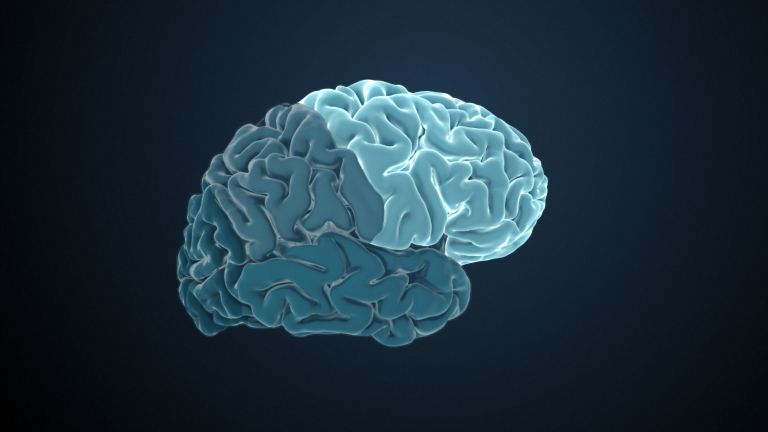
The Temporal lobe merges into the parietal and occipital lobes towards the back of the head and the crown without any sharp boundaries. It is separated from the Frontal lobe by a deep groove, the lateral Fissure. The Insula lies deep within this fissure. Looking at the brain from below, you can see that the two temporal lobes “frame” the Brain stem After all, their front, blunt pole is actually located at the rear edge of what is colloquially referred to as the temple.
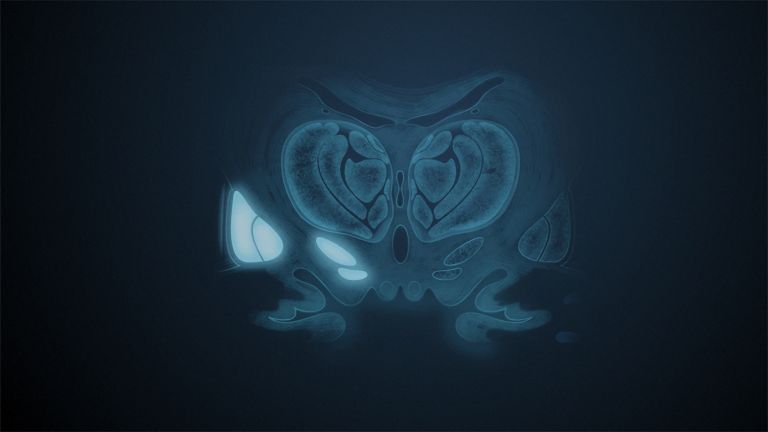
When viewed under a microscope, the temporal lobe reveals not only centers with the typical six-layer structure of the neocortex, but also numerous allocortical centers – i.e., “differently layered,” non-six-layer cortices. In addition, the temporal lobe is home to the amygdala, which consists of layered, and therefore cortical, and unlayered collections of nerve cells. Given this diversity, it is important to discuss the temporal lobe “piece by piece,” i.e., region by region.
Temporal lobe
Lobus temporalis
The temporal lobe is one of the four lobes of the cerebrum and is located laterally (on the side) at the bottom. It contains important areas such as the auditory cortex and parts of Wernicke's area, as well as areas for higher visual processing; deep within it lies the medial temporal lobe with structures such as the hippocampus.
frontal
An anatomical position designation – frontal means "towards the forehead," i.e., at the front.
Frontal lobe
Lobus frontalis
The frontal cortex is the largest of the four lobes of the cerebral cortex and its functions are correspondingly comprehensive. The front area, known as the prefrontal cortex, is responsible for complex action planning (known as executive functions), which also shapes our personality. Its development (myelination) takes up to 30 years and even then is not yet complete. Other important components of the frontal cortex are Broca's area, which controls our ability to express ourselves linguistically, and the primary motor cortex, which sends movement impulses throughout the body.
lateral
A positional term – lateral means "towards the side." In relation to the nervous system, it refers to a direction at right angles to the neural axis, i.e., to the right or left.
Fissure
The strong folding of the cortex (cerebral cortex) creates fissures – from the Latin: cleft. These clefts can be used to describe individual brain structures. For example, the fissura sylvii separates the temporal lobe from the frontal lobe. Less deep clefts are often referred to as sulci.
Insula
lobus insularis
The insula is a recessed part of the cortex (cerebral cortex) that is covered by the frontal, temporal, and parietal lobes. This overlay is called the opercula (lid). The insula influences the motor and sensory functions of the intestines and is considered to be the link between cognitive and emotional elements in pain processing. It is also involved in processes such as taste and physical self-awareness.
Brain stem
truncus cerebri
The "trunk" of the brain, to which all other brain structures are "attached," so to speak. From bottom to top, it comprises the medulla oblongata, the pons, and the mesencephalon. It transitions into the spinal cord below. It is a center for vital functions such as breathing and heartbeat and contains ascending and descending pathways between the cerebrum, cerebellum, and spinal cord.
Sound, image, and language
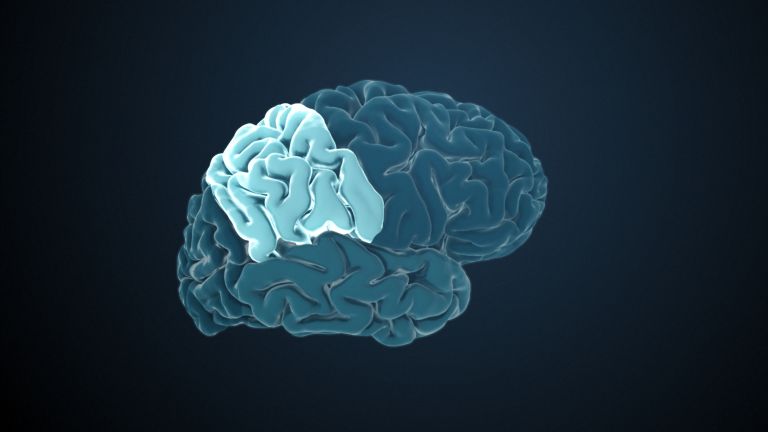
Perhaps the best-known function of the Temporal lobe is hearing. Well-known, yes. Conspicuous, no. This is because the primary auditory center, the so-called Heschl's gyrus, is hidden in the deep lateral Fissure. After several synaptic switches in the Brain stem and thalamus, the auditory pathway, which transmits signals from the sensory cells in the Cochlea of the ear, ends in these convolutions. The primary auditory center in Heschl's gyrus is only about the size of a postage stamp. The secondary and tertiary auditory centers downstream are much larger. They are located in the upper and middle gyrus of the temporal lobe and occupy almost the entire cortical surface of the temporal lobe, which can be seen in the side view. This makes hearing one of the most extensive systems in our Cerebrum – speech and music apparently require a high level of “computational effort.”
Where the upper and middle temporal convolutions merge into the Cortex of the Occipital lobe – which is primarily responsible for the Visual system – auditory and visual functions “overlap.” This is where the lexical centers involved in recognizing written and spoken words are located. Particularly well known is the sensory Wernicke's area, which is located in the dominant – usually left – Hemisphere. A Lesion in this area leads to disturbances in speech and writing comprehension.
Temporal lobe
Lobus temporalis
The temporal lobe is one of the four lobes of the cerebrum and is located laterally (on the side) at the bottom. It contains important areas such as the auditory cortex and parts of Wernicke's area, as well as areas for higher visual processing; deep within it lies the medial temporal lobe with structures such as the hippocampus.
lateral
A positional term – lateral means "towards the side." In relation to the nervous system, it refers to a direction at right angles to the neural axis, i.e., to the right or left.
Fissure
The strong folding of the cortex (cerebral cortex) creates fissures – from the Latin: cleft. These clefts can be used to describe individual brain structures. For example, the fissura sylvii separates the temporal lobe from the frontal lobe. Less deep clefts are often referred to as sulci.
Brain stem
truncus cerebri
The "trunk" of the brain, to which all other brain structures are "attached," so to speak. From bottom to top, it comprises the medulla oblongata, the pons, and the mesencephalon. It transitions into the spinal cord below. It is a center for vital functions such as breathing and heartbeat and contains ascending and descending pathways between the cerebrum, cerebellum, and spinal cord.
Cochlea
The cochlea is the part of the inner ear that contains the organ of Corti, which is responsible for converting acoustic signals into nerve impulses.
Heschl's gyrus
gyrus temporalis transversus
Heschl's gyrus is an area in the temporal lobe that was first described by Richard Heschl in 1855. It is the seat of the primary auditory cortex, i.e., the hearing center in the cerebral cortex.
Cerebrum
telencephalon
The cerebrum comprises the cerebral cortex (gray matter), the nerve fibers (white matter), and the basal ganglia. It is the largest part of the brain. The cortex can be divided into four cortical areas: the temporal lobe, frontal lobe, occipital lobe, and parietal lobe.
Its functions include the coordination of perception, motivation, learning, and thinking.
Cortex
cortex cerebri
Cortex refers to a collection of neurons, typically in the form of a thin surface. However, it usually refers to the cerebral cortex, the outermost layer of the cerebrum. It is 2.5 mm to 5 mm thick and rich in nerve cells. The cerebral cortex is heavily folded, comparable to a handkerchief in a cup. This creates numerous convolutions (gyri), fissures (fissurae), and sulci. Unfolded, the surface area of the cortex is approximately 1,800cm².
Occipital lobe
lobus occipitalis
One of the four large lobes of the cerebral cortex. The occipital lobe lies above the cerebellum. It borders the parietal and temporal lobes at the front. The calcarine sulcus divides the occipital lobe into an upper and lower half, the cuneus and the lingual gyrus. Functionally, this area of the brain is responsible for the central processing of visual information – both the primary and secondary visual cortex are located in the occipital lobe.
Visual system
The visual system is the part of the nervous system that processes visual information. It primarily comprises the eye, the optic nerve, the optic chiasm, the optic tract, the lateral geniculate nucleus, the optic radiation, the primary visual cortex, and the visual association cortices.
Hemisphere
The cerebrum and cerebellum each consist of two halves – the right and left hemispheres. In the cerebrum, they are connected by three pathways (commissures). The largest commissure is the corpus callosum.
Lesion
A lesion is damage to organic tissue.
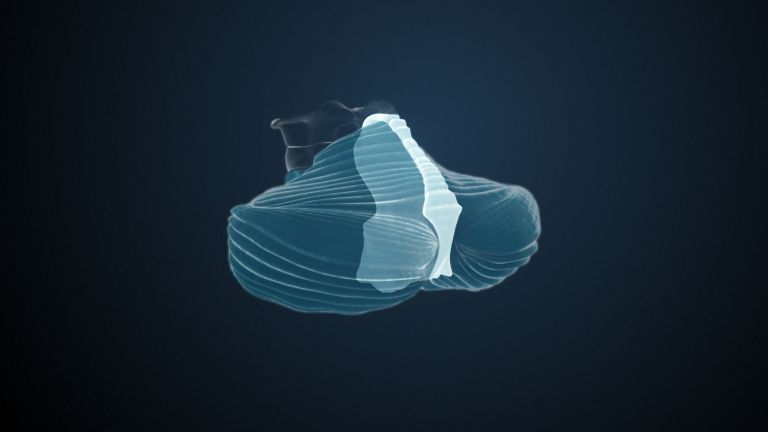
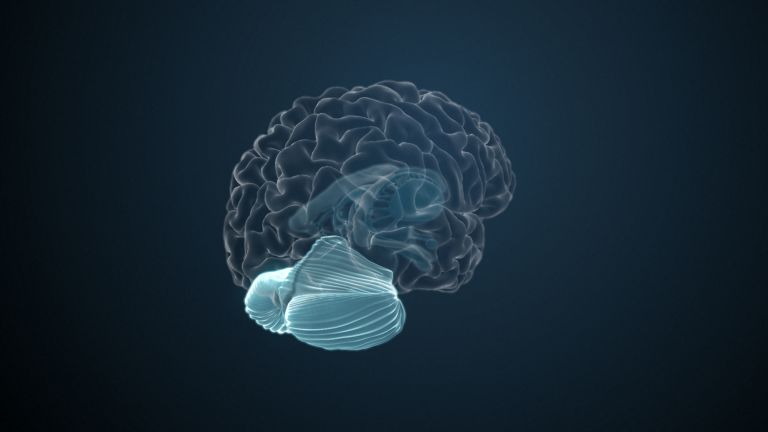
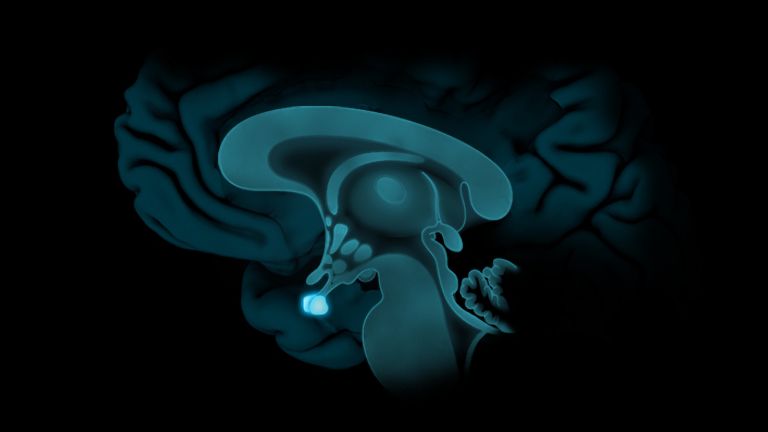
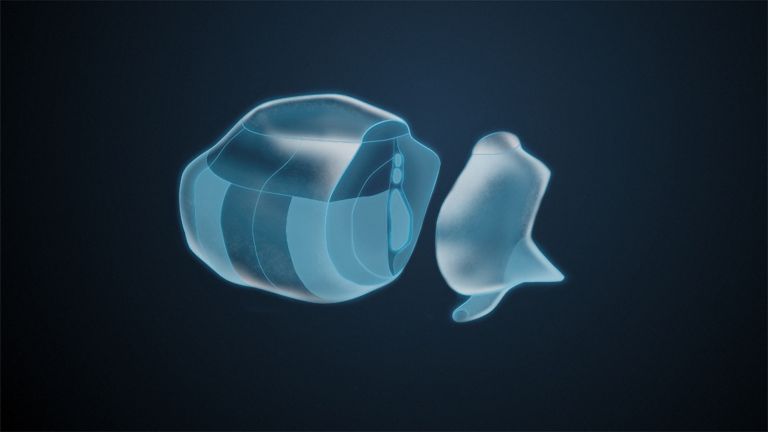
Scent and fear
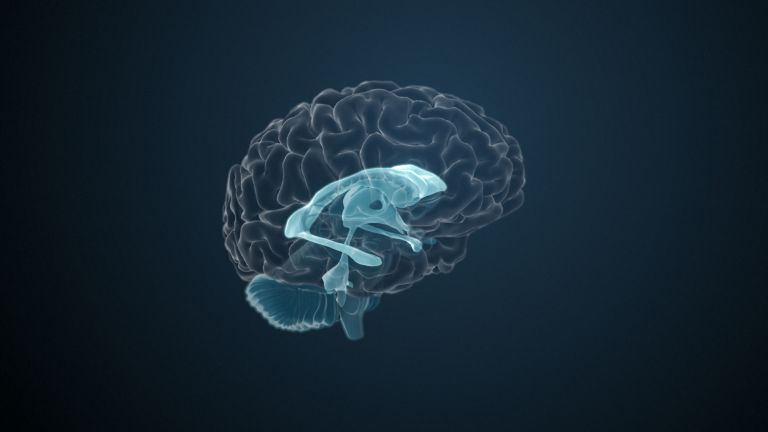
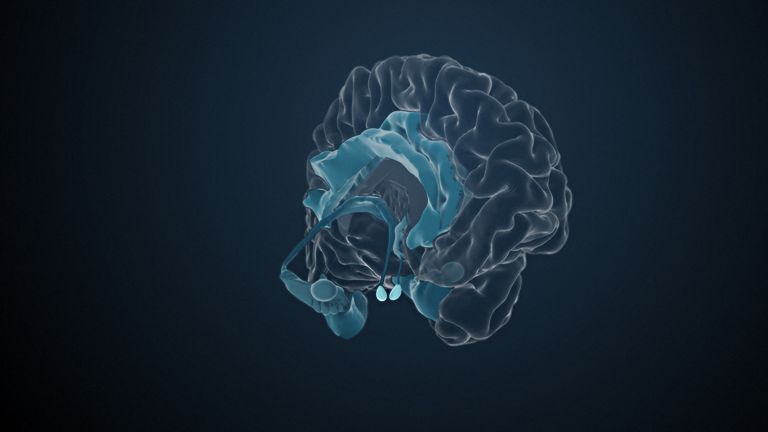
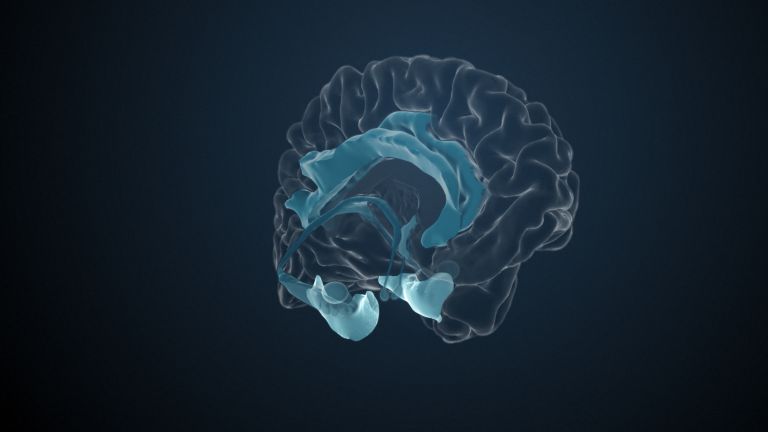
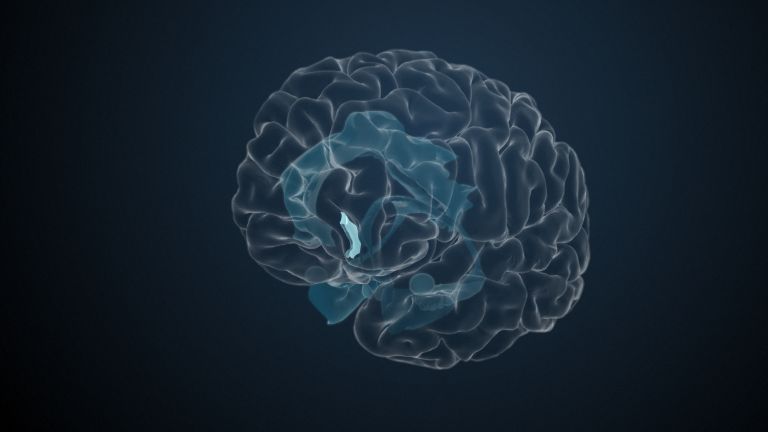
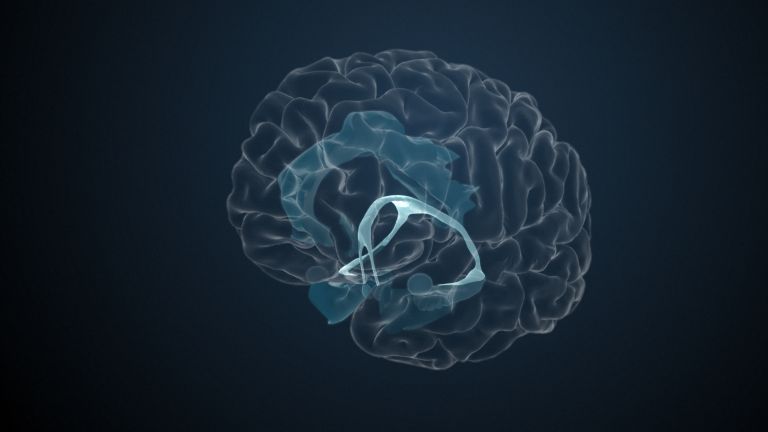
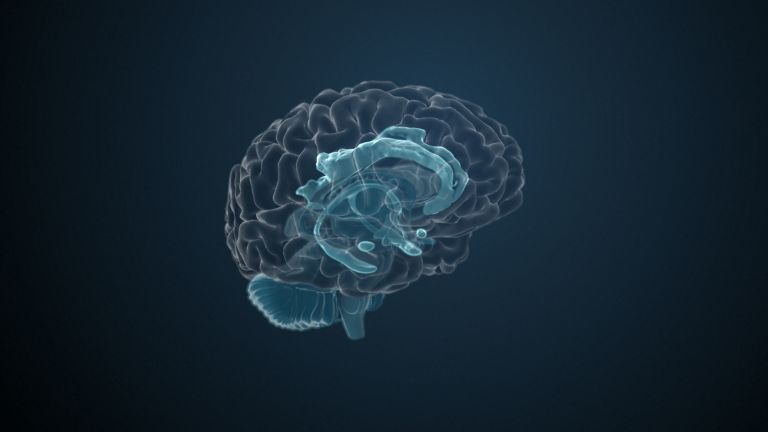
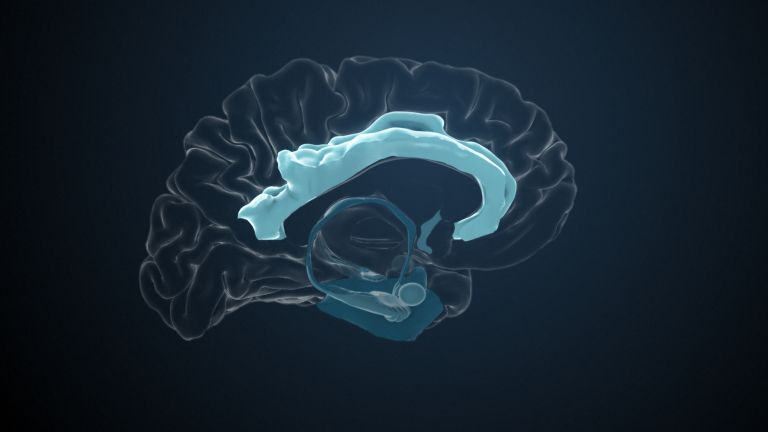
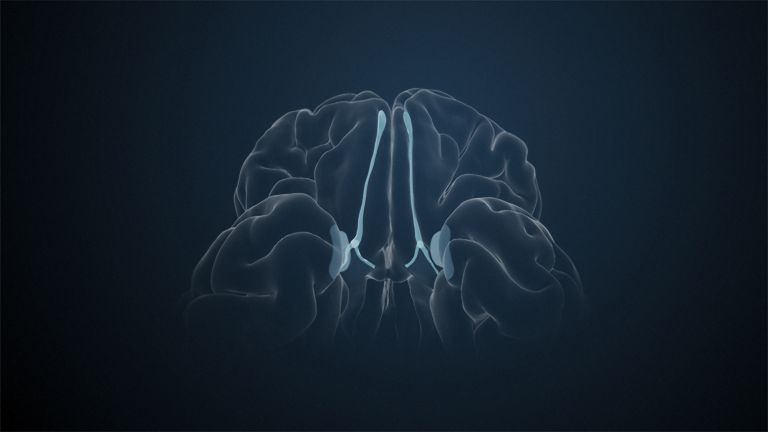
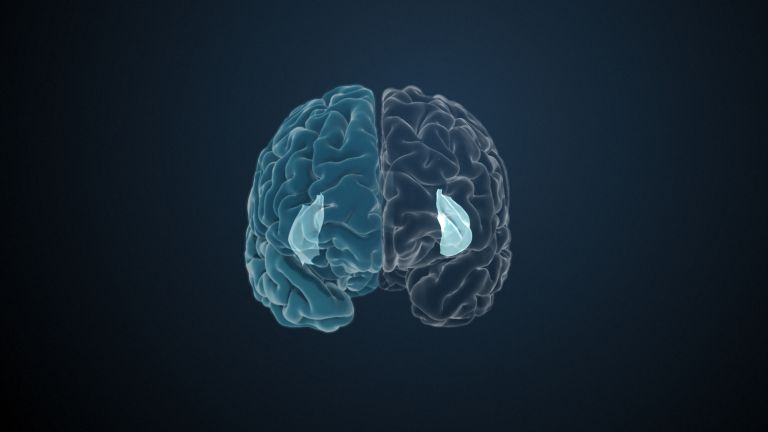
Looking at the Temporal lobe from below, you will see a small inward bulge on its inner surface, just behind its blunt anterior pole. It is called the uncus, or hook. This hook is quite remarkable: the Olfactory tract ends at its three-layered, allocortical surface. Just below these olfactory cortices, and even forming part of them, lies the amygdala, or almond-shaped Nucleus. The Amygdala belongs functionally to the Limbic system and is responsible for the affective coloring of our experiences. However, it is predominantly dark colors – fear and terror – with which it paints our inner worlds.
Temporal lobe
Lobus temporalis
The temporal lobe is one of the four lobes of the cerebrum and is located laterally (on the side) at the bottom. It contains important areas such as the auditory cortex and parts of Wernicke's area, as well as areas for higher visual processing; deep within it lies the medial temporal lobe with structures such as the hippocampus.
Olfactory tract
Tractus olfactorius
Smell information travels via the olfactory tract from the olfactory bulb, located just above the nose, to the primary olfactory cortex.
Nucleus
In cell biology, the nucleus in a cell is the cell nucleus, which contains the chromosomes, among other things. In neuroanatomy, the nucleus in the nervous system refers to a collection of cell bodies – known as gray matter in the central nervous system and ganglia in the peripheral nervous system.
Amygdala
corpus amygdaloideum
An important core area in the temporal lobe that is associated with emotions: it evaluates the emotional content of a situation and reacts particularly to threats. In this context, it is also activated by pain stimuli and plays an important role in the emotional evaluation of sensory stimuli. Inaddition, it is involved in linking emotions with memories, emotional learning ability, and social behavior. The amygdala is part of the limbic system.
Limbic system
The limbic system is a functional unit in the brain. It consists of interconnected structures, primarily in the cerebrum and diencephalon. The structures assigned to the system vary depending on the source, but the most important components are the hippocampus, amygdala, cingulate gyrus, septum, and mammillary bodies. The limbic system is involved in autonomic and visceral processes as well as in mechanisms of emotion, memory, and learning. Some authors mistakenly reduce the limbic system to the emotional world by referring to it as the "emotional brain."
Remembering and forgetting
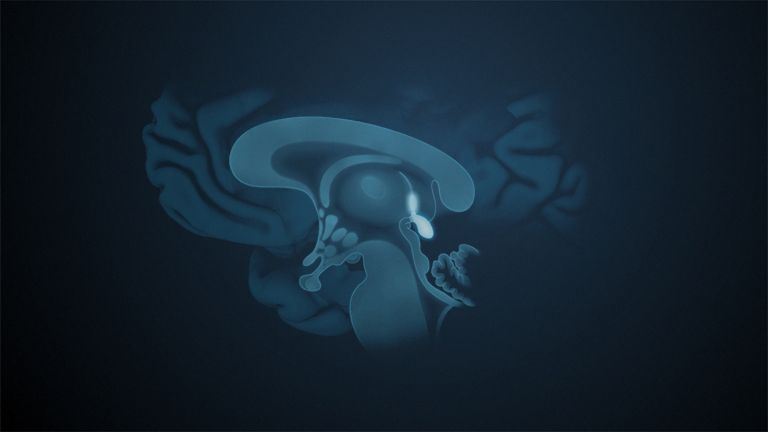
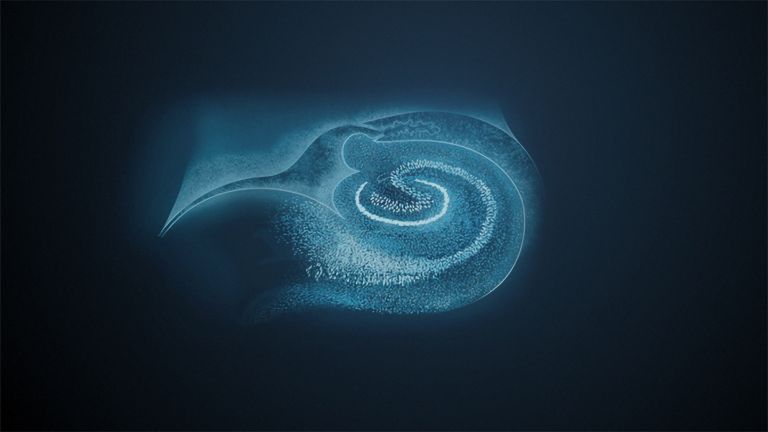
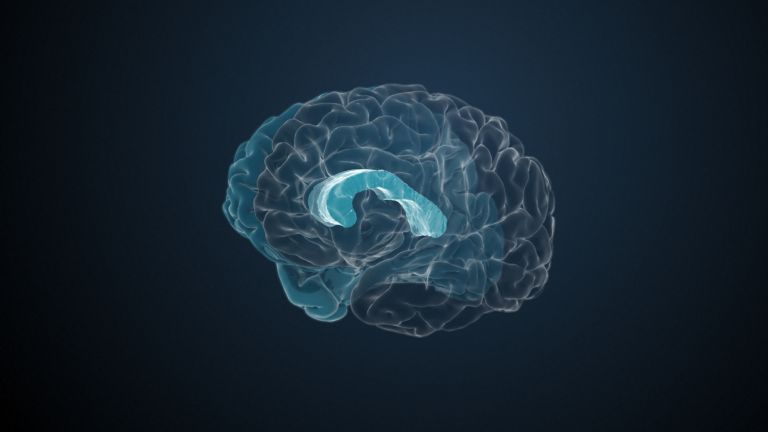
The Temporal lobe also plays an important role in Memory. And once again, it is the allocortical, i.e., non-typical six-layered cortical areas that serve these functions, and they too are considered part of the Limbic system The widest convolution of the temporal lobe, located furthest inside and visible from below, is the Parahippocampal gyrus It contains the entorhinal cortex, which acts as a kind of interface between what we are experiencing right now and the memory system. Right next to it and slightly above it is the hippocampal formation. To see it, you would have to cut off the temporal lobe and look at it from the inside. Together, these two – the hippocampal formation and the entorhinal Cortex – are responsible for both “reading” new memory content and retrieving existing memories.
Memories are not limited to knowledge and biography. Rather, they enable us to orient ourselves in everyday life. Important interfaces between the Visual system and memory are formed here by the isocortices on the posterior surface of the temporal lobe. For example, centers involved in the (re-)recognition of faces have been found in the spindle-shaped gyrus fusiformis.
Although we know a lot about the temporal lobe, it is still largely unclear what happens in the other isocortical regions, especially at its blunt anterior pole.
Temporal lobe
Lobus temporalis
The temporal lobe is one of the four lobes of the cerebrum and is located laterally (on the side) at the bottom. It contains important areas such as the auditory cortex and parts of Wernicke's area, as well as areas for higher visual processing; deep within it lies the medial temporal lobe with structures such as the hippocampus.
Memory
Memory is a generic term for all types of information storage in the organism. In addition to pure retention, this also includes the absorption of information, its organization, and retrieval.
Limbic system
The limbic system is a functional unit in the brain. It consists of interconnected structures, primarily in the cerebrum and diencephalon. The structures assigned to the system vary depending on the source, but the most important components are the hippocampus, amygdala, cingulate gyrus, septum, and mammillary bodies. The limbic system is involved in autonomic and visceral processes as well as in mechanisms of emotion, memory, and learning. Some authors mistakenly reduce the limbic system to the emotional world by referring to it as the "emotional brain."
Parahippocampal gyrus
gyrus parahippocampalis
The parahippocampal gyrus runs along the hippocampus in the lower, inner temporal lobe. Its anterior part is covered by the entorhinal cortex. It is connected to numerous areas of the cerebral cortex and projects to the hippocampus, which it also acts as a gateway to. This means that it is involved in the consolidation of explicit memory content, among other things. In addition, the posterior part of the parahippocampal gyrus contains the parahippocampal place area (PPA), which responds particularly to complex visual scenes such as rooms, landscapes, or streets and thus plays an important role in spatial orientation and location recognition.
Cortex
cortex cerebri
Cortex refers to a collection of neurons, typically in the form of a thin surface. However, it usually refers to the cerebral cortex, the outermost layer of the cerebrum. It is 2.5 mm to 5 mm thick and rich in nerve cells. The cerebral cortex is heavily folded, comparable to a handkerchief in a cup. This creates numerous convolutions (gyri), fissures (fissurae), and sulci. Unfolded, the surface area of the cortex is approximately 1,800cm².
Visual system
The visual system is the part of the nervous system that processes visual information. It primarily comprises the eye, the optic nerve, the optic chiasm, the optic tract, the lateral geniculate nucleus, the optic radiation, the primary visual cortex, and the visual association cortices.
posterior
A positional term – posterior means "towards the back, located at the rear." In relation to the nervous system, it refers to a direction towards the tail.
First published on September 5, 2011
Last updated on November 28, 2025