The Cingulate Gyrus
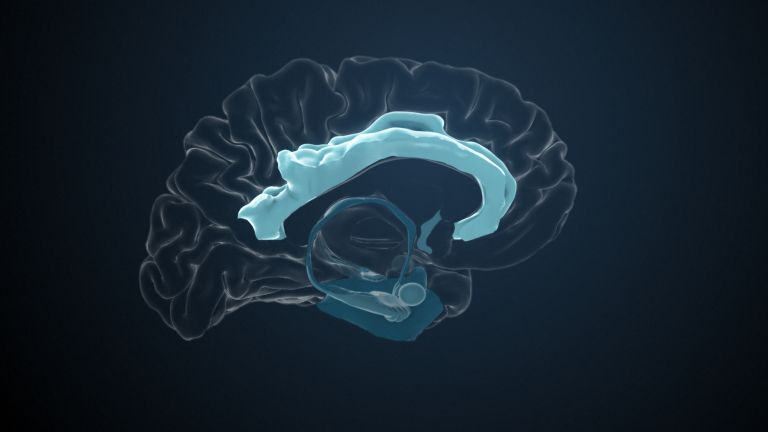
The “belt fold” is an internal part of the cortex. It becomes active during the Stroop test, during which the word “red” is written in green letters – and you have to name the color of the letters.
Scientific support: Prof. Dr. Herbert Schwegler, Prof. Dr. Anne Albrecht
Published: 22.09.2023
Difficulty: serious
As the largest part of the limbic system, the Cingulate gyrus influences attention and concentration, processes pain, and regulates emotions. If it is damaged, patients lack motivation; they appear emotionally numb and move very little.
Cingulate gyrus
gyrus cinguli
The cingulate gyrus is an important part of the limbic system in the cerebrum. This strip of cortex runs medially in the cerebrum, directly above the corpus callosum. Among other things, it is involved in emotions and memory. Through its connections to limbic and autonomic centers, it can also influence autonomic responses (e.g., heart rate, blood pressure). The anterior (front) region in particular is also associated with attention, motivation, error monitoring, and emotion regulation.
attention
Attention
Attention serves as a tool for consciously perceiving internal and external stimuli. We achieve this by focusing our mental resources on a limited number of stimuli or pieces of information. While some stimuli automatically attract our attention, we can select others in a controlled manner. The brain also unconsciously processes stimuli that are not currently the focus of our attention.
emotions
Neuroscientists understand "emotions" to be complex response patterns that include experiential, physiological, and behavioral components. They arise in response to personally relevant or significant events and generate a willingness to act, through which the individual attempts to deal with the situation. Emotions typically occur with subjective experience (feeling), but differ from pure feeling in that they involve conscious or implicit engagement with the environment. Emotions arise in the limbic system, among other places, which is a phylogenetically ancient part of the brain. Psychologist Paul Ekman has defined six cross-cultural basic emotions that are reflected in characteristic facial expressions: joy, anger, fear, surprise, sadness, and disgust.
In a cingulotomy, the doctor permanently severs the Cingulate gyrus during an operation. This causes irreversible changes to the patient's psyche, but the procedure can be a last resort for treatment-resistant Obsessive-compulsive disorders and depression, as well as severe chronic pain. Nowadays, however, cingulotomy is rarely performed, as other procedures have become more attractive. One example is deep brain stimulation, in which implanted electrodes stimulate specific areas of the brain. Unlike cutting through an area of the brain, this method is reversible.
Cingulate gyrus
gyrus cinguli
The cingulate gyrus is an important part of the limbic system in the cerebrum. This strip of cortex runs medially in the cerebrum, directly above the corpus callosum. Among other things, it is involved in emotions and memory. Through its connections to limbic and autonomic centers, it can also influence autonomic responses (e.g., heart rate, blood pressure). The anterior (front) region in particular is also associated with attention, motivation, error monitoring, and emotion regulation.
Obsessive-compulsive disorders
This term summarizes neuropsychiatric disorders that manifest themselves in the form of obsessive thoughts on the one hand and compulsive actions on the other. For example, those affected have the urge to devote themselves to constantly recurring, mostly anxious thoughts, to wash themselves excessively often or to control their fellow human beings disproportionately. While neuroscientists used to try to explain OCD in purely psychological terms, it is now believed that some biological factors also contribute to its development, such as a disturbed metabolism of various neurotransmitters in the brain.
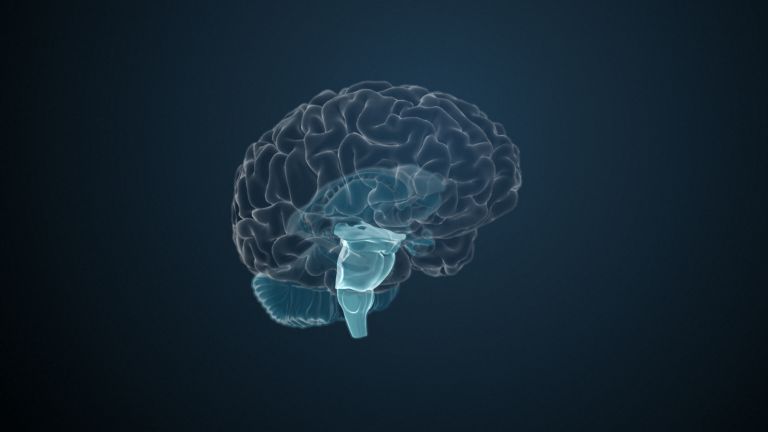
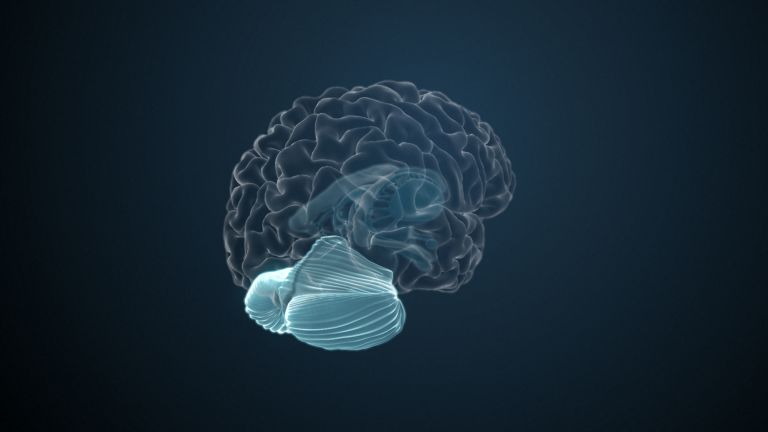
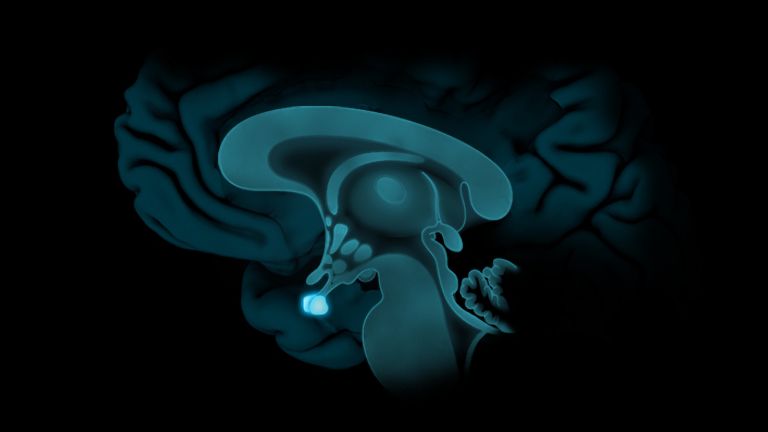
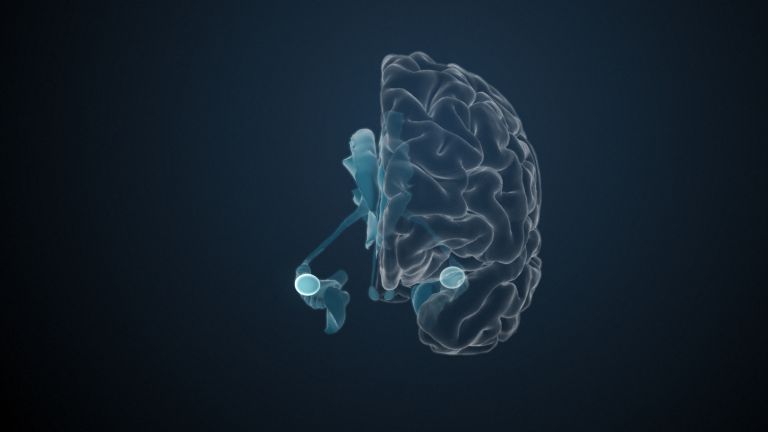
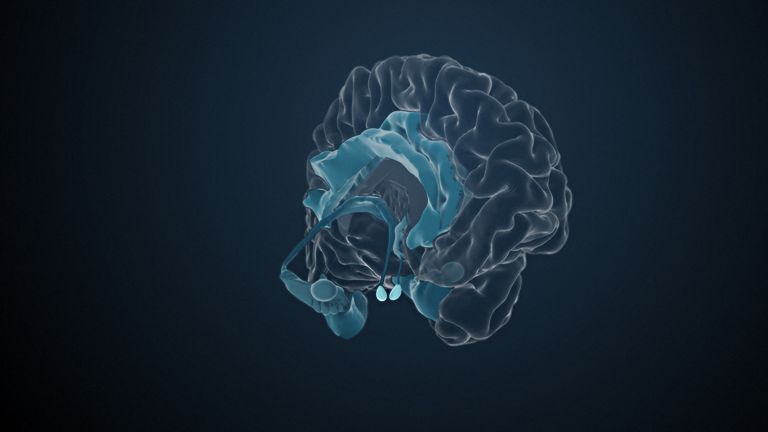
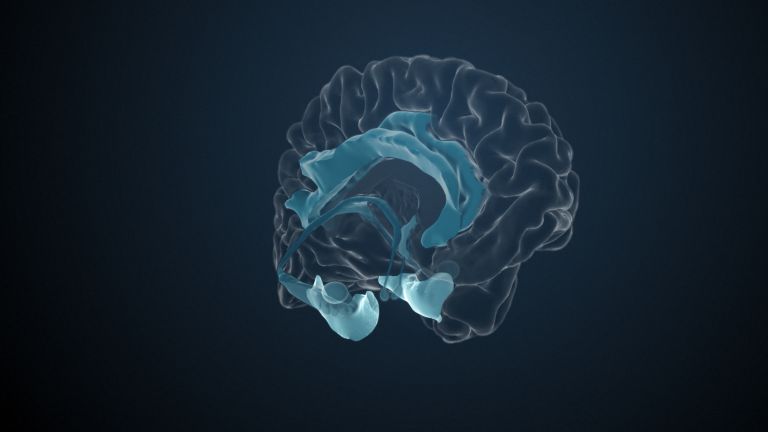
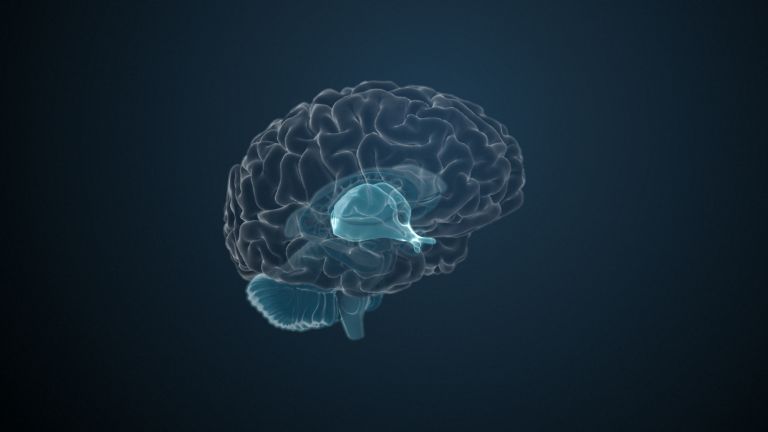
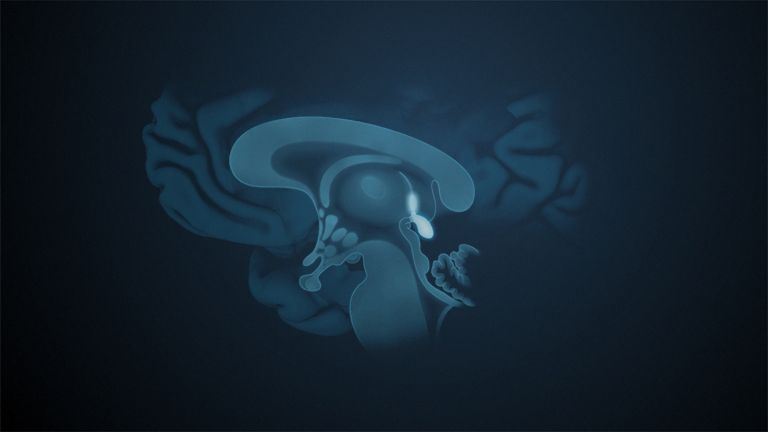
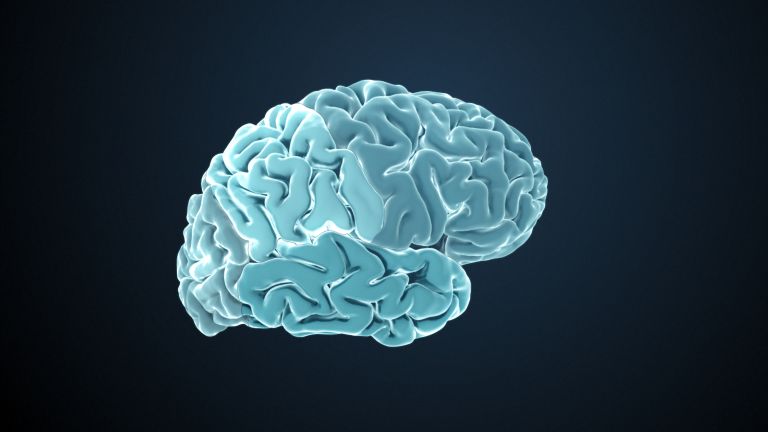
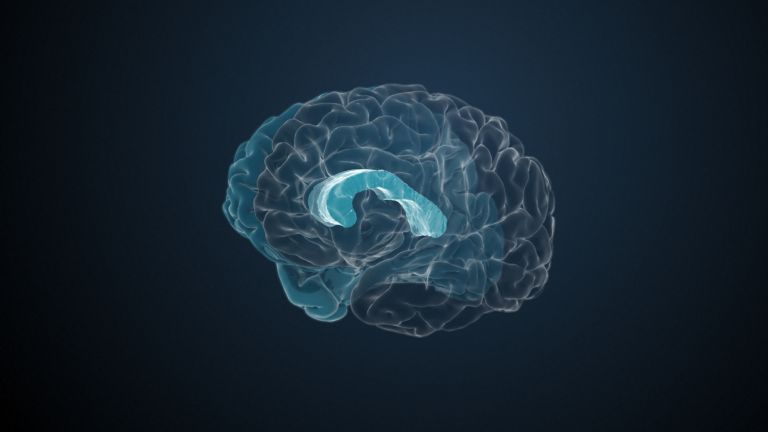
The Cingulate gyrus can only be seen when the brain is cut lengthwise down the middle and opened upIt is the part of the cerebral Cortex above the Corpus callosum that connects the two hemispheres. As the largest part of the limbic system, the cingulate gyrus influences attention, pain processing, and the regulation of emotions. It is also part of the Papez circuit, which begins and ends at the Hippocampus and plays a key role in the permanent storage of Memory content.
Cingulate gyrus
gyrus cinguli
The cingulate gyrus is an important part of the limbic system in the cerebrum. This strip of cortex runs medially in the cerebrum, directly above the corpus callosum. Among other things, it is involved in emotions and memory. Through its connections to limbic and autonomic centers, it can also influence autonomic responses (e.g., heart rate, blood pressure). The anterior (front) region in particular is also associated with attention, motivation, error monitoring, and emotion regulation.
Cortex
cortex cerebri
Cortex refers to a collection of neurons, typically in the form of a thin surface. However, it usually refers to the cerebral cortex, the outermost layer of the cerebrum. It is 2.5 mm to 5 mm thick and rich in nerve cells. The cerebral cortex is heavily folded, comparable to a handkerchief in a cup. This creates numerous convolutions (gyri), fissures (fissurae), and sulci. Unfolded, the surface area of the cortex is approximately 1,800cm².
Corpus callosum
As the largest commissure (connection in the brain), the corpus callosum connects the two cerebral hemispheres. It consists of 200-250 million nerve fibers and serves to exchange information.
emotions
Neuroscientists understand "emotions" to be complex response patterns that include experiential, physiological, and behavioral components. They arise in response to personally relevant or significant events and generate a willingness to act, through which the individual attempts to deal with the situation. Emotions typically occur with subjective experience (feeling), but differ from pure feeling in that they involve conscious or implicit engagement with the environment. Emotions arise in the limbic system, among other places, which is a phylogenetically ancient part of the brain. Psychologist Paul Ekman has defined six cross-cultural basic emotions that are reflected in characteristic facial expressions: joy, anger, fear, surprise, sadness, and disgust.
Hippocampus
The hippocampus is the largest part of the archicortex and an area in the temporal lobe. It is also an important part of the limbic system. Functionally, it is involved in memory processes, but also in spatial orientation and learning. It comprises the subiculum, the dentate gyrus, and the Ammon's horn with its four fields CA1-CA4.
Changes in the structure of the hippocampus due to stress are associated with chronic pain. The hippocampus also plays an important role in the amplification of pain through anxiety.
Memory
Memory is a generic term for all types of information storage in the organism. In addition to pure retention, this also includes the absorption of information, its organization, and retrieval.
Location and structure
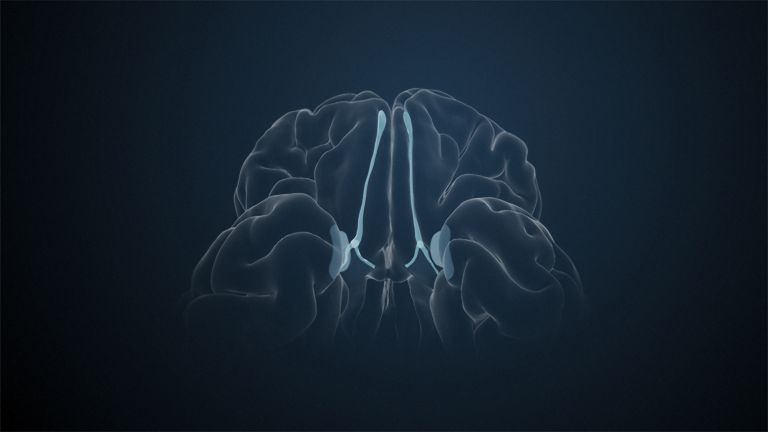
Gyrus cinguli is Latin for “belt fold.” Like a belt, it lies on the Corpus callosum and runs parallel to it from front to back. However, it includes not only the cerebral Cortex directly above the corpus callosum, but also its continuation into the sulcus that borders it above – the sulcus cinguli. Interestingly, the surface of the Cingulate gyrus varies greatly from person to person: its sulci are located in different places, and in some people, the cingulate gyrus is even divided into two parallel gyri by an additional paracingular sulcus.
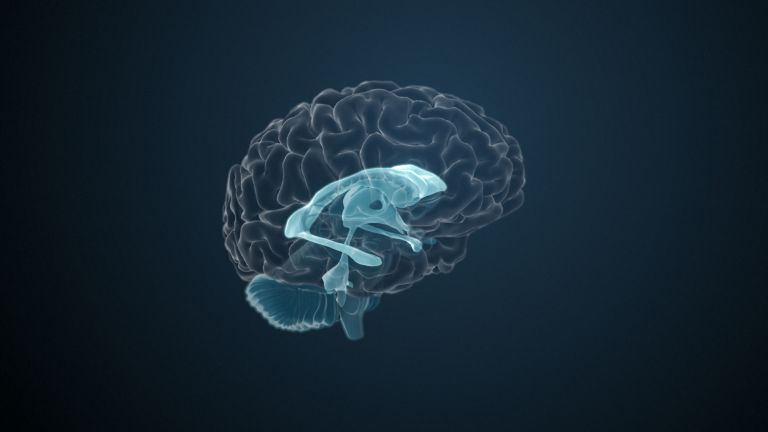
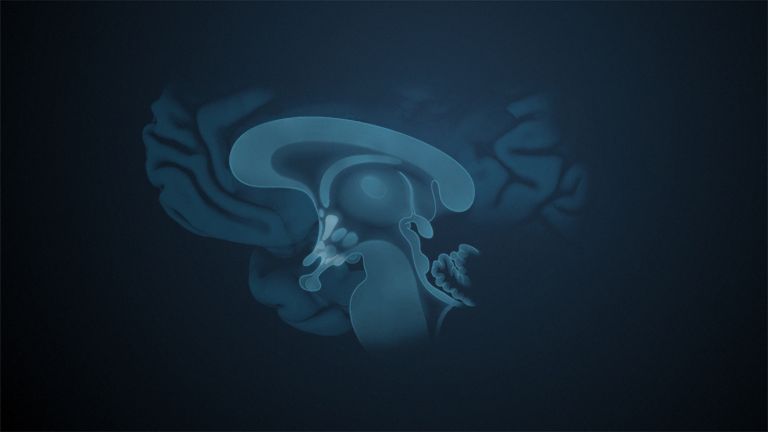
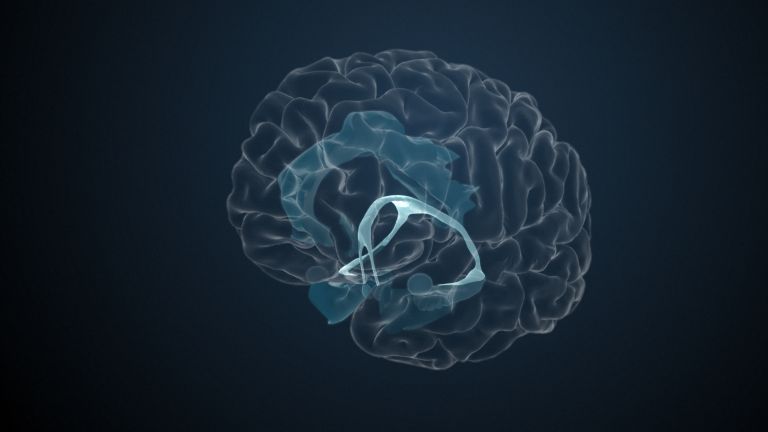
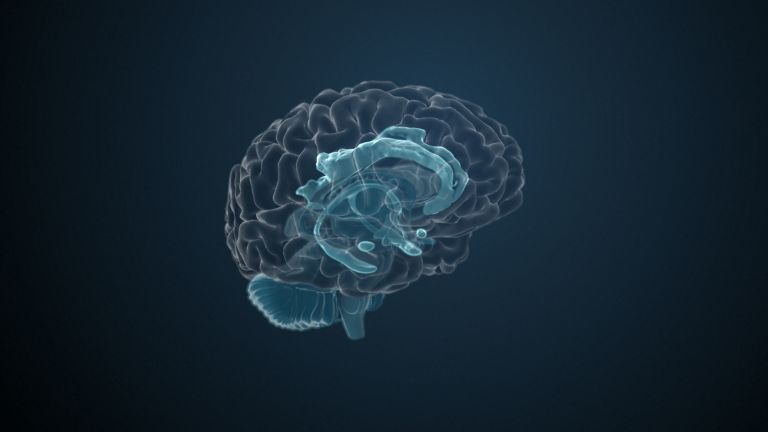
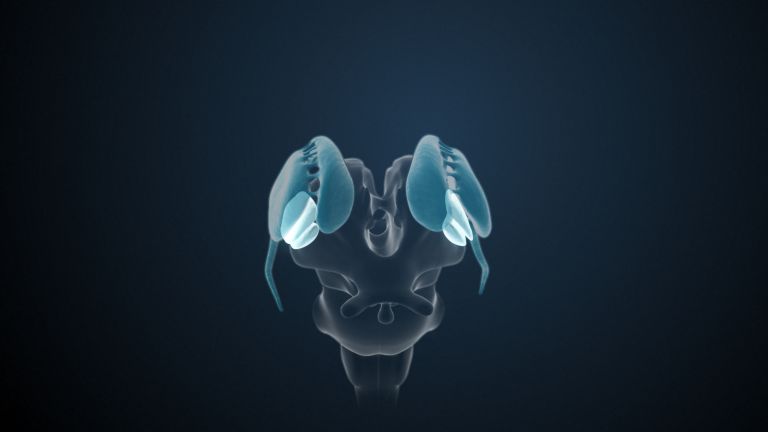
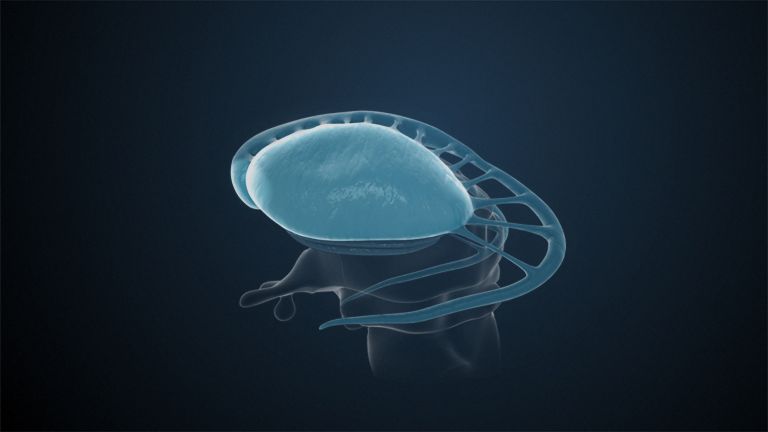
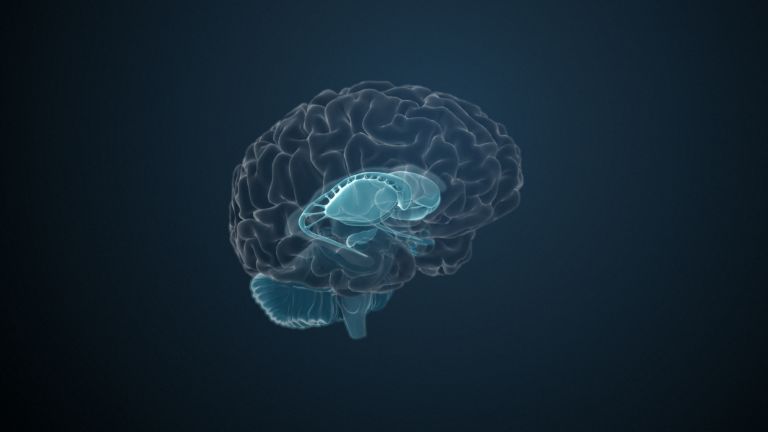
Together with the hippocampal gyrus, the cingulate gyrus forms the outer ring of the Limbic system The corpus callosum is the boundary between outer and inner ring, but the two are not really separated; the cingulate gyrus is well connected to all other parts of the limbic system via fiber connections.
Corpus callosum
As the largest commissure (connection in the brain), the corpus callosum connects the two cerebral hemispheres. It consists of 200-250 million nerve fibers and serves to exchange information.
Cortex
cortex cerebri
Cortex refers to a collection of neurons, typically in the form of a thin surface. However, it usually refers to the cerebral cortex, the outermost layer of the cerebrum. It is 2.5 mm to 5 mm thick and rich in nerve cells. The cerebral cortex is heavily folded, comparable to a handkerchief in a cup. This creates numerous convolutions (gyri), fissures (fissurae), and sulci. Unfolded, the surface area of the cortex is approximately 1,800cm².
Cingulate gyrus
gyrus cinguli
The cingulate gyrus is an important part of the limbic system in the cerebrum. This strip of cortex runs medially in the cerebrum, directly above the corpus callosum. Among other things, it is involved in emotions and memory. Through its connections to limbic and autonomic centers, it can also influence autonomic responses (e.g., heart rate, blood pressure). The anterior (front) region in particular is also associated with attention, motivation, error monitoring, and emotion regulation.
Limbic system
The limbic system is a functional unit in the brain. It consists of interconnected structures, primarily in the cerebrum and diencephalon. The structures assigned to the system vary depending on the source, but the most important components are the hippocampus, amygdala, cingulate gyrus, septum, and mammillary bodies. The limbic system is involved in autonomic and visceral processes as well as in mechanisms of emotion, memory, and learning. Some authors mistakenly reduce the limbic system to the emotional world by referring to it as the "emotional brain."




Structure and nerve pathways
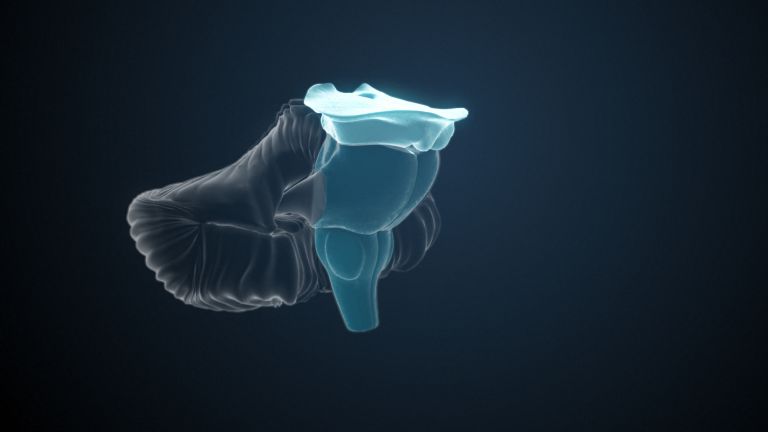
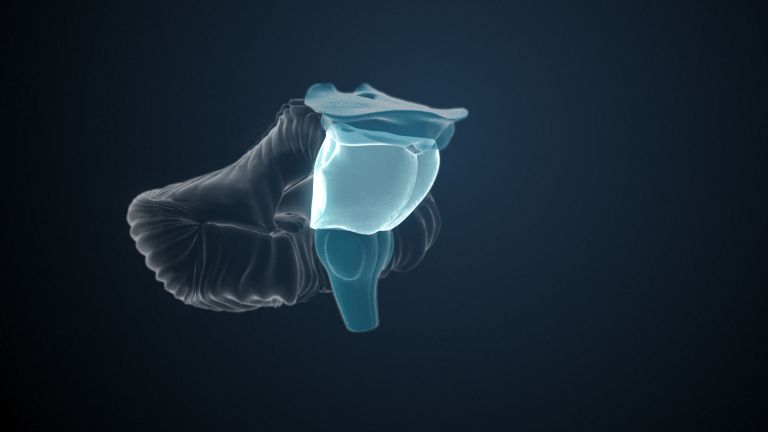
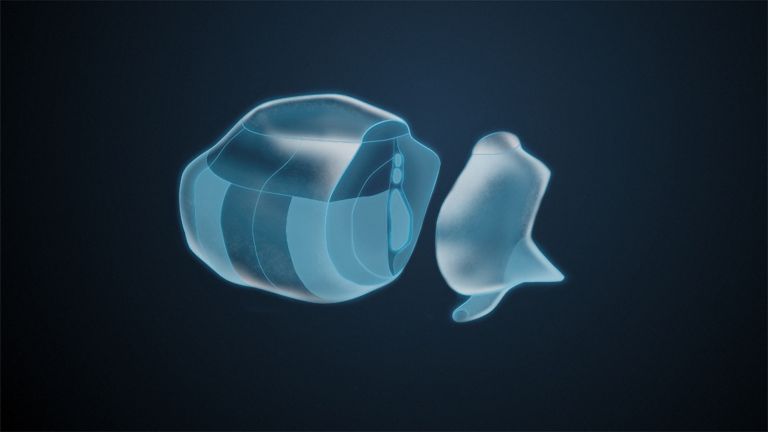
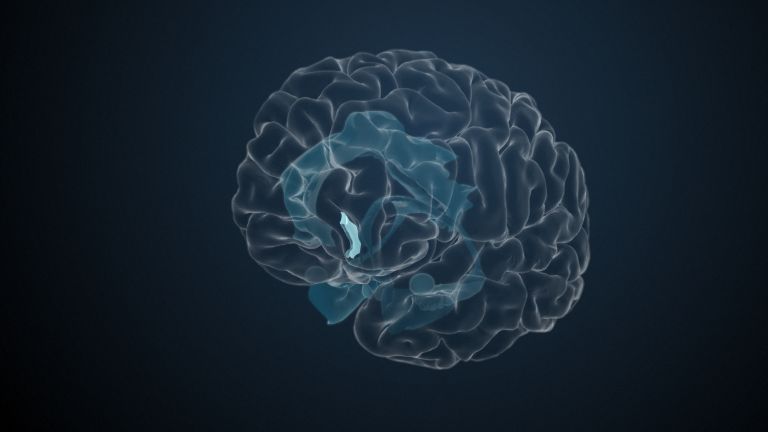
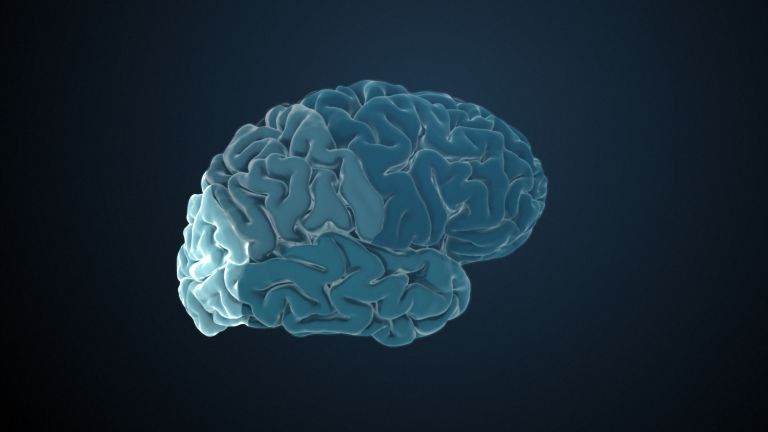
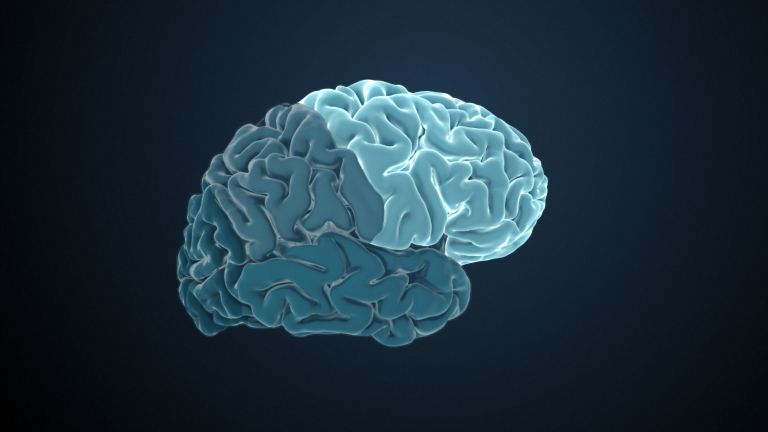
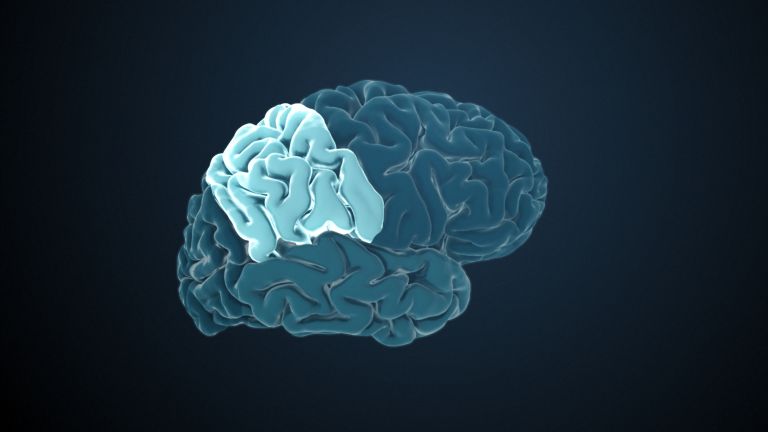
Although it is not visible externally, internally, at the cellular level, the Cingulate gyrus is divided into two parts with different functions. Their names are rather unimaginative: they are simply called Pars anterior and Pars posterior – the front part and the rear part.
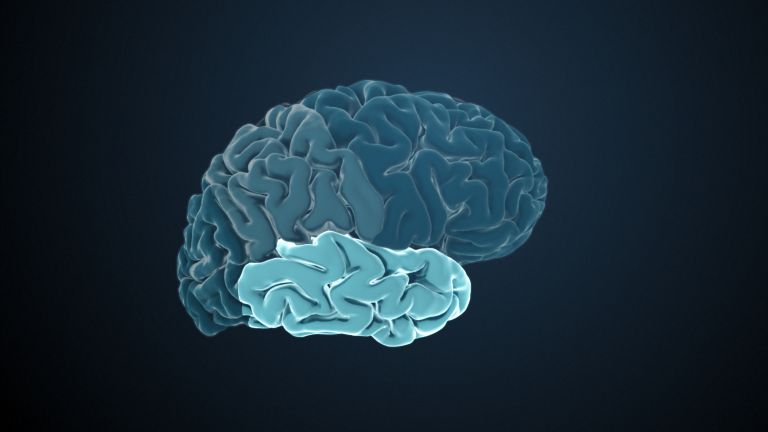
The posterior cingulate gyrus is connected to different areas of the cerebral Cortex in the parietal, temporal, and frontal lobes. It primarily regulates visual-spatial attention and is responsible for spatial Memory. This may be due to the fact that it receives input from the posterior parietal lobe, which plays a key role in orientation. Cytologically, the posterior cingulate gyrus mainly contains nerve cells that are involved in sensory processing. Under the microscope, the many small cells in the granular layers of the cortex are striking.
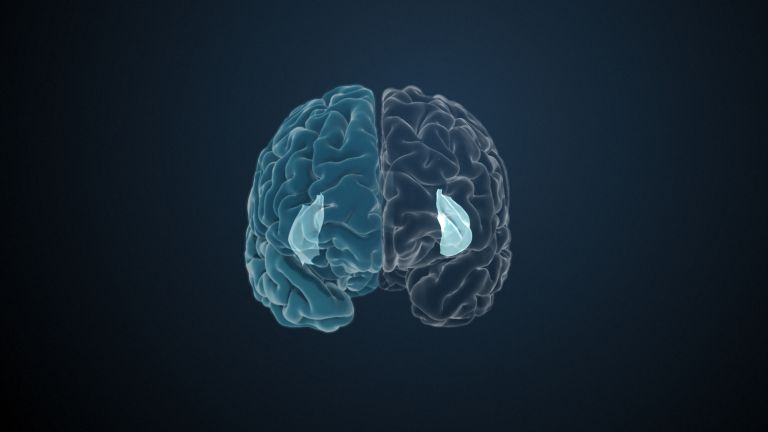
The front part has been much better studied experimentally than the rear part. It exchanges information with the amygdala, the Nucleus accumbens, the thalamus, the motor and prefrontal cortex, and is mainly composed of motor nerve cells. Its cortex is agranular, meaning that the granular cell layers typical of other brain areas are greatly reduced. The front part of the cingulate gyrus also plays a role in motor function: if it is damaged, those affected suffer from a lack of movement.
The anterior cingulate gyrus is active when it comes to choosing between different behaviors in response to conflicting stimuli. An example is the Stroop test: Test subjects must name the color in which a word is written. This is more difficult than one would suspect: between two conflicting stimuli – the word “red” written in green – attention must be directed to the correct answer. In addition, the anterior cingulate gyrus is involved in expressive movements, i.e., Facial expressions and gestures. And last but not least, it is involved in the evaluation of pain stimuli. Professionals divide the anterior cingulate gyrus further into a posterior cognitive and an anterior affective subunit.
Cingulate gyrus
gyrus cinguli
The cingulate gyrus is an important part of the limbic system in the cerebrum. This strip of cortex runs medially in the cerebrum, directly above the corpus callosum. Among other things, it is involved in emotions and memory. Through its connections to limbic and autonomic centers, it can also influence autonomic responses (e.g., heart rate, blood pressure). The anterior (front) region in particular is also associated with attention, motivation, error monitoring, and emotion regulation.
posterior
A positional term – posterior means "towards the back, located at the rear." In relation to the nervous system, it refers to a direction towards the tail.
Cortex
cortex cerebri
Cortex refers to a collection of neurons, typically in the form of a thin surface. However, it usually refers to the cerebral cortex, the outermost layer of the cerebrum. It is 2.5 mm to 5 mm thick and rich in nerve cells. The cerebral cortex is heavily folded, comparable to a handkerchief in a cup. This creates numerous convolutions (gyri), fissures (fissurae), and sulci. Unfolded, the surface area of the cortex is approximately 1,800cm².
frontal
An anatomical position designation – frontal means "towards the forehead," i.e., at the front.
attention
Attention
Attention serves as a tool for consciously perceiving internal and external stimuli. We achieve this by focusing our mental resources on a limited number of stimuli or pieces of information. While some stimuli automatically attract our attention, we can select others in a controlled manner. The brain also unconsciously processes stimuli that are not currently the focus of our attention.
Memory
Memory is a generic term for all types of information storage in the organism. In addition to pure retention, this also includes the absorption of information, its organization, and retrieval.
Nucleus
In cell biology, the nucleus in a cell is the cell nucleus, which contains the chromosomes, among other things. In neuroanatomy, the nucleus in the nervous system refers to a collection of cell bodies – known as gray matter in the central nervous system and ganglia in the peripheral nervous system.
Facial expressions
Five muscle groups control the visible movements on the surface of our faces – and this applies to everyone in the world. Neuroscientists emphasize universal, evolutionarily anchored reactions as the reason for this. For this reason, the basic emotions of fear, anger, disgust, sadness, surprise, and joy leave similar traces on the face everywhere, which we can usually identify reliably even in strangers.
Stimulation and malfunction
If the Cingulate gyrus is stimulated with an electrode – i.e., activated – bodily functions change: An animal stimulated in this way breathes more slowly, its heart beats more slowly, its blood pressure drops, and its pupils dilate.
If, on the other hand, the cingulate gyrus is damaged – for example, by a stroke – the person affected reacts less to environmental stimuli and lacks drive: they move less and also speak less. If the Lesion is more extensive and occurs on both sides of the brain at the same time, the person no longer even responds to pain stimuli – they turn toward the stimulus, so they do register it, but otherwise show no appropriate reaction. Monkeys that have had their cingulate gyrus removed become tamer, but at the same time lose all interest in other members of their group.
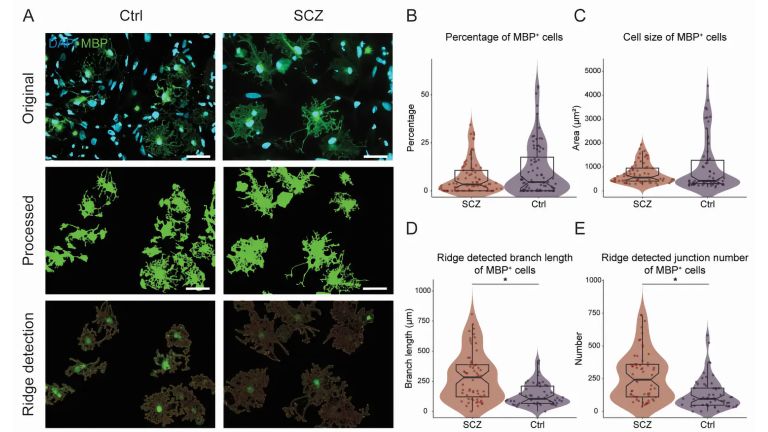
Neuroscientists suspect that the cingulate gyrus also plays a role in the development of neuropsychiatric disorders such as depression, obsessive-compulsive disorder, and schizophrenia. For example, people with schizophrenia lack drive and attention. They have noticeable problems with the Stroop test and make more mistakes. In addition, their cingulate gyrus is only slightly active when performing the tasks. Other studies have found that this part of the brain has reduced blood flow in schizophrenic patients and is smaller in volume than in healthy subjects. Postmortem examinations of brain tissue from schizophrenic patients revealed that certain nerve cells in the anterior part of the cingulate gyrus are smaller and less frequent in these patients.
Cingulate gyrus
gyrus cinguli
The cingulate gyrus is an important part of the limbic system in the cerebrum. This strip of cortex runs medially in the cerebrum, directly above the corpus callosum. Among other things, it is involved in emotions and memory. Through its connections to limbic and autonomic centers, it can also influence autonomic responses (e.g., heart rate, blood pressure). The anterior (front) region in particular is also associated with attention, motivation, error monitoring, and emotion regulation.
stroke
Cerebral apoplexy
In a stroke, the brain or parts of it are no longer supplied with sufficient blood, which impairs the supply of oxygen and glucose. The most common cause is a blockage in an artery (ischemic stroke), less commonly a hemorrhage (hemorrhagic stroke). Typical symptoms include sudden visual disturbances, dizziness, paralysis, speech or sensory disturbances. Long-term consequences can include various sensory, motor, and cognitive impairments.
Lesion
A lesion is damage to organic tissue.
attention
Attention
Attention serves as a tool for consciously perceiving internal and external stimuli. We achieve this by focusing our mental resources on a limited number of stimuli or pieces of information. While some stimuli automatically attract our attention, we can select others in a controlled manner. The brain also unconsciously processes stimuli that are not currently the focus of our attention.
First published on September 9, 2011
Updated on December 22, 2023