The Pallidum
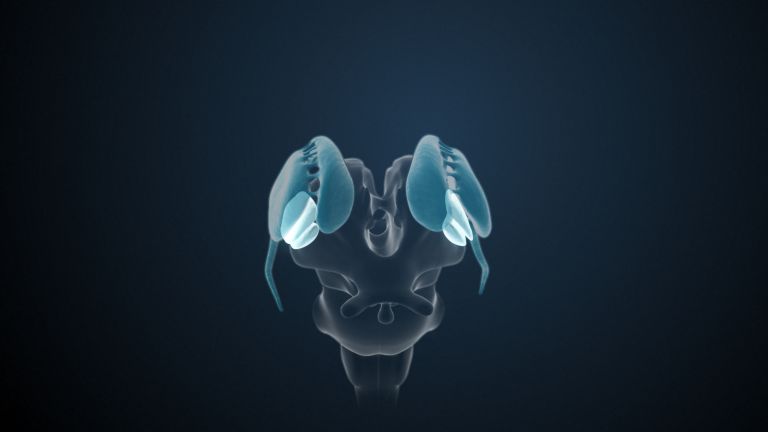
Movements are the result of a delicate balance between inhibition and excitation. The globus pallidus, the pale nucleus of the basal ganglia, does both, providing a prime example of highly complex feedback loops.
Scientific support: Prof. Dr. Horst-Werner Korf
Published: 23.11.2025
Difficulty: intermediate
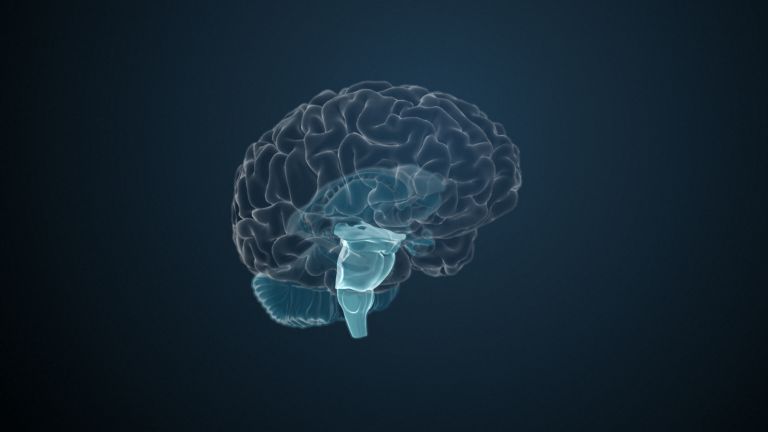
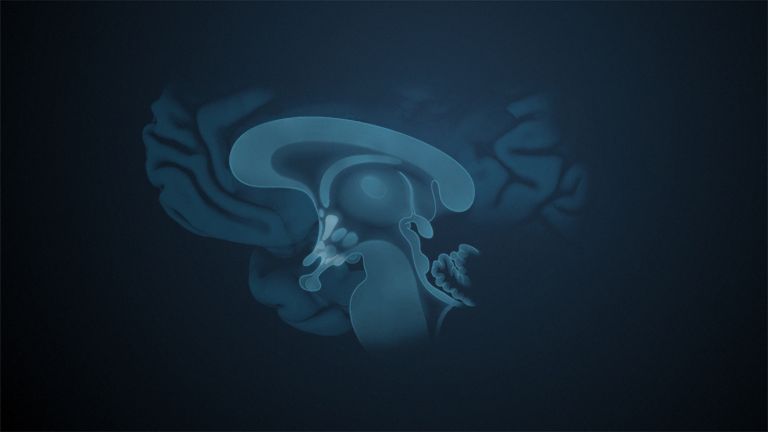
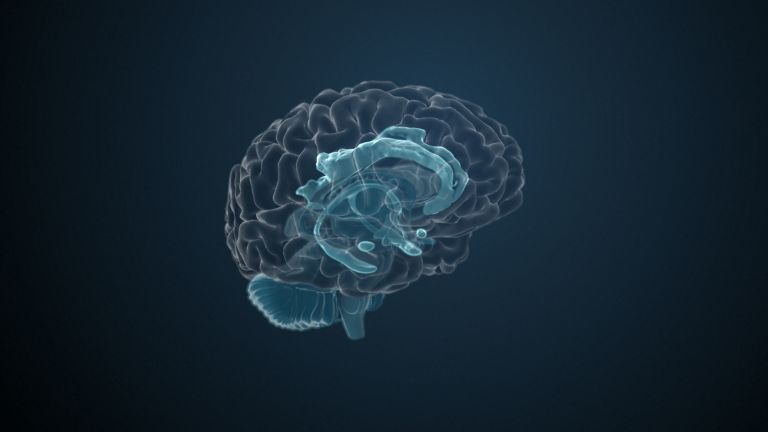
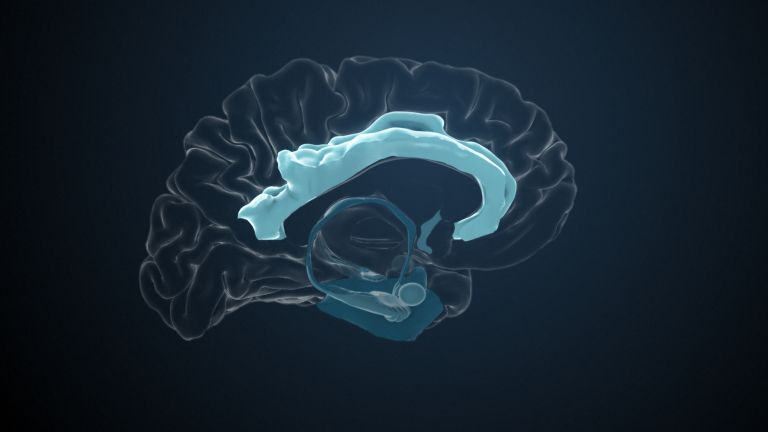
The Pallidum is the output element of the Basal ganglia It modulates the motor activity of the Cortex via the thalamus. Inhibitory and excitatory feedback loops between the cortex, striatum, globus pallidus, subthalamic nucleus, and thalamus play an important role in this process.
Pallidum
globus pallidus
The globus pallidus, also known as the pallidum, is an important nucleus of the basal ganglia. It is a motor nucleus of the extrapyramidal system involved in the regulation of movement. The pallidum has an inhibitory and an excitatory part. The Latin name pallidus – pale – refers to the color of this nucleus.
Basal ganglia
Nuclei basales
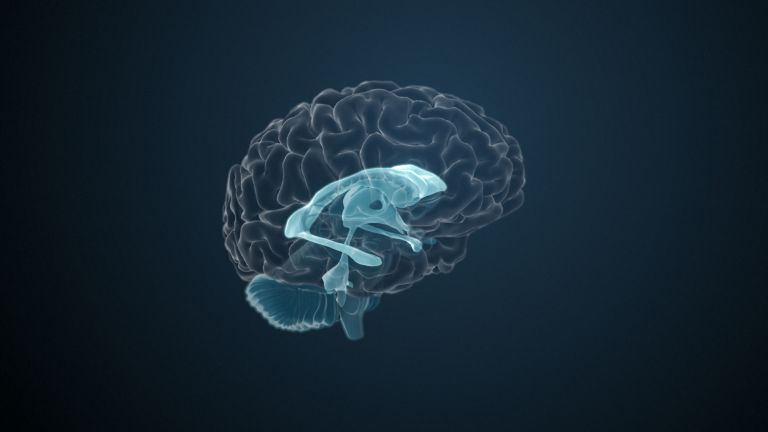
The basal ganglia are a group of subcortical nuclei (located beneath the cerebral cortex) in the telencephalon. The basal ganglia include the globus pallidus and the striatum, and, depending on the author, other structures such as the substantia nigra and the subthalamic nucleus. The basal ganglia are primarily associated with voluntary motor function, but they also influence motivation, learning, and emotion.
Cortex
cortex cerebri
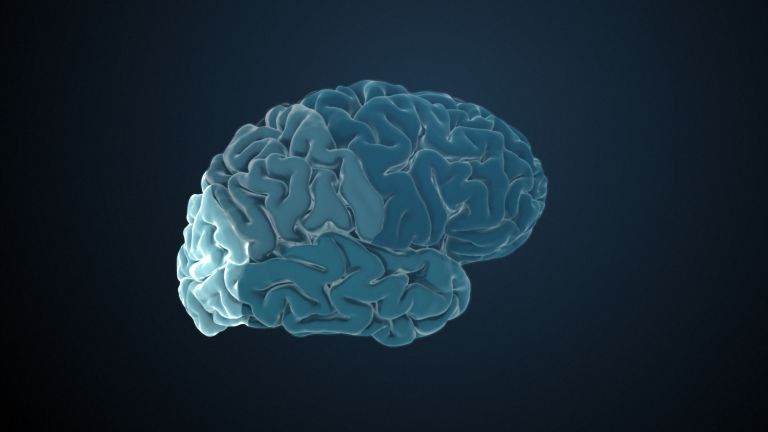
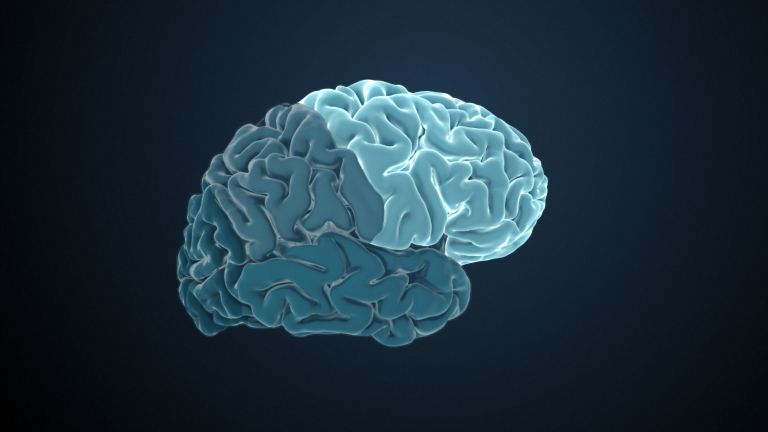
Cortex refers to a collection of neurons, typically in the form of a thin surface. However, it usually refers to the cerebral cortex, the outermost layer of the cerebrum. It is 2.5 mm to 5 mm thick and rich in nerve cells. The cerebral cortex is heavily folded, comparable to a handkerchief in a cup. This creates numerous convolutions (gyri), fissures (fissurae), and sulci. Unfolded, the surface area of the cortex is approximately 1,800cm².
excitatory
Exciting synapses are described as excitatory when they depolarize the subsequent cell membrane and can thus lead to the formation of an action potential. An excitatory effect is usually produced by an exciting transmitter (messenger substance), such as glutamate. The opposite is an inhibitory synapse.
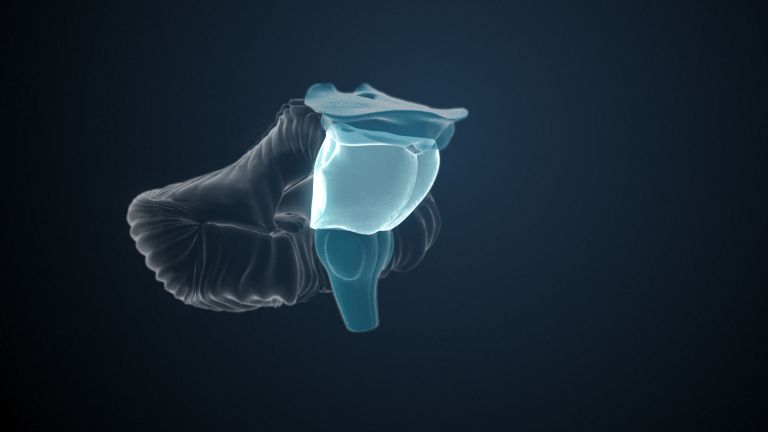
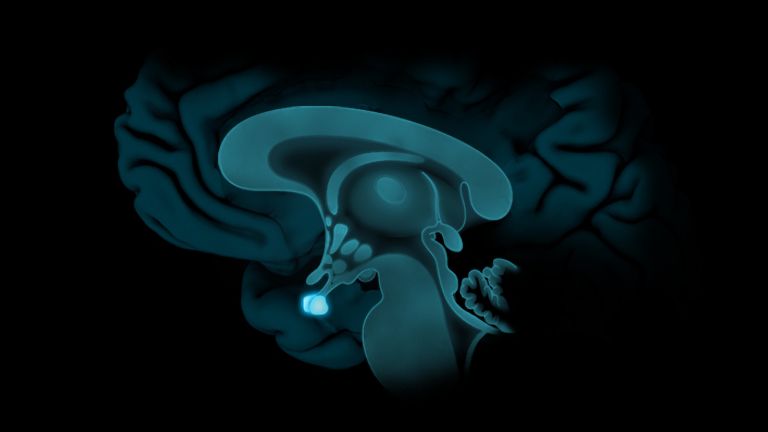
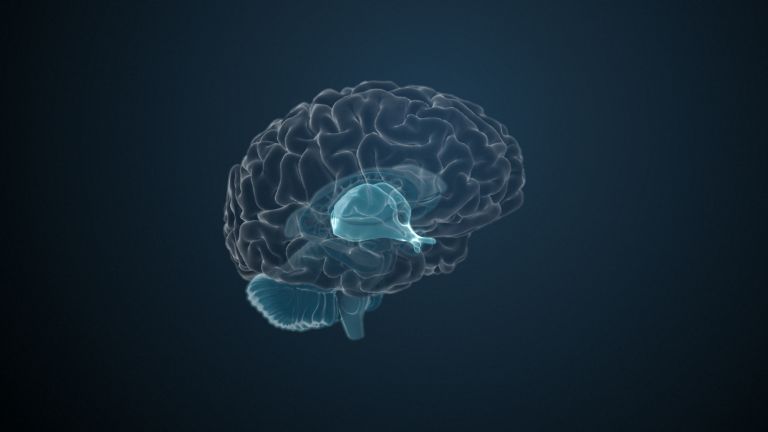
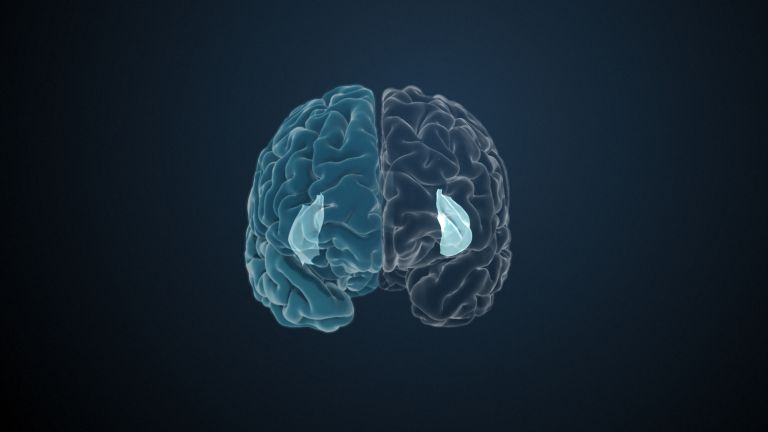
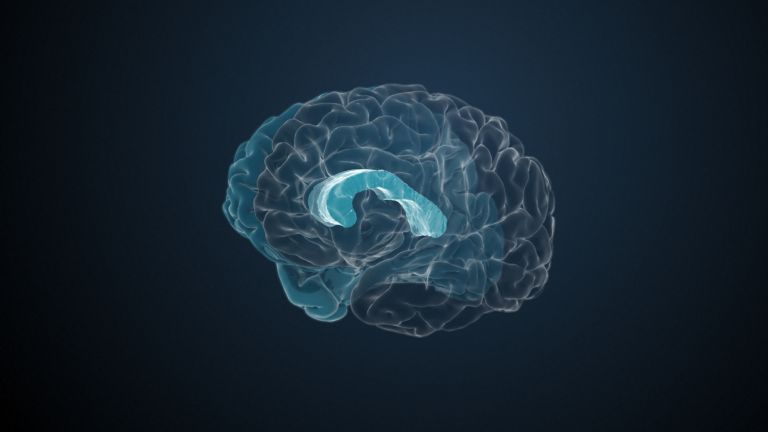
On a fresh brain section, the pale Nucleus – the globus pallidus, or Pallidum for short –lives up to its name: Especially when compared to the putamen, which lies next to it, it appears rather pale. The pallidum owes its striking colorlessness to many large, pigment-poor nerve cells. As part of the basal ganglia, it plays an important role in voluntary motor function – and does so in a highly complex manner.
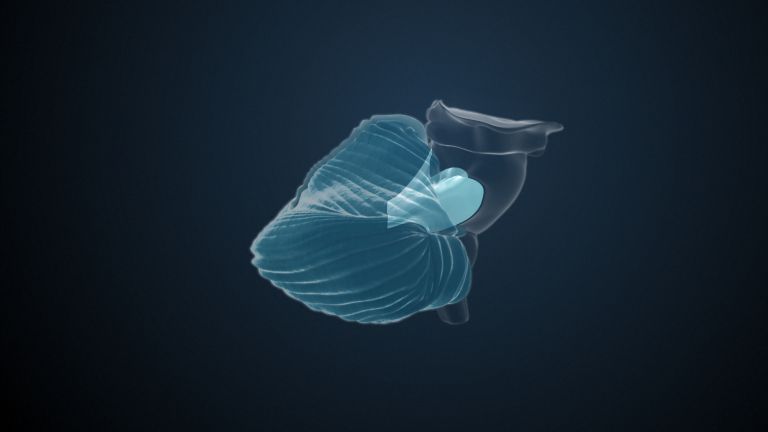
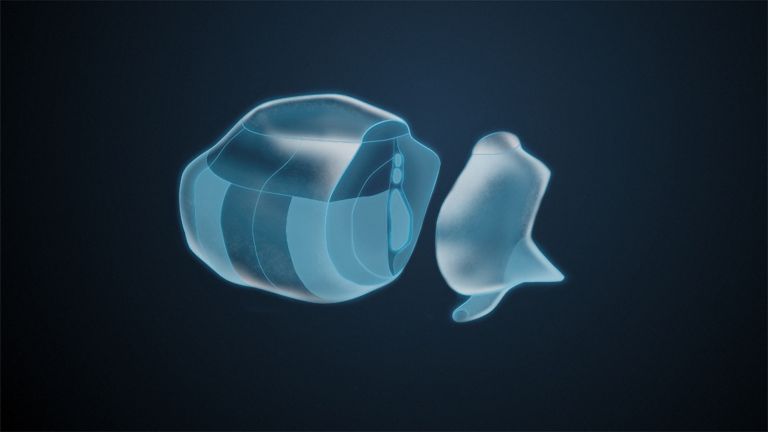
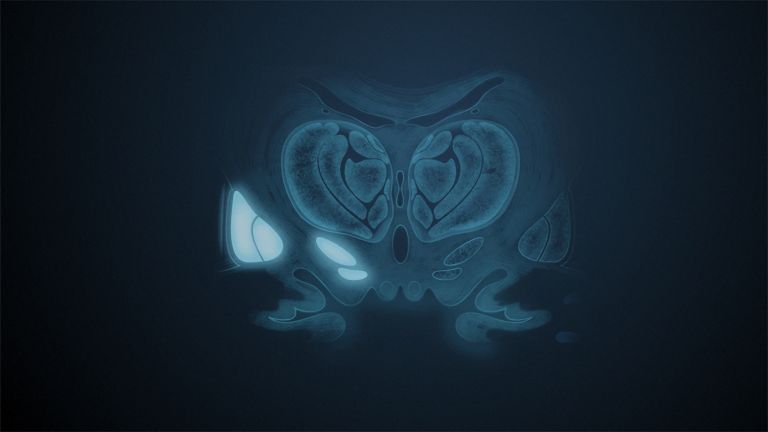
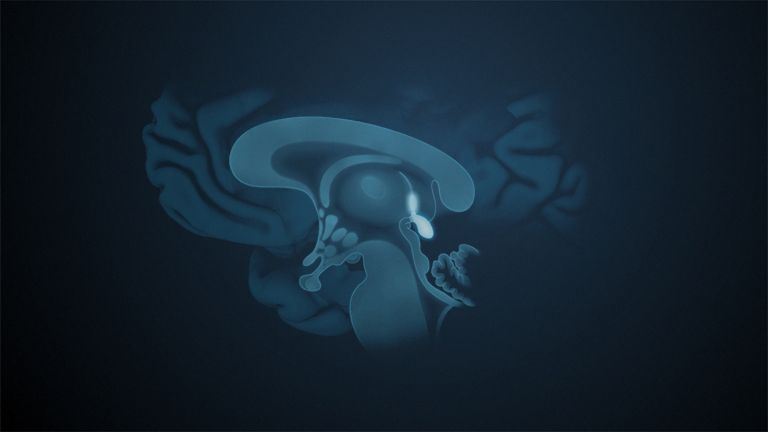
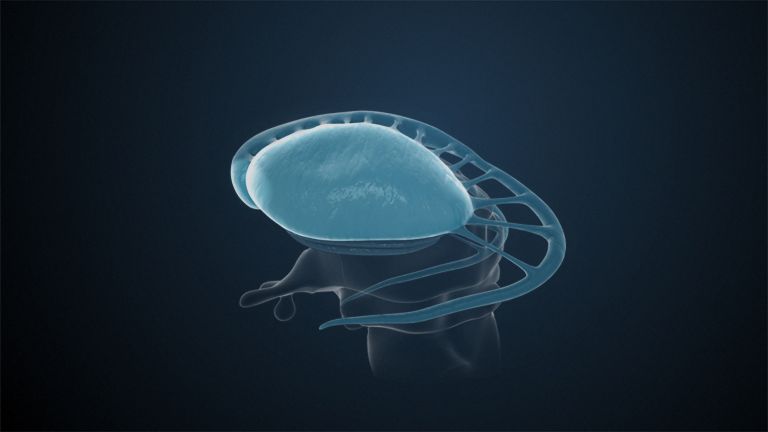
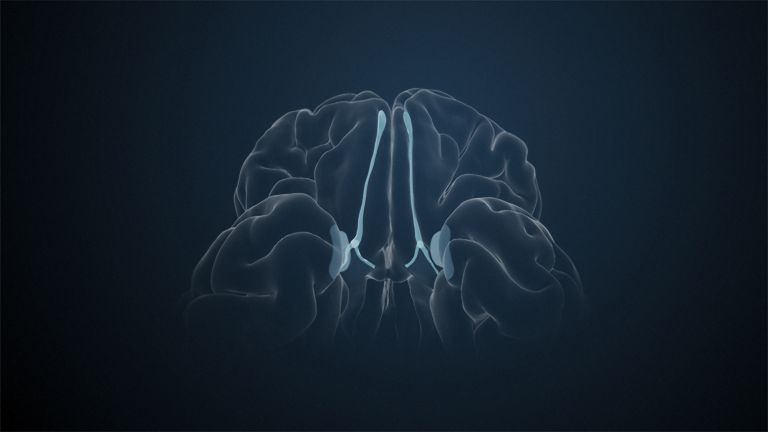
The globus pallidus consists of an inner part – the globus pallidus internus – and an outer part – the globus pallidus externus – which are separated from each other by a thin layer of white matter Topographically speaking, it nestles closely against the Putamen. Functionally and embryologically, however, the putamen and pallidum are very different. In fact, the globus pallidus is a scattered part of the diencephalon, more precisely – the ventral thalamus – which has been pushed to the side by the fibers of the internal capsule. And so it is also the Diencephalon to which the pale nucleus sends the mass of its axons.
Nucleus
In cell biology, the nucleus in a cell is the cell nucleus, which contains the chromosomes, among other things. In neuroanatomy, the nucleus in the nervous system refers to a collection of cell bodies – known as gray matter in the central nervous system and ganglia in the peripheral nervous system.
Pallidum
globus pallidus
The globus pallidus, also known as the pallidum, is an important nucleus of the basal ganglia. It is a motor nucleus of the extrapyramidal system involved in the regulation of movement. The pallidum has an inhibitory and an excitatory part. The Latin name pallidus – pale – refers to the color of this nucleus.
white matter
The white matter refers to the myelinated fibers of the nervous system that connect one neuron to another. The white color is caused by the myelin sheath surrounding the fibers.
Putamen
A nucleus of the basal ganglia that, together with the caudate nucleus, forms the striatum. As part of the extrapyramidal motor system, it is involved in voluntary motor function (intentional movement).
ventral
A positional term – ventral means "towards the abdomen." In relation to the nervous system, it refers to a direction perpendicular to the neural axis, i.e., downwards or forwards.
In animals (that do not walk upright), the term is simpler, as it always means toward the abdomen. Due to the upright posture of humans, the brain bends in relation to the spinal cord, making ventral mean "forward."
Diencephalon
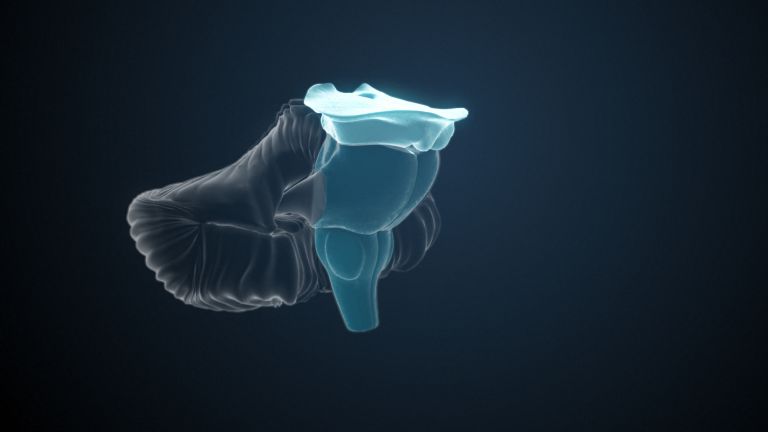
The diencephalon (midbrain) includes the thalamus and hypothalamus, among other structures. Together with the cerebrum, it forms the forebrain. The diencephalon contains centers for sensory perception, emotion, and the control of vital functions such as hunger and thirst.
Loops of inhibition and excitation
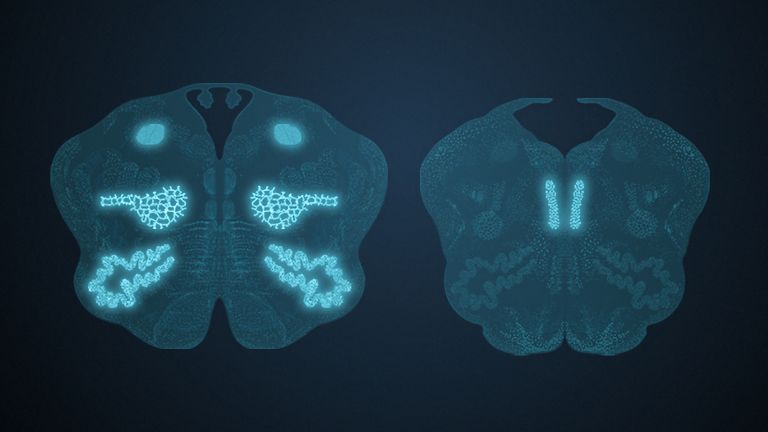
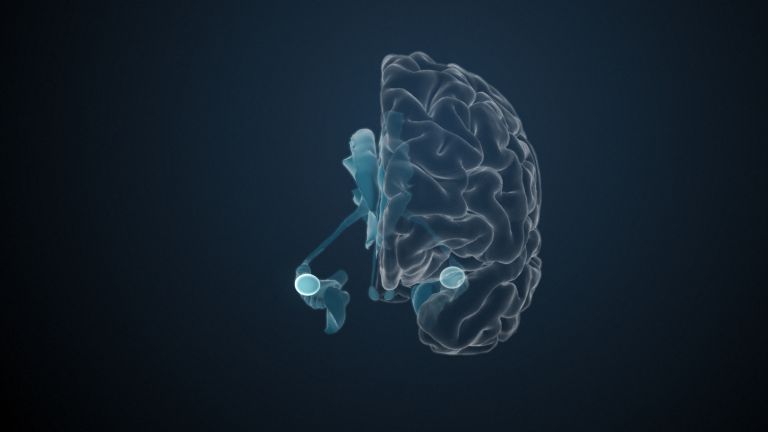
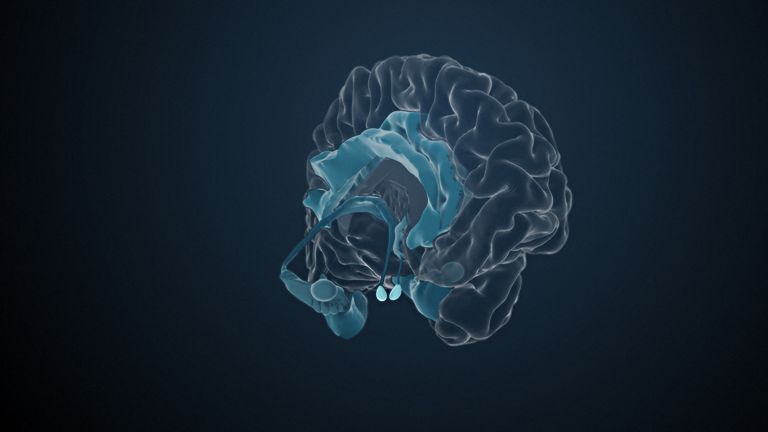
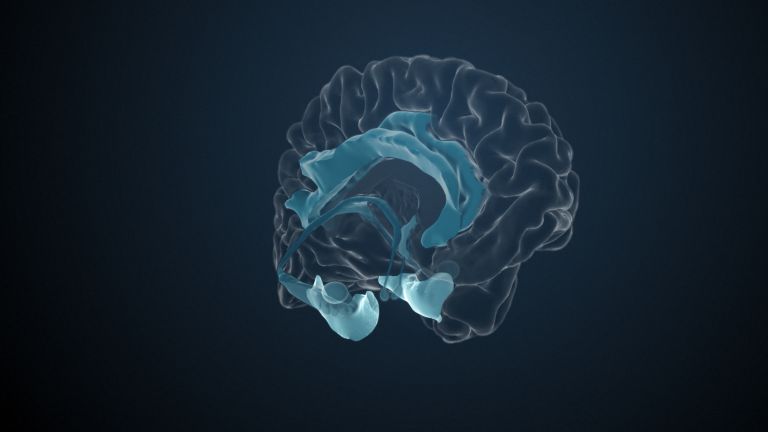
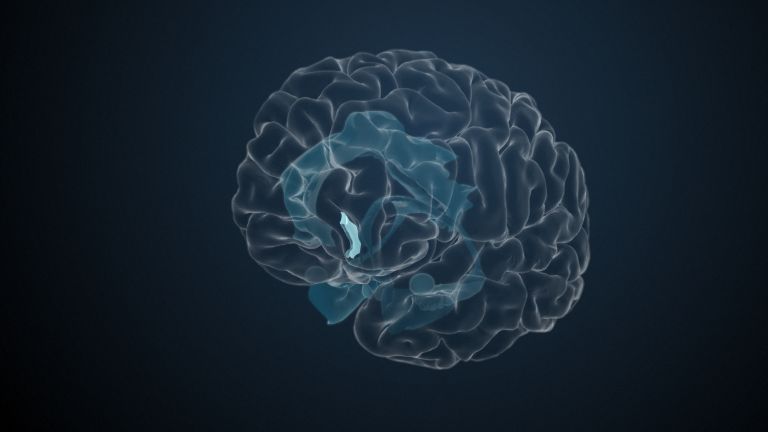
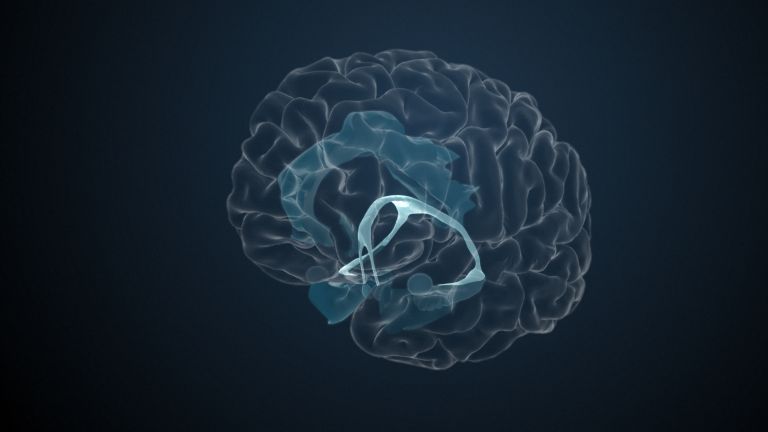
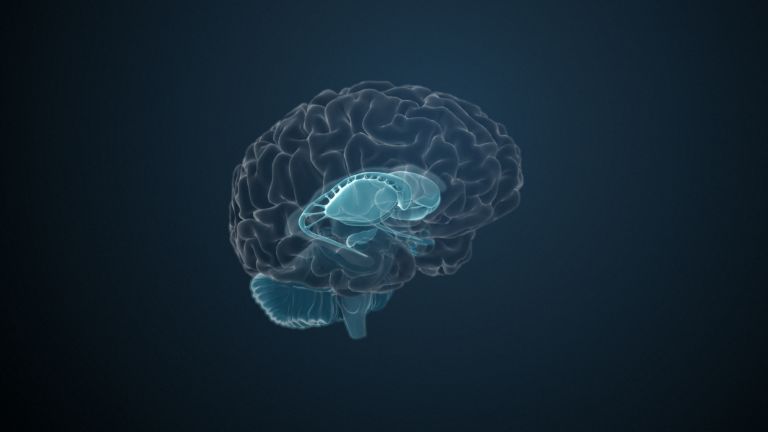
Voluntary movements are the most natural thing in the world; they come easily to us. However, once again, highly complex processes are at work behind the scenes. In this case, they manifest themselves in the interconnection of the Pallidum: both the internal and external pallidum are influenced by nerve cells in the striatum, the uppermost area of the Basal ganglia The medium spiny neurons of the Striatum are GABAergic, and GABA is an inhibitory Neurotransmitter: the striatum therefore inhibits the activity of the pallidum. Its internal segment sends inhibitory axons to a Nucleus of the thalamus, which in turn sends excitatory fibers to the Cortex. This is where the loop closes, because the cortex excites the striatum.
At the end, this loop creates positive feedback: the cortex fires into the system, thereby inhibiting the Inhibition of the thalamic centers that excite it. This should actually lead to a feedback catastrophe, to excessive excitation of the cortical motor centers – if it weren't for a damper.
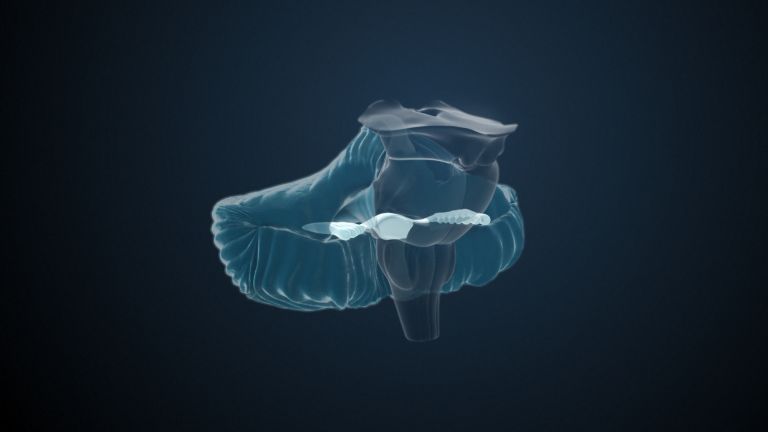
This damper consists of the external pallidum and the subthalamic nucleus, which is also located in the Diencephalon. As mentioned above, the former is influenced by the inhibitory medium spiny neurons of the striatum and in turn inhibits the activity of the neurons in the Subthalamic nucleus However, the subthalamic nucleus sends excitatory fibers to the internal pallidum. This, as we mentioned, sends inhibitory fibers back to the thalamus, which excites the cortex. This loop is just as confusing as the first one, but a closer comparison reveals that there is one more inhibitory Synapse at play here via the globus pallidus externus. Therefore it is a negative feedback loop that keeps the activity of the system in check.
So, we can conclude that balance is crucial. This becomes most apparent when a “feedback catastrophe” actually occurs – for example, when the subthalamic nucleus is destroyed. Those affected suffer from uncontrollable, seizure-like, seemingly senseless movements of the extremities. This is called “ballism” (from the Greek “ballein”: to throw) and it looks as if the patients are trying to kick imaginary soccer balls or throw handballs. They can endanger themselves and others without being able to control their movements.
Pallidum
globus pallidus
The globus pallidus, also known as the pallidum, is an important nucleus of the basal ganglia. It is a motor nucleus of the extrapyramidal system involved in the regulation of movement. The pallidum has an inhibitory and an excitatory part. The Latin name pallidus – pale – refers to the color of this nucleus.
Basal ganglia
Nuclei basales
The basal ganglia are a group of subcortical nuclei (located beneath the cerebral cortex) in the telencephalon. The basal ganglia include the globus pallidus and the striatum, and, depending on the author, other structures such as the substantia nigra and the subthalamic nucleus. The basal ganglia are primarily associated with voluntary motor function, but they also influence motivation, learning, and emotion.
Striatum
Corpus striatum
The striatum is a central structure of the basal ganglia. It consists of the caudate nucleus and putamen; the nucleus accumbens is also functionally part of it as its ventral portion. As the most important input structure of the basal ganglia, the striatum plays an essential role in controlling movement sequences as well as in cognition, motivational processes, and the reward system.
GABA
GABA is an amino acid and the most important inhibitory neurotransmitter, which acts as a messenger in the transmission of information between neurons at their synapses.
Neurotransmitter
A neurotransmitter is a chemical messenger, an intermediary substance. It is released by the sender neuron at the sites of cell-cell communication and has an excitatory or inhibitory effect on the receiver neuron.
Nucleus
In cell biology, the nucleus in a cell is the cell nucleus, which contains the chromosomes, among other things. In neuroanatomy, the nucleus in the nervous system refers to a collection of cell bodies – known as gray matter in the central nervous system and ganglia in the peripheral nervous system.
excitatory
Exciting synapses are described as excitatory when they depolarize the subsequent cell membrane and can thus lead to the formation of an action potential. An excitatory effect is usually produced by an exciting transmitter (messenger substance), such as glutamate. The opposite is an inhibitory synapse.
Cortex
cortex cerebri
Cortex refers to a collection of neurons, typically in the form of a thin surface. However, it usually refers to the cerebral cortex, the outermost layer of the cerebrum. It is 2.5 mm to 5 mm thick and rich in nerve cells. The cerebral cortex is heavily folded, comparable to a handkerchief in a cup. This creates numerous convolutions (gyri), fissures (fissurae), and sulci. Unfolded, the surface area of the cortex is approximately 1,800cm².
Inhibition
Neuronal inhibition describes the phenomenon whereby a sender neuron sends an impulse to a receiver neuron, causing the latter's activity to decrease. The most important inhibitory neurotransmitter is GABA.
Diencephalon
The diencephalon (midbrain) includes the thalamus and hypothalamus, among other structures. Together with the cerebrum, it forms the forebrain. The diencephalon contains centers for sensory perception, emotion, and the control of vital functions such as hunger and thirst.
Subthalamic nucleus
Nucleus subthalamicus
Although the subthalamic nucleus is a nucleus of the subthalamus in the diencephalon, it is functionally closely integrated into the motor control of the basal ganglia. It plays a role in impulse control, movement control, and inhibition of unwanted movements. Damage to this nucleus can lead to temporary, uncontrolled, jerky movements of the extremities – known as ballism. Doctors have already achieved successful treatment outcomes in both obsessive-compulsive disorder and Parkinson's disease by artificially stimulating this region with a neuroimplant.
Synapse
A synapse is a connection between two neurons and serves as a means of communication between them. It consists of a presynaptic region – the terminal button of the sender neuron – and a postsynaptic region – the region of the receiver neuron with its receptors. Between them lies the synaptic cleft.
First published on August 23, 2011
Last updated on November 28, 2025