The Frontal Lobe
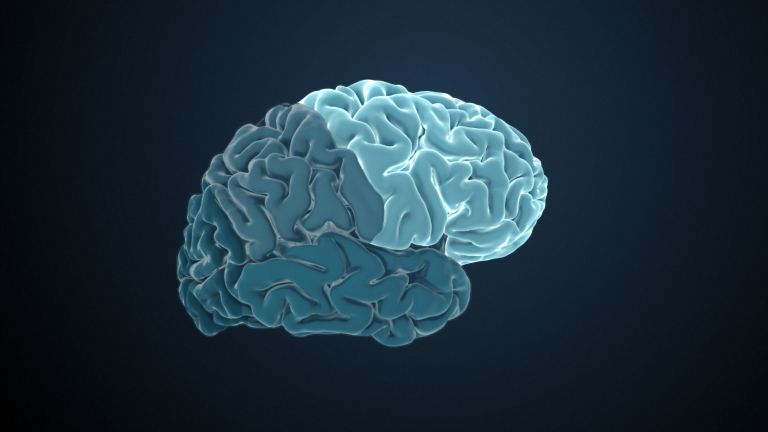
“Director of the brain,” “cradle of culture” – the frontal lobe is not only the largest brain structure, it is also adorned with superlatives. In addition to targeted motor skills, its tasks include important executive functions.
Scientific support: Prof. Dr. Herbert Schwegler, Prof. Dr. Anne Albrecht
Published: 28.10.2024
Difficulty: intermediate
The Frontal lobe plays an important role in the planning and execution of voluntary movements. The prefrontal area is massively interconnected and is commonly associated with Executive functions It therefore plays a key role in personality and character. The personality changes that can result from damage to the PFC and motor disorders that can result from damage to the motor cortical areas of the frontal lobe are correspondingly serious.
frontal
An anatomical position designation – frontal means "towards the forehead," i.e., at the front.
Frontal lobe
Lobus frontalis
The frontal cortex is the largest of the four lobes of the cerebral cortex and its functions are correspondingly comprehensive. The front area, known as the prefrontal cortex, is responsible for complex action planning (known as executive functions), which also shapes our personality. Its development (myelination) takes up to 30 years and even then is not yet complete. Other important components of the frontal cortex are Broca's area, which controls our ability to express ourselves linguistically, and the primary motor cortex, which sends movement impulses throughout the body.
Executive functions
Brain research uses the term "executive functions" to describe the "higher" mental abilities of living beings. These include, for example, focused attention, planning actions, error correction, decision-making, impulse control, and emotional regulation.
As important as the PFC may be, in the 1950s a neurologist named Walter Freeman drove his ‘lobotomobile’ through the USA and separated the Prefrontal cortex from the rest of the brain – in almost 2,500 patients! To do this, he broke through the Eye socket using an ‘ice pick’ he had developed, inserted it five centimeters deep and stirred it vigorously several times. This interrupted the nerve fibers of the PFC to the rest of the brain. By this, faulty connections were switched off – as Freeman propagated.
Lobotomy was originally developed by António Egas Moniz to treat certain psychoses, for which he received a Nobel Prize in 1949. Freeman saw this method as a kind of psychiatric panacea – he treated patients on suspicion or request and sometimes with undesirable side effects. Once, he operated on 228 patients in 12 days. The case of Howard Dully, whom his stepmother found unruly, proves that this wish did not always come from the patient himself. Dully was 12 years old.
Prefrontal cortex
Prefrontal cortex
The prefrontal cortex (PFC) forms the front part of the frontal lobe and is one of the brain's most important integration and control centers. It receives highly processed information from many other areas of the cortex and is responsible for planning, controlling, and flexibly adapting one's own behavior. Its central tasks include executive functions, working memory, emotion regulation, and decision-making. In addition, the PFC plays an important role in the cognitive evaluation and modulation of pain.
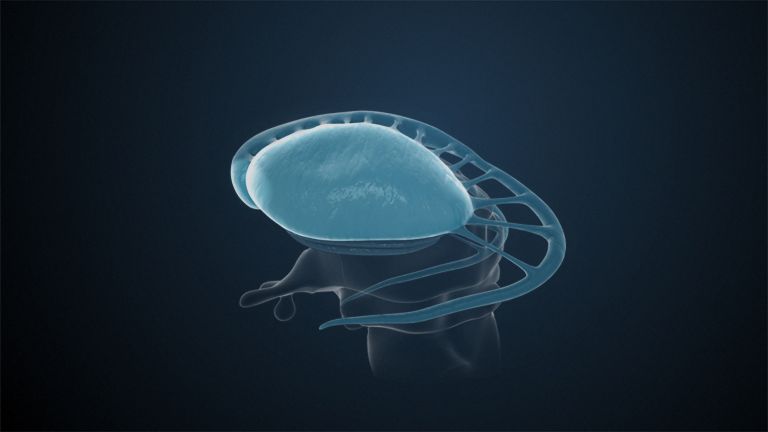
Eye
bulbus oculi
The eye is the sensory organ responsible for perceiving light stimuli – electromagnetic radiation within a specific frequency range. The light visible to humans lies in the range between 380 and 780 nanometers.
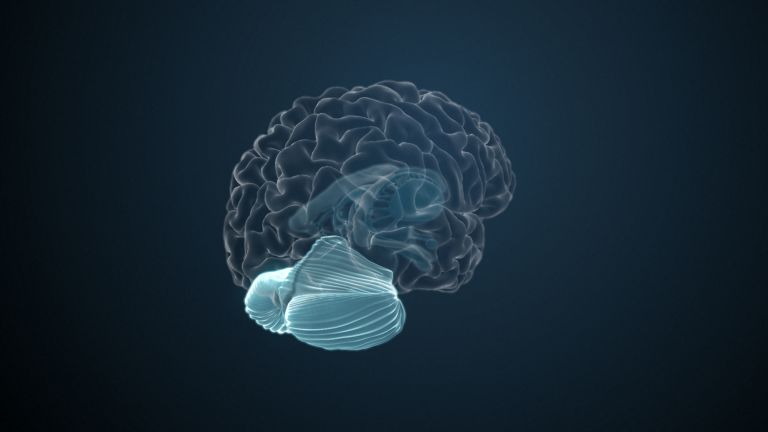
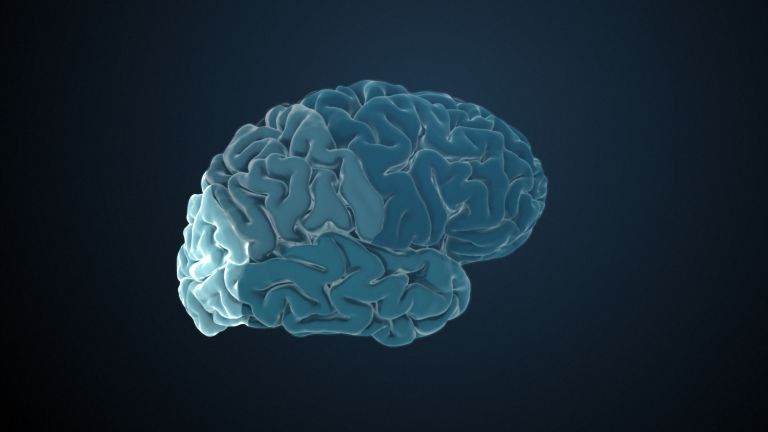
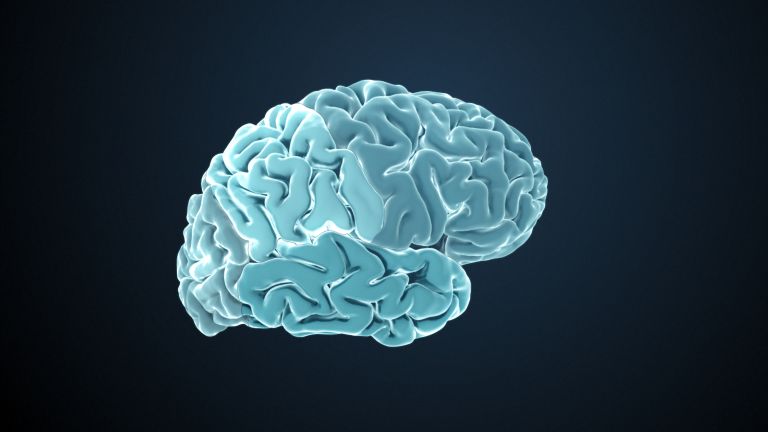
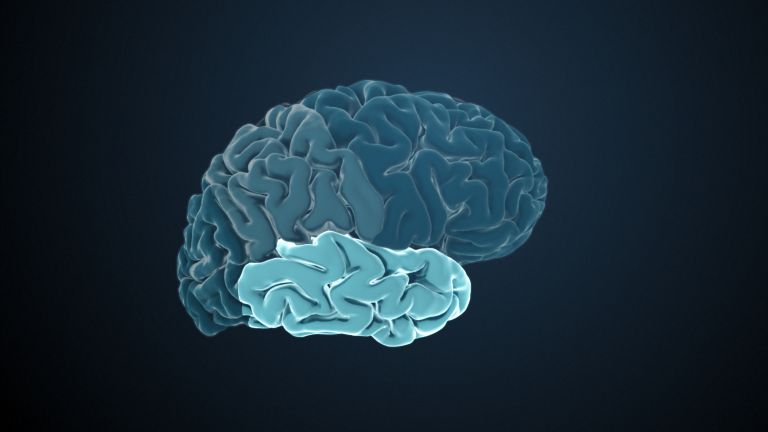
It is the largest brain structure in humans: the Frontal lobe It occupies the entire front part of the Cortex up to the central Fissure. Many experts locate the higher mental functions of humans here, some even describe it as the director of the brain, the bearer of our culture, and shower it with further superlatives. And indeed, although large areas of the frontal lobe have motor tasks, its foremost area, the prefrontal cortex, or PFC for short, is repeatedly mentioned in connection with attention, thinking, decision-making and planning, and is regarded as the seat of personality. With such important functions, it is not surprising that the PFC is the structure in the human brain that takes the longest to develop: It takes up to 25 years for the frontal lobe to fully mature.
frontal
An anatomical position designation – frontal means "towards the forehead," i.e., at the front.
Frontal lobe
Lobus frontalis
The frontal cortex is the largest of the four lobes of the cerebral cortex and its functions are correspondingly comprehensive. The front area, known as the prefrontal cortex, is responsible for complex action planning (known as executive functions), which also shapes our personality. Its development (myelination) takes up to 30 years and even then is not yet complete. Other important components of the frontal cortex are Broca's area, which controls our ability to express ourselves linguistically, and the primary motor cortex, which sends movement impulses throughout the body.
Cortex
cortex cerebri
Cortex refers to a collection of neurons, typically in the form of a thin surface. However, it usually refers to the cerebral cortex, the outermost layer of the cerebrum. It is 2.5 mm to 5 mm thick and rich in nerve cells. The cerebral cortex is heavily folded, comparable to a handkerchief in a cup. This creates numerous convolutions (gyri), fissures (fissurae), and sulci. Unfolded, the surface area of the cortex is approximately 1,800cm².
Fissure
The strong folding of the cortex (cerebral cortex) creates fissures – from the Latin: cleft. These clefts can be used to describe individual brain structures. For example, the fissura sylvii separates the temporal lobe from the frontal lobe. Less deep clefts are often referred to as sulci.
Motor function
Let's look at the Frontal lobe from back to front, starting just before the central Fissure of the Cerebrum: this is where the Primary motor cortex (the gyrus praencentralis, Brodmann area 4), which plays a key role in voluntary movement, is located. It is organised somatotopically, according to a kind of map that reflects the body. Interestingly, the face – and especially lips and tongue – as well as the hand occupy a strikingly large space, while the body is represented comparatively small. At second glance, it becomes clear why: the muscles in the back or stomach have fairly simple tasks, while the facial expressions, the production of sounds via lips and tongue – speech – or the sophisticated motor skills of the hands are highly demanding. This is reflected in the proportions of the map. Incidentally, it also has a nice detail: the knee, which so often bends the leg by 90 degrees in real, seated life, also does this in the brain: it is represented directly on the medial edge, precisely where the cortex folds inwards.
The primary motor Cortex (M1) is considered to be the origin of voluntary motor skills, particularly with regard to speed, direction and strength development. However, it is important to bear in mind that although M1 is the primary motor cortex according to its title, it is integrated into a comprehensive network for controlling movement. The axons of its pyramidal cells form the pyramidal tract. It runs to the spinal cord, where the movement impulses are interconnected to the muscles.
Directly in front, towards the forehead, is the Premotor cortex (according to Brodmann area 6 and partly 8), which is involved in complex movement sequences. Like M1 it is organized in the form of a body map, although a special feature is suspected here: the medial – inner – premotor cortex appears to be more involved in planned movements, while the lateral, outer area reacts more to sensory signals – i.e., to what is happening in the outside world. The comparatively small Supplementary motor area is located directly in front of the premotor cortex on the surface. The neurons here are involved in the development of the movement plan.
In addition to this whole-body motor area, there are two other specialists, the frontal Eye area (Brodmann area 8) and Broca's area (Brodmann area 44): the former controls conscious eye movements, while Broca's area is responsible for the motor skills of speech production. It occurs in one hemisphere only and is usually located on the left in right-handed people.
Depending on their areas of responsibility, disorders become apparent when one of the motor areas is damaged: For example, in the primary motor cortex can lead to a weakening or a paralysis of the opposite side of the body. If it affects the supplementary motor cortex, movements are no longer initiated - those affected then suffer from a lack of movement: hypokinesia.
frontal
An anatomical position designation – frontal means "towards the forehead," i.e., at the front.
Frontal lobe
Lobus frontalis
The frontal cortex is the largest of the four lobes of the cerebral cortex and its functions are correspondingly comprehensive. The front area, known as the prefrontal cortex, is responsible for complex action planning (known as executive functions), which also shapes our personality. Its development (myelination) takes up to 30 years and even then is not yet complete. Other important components of the frontal cortex are Broca's area, which controls our ability to express ourselves linguistically, and the primary motor cortex, which sends movement impulses throughout the body.
Fissure
The strong folding of the cortex (cerebral cortex) creates fissures – from the Latin: cleft. These clefts can be used to describe individual brain structures. For example, the fissura sylvii separates the temporal lobe from the frontal lobe. Less deep clefts are often referred to as sulci.
Cerebrum
telencephalon
The cerebrum comprises the cerebral cortex (gray matter), the nerve fibers (white matter), and the basal ganglia. It is the largest part of the brain. The cortex can be divided into four cortical areas: the temporal lobe, frontal lobe, occipital lobe, and parietal lobe.
Its functions include the coordination of perception, motivation, learning, and thinking.
Primary motor cortex
An area of the frontal lobe in the anterior wall of the central sulcus. It is considered to be the higher-level control unit responsible for voluntary and fine motor skills. This is where the cell bodies of the central motor neurons are located, whose axons primarily extend to the spinal cord (via the corticospinal tract). Only in the primary motor cortex do Betz giant cells occur, which are particularly large motor neurons whose axons extend directly to the motor neurons in the anterior horn of the spinal cord without prior synaptic switching.
Brodmann area
As early as 1909, neuroanatomist Korbinian Brodmann divided the cerebral cortex into different areas. He did this based on histological criteria, distinguishing these areas according to their cellular structure. It later became apparent that these different structures of the cortex are often associated with different specializations.
medial
A positional term – medial means "towards the middle." In relation to the nervous system, it refers to a direction toward the body, away from the sides.
Cortex
cortex cerebri
Cortex refers to a collection of neurons, typically in the form of a thin surface. However, it usually refers to the cerebral cortex, the outermost layer of the cerebrum. It is 2.5 mm to 5 mm thick and rich in nerve cells. The cerebral cortex is heavily folded, comparable to a handkerchief in a cup. This creates numerous convolutions (gyri), fissures (fissurae), and sulci. Unfolded, the surface area of the cortex is approximately 1,800cm².
Premotor cortex
Part of the motor cortex in the frontal lobe. It is connected to the primary motor cortex and numerous other brain regions and is involved in the planning, preparation, and coordination of complex, voluntary movements. Examples of its functions include reaching for an object or the sequence of movements involved in targeted actions.
Supplementary motor area
Area of the association motor cortex in the frontal lobe that is involved in movement planning and the organization of movement sequences.
Eye
bulbus oculi
The eye is the sensory organ responsible for perceiving light stimuli – electromagnetic radiation within a specific frequency range. The light visible to humans lies in the range between 380 and 780 nanometers.
Broca's area
An area of the prefrontal cortex (cerebral cortex) that is usually located in the left hemisphere. Plays a key role in the motor production of speech. First described by French neurologist Paul Pierre Broca in 1861.
Prefrontal cortex
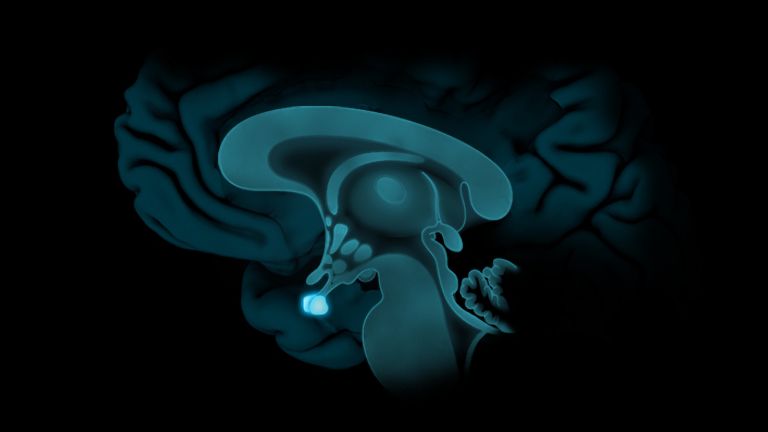
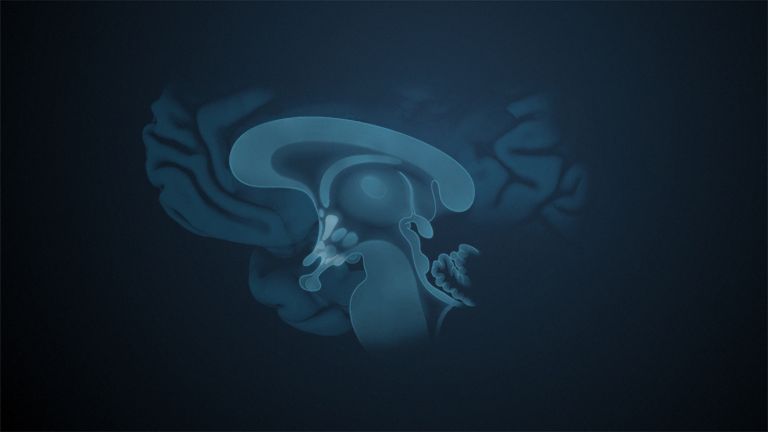
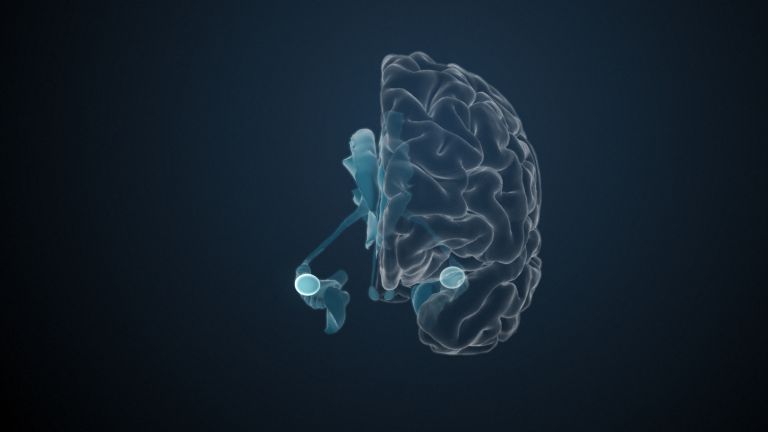
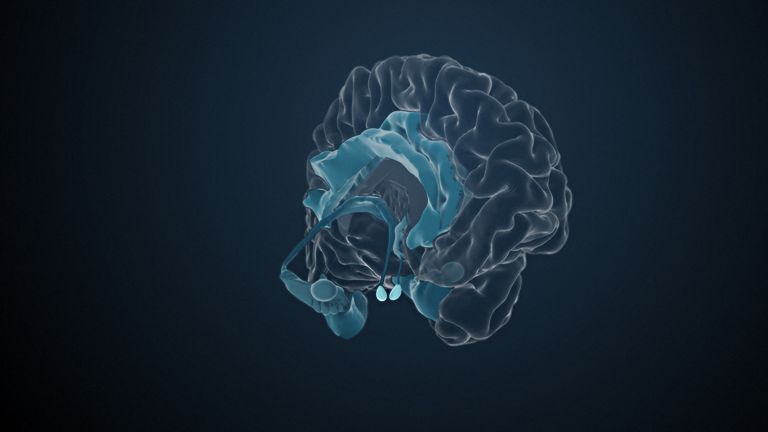
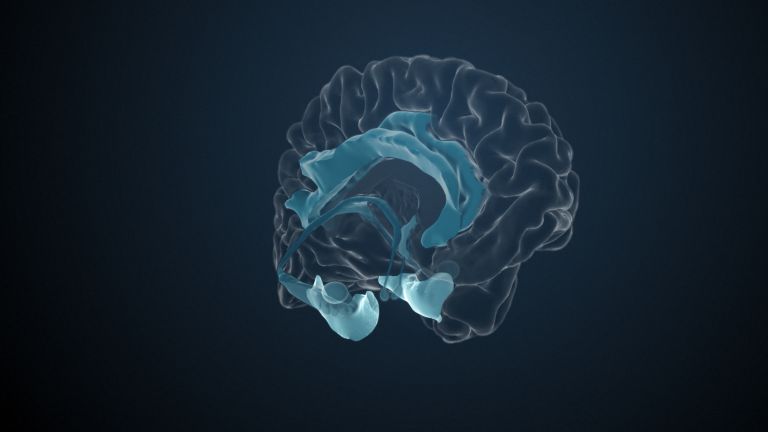
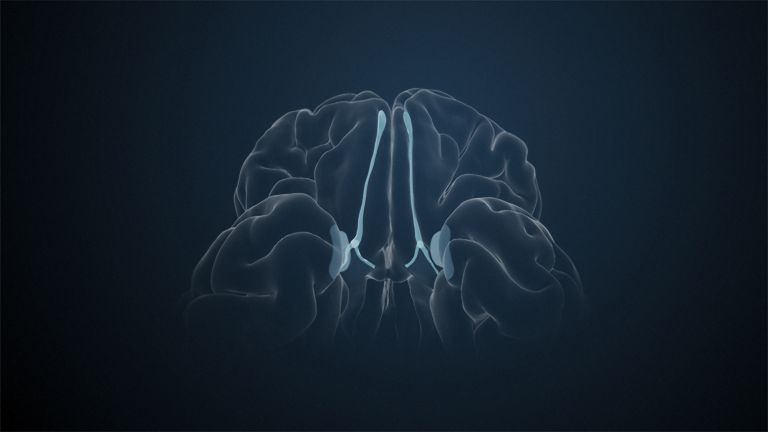
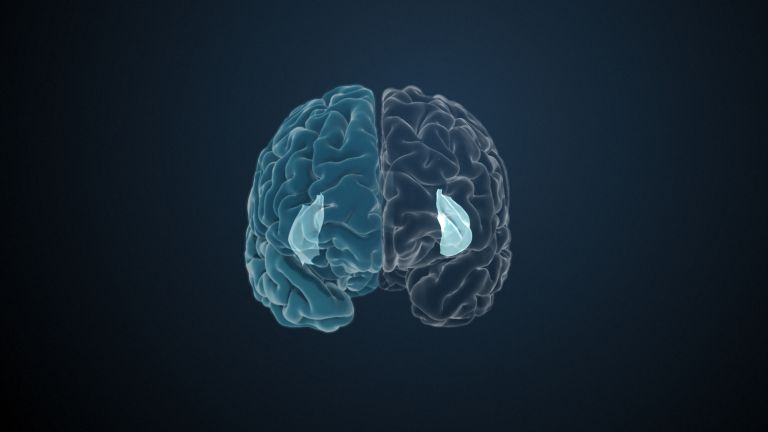
As already mentioned, when it comes to what makes a person human, the Prefrontal cortex is one of the most promising structures in the brain. It all starts quite mundanely: the Olfactory bulb is located on its underside – which rests on the Eye socket, the orbit, from which this area is called the Orbitofrontal cortex However, if we look at the PFC from the point of view of its inputs and outputs, its significance can be surmised. The PFC is informed by almost all sensory association cortices, as well as by the hypothalamus, the Raphe nuclei and the ventral tegmentum. It is reciprocally connected to the septum, the amygdala, the Caudate nucleus and the Pons. A prominent fiber connection also leads to the Primary motor cortex Perhaps it was this striking interconnection that led the great British neurologist John Hughlings Jackson to assume at the end of the 19th century that all regions of the cerebral Cortex must be represented somewhere in the frontal lobe.
The PFC can be roughly divided into the dorsolateral prefrontal cortex (according to Brodmann 9/46) and the orbitofrontal cortex (according to Brodmann areas 10, 11, 47/12, 13, 14 and parts of 45). Both play a special role in the so-called Executive functions These include directed Attention – which can also suppress disturbing factors – the organization of complex actions as a sequence of individual steps, planning – including time planning in the form of a meaningful sequence – continuous monitoring, and working memory functions. All of these aspects primarily affect the Dorsolateral PFC orbitofrontal, and the emotional and motivational aspects of a decision are also negotiated. And all of these individual points are highly interconnected in terms of their influences and dependencies.
Prefrontal cortex
Prefrontal cortex
The prefrontal cortex (PFC) forms the front part of the frontal lobe and is one of the brain's most important integration and control centers. It receives highly processed information from many other areas of the cortex and is responsible for planning, controlling, and flexibly adapting one's own behavior. Its central tasks include executive functions, working memory, emotion regulation, and decision-making. In addition, the PFC plays an important role in the cognitive evaluation and modulation of pain.
Olfactory bulb
bulbus olfactorius
The anterior part of the brain that transmits information from the olfactory nerves to the olfactory brain (rhinencephalon) after initial processing via the olfactory tract.
Eye
bulbus oculi
The eye is the sensory organ responsible for perceiving light stimuli – electromagnetic radiation within a specific frequency range. The light visible to humans lies in the range between 380 and 780 nanometers.
Orbitofrontal cortex
A convolution in the orbitofrontal cortex of the cerebral cortex, located anatomically behind the eyes. The orbitofrontal cortex plays a crucial role in decision-making and monitoring social interactions and is correspondingly complex in structure. It consists of four different substructures: the medial, lateral, anterior, and posterior orbital gyri, as well as the rectus gyrus.
Raphe nuclei
The raphe nuclei are located in the reticular system and are distributed throughout the brain stem. They belong to the ascending reticular activating system (ARAS) and are the site of serotonin production.
Caudate nucleus
nucleus caudatus
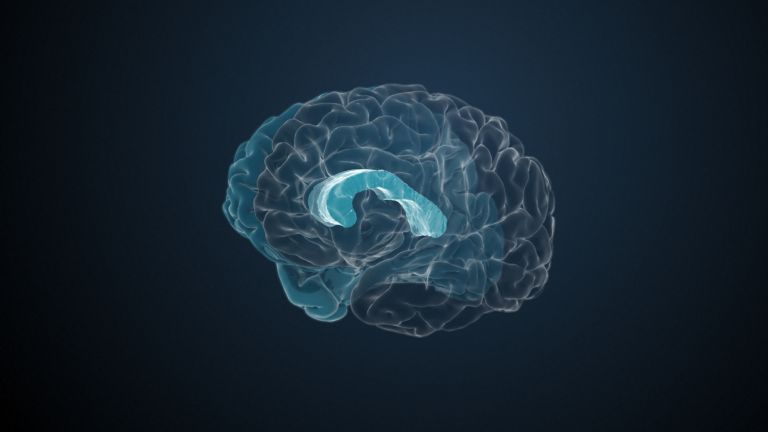
Part of the basal ganglia, it forms the striatum together with the putamen. Anatomically, the caudate nucleus is located frontally in the center of the brain and extends backward, forming a C shape. It consists of a head (caput nuclei caudati), a body (corpus nuclei caudati), and a tail (cauda nuclei caudati). In contrast to the more motor-related parts of the basal ganglia, this area is strongly connected to the prefrontal cortex in addition to its motor functions. As a result, this part of the striatum is also heavily involved in cognition, motivation, and emotion.
Pons
pons
Area in the brain stem between the medulla oblongata and the mesencephalon. It acts as a switching station for many nerve pathways between the brain and spinal cord and contains numerous nuclei, including cranial nerves and those involved in controlling motor function in cooperation with the cerebellum.
Primary motor cortex
An area of the frontal lobe in the anterior wall of the central sulcus. It is considered to be the higher-level control unit responsible for voluntary and fine motor skills. This is where the cell bodies of the central motor neurons are located, whose axons primarily extend to the spinal cord (via the corticospinal tract). Only in the primary motor cortex do Betz giant cells occur, which are particularly large motor neurons whose axons extend directly to the motor neurons in the anterior horn of the spinal cord without prior synaptic switching.
Cortex
cortex cerebri
Cortex refers to a collection of neurons, typically in the form of a thin surface. However, it usually refers to the cerebral cortex, the outermost layer of the cerebrum. It is 2.5 mm to 5 mm thick and rich in nerve cells. The cerebral cortex is heavily folded, comparable to a handkerchief in a cup. This creates numerous convolutions (gyri), fissures (fissurae), and sulci. Unfolded, the surface area of the cortex is approximately 1,800cm².
frontal
An anatomical position designation – frontal means "towards the forehead," i.e., at the front.
Executive functions
Brain research uses the term "executive functions" to describe the "higher" mental abilities of living beings. These include, for example, focused attention, planning actions, error correction, decision-making, impulse control, and emotional regulation.
Attention
Attention
Attention serves as a tool for consciously perceiving internal and external stimuli. We achieve this by focusing our mental resources on a limited number of stimuli or pieces of information. While some stimuli automatically attract our attention, we can select others in a controlled manner. The brain also unconsciously processes stimuli that are not currently the focus of our attention.
working memory
Working memory
A form of memory, often used synonymously with the term "short-term memory." However, many theorists clearly distinguish between the two concepts with regard to the manipulation of information in working memory. It temporarily retains information, including newly acquired information and memory content from long-term memory that is associated with the new information. In the model developed by Alan Baddeley and Graham Hitch, it includes a central executive, a phonological loop, an episodic buffer, and a visuospatial sketchpad.
Dorsolateral PFC
cortex praefrontalis dorsolateralis
The dorsolateral prefrontal cortex is the upper (dorsal) and lateral part of the frontal lobe. It is involved in the planning and regulation of complex motor and intellectual actions. According to one experiment, this also seems to include lying. The dorsolateral PFC regulates these and other abilities in coordination with many other areas of the brain with which it is closely linked.
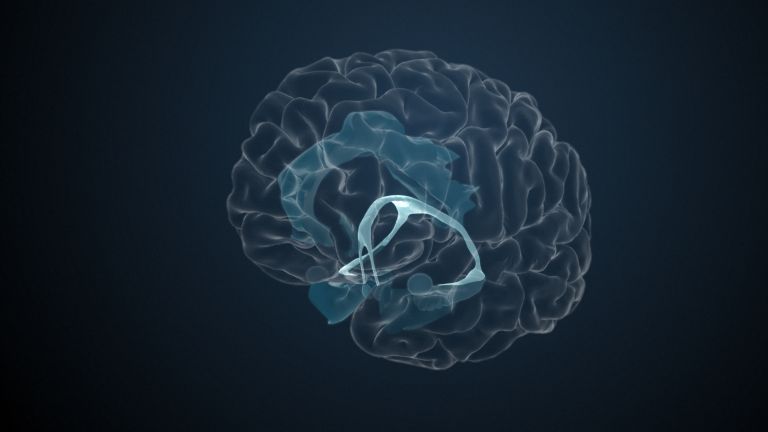
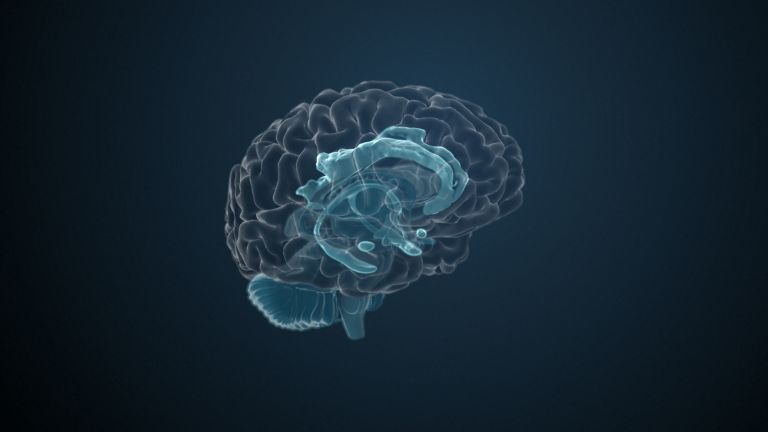
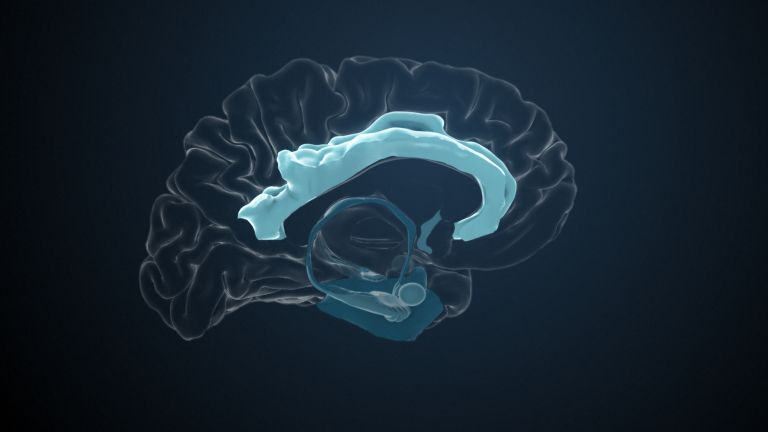
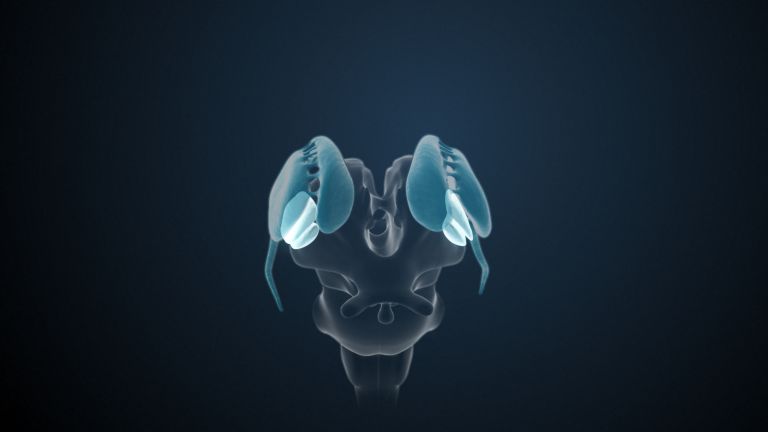
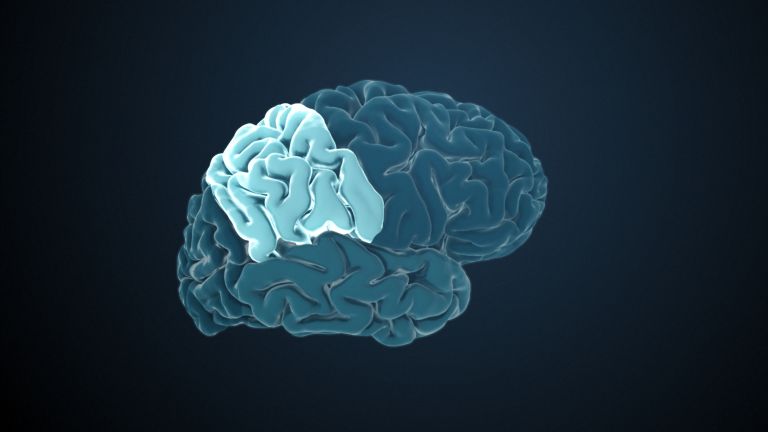
Damage to the PFC and psyche
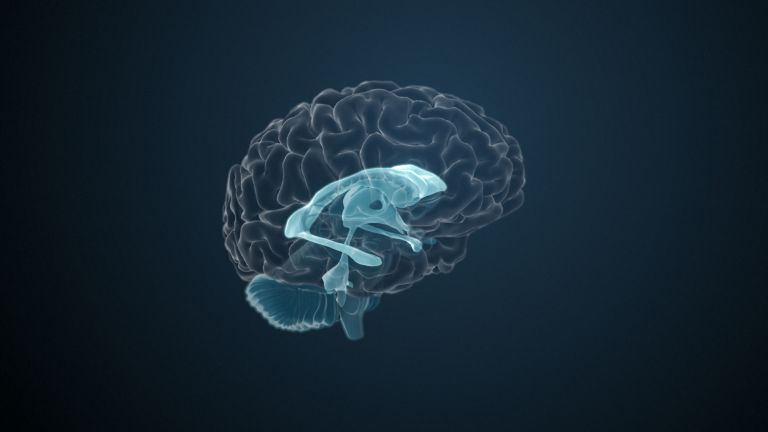
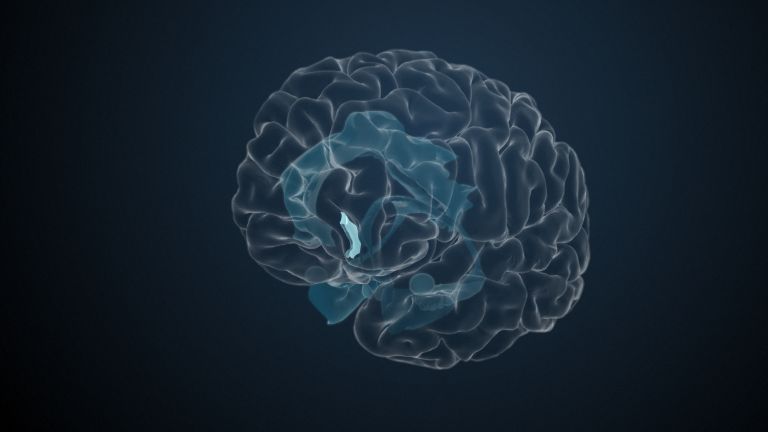
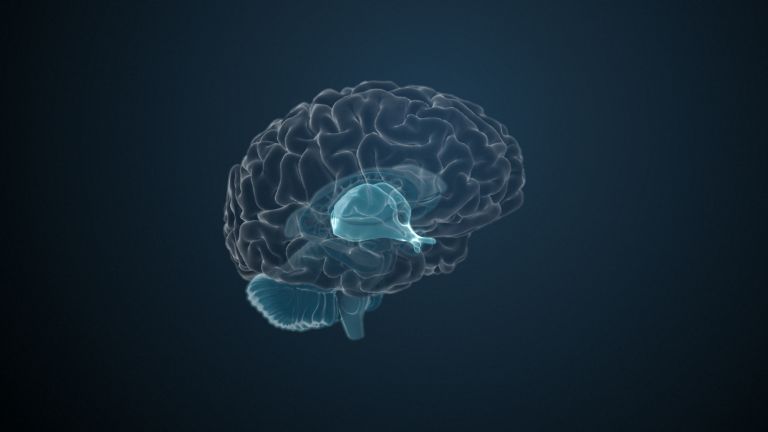
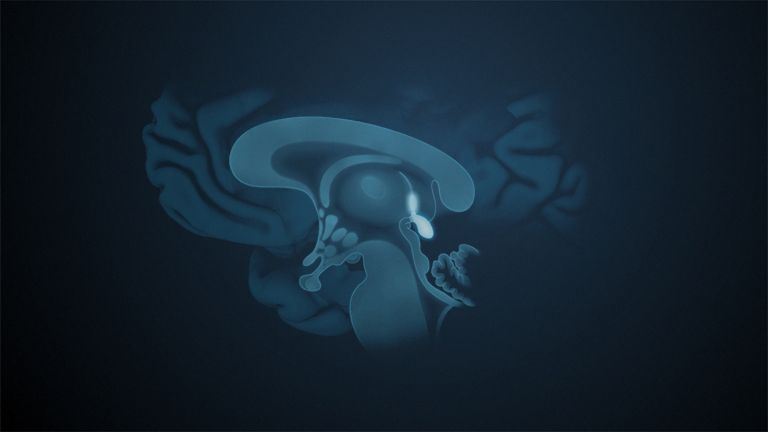
In view of these responsible tasks, the symptoms of damage to the PFC should be massive. This is confirmed by one of the best-known patients in brain research – the American Phineas Gage. He was a railway foreman when he suffered a terrible accident in 1848: a five-centimetre-thick iron bar shot through his left cheek and exited at the top right of his skull. The entire PFC was badly damaged, and it was basically a miracle that Gage survived not only the accident but also the infections that followed. But his personality had changed dramatically, as his doctor at the time, John D. Harlow, noted: Whereas he had previously been known as friendly and reliable, after the accident Gage became opinionated, impulsive and sometimes foul-mouthed. He was also unable to plan properly and was therefore very unreliable.
The clinic is now familiar with several cases like Gage's. For example, damage to the orbitofrontal region can lead to pseudo-depressive disorders. In this case, patients are listless to the point of apathy, reduced in sexual behavior and show little emotion. The pseudo-psychopathic disorder is almost the opposite. These patients show motor restlessness, are distant and uninhibited. Particularly in the sexual sphere, they lose their sense of social conventions and show excessive desire. Today, symptoms such as these are categorized as Frontal lobe syndrome, which has different aspects depending on the diverse tasks of the frontal cortex and the high degree of its interconnectedness.
frontal
An anatomical position designation – frontal means "towards the forehead," i.e., at the front.
Frontal lobe
Lobus frontalis
The frontal cortex is the largest of the four lobes of the cerebral cortex and its functions are correspondingly comprehensive. The front area, known as the prefrontal cortex, is responsible for complex action planning (known as executive functions), which also shapes our personality. Its development (myelination) takes up to 30 years and even then is not yet complete. Other important components of the frontal cortex are Broca's area, which controls our ability to express ourselves linguistically, and the primary motor cortex, which sends movement impulses throughout the body.
First published on September 8, 2011
Last updated on October 28, 2024