Like Mother, like Child
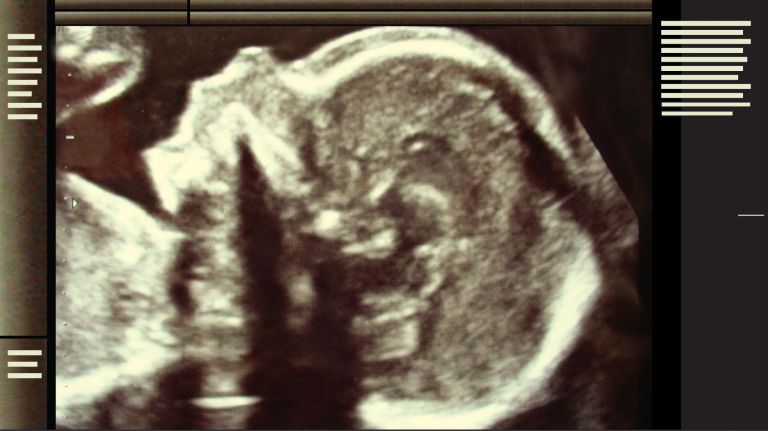
Like father, like son, as the saying goes. Better would be: like mother, like child. What an expectant mother eats, how stressed and anxious she feels, is imprinted on her baby's genes and brain – and influences it throughout its life.
Scientific support: Prof. Dr. Mark Hübener
Published: 10.02.2026
Difficulty: intermediate
- Influences in the womb shape the unborn child, sometimes for life.
- Stress in the mother causes her child to be more quick-tempered and often stressed, but also to perform comparatively well under stress.
- Prenatal stress could cause mental decline in old age, according to one of the latest hypotheses.
- Anxious pregnant women tend to have cautious babies who recognize danger in a flash. However, this can be unfavorable in a safe environment.
- Nutrition during the ten months of pregnancy influences how quickly a child eats its fill later on and presumably also whether it is more susceptible to addiction.
“Fetal alcohol spectrum disorders” refer to all alcohol-related damage to the development of the baby in the womb. Alcohol is a toxic substance for the child that passes through the placenta unhindered, which is why even small amounts can cause permanent damage. The consequences can include impaired growth and damage to hearing, vision, and heart. In 2023, the Canadian Center for Addiction and Mental Health in Ontario counted over 400 developmental deficits caused by alcohol. Lana Popova, the lead author of the review published in Nature Reviews Disease Primers, emphasizes that there is no amount and no stage of pregnancy at which alcohol is not harmful. Damage can also occur in any organ of the body. Primarily, it is only genes and individual metabolism, how quickly the substance is broken down in the body, that influence the extent of the effects.
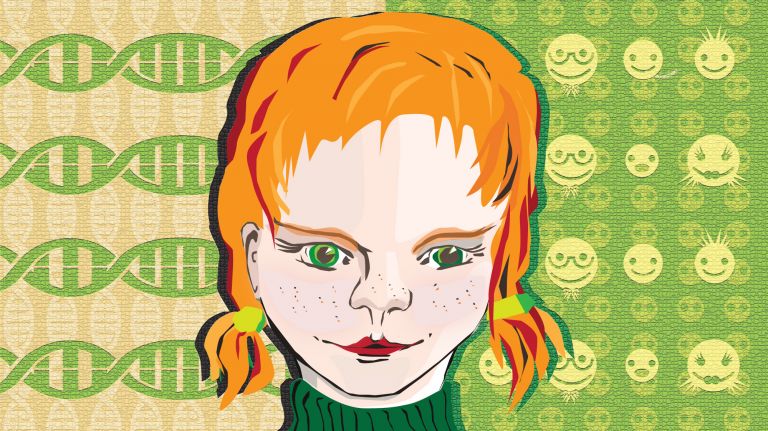
Children carry half of their genes from their father and half from their mother in their cells, so one might assume that they inherit the same proportion of different characteristics from both parents. In fact, however, the woman has a much greater influence. In the womb, nutrition and emotions, conveyed by messenger substances, affect the baby and, among other things, change the signature of the genes, i.e., how the genetic blueprint in the cells is translated into proteins. This happens, among other things, when methyl groups attach themselves to the building blocks of the genetic code. This is why a diabetic mother passes on the metabolic disorder to her child much more frequently than would be expected genetically.
It sounds too simplistic to be true: happy pregnant women give birth to happy children. Those who remain calm during pregnancy have calm babies, and those who spend the ten months in a state of anxiety also have unbalanced children. Can this be true?
When neonatologists, obstetricians, and neuroscientists are asked about the connection between time in the womb and the child's later character, the answer is surprising: “Much of this is still the subject of basic research, but it stands to reason that a happy mother is more likely to have a happy child,” says Andreas Plagemann, an obstetrician at Charité. During the ten months, central control loops in the brain and genes are calibrated. This process of fetal programming shapes behavior for a lifetime. “It's like a stamp that I press into modeling clay,” says Plagemann.
The “stress” stamp
One such stamp, for example, is the stress that an expectant mother experiences during pregnancy. When under stress, the body releases Cortisol. About ten percent of the Hormone crosses the placental barrier and reaches the child's brain. The effects of cortisol on children have been extensively researched – partly because around one in ten pregnant women go into premature labor and doctors then inject stress hormones to help the baby's lungs mature more quickly. The pharmacological stress level can be measured and correlated with the child's behavior.
A little seems to be enough to permanently change behavior:
When pregnant women received stress hormones for just two days, their children were still significantly more sensitive to stress at the age of eight, as Matthias Schwab, a neurologist at Jena University Hospital, showed in a recent study. He also found that these children were more likely to have Attention deficit syndrome: those affected found it harder to concentrate and were less likely to behave calmly than their peers. Even their Intelligence quotient was lower. Premature birth could also explain such abnormalities. Schwab blames stress hormones.
Cortisol
A hormone produced by the adrenal cortex that is primarily an important stress hormone. It belongs to the group of glucocorticoids and influences carbohydrate and protein metabolism in the body, suppresses the immune system, and acts directly on certain neurons in the central nervous system.
Hormone
Hormones are chemical messengers in the body. They serve to transmit information between organs and cells, usually slowly, e.g., to regulate blood sugar levels. Many hormones are produced in glandular cells and released into the blood. At their destination, e.g., an organ, they dock at binding sites and trigger processes inside the cell. Hormones have a broader effect than neurotransmitters; they can influence various functions in many cells of the body.
Attention
Attention
Attention serves as a tool for consciously perceiving internal and external stimuli. We achieve this by focusing our mental resources on a limited number of stimuli or pieces of information. While some stimuli automatically attract our attention, we can select others in a controlled manner. The brain also unconsciously processes stimuli that are not currently the focus of our attention.
Intelligence
Intelligence
Collective term for human cognitive performance. According to British psychologist Charles Spearman, cognitive performance in different areas correlates with a general factor (g factor) of intelligence. This means that intelligence can be expressed as a single value. American psychologist Howard Gardner, among others, has developed a counter-concept to this, known as the "theory of multiple intelligences." According to this theory, intelligence develops independently in the following eight areas: linguistic, logical-mathematical, musical-rhythmic, visual-spatial, bodily-kinesthetic, naturalistic, intrapersonal, and interpersonal.
Intelligence quotient
A measure intended to express a person's intellectual capacity. Tests designed to determine intelligence are based on the concept that there is a general factor of intelligence that is normally distributed across the population. The first IQ tests were developed in the early 20th century by Alfred Binet, who wanted to use them to determine the relative intelligence age of schoolchildren. According to his definition, IQ is the quotient of intelligence age and chronological age multiplied by 100. This is also the average IQ of a person. Modern tests often use standard deviations for normalization, which means that IQ is still scaled to average = 100, SD = 15, without directly calculating intelligence age. 95 percent of the population has IQ scores between 70 and 130. If someone scores below 70, they are considered to have intellectual disability, while a score above 130 is considered gifted.
Genes and brain react
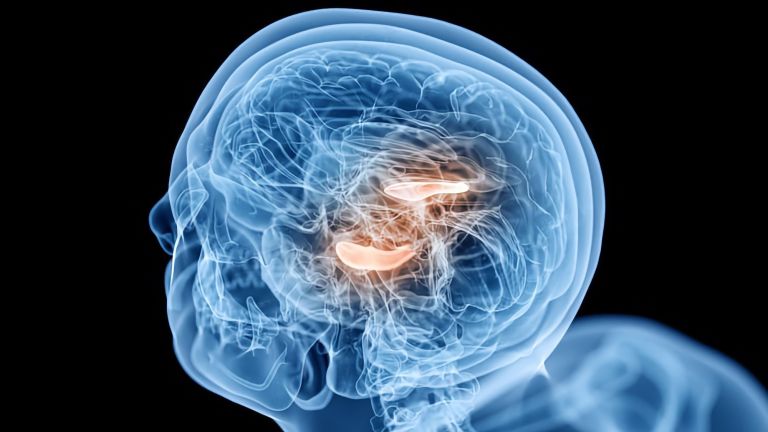
Stress is primarily regulated in the brain by the Hippocampus and Hypothalamus. If a baby's Cortisol levels are permanently elevated during pregnancy, this becomes established as the normal state. The body's own stress systems are adjusted so that the child is stressed more quickly and more frequently, which is what it needs in order to perform at its best. The stress axis, the activation chain within the stress systems, becomes hyperactive, explains Schwab. However, no one has yet observed such a change in behavior in children as a result of a one-off relationship dispute or an argument at work. Rather, the effects are observed in individuals who almost always feel very stressed and nervous.
Animal experiments conducted by researchers led by Tracy Bale, then at the University of Pennsylvania School of Veterinary Medicine, provide detailed insight into the mechanisms of this early adjustment of stress sensitivity. In a study, they were able to show that maternal stress reduces the synthesis of an enzyme called OGT – ortho-N-acetylglucosamine transferase – which reprograms the brains of their fetuses before birth. OGT alters the translation of many genes into proteins and causes an energy deficiency in the cells of the hypothalamus, as has also been observed in Autism and schizophrenia.
Hippocampus
The hippocampus is the largest part of the archicortex and an area in the temporal lobe. It is also an important part of the limbic system. Functionally, it is involved in memory processes, but also in spatial orientation and learning. It comprises the subiculum, the dentate gyrus, and the Ammon's horn with its four fields CA1-CA4.
Changes in the structure of the hippocampus due to stress are associated with chronic pain. The hippocampus also plays an important role in the amplification of pain through anxiety.
Hypothalamus
The hypothalamus is considered the center of the autonomic nervous system, meaning it controls many motivational states and regulates vegetative aspects such as hunger, thirst, and sexual behavior. As an endocrine gland (which, unlike an exocrine gland, releases its hormones directly into the blood without a duct), it produces numerous hormones, some of which inhibit or stimulate the pituitary gland to release hormones into the blood.In this function, it also plays an important role in the response to pain and is involved in pain modulation.
Cortisol
A hormone produced by the adrenal cortex that is primarily an important stress hormone. It belongs to the group of glucocorticoids and influences carbohydrate and protein metabolism in the body, suppresses the immune system, and acts directly on certain neurons in the central nervous system.
Autism
A serious developmental disorder that often manifests itself in reduced social skills, impaired communication, and stereotypical behavior. Today, it is understood to be part of the autism spectrum disorders.
Dementia due to prenatal stress?
However, being predisposed to stress at birth is not necessarily a bad thing. “Evolutionarily speaking, it's an advantage,” emphasizes Schwab, “because these people are more alert and are less likely to put themselves in danger.” However, being in a constant state of alert is not good for nerve cells in the long term. Cortisol promotes cell death, inhibits the happiness Hormone serotonin, and causes high blood pressure. This is why people who are constantly stressed are more likely to have strokes and have a shorter life expectancy.
And as if that weren't enough, Schwab suspects that because the stress hormone drives cell death, stress in the womb may predispose people to mental decline in old age. So is the Dementia epidemic in industrialized nations caused by chronic stress in pregnant women? Long-term studies in humans are still lacking. However, animal experiments point in this direction, according to Schwab: Prenatal stress leads to premature aging of the brain in mice and also in primates. “We see earlier atrophy. Put simply, the brain becomes more wrinkled.”
Not only stress, but even specific emotions, such as the mother's anxiety during pregnancy, leave their mark on the child. This is suggested not only, but above all, by the research of psychologist Bea van den Bergh at Tilburg University in Belgium. As early as 1989, she used a standardized psychological test to assess the anxiety of 86 pregnant women at various points in time. She noticed that children of mothers who were very fearful between the 12th and 22nd weeks of pregnancy cried a lot and slept and ate particularly irregularly during the first seven months of life.
In the first half of pregnancy, almost all nerve cells in the brain are formed and, according to van den Bergh, the limbic system, the stress axis, and various Neurotransmitter systems in the baby's brain are calibrated to the level of fear experienced. This is especially true since fear is processed in the brain in a similar way to stress. If the mother was very anxious, the little ones later produce stress hormones quickly and in large quantities at the slightest provocation in order to reach their normal level.
Cortisol
A hormone produced by the adrenal cortex that is primarily an important stress hormone. It belongs to the group of glucocorticoids and influences carbohydrate and protein metabolism in the body, suppresses the immune system, and acts directly on certain neurons in the central nervous system.
Hormone
Hormones are chemical messengers in the body. They serve to transmit information between organs and cells, usually slowly, e.g., to regulate blood sugar levels. Many hormones are produced in glandular cells and released into the blood. At their destination, e.g., an organ, they dock at binding sites and trigger processes inside the cell. Hormones have a broader effect than neurotransmitters; they can influence various functions in many cells of the body.
Dementia
Dementia
Dementia is an acquired deficit of cognitive, social, motor, and emotional abilities. The most well-known form is Alzheimer's disease. "De mentia" means "without mind" in English.
Neurotransmitter
A neurotransmitter is a chemical messenger, an intermediary substance. It is released by the sender neuron at the sites of cell-cell communication and has an excitatory or inhibitory effect on the receiver neuron.
Always on alert
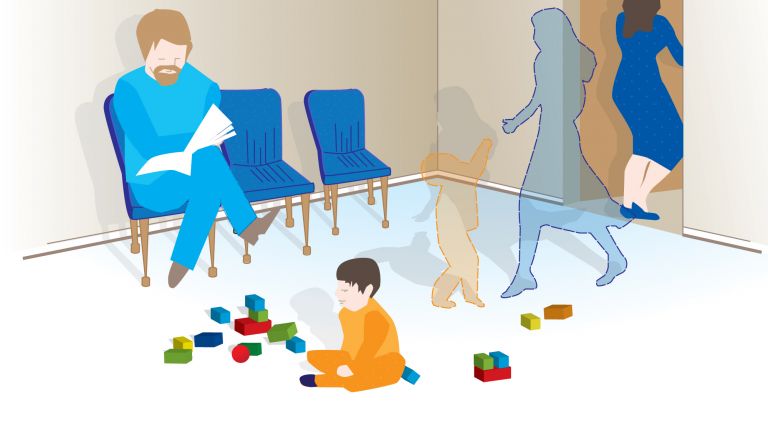
One might think that such experiences in the womb would certainly be outgrown. However, van den Bergh's work contradicts this. At the age of eight to nine, teachers and mothers more often rated children who had been carried by an overly anxious woman as particularly difficult, unfocused, and restless. These mothers had scored particularly high on a standardized test to determine anxiety because, for example, they reported being very often nervous, restless, worried, uneasy, and afraid of misfortune. This permanent state of mind had a lasting effect on their children. Even as teenagers aged fourteen to fifteen, they are still more impulsive in tests. For example, they answer faster but make more mistakes than other children. Even at the age of almost twenty, the differences remained, much to van den Bergh's surprise: “They are not necessarily worse in cognitive tests. For example, they are more creative and respond much more strongly to praise,” she emphasizes. “But in settings with few stimuli, such as a boring school lesson, they often behave out of the ordinary. They cannot concentrate. Only under stress – their normal state – do they cope well.”
In recent years, van den Bergh has been able to investigate how the mother's anxiety affects the baby. Women who are excessively anxious have particularly low levels of a specific enzyme that ensures that the stress Hormone Cortisol is broken down before it passes through the placenta. The brain and genes of the unborn child are therefore exposed to particularly high levels of cortisol.
This has an effect on very specific behaviors. According to one study, babies of anxious pregnant women reacted to a harmless da-da-dada sound at the age of nine months with a constant state of inner alertness. Usually, after hearing the sound a few times, infants learn that it means nothing and ignore it. “In a safe environment, this sensitive reaction is detrimental and promotes anxiety disorders and other psychological abnormalities,” believes van den Bergh.
In a standardized test, the little ones also reacted more strongly to panicked female voices and paid more Attention to them than to cheerful chatter. So they are not only more anxious, but also filter out anxiety-inducing information from their environment much more strongly. This is an advantage for children born in a crisis area. They immediately sense when danger is imminent.
Hormone
Hormones are chemical messengers in the body. They serve to transmit information between organs and cells, usually slowly, e.g., to regulate blood sugar levels. Many hormones are produced in glandular cells and released into the blood. At their destination, e.g., an organ, they dock at binding sites and trigger processes inside the cell. Hormones have a broader effect than neurotransmitters; they can influence various functions in many cells of the body.
Cortisol
A hormone produced by the adrenal cortex that is primarily an important stress hormone. It belongs to the group of glucocorticoids and influences carbohydrate and protein metabolism in the body, suppresses the immune system, and acts directly on certain neurons in the central nervous system.
Attention
Attention
Attention serves as a tool for consciously perceiving internal and external stimuli. We achieve this by focusing our mental resources on a limited number of stimuli or pieces of information. While some stimuli automatically attract our attention, we can select others in a controlled manner. The brain also unconsciously processes stimuli that are not currently the focus of our attention.
Eating sick
Not only the emotional state, but also the eating habits of the mother influence the child she is carrying. Researchers noticed how strong this influence can be years ago in the case of diabetes mellitus. It is passed on two to three times more frequently through the maternal line. For a long time, it was unclear why this was the case. Today, the answer is known: an excess of food and blood sugar during pregnancy causes metabolic imbalance to become the norm for the baby as well. Normally, the hormones leptin and insulin help to manage the flood of sugar and also signal when the body is full. However, the brains of babies born to diabetic women hardly respond to these substances. This has a lifelong effect on their eating habits. They need a lot of calories to satisfy their hunger.
Researchers have even found evidence of a possible risk of addiction due to the mother's diet – at least in animal experiments. In 2013, psychiatrist Nicole Avena, now at the School of Medicine at Mount Sinai, reported that female rats that ate a lot of sugar and fat during pregnancy and lactation were more likely to give birth to offspring that later drank more of an alcohol solution and also had more difficulty giving up amphetamines.

Born addicted?
Sugar and alcohol activate the same reward systems in the brain. Children from families with alcohol abuse problems often consume large amounts of sweets. Fourteen teaspoons in a glass of water is just right for them – twice as sweet as standard cola. Other children, on the other hand, are satisfied with ten and a half teaspoons, according to a 2010 study by American developmental biologist Julie Mennella.
So, is the course for later addiction already set in the womb if the pregnant woman eats a lot of sweets? Researchers' opinions on this differ. “The white crystals are addictive,” says epidemiologist Simon Thornley from the University of Auckland. But Avena, who collected the alarming findings, is reluctant to classify sugar as a prenatal gateway drug. She wants to wait for further studies.
Pregnant and not sick
As enlightening as it is, research into fetal programming can unfortunately also exacerbate an existing, unhealthy trend: the pathologization of pregnancy. Expectant mothers are confronted with a plethora of preventive medical checkups and have to visit the doctor more often than ever before. “This does little to relax and encourage women, who know best what is good for them,” criticizes van den Bergh. She hopes that, despite all the discoveries, pregnant women will not be swayed by specialists or popular advice books and will trust their instincts.
The baby in the womb cannot hear Mozart, because the music does not reach it, but it can hear the traffic noise from the main road. However, any song that the expectant mother likes and finds relaxing is certainly good for the baby. So Led Zeppelin, Bad Bunny, or Bach – whatever she likes.
Originally published on March 23, 2016
Last updated on February 10, 2026