The Newborn – A User Manual
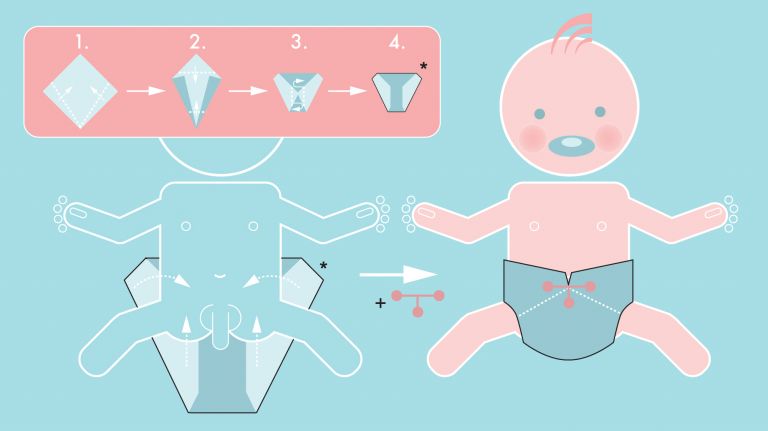
The unboxing is over, and the still somewhat crumpled and wobbly new being has been unwrapped. Now what? Our quick start guide has only three points: cuddle, comfort, and let others help.
Scientific support: Prof. Dr. Martin Korte
Published: 30.03.2016
Difficulty: intermediate
- Full, clean, well-rested? Children need a little more than that.
- Through emotional interaction with their parents, babies form a secure bond with them. This is essential for healthy mental and physical development.
- It is also important to respond sensitively to the child's needs.
- The quickest and best way to form a secure bond is through lots of loving, physical contact with the child from the very beginning.
- Simply letting a baby cry is never recommended. From the second half of the year onwards, and as the child gets older, they can slowly learn to calm themselves down on their own.
- Despite all good intentions, the initial period of getting to know your new baby can be very stressful and difficult. Young parents should be aware of the support available to them and accept it.
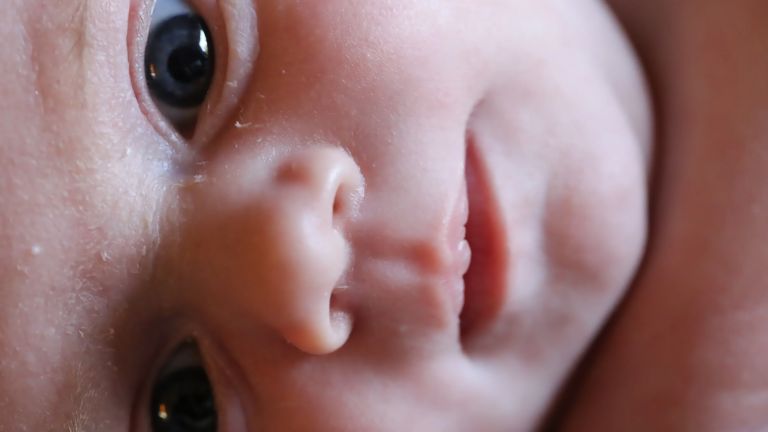
The fragile-looking, unknown being that new parents hold in their arms immediately after birth cannot do much at first glance. Their head wobbles, their gaze is still blurry, and their first smile is still a few weeks away. But newborn babies already have a whole range of tricks up their sleeves:
- Grasping reflex: When pressure is applied to the palm of the hand or sole of the foot, the baby reaches out or curls its toes. This reflex is considered a remnant from the time when our ancestors' babies, similar to modern monkey babies, actively clung to their parents' fur.
- Search and sucking reflexes: The baby turns its head from side to side in search of a nipple. If you touch the corner of its mouth, it turns its face toward the touch. Once it has found the nipple or a similar object such as a finger, pacifier, or the tip of a nose, the baby begins to suck.
- Movement reflexes: Their origin and meaning are often unclear, but newborns respond to certain stimuli with surprisingly complex behaviors. They perform swimming movements in water, automatically hold their breath underwater, or make walking movements when held under the armpits and touching the ground with their feet. These reflexes disappear long before a child later learns to walk or swim properly.
- Beyond reflexes, newborns can often do more than you might think at first glance: for example, they recognize their mother's voice and smell and can distinguish between faces and different languages.
See also ▸ Small but mighty
Pregnant? New parents? Those who have not previously experienced the birth and care of infants firsthand in their own family or circle of friends are now entering uncharted territory: Who is this unborn being, what can it do, what does it want, and what does it need?
In the first half of the 20th century, the answer to these questions was terribly simple: “The child is fed, bathed, and dried, but otherwise left completely alone. It is best to keep the child in another room, where it can remain alone.” This advice comes from pulmonologist and Hitler admirer Johanna Haarer, who wrote a best-selling guidebook in 1934: “Die deutsche Mutter und ihr erstes Kind” (The German Mother and Her First Child) continued to sell brilliantly even after the war, with only a few Nazi terms removed; by 1987, 1.2 million copies had been sold. The impact of the book on the current generation of young parents should not be underestimated, according to historian Miriam Gebhardt: “Today's potential parents have the crude ideas of at least two generations ingrained in them,” she writes in ZEIT, for example.
Haarer coined the image of an infant who likes to “cry to pass the time” and must be relentlessly brought back onto the right path: "If even the pacifier fails, then dear mother, be tough! Don't you dare take the child out of bed, carry it, rock it, or hold it on your lap [...]. After a short time, it will demand Attention as a right, will no longer be quiet [...] – and the small but relentless domestic tyrant is ready."
Attention
Attention
Attention serves as a tool for consciously perceiving internal and external stimuli. We achieve this by focusing our mental resources on a limited number of stimuli or pieces of information. While some stimuli automatically attract our attention, we can select others in a controlled manner. The brain also unconsciously processes stimuli that are not currently the focus of our attention.
Babies need closeness and empathy
It has long been known that Haarer and other advocates of emotional and physical distance from children were completely wrong. This was already demonstrated by Haarer's contemporary, the Jewish psychoanalyst and developmental psychologist René Spitz, who emigrated to the USA in 1938. In a famous study, Spitz compared babies who grew up in an orphanage with minimal interaction from adults with children of prison inmates who were able to be cared for by their mothers for at least several hours a day. Despite otherwise comparable environmental conditions, the orphans suffered significantly more frequently from developmental delays, psychological problems, and poor health. Spitz attributed these deficits to the deprivation of almost all emotional contact in the orphanage.
The fact that children need closeness and Empathy from their parents from the very beginning has long been accepted in modern infant and toddler research. In the 1950s to 1980s, researchers John Bowlby and Mary Ainsworth at the Tavistock Clinic in London developed the underlying attachment theory ▸ The invisible Bond. Children who develop a secure attachment to their caregivers in the first weeks, months, and years of their lives feel safe with them and are better protected against stress and psychological disorders for many years to come.
“A good attachment relationship develops when parents respond sensitively to their children's needs,” says developmental psychologist Agnes von Wyl from the Zurich University of Applied Sciences. “The key to this is sensitive behavior on the part of the parents, i.e., their ability to perceive the child's signals without delay, interpret them correctly, and respond appropriately and within a time frame that is still tolerable for the child.”
Empathy
Empathy
The term "empathy" comes from the ancient Greek word for "passion." Today, empathy is understood as the ability to put oneself in another person's shoes and understand their feelings, thoughts, and actions. In neuroscience, empathy is supported by mirror neurons, among other things: nerve cells that show similar activity when observing an action as when performing it.
Advice is often contradictory
Easier said than done? Young parents with no previous experience quickly feel uncertain. Even during pregnancy, they are bombarded with advice from family, midwives, doctors, and books which often contradicts each other. Should the mother avoid excitement and sweets to protect the fetus from stress hormones or poor eating habits later on? ▸ Like mother, like child? Should you breastfeed your baby spontaneously, according to your intuition, according to a fixed schedule, or not at all? Should the baby sleep in the parents' bed, in its own crib, or even in its own room? And above all: How can you know what a newborn's crying means and what the baby needs right now?
The correct answers to many of these questions cannot be found in advice columns or scientific studies because they depend primarily on two factors: the preferences of the parents and the personality of the child. ▸ Where on Earth did She get that from? “It's important to find the best possible solution for each child and each parent-child relationship,” says von Wyl. Fabienne Becker-Stoll, psychologist and director of the Bavarian Institute for Early Childhood Education, agrees: “Sensitive behavior means responding to the individual needs of the child. Some children need routine, for example, while others are more spontaneous. Some want to be carried as much as possible, while others find that too restrictive.”
Quick guide: Three tips
Nevertheless, there are three tips that new parents can take to heart as a quick guide for their new offspring:
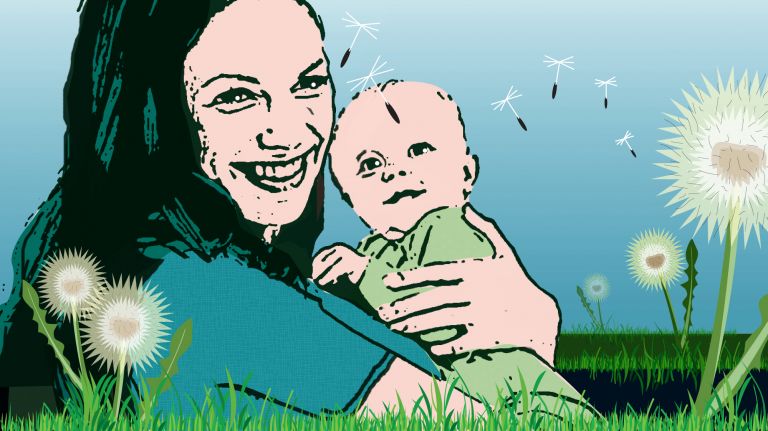
First: It is impossible to harm a young baby with too much physical contact and Attention. As long as it is good for the child and the parents, “the more, the better” applies. Like the babies of other primates, human children are born comparatively immature and in need of help ▸ Development of a brain. Against this background, it is not surprising that the early childhood brain is particularly responsive to sensory and emotional stimuli that arise in physical proximity to caregivers, and that these also have a decisive influence on its maturation ▸ How Thinking develops. “Nothing reduces stress or trains the brain better than loving, sensitive physical contact,” says Becker-Stoll.
An important key to the magic of cuddling is the Hormone Oxytocin. In mothers, children, and fathers, the brain floods the body with oxytocin whenever there is physical contact. The hormone plays an important role during birth; it is released during breastfeeding and when children and parents touch, smell, look at, or hear each other. Studies show that the higher the oxytocin levels, the more secure the bond between parents and children, and the more sensitive they are in their interactions with each other.
Attention
Attention
Attention serves as a tool for consciously perceiving internal and external stimuli. We achieve this by focusing our mental resources on a limited number of stimuli or pieces of information. While some stimuli automatically attract our attention, we can select others in a controlled manner. The brain also unconsciously processes stimuli that are not currently the focus of our attention.
Hormone
Hormones are chemical messengers in the body. They serve to transmit information between organs and cells, usually slowly, e.g., to regulate blood sugar levels. Many hormones are produced in glandular cells and released into the blood. At their destination, e.g., an organ, they dock at binding sites and trigger processes inside the cell. Hormones have a broader effect than neurotransmitters; they can influence various functions in many cells of the body.
Oxytocin
Oxytocin
Oxytocin is a hormone produced in the paraventricular nucleus and supraoptic nucleus of the hypothalamus and released into the blood via the posterior lobe of the pituitary gland. It initiates contractions during childbirth and supports the milk ejection reflex during breastfeeding. It is also released during orgasm. Oxytocin can promote trust and strengthen pair bonding, but recent findings show that its effects are more complex and, in certain contexts, can also promote separation from out-groups.
Crying is a distress signal
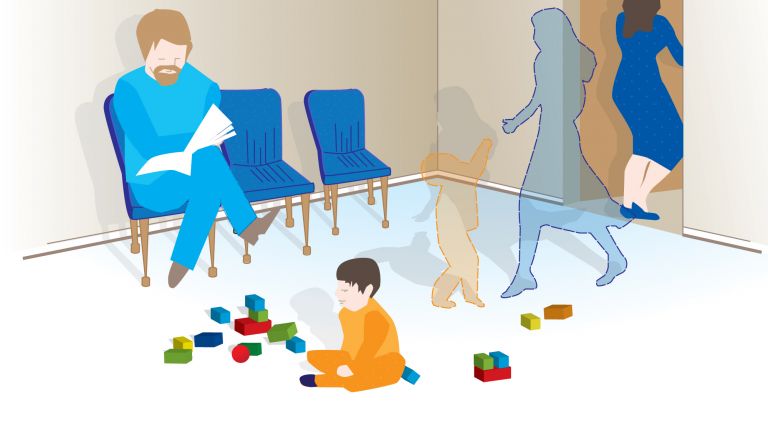
Secondly, young babies in particular should never be left alone to cry. For newborns, who have few means of expression or action beyond close interaction with their parents, persistent and desperate crying is a distress signal. It is used either when they are exposed to prolonged unpleasant sensations such as pain, or when their needs are not met within a reasonable time frame. Babies signal when they are hungry beforehand by snorting, grunting, or whining more quietly. It is worthwhile for parents to respond to this, says von Wyl: “Studies show that infants who are always calmed in the same way during the first three months are better able to regulate themselves later on.”
If, on the other hand, a crying young baby is ignored by its parents, this can lead to increased release of stress hormones such as Cortisol. Becker-Stoll therefore warns against sleep training methods that involve leaving the baby to cry alone: "Every child stops crying at some point, but stress hormones still flood the brain and inhibit stress reduction in the long term. Children who stop crying because they know it's pointless are at risk of developing a disturbed bond with their parents and have a higher risk of mental illness later in life." Von Wyl believes that older babies can also learn to sleep through the night. This may mean that they cry during this phase, but it does not mean that children should simply be left to cry: “After six months, you can gradually give the infant more space to calm themselves down and react less immediately to crying.”
Other studies support this point of view: children who had undergone sleep training as babies were no different at the age of five from those who had not undergone such training. Sleep training – which, incidentally, does not necessarily involve letting the baby cry – therefore promises mainly short-term relief. In the long term, however, another study showed that every child finds its own sleep rhythm, apparently regardless of the parents' training attempts.
Cortisol
A hormone produced by the adrenal cortex that is primarily an important stress hormone. It belongs to the group of glucocorticoids and influences carbohydrate and protein metabolism in the body, suppresses the immune system, and acts directly on certain neurons in the central nervous system.
Parents need support
Thirdly: Taking the time in the first days, weeks, and months to get to know your baby's individual signals, needs, and idiosyncrasies and responding appropriately is hard work. Sleep deprivation and exhaustion in particular can push even relaxed parents of easy-care babies to the limits of their endurance. If there are other problems such as breastfeeding difficulties or postnatal depression, the early days with your newborn can be even more difficult.
Becker-Stoll, who experienced firsthand with one of her children what it means to have a so-called “cry baby,” says she would have given up all her worldly possessions for two hours of sleep during that time. Her most important tip for new parents is therefore to establish a good support network as early as possible. In addition to visits from the midwife and help from family and friends, support options include breastfeeding advice or the services of a maternity nurse, who offers comprehensive help during the postpartum period and is usually paid for in large part by health insurance. “It's better to get help sooner rather than later,” says Becker-Stoll. “Ask for vouchers for time, laundry, or food. The best preparation for the early days with your new baby is help at home.”
Further reading
- Sunderland, Margot : What Every Parent Needs To Know: Love, nurture and play with your child (2016)
- Spitz, R.: Hospitalism. An inquiry into the genesis of psychiatric conditions in early childhood. The psychoanalytic study of the child, IUP, New York, 53 – 74, 1945.
Originally published on March 30, 2016
Last updated on January 26, 2026