Where on Earth did She get that from?
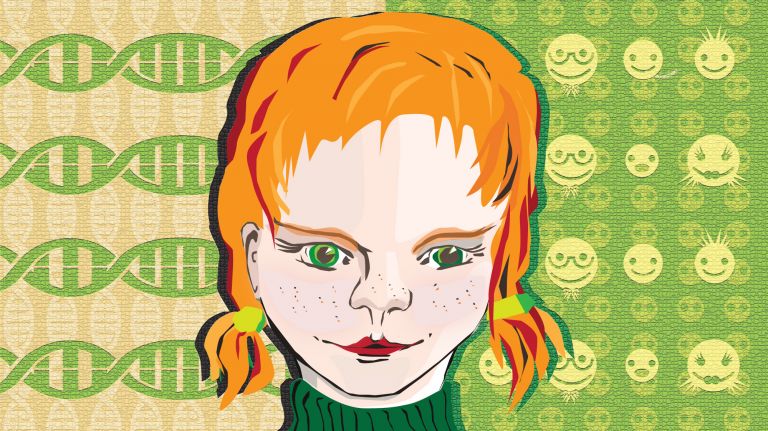
When harmless babies grow into children with their own personalities and temperaments, parents sometimes rub their eyes in amazement: Where on earth did they get that from? Researchers are looking for answers. But it’s not that easy.
Scientific support: Prof. Dr. Claudia Buß, Prof. Dr. Hemmen Sabir
Published: 18.03.2026
Difficulty: intermediate
- Walter Mischel’s famous marshmallow experiment examines how long children can wait for a reward. The result: self-control depends heavily on context and trust in the environment.
- Long-term studies by Mischel showed that the more patient children were more successful later in life. This was seen as evidence of the strong influence of genes on development. Studies from other cultural contexts refuted this theory.
- Personality arises from a dynamic interplay of genes, environment, and active self-regulation (keyword: “nature via nurture”).
- Psychologist Judith Rich Harris argues that the influence of genes and peers is underestimated, while the power of upbringing is overestimated.
- Today, it is believed that culture and nature strongly influence each other in the formation of a child’s personality – and in both directions (“bidirectional development”).
- Temperament, too, is biologically determined but can be changed through experiences and learning processes.
- The first three years are crucial for brain development. But development continues beyond that: people can change throughout their entire lives.
The idea that only parents shape their children is now considered outdated. Research clearly shows that development is reciprocal. As early as 1986, Kathleen E. Anderson and colleagues at the University of Calgary demonstrated this in an impressively simple experiment: They observed mothers with their sons. Some of the sons were aggressive, while the control group was average. Then they swapped them in the lab: mothers of average sons interacted with aggressive boys, and vice versa. The mothers promptly changed their behavior as a result: the mothers of average sons became stricter and more aggressive after the swap. They adjusted their behavior to match that of the mothers of aggressive sons – and vice versa.
Our very own experiment in delayed gratification happened by accident – and anyone not currently wearing rose-colored parenting glasses might be tempted to call it a failed parenting experiment. It was a simple trade: one smiley face for getting dressed by himself, four smiley faces for a small treat – in existential emergencies like morning parenting stress, such methods are allowed. It had worked wonderfully with his sister at that age. But our four-year-old is different. “How many smileys do I have?” is the first thing he wants to know. If he has three, there’s a relatively good chance that the little guy will come out of his room dressed after a while. If, on the other hand, there’s only one smiley on the list, he’ll say, “Oh no, I don’t feel like it today.” Persuasion doesn’t help either: “Look, if you get dressed by yourself now and tonight, and do the same thing again tomorrow, you’ll have earned a treat.” Wide eyes: “Already tomorrow?” He thinks it over. “Oh no, I don’t feel like it.”
What’s going on? Didn’t we raise the kids exactly the same way? Why does one child react so differently from the other? Indeed, from a parent’s perspective, it’s astonishing how babies suddenly turn into people with their own personalities. And one inevitably wonders what influence one has on that. Psychologist Walter Mischel must have felt something similar when, in the mid-1960s, he watched his three young daughters – then between the ages of three and six – grow up. “I observed the miracle of their transformation,” he says in an interview in ZEIT, “I wanted to find out what was going on in their heads.” Mischel didn’t waste time on morning battles over getting dressed (perhaps his wife was in charge of that), but instead devised an experiment on delayed gratification that would later achieve worldwide fame. And to which, to this day, conclusions are attributed that, upon closer inspection, are not clearly substantiated.
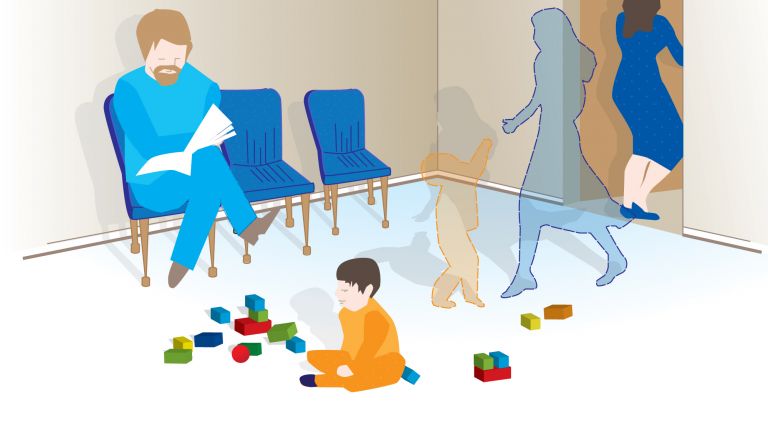
But let’s start from the beginning: Mischel placed four- and five-year-old children in his daughters’ university kindergarten in front of a marshmallow and gave them the choice of eating it immediately or waiting 15 minutes alone in a room with the marshmallow to then receive a second one. Only a few children managed this: most opted for the smaller, immediate reward. Mischel later showed that even the behavior of one-and-a-half-year-olds predicted how they would perform later in the marshmallow test: those who remained calm longer when their mother briefly left the room were also able to wait longer during the test. For a long time, this was seen as an indication of a stable trait (“willpower”). But recent research corrects this picture: children are more likely to wait if they trust their environment; socioeconomic status strongly influences decisions; patience is often rational: Those who experience uncertain conditions are more likely to take the treat immediately. This means that behavior in the experiment measures not only self-control – but also learning experiences regarding the reliability of the world.
Those who can wait longer for a reward succeed
When Mischel asked his daughters ten years later what their former kindergarten friends were up to, he noticed that those who had been particularly impatient in the experiment back then tended to face more problems later on, while those who had been patient seemed to navigate life more easily. Mischel investigated this further. He met with the participants from that time repeatedly over the decades and found: Those who were patient back then were better able to concentrate later on, were more self-confident, performed better on Intelligence tests, and, on average, had higher educational attainment and more stable relationships.
The experiment is still debated today. It seems to suggest that we have a predisposition that inevitably predetermines our later life – even though Mischel himself repeatedly qualified this view. A simple Adaptation of the test, conducted last year by German psychologist Bettina Lamm – then at the University of Osnabrück – in cooperation with the universities of Bielefeld, Giessen, and Frankfurt am Main, and not yet published, proved that such rigid assumptions are incorrect: The reactions of 125 German and 76 Cameroonian children were compared in the marshmallow test – for the Cameroonian children, a similar treat from their own culture was provided. While only 30 percent of the German children were able to wait – a result similar to what Mischel once achieved – 70 percent of the Cameroonian children exercised patience.
“This suggests that different parenting styles have a major influence,” says Lamm. She suspects a connection to the overarching socialization goals: “Here in Germany, we want children to develop into independent individuals who express their feelings, needs, and preferences and advocate for them. In Cameroon, one of the most important goals is for them to fit into the group, show respect, and work to maintain social harmony.” Parents in Cameroon are stricter, she notes, and children learn early on to suppress their own Emotions. In Germany, on the other hand, children are encouraged from the very beginning to express their feelings. They do just that in the marshmallow experiment (“but I want to”) and when getting dressed in the morning (“but I don’t want to”). So do parents really have the main influence?
Intelligence
Intelligence
Collective term for human cognitive performance. According to British psychologist Charles Spearman, cognitive performance in different areas correlates with a general factor (g factor) of intelligence. This means that intelligence can be expressed as a single value. American psychologist Howard Gardner, among others, has developed a counter-concept to this, known as the "theory of multiple intelligences." According to this theory, intelligence develops independently in the following eight areas: linguistic, logical-mathematical, musical-rhythmic, visual-spatial, bodily-kinesthetic, naturalistic, intrapersonal, and interpersonal.
Adaptation
Adaptation refers to the process by which the sensory organs, the perceptual system, or the entire organism adjusts to the intensity and quality of stimuli and to changes in environmental conditions. In visual adaptation, for example, the pupil and the sensitivity of the photoreceptors regulate themselves according to the prevailing light conditions.
Emotions
Neuroscientists understand "emotions" to be complex response patterns that include experiential, physiological, and behavioral components. They arise in response to personally relevant or significant events and generate a willingness to act, through which the individual attempts to deal with the situation. Emotions typically occur with subjective experience (feeling), but differ from pure feeling in that they involve conscious or implicit engagement with the environment. Emotions arise in the limbic system, among other places, which is a phylogenetically ancient part of the brain. Psychologist Paul Ekman has defined six cross-cultural basic emotions that are reflected in characteristic facial expressions: joy, anger, fear, surprise, sadness, and disgust.
Is Parenting Pointless?
American psychologist Judith Rich Harris sees it differently. She became an overnight sensation in 1998 with her book “The Nurture Assumption: Why Children Turn Out the Way They Do”. In summary, based on years of experience with psychological test designs, the researcher argued as follows: The impact of genes on personality development is underestimated, while that of parental upbringing is overestimated. For older children, the greatest influence besides genes comes from peers – that is, their friends – and thus the environment outside the family. Berlin psychologist Jens Asendorpf confirmed: “Parents must not overestimate their own influence.”
In fact, there are numerous situations in daily life with children where one begins to suspect that parenting has little effect. For a long time, I was convinced that boys who don’t play with dolls are raised by their parents according to one-sided gender stereotypes. So we bought cars for our daughter and dolls for our sons – everyone was supposed to play with everything. But that’s not how it turned out. When we repair the bikes, the boys run over and snatch the tools from us. One of the little one’s first clearly understandable words was “screwdriver” – and with it, he tirelessly tinkers with his Bobby Car, while our daughter straps her doll onto the bike rack and explains the world to her.
And this was long before my children had a peer group. Where else could such early influences come from, if not from genes? Bettina Lamm suspects an unconscious influence from deeply ingrained parental role models: For example, experiments showed that adults reacted very differently to the same baby photos – depending on whether they were told the picture showed a girl or a boy. When it came to girls, they described the baby as cute, small, and in need of protection. If they thought it was a boy, he was described as “curious, alert, and active.”
“The timing of when something occurs is also not a good indicator of whether it is innate,” says Bettina Lamm. Even if certain behaviors are genetically determined, that does not mean they must manifest early on. The environment always plays a role; genes tend to provide the framework for this interaction. “You wouldn’t ask: what is innate, what is learned,” says Lamm, “you’d rather look at how these factors interact.”
In fact, the influence of genes on certain traits changes over the years, as numerous childhood, twin, and adoption studies show. In some cases, it even increases: While in the first year of life, for example, the variability in Intelligence attributable to genes is about 30 percent in children – measured at this age using visual habituation tests – it rises to about 50 percent in eight-year-olds. By retirement age, it even reaches 70 percent. This is also because genes shape the environment – a factor that is often underestimated, according to Asendorpf: Children who are genetically predisposed to intelligence seek out an intellectually stimulating environment. As a result, the genetic predisposition has a sort of double effect. “Environment and genes should not be viewed as opposites; they correlate with one another.” Experiences can influence which genes are active – even before birth. This perspective is often described by the concept “nature via nurture.”
Intelligence
Intelligence
Collective term for human cognitive performance. According to British psychologist Charles Spearman, cognitive performance in different areas correlates with a general factor (g factor) of intelligence. This means that intelligence can be expressed as a single value. American psychologist Howard Gardner, among others, has developed a counter-concept to this, known as the "theory of multiple intelligences." According to this theory, intelligence develops independently in the following eight areas: linguistic, logical-mathematical, musical-rhythmic, visual-spatial, bodily-kinesthetic, naturalistic, intrapersonal, and interpersonal.

Many factors influence temperament
Even a once-accepted fundamental principle of psychology is now being questioned: the theory that at least certain basic traits, known as temperament, are innate – a thesis many parents subscribe to. One child crafts, paints; sometimes you barely notice they’re there. With another, you wonder if everything is okay when they aren’t making a racket, stomping and shouting from their corner.
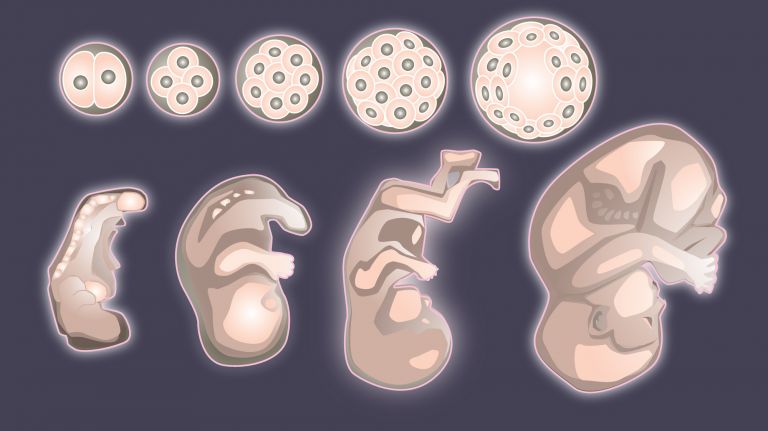
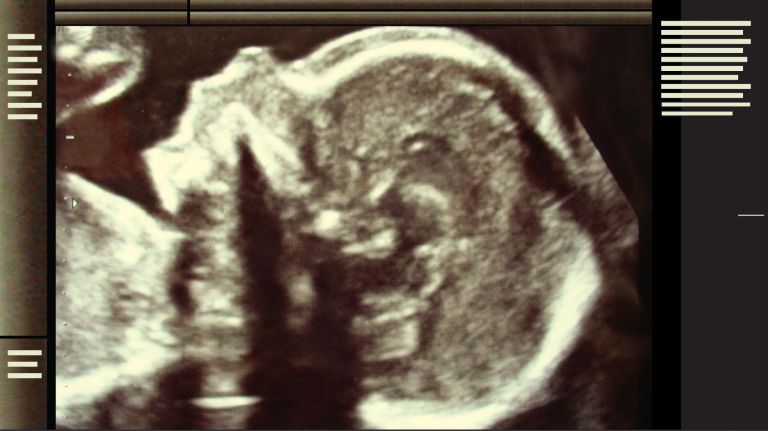
But it would be wrong to speak of an unchangeable genetic predisposition here: For one thing, even in the womb, numerous experiences of the fetus play a role in the activation of its genes – such as which nutrients it receives or which hormones reach it via the placenta. Even a newborn is thus shaped by its environment. ▸ Like mother, like Child
Moreover, temperament is not unchangeable: This was discovered by Harvard researcher Jerome Kagan: In the 1980s, he observed two temperaments in newborns that he believed were innate: reserved and inhibited on the one hand, and uninhibited, energetic, and impulsive on the other. Kagan followed his subjects for several years – and found that by kindergarten, one in three children had already shed their shyness. Berlin-based researcher Asendorpf reached similar conclusions in a long-term study in Munich that began at kindergarten age and followed the subjects for 25 years: While aggressive children often developed into aggressive adults, the link between early Inhibition and later inhibition was only weakly pronounced. “That depends on later experiences; they can still change a lot,” says Asendorpf. Kagan also came to this conclusion: “Our temperament is not our destiny.”
Inhibition
Neuronal inhibition describes the phenomenon whereby a sender neuron sends an impulse to a receiver neuron, causing the latter's activity to decrease. The most important inhibitory neurotransmitter is GABA.
How important are the first three years?
Many consider the first three years – in the 1980s typically still the time before kindergarten – to be decisive when it comes to a child’s personality. Many psychologists emphasize how important a strong bond between parents and child is during this time ▸ The invisible Bond. This has sparked massive, ideologically driven debates about the right form of childcare, even extending to the question of whether good parents should care for their children at home until their third birthday.
So are we neglectful parents with our daycare kids? The first few years are indeed crucial for brain development, says Bettina Lamm, because many important connections between nerve cells form during this time. “Experiences with the environment are decisive in determining which connections are formed or strengthened.” A loving, reliable environment is therefore important for toddlers – but that doesn’t have to be exclusively their own parents. After that, the brain’s Plasticity does decrease. But it remains flexible: “We’re not done after three years,” says Lamm. Connections can still change later in life – though this is easier during certain, particularly sensitive periods. And Walter Mischel never tires of emphasizing that people can change. A four-year-old who can’t resist a marshmallow has no excuse for the rest of their life.
Plasticity
Neuroplasticity
The term neuroplasticity describes the ability of synapses, nerve cells, and entire areas of the brain to change structurally and functionally depending on the degree to which they are used. Synaptic plasticity refers to the adaptation of the signal transmission strength of synapses to the frequency and intensity of incoming stimuli, for example in the form of long-term potentiation or depression. In addition, the size, interconnection, and activity patterns of different areas of the brain also change depending on their use. This phenomenon is referred to as cortical plasticity when it specifically affects the cortex.
New Perspectives
Programs designed to promote self-control show demonstrable effects, particularly in early childhood and in educational settings. At the same time, social factors such as poverty or chronic stress influence development more strongly than long assumed and can significantly shape self-regulation.
Digital media are also coming into focus: they can both promote and impair Attention and impulse control – depending on how they are used. The concept of differential susceptibility complements this picture: some children react particularly strongly to their environment and, depending on conditions, develop either particularly positively or particularly problematically.
Attention
Attention
Attention serves as a tool for consciously perceiving internal and external stimuli. We achieve this by focusing our mental resources on a limited number of stimuli or pieces of information. While some stimuli automatically attract our attention, we can select others in a controlled manner. The brain also unconsciously processes stimuli that are not currently the focus of our attention.
Further reading
- Dirk Asendorpf, Inhibited and aggressive preschool children at 23 years of age: personality and social transitions into adulthood, Dev Psychol. 2008 Jul;44(4):997–1011. (abstract).
- Mischel, Walter, Delay of Gratification in Children, Science, Vol. 244, No. 4907, 1989 (pdf)
- Kagan, Jerome: Three Seductive Ideas (2000)
- Lona Lehrer: Do parents matter? Interview with Judith Harris, Scientific American, April 9, 2009, (Full text)
Originally published on April 1, 2016
Last updated on March 18, 2026