How Thinking develops
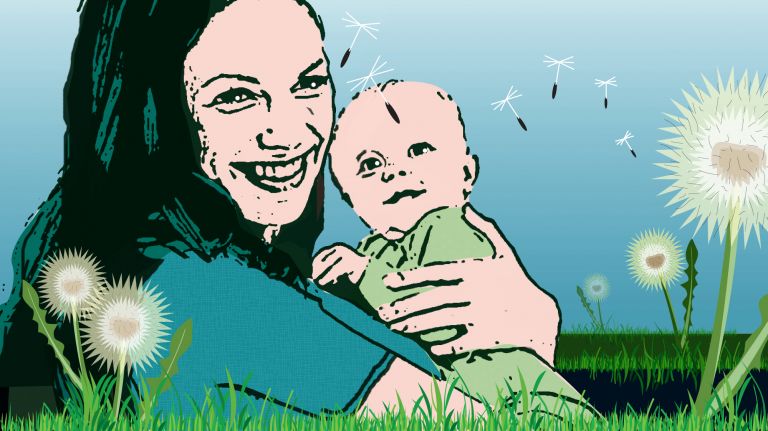
Never again does as much happen in the human brain as during the first years of life. Concepts, language, and even abstract ideas take root in early childhood.
Scientific support: Prof. Dr. Anna Katharina Braun, Prof. Dr. Hemmen Sabir
Published: 18.03.2026
Difficulty: intermediate
- At birth, the brain already has as many nerve cells as an adult. However, connections and networks must still form and be selectively “weeded out” at later stages of brain development (pruning).
- Motor skills are a key driver of cognitive development: they allow the baby to explore its surroundings and are the key to self-efficacy.
- As early as four months, infants categorize objects – an important prerequisite for language acquisition.
- Between nine and twelve months, children learn to share impressions with others – a driving force for language and communication.
- Nine-month-old babies begin to understand that things still exist even when they can no longer see them.
- However, they do not grasp what others might know until at least age five. And even in eleven-year-olds, Theory of Mind – the ability to infer what others know, feel, or expect – is not yet fully developed.
Babies are by no means born as “blank slates.” From an early age, they possess astonishing cognitive abilities that help them structure and understand their environment. At the same time, their brains continue to develop with tremendous dynamism during the first years of life. Yet as early as two months old, they expect a solid object to fall downward and not upward. Or that a glass cannot float in the air next to the table. By around five months, they have realized that water is not solid and, unlike a wooden block, can pass through a sieve. If shown pictures or animations in an experiment that violate these laws, the little ones are confused.
As recently as February 2016, scientists led by Susan Hespos and Lance Rips from Northwestern University in Evanston, Illinois, published findings suggesting that this intuitive understanding of materials goes even further. According to these findings, five-month-old babies instinctively grasp that solids such as sand or glass beads can indeed pass through a sieve if they are small enough.
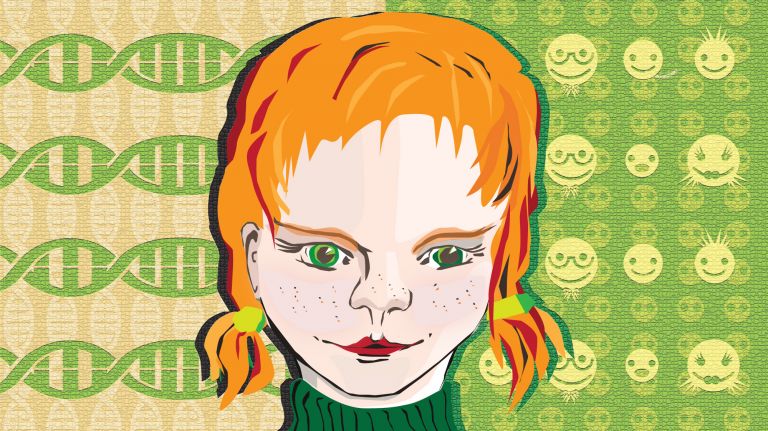
There are essentially two possible explanations for this early understanding of physical phenomena. Either the babies’ high capacity for learning leads them to begin recognizing such relationships at a rapid pace. Or – as advocated, for example, by cognitive psychologist Elizabeth Spelke of Harvard University in Cambridge, Massachusetts – infants possess innate knowledge of fundamental scientific principles.
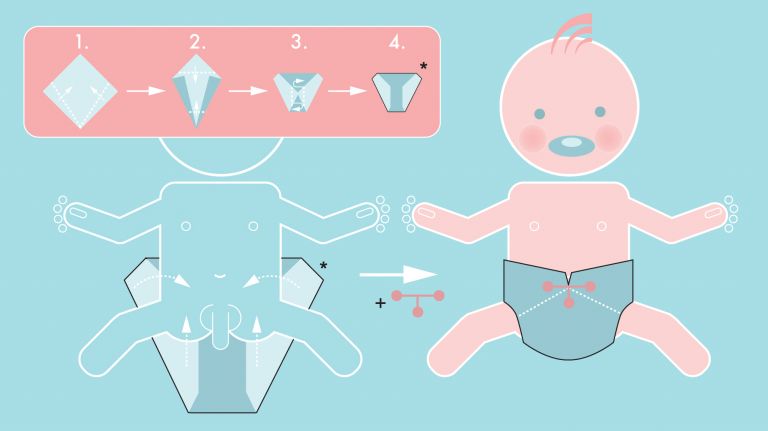
Crying, sleeping, drinking, a full diaper – at first glance, this is what a baby’s daily life looks like. No wonder that as late as the 1960s, the prevailing view was that being fed, dry, and clean, having peace to sleep, and a good dose of fresh air were enough to care for a baby. The youngest children were not thought capable of much interaction with their environment.
Today we know: Never again does as much happen in our minds as in the first years of life. “If we could observe the development of the human brain before birth and during early childhood, we would likely be so fascinated, it would take our breath away” writes the German neurobiologist Gerald Hüther.
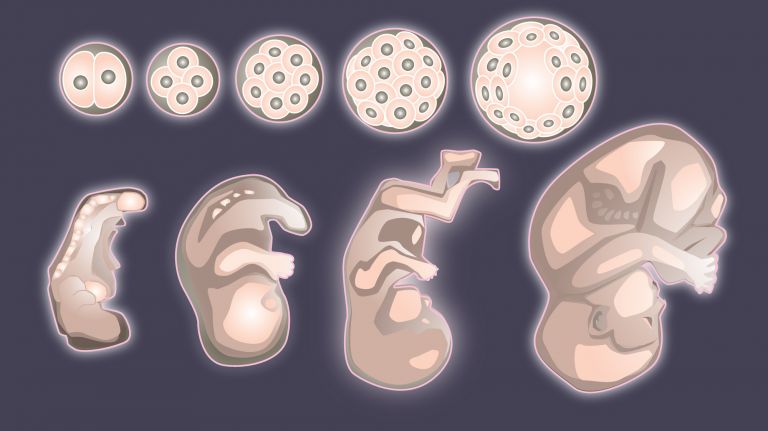
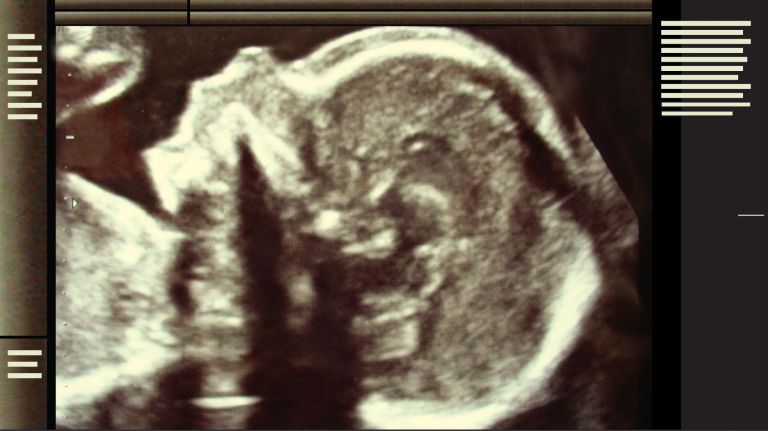
A newborn’s brain contains around 86 million nerve cells – the same number as in an adult ▸ Development of a Brain. Yet they are not yet optimally connected. Synapses form, neural connections and networks grow, and must then “reorganize” as needed. This selection and optimization process can only take place if babies and toddlers are able to explore themselves and their environment.
Motor Skills as the Engine of the Mind
Even in the womb, the brain begins to absorb its first experiences, such as the Taste of amniotic fluid or the mother’s voice penetrating the uterus ▸ Like mother, like child. Above all, motor skills already play a significant role in MMom’s belly. Starting around the seventh week of pregnancy, the tiny fetus can be observed moving, and even at this stage, nerve cell extensions from the brain and Spinal cord make contact with the fetus’s muscle cells. Initial connections between motor and sensory pathways form and are strengthened through regular “training.” As early as the 12th week of pregnancy, the unborn baby is able to move individual fingers, play with the umbilical cord, or put its thumb in its mouth.
After birth, motor skills remain a key driver of mental development, as they are what first enable the baby to explore its environment. The baby expands the range of its “explorations” and learns to use its hands to examine objects. For developmental psychologists, motor skills are therefore a crucial foundation for cognitive development and the key to self-efficacy. This is how little ones “grasp” the world: If I push the ball, it rolls away. Or: If I knock over the cup, Mom makes a funny sound. Babies as young as three months old learn to set a mobile – attached to their leg by a string – in motion by kicking wildly, as the Swiss biologist and developmental psychologist Jean Piaget (1896–1980) observed.
Babies also begin to think in categories surprisingly early. The first studies on this date back to the late 1970s. Traditionally, researchers show babies various objects and observe how long they look at them. If they look longer – for example, because a dog suddenly appears in a series of buildings – this is interpreted as a reaction to “new” or “different.” “These experiments, however, have sparked major debates about whether we can even speak of thinking here, or whether the perceptual system is merely reacting to a distinctly different visual stimulus,” says Sabina Pauen, a developmental psychologist at Heidelberg University.
Taste
The sensory impression we refer to as "taste" results from the interaction between our senses of smell and taste. In terms of sensory physiology, however, "taste" is limited to the impression conveyed to us by the taste receptors on the tongue and in the surrounding mucous membranes. It is currently assumed that there are five different types of taste receptors that specialize in the taste qualities sweet, sour, salty, bitter, and umami. In 2005, scientists also identified possible taste receptors for fat, whose role as a distinct taste quality is still being investigated.
Spinal cord
medulla spinalis
The spinal cord is the part of the central nervous system located in the spine. It contains both the white matter of the nerve fibers and the gray matter of the cell nuclei. Simple reflexes such as the knee-jerk reflex are already processed here, as sensory and motor neurons are directly connected. The spinal cord is divided into the cervical, thoracic, lumbar, and sacral spinal cord.
Chair or dog? How categories emerge
Pauen and her team therefore take a different approach. The Heidelberg researchers use an electroencephalogram (EEG) to measure the brain waves of babies while they view a series of one hundred very different images in a random order. Of these, 80 belong to one category and 20 to another. If an image appears that does not belong to the first group of objects, and the baby recognizes this, the scientists record a very characteristic spike in the EEG – specifically in the frontal lobe, where thinking takes place. This suggests that infants as young as three to four months old can indeed distinguish whether they are seeing furniture or animals.
By seven to nine months, they then differentiate between more nuanced categories, such as between people and animals, between cars and trucks, or even between different dog breeds. A little later, at ten to twelve months, babies even classify objects by function – even if this is far less obvious at first glance than, for example, the color of the object in question.
In doing so, babies lay an important foundation for language acquisition. Many terms in everyday language – such as dog, cat, car, truck, chair, table – can be categorized in this way. Scientists assume that word comprehension begins around the time when infants are already making subtle distinctions between very fine categories, that is, at around 10 months of age. The child begins to understand what adults mean when they use familiar words, because these now fit into the categories in the child’s mind.
As in many areas, toddlers learn language through observation and imitation. The child observes adults and tries to imitate them. “We assume that a toddler supposes their parents already know what they’re doing and therefore tries to copy their actions,” says Pauen. This applies even to nonsensical behavior, such as when Dad taps the lid of a box three times before opening it.
EEG
An electroencephalogram, or EEG for short, is a recording of the brain's electrical activity (brain waves). Brain waves are measured on the surface of the head or using electrodes implanted in the brain itself. The time resolution is in the millisecond range, but the spatial resolution is very poor. The discoverer of electrical brain waves and EEG is the neurologist Hans Berger (1873−1941) from Jena.
frontal
An anatomical position designation – frontal means "towards the forehead," i.e., at the front.
You know what I mean
One theory regarding language acquisition goes like this: If an adult uses a certain word while focusing their Attention on a specific object, the child assumes that the object is what is being referred to – and not, for example, its characteristics. So if Mom points to a dog and says “dog” or “woof-woof,” the child assumes that’s the animal’s name – and not, say, the sound the animal makes. This can be imprecise at first, such as when the child starts using “woof-woof” for all animals or only refers to the neighbor’s poodle that way. Nevertheless, this is how the first shared linguistic concepts emerge, and the child understands: I can say “woof-woof” and everyone knows what I mean, even if there isn’t a dog in sight right now.
What is crucial is that the baby first learns to direct others’ attention to a specific object and thus communicate – and vice versa. Scientists refer to this as “joint attention.” This developmental milestone occurs around nine months of age. The American anthropologist and behavioral scientist Michael Tomasello – who was then at the Max Planck Institute for Evolutionary Anthropology in Leipzig – therefore also speaks of the “nine-month miracle.” When the mother points her finger at an object, the child no longer looks at Mom’s finger but in the direction she is pointing – that is, at the object in question. This marks an important step toward information exchange – a milestone in mental development, because according to Tomasello, among all living beings, only humans communicate to share a perception, following the motto: “Look, this is what I saw.”
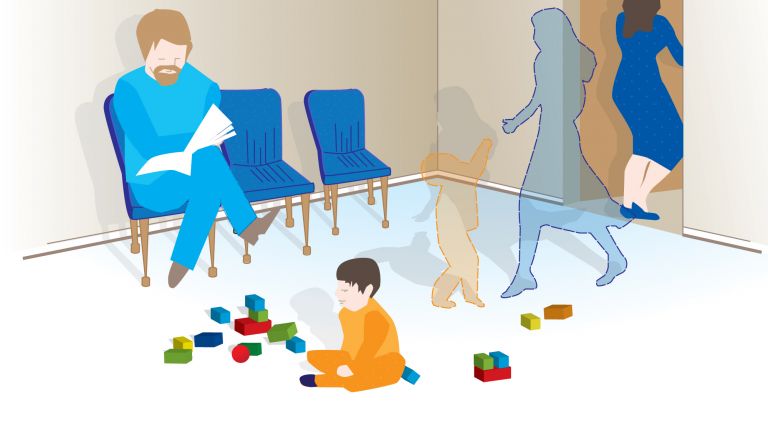
Around the same time – between nine and twelve months – babies realize that things or people continue to exist even when they are hidden under a cloth or behind a door. Piaget coined the term “object permanence” in this context – a crucial step toward thinking. Very young infants seem to literally forget a hidden object, following the motto “out of sight, out of mind”
Whether this is actually the case is now a matter of debate in research ▸ Small but mighty!, but it is difficult to determine because the thoughts of the very youngest can only be studied to a limited extent. By a few months, at least, infants already begin to search unsystematically for the hidden object. They suspect it must still be there, but have no real idea where. If the object is only partially hidden, even four- to eight-month-old children can track it down. Nine- to twelve-month-old children, however, know exactly where the ball is if they have previously watched Mom drape a cloth over it.
Attention
Attention
Attention serves as a tool for consciously perceiving internal and external stimuli. We achieve this by focusing our mental resources on a limited number of stimuli or pieces of information. While some stimuli automatically attract our attention, we can select others in a controlled manner. The brain also unconsciously processes stimuli that are not currently the focus of our attention.
I know what you know – or maybe not
However, it takes some time before the child develops an understanding of whether the person across from them might also know where the hidden ball is. A three-year-old will assume that Dad, who enters the room later, will look for the ball where Mom hid it – even though he didn’t see her place it under the cloth. Another example: If you swap the contents of a green and a red lunchbox, the child assumes that the person who owns the green box will now look for their sandwich in the red one – even though they were absent and therefore couldn’t observe the swap. Only a five-year-old understands that the owner of the green lunchbox is still looking for their lunch there. Nevertheless, it is only seven-year-olds who realize that the owner of the green lunchbox is not being “mean” by eating the wrong sandwich.
Thus, the seven-year-old is slowly moving toward “adult thinking” with a developed Theory of Mind. Yet what happens in their brain is not yet comparable to the processes in the adult brain, as neuroscientist Rebecca Saxe of the Massachusetts Institute of Technology in Cambridge, Massachusetts, has determined through fMRI studies. The activation patterns in the key brain regions responsible for Theory of Mind – that is, for the ability to infer feelings, needs, intentions, expectations, or opinions in our fellow human beings – differ from those of adult subjects – even in 11-year-olds. Some frontal Cortex regions continue to be optimized well into puberty. It seems that thinking, too, matures slowly only in us humans.
frontal
An anatomical position designation – frontal means "towards the forehead," i.e., at the front.
Cortex
cortex cerebri
Cortex refers to a collection of neurons, typically in the form of a thin surface. However, it usually refers to the cerebral cortex, the outermost layer of the cerebrum. It is 2.5 mm to 5 mm thick and rich in nerve cells. The cerebral cortex is heavily folded, comparable to a handkerchief in a cup. This creates numerous convolutions (gyri), fissures (fissurae), and sulci. Unfolded, the surface area of the cortex is approximately 1,800cm².
Further reading
- Marinovic, V. Et al. Neural correlates of human-animal distinction: An ERP-study on early categorical differentiation with 4– and 7-month-old infants and adults. Neuropsychologia; 2014, Jul, 60: 60 – 76 (abstract)
Originally published on March 18, 2016
Last updated on March 18, 2026