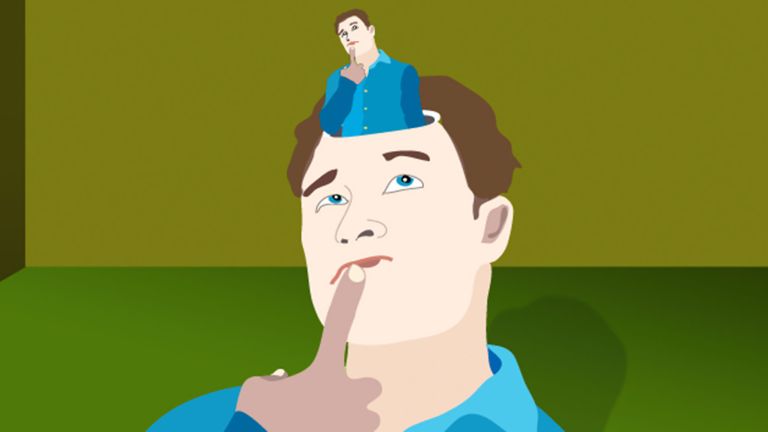
Think
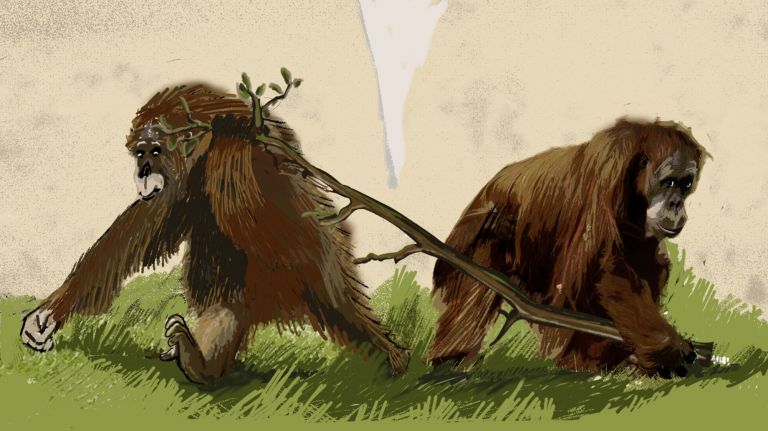
Thinking helps
Not so long ago, behaviorists believed that science would never be able to understand thinking. Accordingly, they treated cognition as a black box and focused instead on stimulus and response, on observable behavior. Everything else was just learning.
Well, the learning part isn't entirely wrong. But the “never figure it out” part is: we now know quite a bit about the processes between stimulus and response, between Perception and thinking. Probably most about memory (coming up), although there are still gaps in our knowledge at the cellular level that are larger than any Synapse. The fact that “thinking” also includes topics such as emotion and intuition (coming up) is only surprising at first glance – both are involved in the decision-making process and are by no means the opposite of conscious thinking. And then there's consciousness. You'll find a few other surprises here as well.
Perception
The term describes the complex process of gathering and processing information from stimuli in the environment and from the internal states of a living being. The brain combines the information, which is perceived partly consciously and partly unconsciously, into a subjectively meaningful overall impression. If the data it receives from the sensory organs is insufficient for this, it supplements it with empirical values. This can lead to misinterpretations and explains why we succumb to optical illusions or fall for magic tricks.
Synapse
A synapse is a connection between two neurons and serves as a means of communication between them. It consists of a presynaptic region – the terminal button of the sender neuron – and a postsynaptic region – the region of the receiver neuron with its receptors. Between them lies the synaptic cleft.