The invisible Bond
It not only ensures survival, but also influences personality: the emotional bond between a toddler and its parents. Ideally, this creates a stable foundation that the child can draw on throughout its entire life.
Scientific support: Prof. Dr. Martin Korte, Prof. Dr. Hemmen Sabir
Published: 18.03.2026
Difficulty: intermediate
- Infants have an innate need for close emotional attachment and try to strengthen this through Eye contact, crying, or smiling.
- Depending on how caregivers interact with infants, they develop different attachment styles: secure, insecure-avoidant, insecure-ambivalent, or disorganized.
- A good bond with one or more caregivers strengthens the personality and makes the child more resistant to stress throughout their life. Neglect in early childhood, on the other hand, can lead to serious changes in the child's emotionality and stress regulation.
- An important bonding Hormone is oxytocin, which helps to form a bond between the child and the caregiver.
Eye
bulbus oculi
The eye is the sensory organ responsible for perceiving light stimuli – electromagnetic radiation within a specific frequency range. The light visible to humans lies in the range between 380 and 780 nanometers.
Neglect
Neglect is a perceptual disorder in which parts of the body or stimuli are ignored due to a brain lesion. The disorder affects the sides opposite the brain lesion. It usually occurs after lesions in the right parietal lobe. Accordingly, visual, auditory, and somatosensory stimuli on the left side are ignored.
Hormone
Hormones are chemical messengers in the body. They serve to transmit information between organs and cells, usually slowly, e.g., to regulate blood sugar levels. Many hormones are produced in glandular cells and released into the blood. At their destination, e.g., an organ, they dock at binding sites and trigger processes inside the cell. Hormones have a broader effect than neurotransmitters; they can influence various functions in many cells of the body.
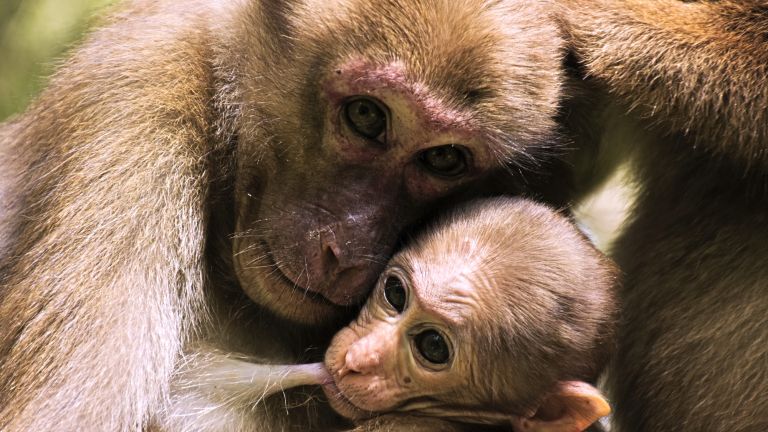
In 1958, behavioral scientist Harry Harlow demonstrated in his famous monkey experiment at the University of Wisconsin that animals also have a need for attachment, and that food alone is not enough for them. He separated young rhesus monkeys from their mothers and instead made them two artificial surrogate mothers out of wire with wooden heads. One provided milk and the other was soft and padded with plush. Harlow wanted to know which dummy the monkeys would prefer. The result was clear: all the monkeys only went to the “cold” wire mother to drink, but then cuddled up to the fabric mother until they were exhausted. The need for warmth and security was apparently stronger than hunger.
Hormones influence personality and brain development, while early childhood Neglect alters Hormone balance. To ensure that mothers care lovingly for their babies, nature equips them with a colorful mix of hormones. The most important ingredient is the bonding hormone oxytocin, which is released very reliably in mothers and children in a secure bonding relationship. It stimulates maternal care, influences how the newborn is treated after birth, and calms and soothes both infants and adults. Oxytocin release is increased in both early and later bonding, sometimes simply by seeing a loved one or hearing their voice. Oxytocin also has a positive effect on stress management in young (breastfeeding) mothers, reducing the amount of stress hormones and promoting balanced mother-child interaction, which in turn stimulates this hormonal system. Fathers and other caregivers also experience increased oxytocin levels when they interact lovingly with the child.
Neglect
Neglect is a perceptual disorder in which parts of the body or stimuli are ignored due to a brain lesion. The disorder affects the sides opposite the brain lesion. It usually occurs after lesions in the right parietal lobe. Accordingly, visual, auditory, and somatosensory stimuli on the left side are ignored.
Hormone
Hormones are chemical messengers in the body. They serve to transmit information between organs and cells, usually slowly, e.g., to regulate blood sugar levels. Many hormones are produced in glandular cells and released into the blood. At their destination, e.g., an organ, they dock at binding sites and trigger processes inside the cell. Hormones have a broader effect than neurotransmitters; they can influence various functions in many cells of the body.
Oxytocin
Oxytocin
Oxytocin is a hormone produced in the paraventricular nucleus and supraoptic nucleus of the hypothalamus and released into the blood via the posterior lobe of the pituitary gland. It initiates contractions during childbirth and supports the milk ejection reflex during breastfeeding. It is also released during orgasm. Oxytocin can promote trust and strengthen pair bonding, but recent findings show that its effects are more complex and, in certain contexts, can also promote separation from out-groups.
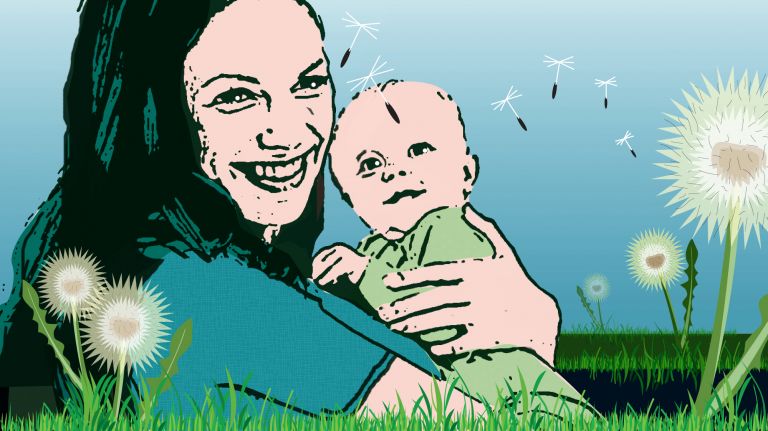
The baby squeals, smiles, and charms its mother to its heart's content. The mother cannot help but respond to her child with baby talk and loving touches. What the young mother experiences with her child is a very special relationship, but also something very fundamental. She builds a close emotional bond with her child, which ideally strengthens it so that one day it can go out into the world feeling secure and confident.
Attachment – this close, emotional relationship with a person – develops in infants with those individuals who are most intensely available to the child in terms of time and emotion, and who give them Attention. It creates basic trust and inner security, regulates emotional behavior, activates the formation of growth hormones and neural networks, and forms the foundation for a later emotionally stable and stress-resistant personality.
Attention
Attention
Attention serves as a tool for consciously perceiving internal and external stimuli. We achieve this by focusing our mental resources on a limited number of stimuli or pieces of information. While some stimuli automatically attract our attention, we can select others in a controlled manner. The brain also unconsciously processes stimuli that are not currently the focus of our attention.
Innate behavioral program
A close bond is an innate need for infants. “At first, babies have only one way of attracting Attention: they cry. And they do so at a frequency that our ears can hear best,” explains psychology professor Fabienne Becker-Stoll from the State Institute for Early Childhood Education in Munich. This is part of a biologically determined behavioral program. Although infants cannot yet speak, they already have some social skills and behaviors at their disposal to activate the care system of their caregivers immediately after birth: They have a preference for human voices, especially their mother's, and for faces. They make Eye contact, signal their needs and Emotions – and at around two months of age, they also begin to smile deliberately. ▸ Small but mighty!
If the child feels uncomfortable, tired, or overexcited, or is separated from its caregiver, it also displays typical behavioral patterns: it searches for its caregiver, crawls toward them, runs after them, cries, clings to them, or protests – and is most easily calmed by physical contact with them. Numerous observations and experiments, for example with monkeys (see info box), show how crucial bonding is for the survival of primates.
John Bowlby, one of the pioneers of attachment theory, already suspected that infants do not only seek contact with a caregiver in order to find protection. The new citizens of the world want to explore the world. Exploratory behavior, as attachment researchers call it, begins when babies start searching for their mother's breast. At around one year of age, when the child learns to walk, it increases rapidly. At two to three years of age, the distance from the parents and the length of the “excursions” also increase. But in order to explore, the child needs the security and protection of its parents as a “safe haven” to which it can return at any time. “It looks as if the child is ‘recharging’ its sense of security when it climbs back onto its mother's lap, cuddles up or rests,” says Fabienne Becker-Stoll.
Attention
Attention
Attention serves as a tool for consciously perceiving internal and external stimuli. We achieve this by focusing our mental resources on a limited number of stimuli or pieces of information. While some stimuli automatically attract our attention, we can select others in a controlled manner. The brain also unconsciously processes stimuli that are not currently the focus of our attention.
Eye
bulbus oculi
The eye is the sensory organ responsible for perceiving light stimuli – electromagnetic radiation within a specific frequency range. The light visible to humans lies in the range between 380 and 780 nanometers.
Emotions
Neuroscientists understand "emotions" to be complex response patterns that include experiential, physiological, and behavioral components. They arise in response to personally relevant or significant events and generate a willingness to act, through which the individual attempts to deal with the situation. Emotions typically occur with subjective experience (feeling), but differ from pure feeling in that they involve conscious or implicit engagement with the environment. Emotions arise in the limbic system, among other places, which is a phylogenetically ancient part of the brain. Psychologist Paul Ekman has defined six cross-cultural basic emotions that are reflected in characteristic facial expressions: joy, anger, fear, surprise, sadness, and disgust.
Different types of attachment
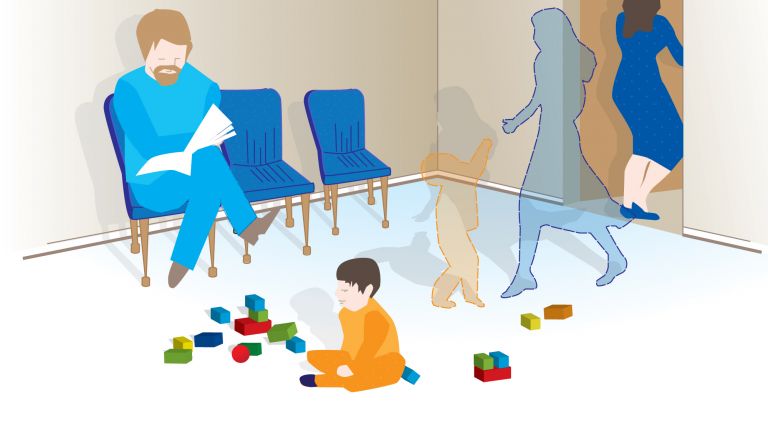
In order to investigate precisely this interplay between attachment and exploration behavior, Mary Ainsworth, a colleague of Bowlby's, developed the Strange Situation test in the 1970s. She sent mothers with their 12- to 20-month-old children into an unfamiliar room with toys. Soon, an unfamiliar but friendly woman enters the room.
After three minutes, the mother leaves, leaving the child with the stranger until the mother returns after another three minutes. The scenario is repeated once more. Ainsworth observed that the toddlers explored significantly more in the presence of their mother. In detail, however, they behaved very differently: some showed classic attachment behavior, while others hardly reacted to their mother or became angry after her return.
Ainsworth derived three attachment types from this: secure, insecure-avoidant, and insecure-ambivalent. Secure attachment is considered the optimum (see info box). Securely attached children are better able to adapt their impulses, needs, and feelings to the situation at hand than insecurely attached children. When under stress, they also demonstrate high self-esteem and self-confidence. “The probability that securely attached toddlers will become happy, contented, and attachment-capable people with good stress and emotion regulation is quite high,” says Nicole Strüber: “The different attachment behavior patterns are strategies children use to respond to their parents.” For a good attachment, it is important that the mother or father perceives the child's signals and responds promptly and appropriately. However, perfection is not required, says Becker-Stoll: “It is important that the parents' behavior is predictable and that they are able to respond quickly in most cases.”
Postnatal depression as a risk factor
However, mothers cannot always be there for their children as much as they need to be – for example, in the case of postnatal depression, which, according to the Ärzteblatt medical journal, affects between 10 and 15 percent of young mothers. In cases of severe depression, antidepressants or treatment in a psychiatric ward with a mother-child unit can help. If left untreated, Depression can be a risk factor for a possible attachment disorder.
Parents are also shaped by their own childhood. “Based on their experiences, they have certain patterns in their brains that influence how well they can respond to their child,” says Nicole Strüber from the Institute for Brain Research at the University of Bremen. “Not all of this can be controlled voluntarily.” Those who experienced a lack of attachment or were traumatized as children may therefore find it difficult to respond sensitively to their own offspring. “The more sensitive the care someone experienced in their own childhood, the more they respond to their children with the attachment Hormone oxytocin,” says Strüber (see info box).
However, it does not all depend on the parents: “The child's temperament also plays a big role in the relationship,” says Nicole Strüber. “It has a strong influence on how easy it is for parents to deal with their child, whether a child is easy to comfort or not. But also on the extent to which it depends on positive experiences.” In addition, there are people who find their way in life despite a difficult start. “Some children are naturally more robust, more psychologically resilient, and less sensitive than others. They have genes that give them a certain invulnerability,” says Strüber.
Depression
A mental illness whose main symptoms are sadness and a loss of joy, motivation, and interest. Current classification systems distinguish between different types of depression.
Hormone
Hormones are chemical messengers in the body. They serve to transmit information between organs and cells, usually slowly, e.g., to regulate blood sugar levels. Many hormones are produced in glandular cells and released into the blood. At their destination, e.g., an organ, they dock at binding sites and trigger processes inside the cell. Hormones have a broader effect than neurotransmitters; they can influence various functions in many cells of the body.
When the brain is still malleable
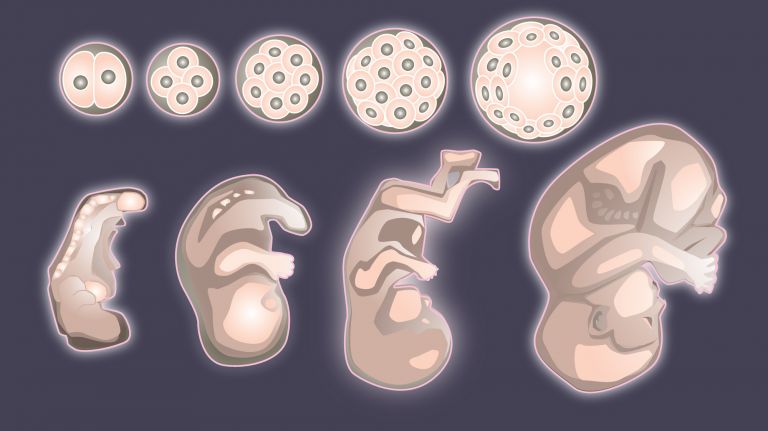
But why do early childhood experiences have such an extreme effect on a person's personality? “The child's brain has a remarkable plasticity,” says Anna Katharina Braun. In the first few years, it is still very “malleable” because the synaptic connections, which are quite unspecific at birth, are still optimizing. The reorganization of neural networks is largely controlled by experiences with the environment. ▸ Development of a brain
“This experience-dependent Plasticity is very useful because children learn a lot through interaction in a very short time and can thus optimize their sensory systems, but also their emotional systems in the brain,” says Braun. “However, it also adapts to negative, stimulus-poor, or unloving environments.” If the child does not learn “emotional grammar” from its parents, it may have problems forming emotional bonds throughout its life.
Early emotional experiences with caregivers therefore have a lasting effect on the structure of the brain – and thus also on how we deal with stress later in life. “Extreme states of stress that are not resolved cause the baby's brain to be flooded with stress hormones that cannot be broken down by comfort or emotional external regulation – for example, when the baby is repeatedly left alone crying for hours on end. This can lead to lasting damage, particularly in the areas of the brain responsible for stress regulation,” warns Becker-Stoll. Researchers also observed changes in the Oxytocin and Cortisol systems. “People who experienced abuse or Neglect as children often have difficulty coping with stress because their brains are not supplied with sufficient amounts of the stress Hormone cortisol in stressful situations,” explains Nicole Strüber.
In addition, changes in the neural networks were observed in neglected children: “The prefrontal cortex, which is involved in emotionality and its regulation, but also in learning processes and stress regulation, is underactive, for example,” explains Braun, "most likely because this region of the brain was not adequately activated due to a lack of attachment partners and its growth was inhibited by constant stress." These centers only matured to their full potential when they were also used. “Adoption studies that examine the emotional and cognitive development of orphans after adoption consistently show that these children catch up very well on a cognitive level after adoption, i.e., in terms of school performance and Intelligence. Emotional disorders, on the other hand, can apparently be repaired only to a limited extent, if at all,” says Braun.
“Nothing trains a child's brain like sensitive interaction with their primary caregiver,” says Prof. Becker-Stoll.
Plasticity
Neuroplasticity
The term neuroplasticity describes the ability of synapses, nerve cells, and entire areas of the brain to change structurally and functionally depending on the degree to which they are used. Synaptic plasticity refers to the adaptation of the signal transmission strength of synapses to the frequency and intensity of incoming stimuli, for example in the form of long-term potentiation or depression. In addition, the size, interconnection, and activity patterns of different areas of the brain also change depending on their use. This phenomenon is referred to as cortical plasticity when it specifically affects the cortex.
Oxytocin
Oxytocin
Oxytocin is a hormone produced in the paraventricular nucleus and supraoptic nucleus of the hypothalamus and released into the blood via the posterior lobe of the pituitary gland. It initiates contractions during childbirth and supports the milk ejection reflex during breastfeeding. It is also released during orgasm. Oxytocin can promote trust and strengthen pair bonding, but recent findings show that its effects are more complex and, in certain contexts, can also promote separation from out-groups.
Cortisol
A hormone produced by the adrenal cortex that is primarily an important stress hormone. It belongs to the group of glucocorticoids and influences carbohydrate and protein metabolism in the body, suppresses the immune system, and acts directly on certain neurons in the central nervous system.
Neglect
Neglect is a perceptual disorder in which parts of the body or stimuli are ignored due to a brain lesion. The disorder affects the sides opposite the brain lesion. It usually occurs after lesions in the right parietal lobe. Accordingly, visual, auditory, and somatosensory stimuli on the left side are ignored.
Hormone
Hormones are chemical messengers in the body. They serve to transmit information between organs and cells, usually slowly, e.g., to regulate blood sugar levels. Many hormones are produced in glandular cells and released into the blood. At their destination, e.g., an organ, they dock at binding sites and trigger processes inside the cell. Hormones have a broader effect than neurotransmitters; they can influence various functions in many cells of the body.
Intelligence
Intelligence
Collective term for human cognitive performance. According to British psychologist Charles Spearman, cognitive performance in different areas correlates with a general factor (g factor) of intelligence. This means that intelligence can be expressed as a single value. American psychologist Howard Gardner, among others, has developed a counter-concept to this, known as the "theory of multiple intelligences." According to this theory, intelligence develops independently in the following eight areas: linguistic, logical-mathematical, musical-rhythmic, visual-spatial, bodily-kinesthetic, naturalistic, intrapersonal, and interpersonal.
Further reading
- John Bowlby and Attachment Theory (Makers of Modern Psychotherapy) (2014)
Originally published on March 17, 2016
Last updated on March 18, 2026