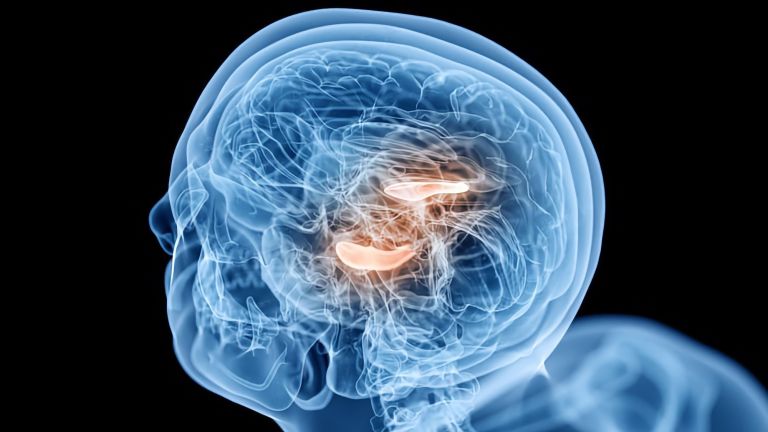
A Short Lexicon of “Esoteric” Practices
Yoga, meditation, relaxation techniques – to many people, these still sound like esoteric nonsense. But ever since neuroscientists began studying these topics, it has become clear just how much the boundaries have shifted.
Published: 07.09.2026
Difficulty: intermediate
In 2005, the Dalai Lama spoke at the world’s largest conference of neuroscientists, the SfN Neuroscience conference in Washington. Who? Yes, indeed: the Dalai Lama, the highest spiritual leader of Tibetan Buddhism. This came as a surprise, not only to Chinese neuroscientists (who, as expected, protested loudly). For many of their colleagues, Buddhism – with its various consciousness techniques – belonged more to the realm of the esoteric. That has changed fundamentally in recent years: while yoga and meditation were still considered esoteric nonsense just 20 years ago, they are now the subject of extensive research. And they are accepted as effective on an even broader scale. So the line between voodoo and reliable techniques must be redrawn in some areas.
Here’s a framework:
Breathing
There’s little more commonplace than one’s own breathing. It’s so commonplace that we rarely even notice it. Yet a piece of wisdom from indigenous peoples goes: “Breath is the horse, mind is the rider.” Can breathing actually affect our state of consciousness? The answer is yes – in more ways than one.
While inhalation activates the sympathetic nervous system, the stimulating part of the autonomic nervous system, exhalation triggers its counterpart, the relaxation promoting Parasympathetic nervous system Take a short but deep sigh – you’ll likely feel the effect immediately. For cardiologists, this alternation between arousal and relaxation is visible in heart rate variability, and reveals a great deal about health and even the chances of survival after a heart attack.
We don’t want to make too much of this topic here, but calm and slow breathing with an emphasis on a prolonged exhalation is the foundation of all relaxation and is highly recommended.
Parasympathetic nervous system
The parasympathetic nervous system is part of the vegetative or autonomic nervous system. The latter term refers to the fact that this part of the nervous system is not subject to voluntary control. It controls the activities of most of the internal organs as well as the heartbeat. In contrast to its counterpart, the sympathetic nervous system, the parasympathetic nervous system is most active when the body is at rest. Among other things, it controls digestion and urination. Acetylcholine serves as the messenger substance for signal transmission within the parasympathetic nervous system.
Out-of-body experiences
In the esoteric section of the bookstore, there are various works describing techniques through which the interested reader’s spirit can leave the body and, for example, fly through the city at night. Near-death experiences are also said to free one from one’s physical burdens.
British physicians tested such near-death experiences by placing objects on the tops of lamps that were invisible to the patient from below on the examination table. Yet no one who had been on the brink of death and outside their body ever saw these objects – even though they had, subjectively, been floating above it all.
Detlef Linke (1945–2005), a well-known German neuroscientist, explained out-of-body experiences as a Memory function. He advised people to try recalling their last time swimming as a self-experiment: When looking back, do you see yourself more from the outside in the pool, or does your gaze follow the water’s surface directly?
For most people, the former is the case. Thus, even with ordinary memories, they adopt a perspective that they did not actually have during the original experience.
Even books detailing specific techniques for inducing out-of-body experiences show little success in everyday life: whoever attempts to leave their body in this way will find that their experience has little to do with reality. Consequently, we haven’t heard much anymore about all the military experiments, such as those reported in the film "Men Who Stare at Goats,” which is based on true events.
The term “out-of-body experience” itself, however, has survived and is used today by consciousness researchers such as Olaf Blanke and Henrik Ehrsson. For the mind can indeed leave the body.
Memory
Memory is a generic term for all types of information storage in the organism. In addition to pure retention, this also includes the absorption of information, its organization, and retrieval.
Buddha-nature
“Who is the master who makes the grass green?” That is one of those pesky paradoxes of Zen Buddhism which not only distract the mind from painful thoughts, but are even said to lead to enlightenment. So there you sit, thinking and racking your brain over every minute aspect of the question. Only to then, in theory, eventually attain insight in a true flash of inspiration.
Whether life after enlightenment actually turns out differently – and whether it can even be attained in this day and age – has not yet been revealed to the author of these lines. Yet there is much wisdom in this little story:
The student asks the master, “What is enlightenment?”
The master asks in return, “Have you eaten yet today?”
“Yes,” replies the student.
“Then go out and wash your bowl.”
Channeling
Can deep meditation lead to such a higher state of consciousness that messages from wiser, spiritual beings can be received through so-called “channeling”? From angels, from beings from the Pleiades constellation, perhaps even from a god? Unfortunately, science can neither answer this question nor prove the existence of these beings. That’s why it’s called “faith.” And so the answer to this question can only be: Absolutely!
However, most scientists would ultimately suspect autosuggestion or hallucination as the objective cause. So anyone who “channels” the wisdom of these higher beings isn’t necessarily a charlatan by design. To them, the messages from a higher realm may seem incredibly convincing in their own experience, and thus appear to be true. That doesn’t necessarily apply to their audience.
Relaxation techniques
Stress has many causes. One of them is having too many negative thoughts. This is called “rumination,” and psychologists also associate it with Depression or post-traumatic stress. Anyone who has ever been stuck in traffic and found themselves drifting from one annoying thought to the next is familiar with this effect.
A good way to occupy the mind more constructively is through relaxation exercises: By focusing on your breathing or your own body – as practiced in autogenic training and progressive muscle relaxation, according to Edmund Jacobson – calm and peace return. You should therefore practice these exercises daily if possible. Your health insurance provider also recommends them.
Depression
A mental illness whose main symptoms are sadness and a loss of joy, motivation, and interest. Current classification systems distinguish between different types of depression.
Esotericism
literally means “secret knowledge.”
Knowledge that is available only to initiates, a select few, or those with deep pockets. Or to newspaper readers in their daily horoscopes. The latter are an art form in themselves – phrases like “You are shy, but you can certainly assert yourself” have to be carefully crafted. But once they are, they create a melting pot so vast that everyone can find a piece of themselves in it.
Far more interesting are the elitist and monetary aspects. After all, scarcity – in this case, of knowledge – is always an excellent sales strategy and also taps into several psychological biases at once. For example, we know from behavioral economics that expensive medications are perceived to work better than inexpensive ones.
Of course, the advantage gained through secret knowledge is crucial, because, as we all know, knowledge is power. For example, Scientologists are taught to mentally occupy every corner of the lecture hall before a speech, effectively encircling the audience – and thereby speaking more successfully. As is always the case in such situations, it’s impossible to scientifically verify whether four additional emanations of Tom Cruise, gazing imperiously, suddenly take control of the room, but one thing is clear: If Cruise believes in them, he feels more confident and delivers his message more convincingly as a result. What matters, after all, is the end result.
Flow
Flow is a concept developed by the American psychologist Mihály Csíkszentmihályi, and it often arises from being challenged by an activity that pushes one just below one’s own performance limit. Any more would increase the pressure; any less would lead to boredom. But this way, there’s a chance to achieve this state called “flow,” in which one becomes completely absorbed in the current activity and completely forgets oneself, one’s surroundings, and the passage of time.
Athletes are familiar with this trance-like state, as are creative people of all kinds, but it can essentially be achieved in any activity. Describing it as “meditation in action” isn’t entirely wrong.
Spiritual healing
Just as the spirit rises above matter, it is supposedly capable, in some cases, of healing that matter – provided it is diseased. This is called spiritual healing, and it works from a distance, through the laying on of hands, through bloody surgeries without visible scars, whatever the spiritual healer can convincingly demonstrate to the patient.
Although many healers are deeply convinced of their own abilities, based on current scientific understanding, most scientists would be more inclined to suspect a placebo effect. Instead of sugar pills without an active ingredient, here a person provides the patient with this convincing reason, which enables the patient to activate their own self-healing powers through conviction and faith. Not everyone approves of this, but we do not wish to ban subjective miracles here. It remains questionable, however, whether spiritual healing will ever be able to replace surgery.
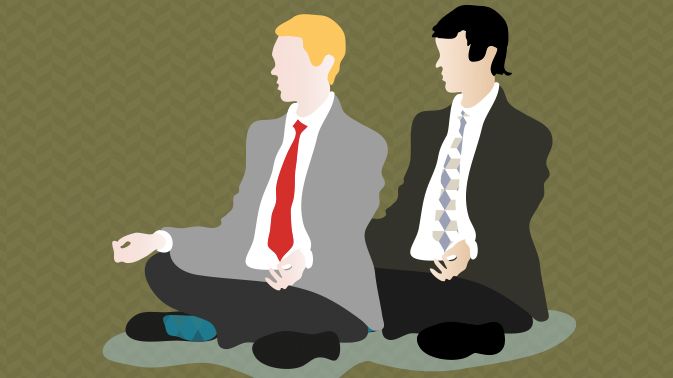
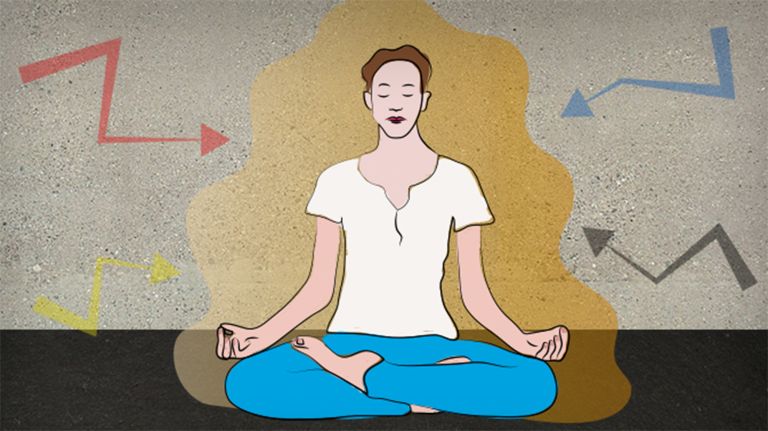
Meditation
There are countless meditation techniques. Some aim for visionary experiences, such as when Hindus commune with divine beings on higher planes. Others cultivate mindfulness by meditating on a candle, a phrase, or even just a specific syllable – a so-called mantra. Incidentally, such mantras can be purchased in exclusive meditation circles for prices exceeding 1,000 euros, and these are said to be particularly effective. They probably aren't.
Yet most meditation techniques are just as safe as they are effective, and their basics can be learned at any adult education center. And you don’t even need that: The simplest – but arguably one of the most difficult – method consists of focusing solely on your own breathing: inhale, exhale, inhale, exhale.
And only that. Whatever thought arises – and thoughts always do – is let go of, and your Attention is gently brought back to your breath.
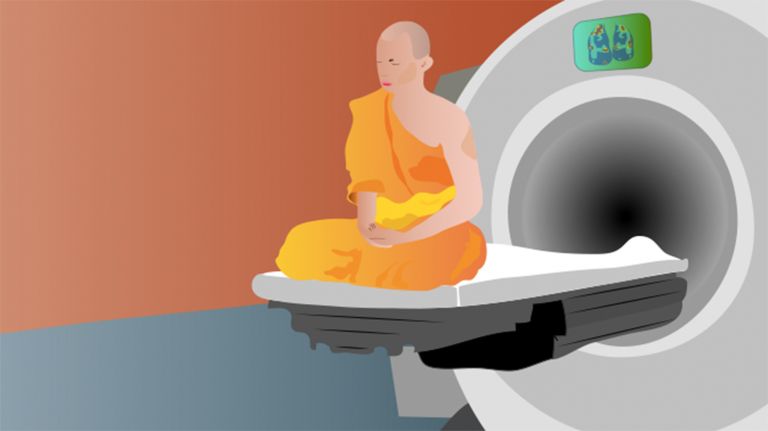
For those who’d like to try a scientifically grounded approach: Mindfulness-Based Stress Reduction (MBSR) is the most extensively researched and a proven effective method.
Attention
Attention
Attention serves as a tool for consciously perceiving internal and external stimuli. We achieve this by focusing our mental resources on a limited number of stimuli or pieces of information. While some stimuli automatically attract our attention, we can select others in a controlled manner. The brain also unconsciously processes stimuli that are not currently the focus of our attention.

Sensory deprivation
Sensory deprivation – the exclusion of as many external stimuli as possible – is an experience all its own. Anyone forced to endure it – in solitary confinement, for example – is exposed to a serious psychological risk. Beyond terrorist detention centers, however, sensory deprivation can induce a very deep state of relaxation. This works exceptionally well through “floating.” To do this, one enters a so-called isolation tank, an invention by the American John C. Lilly, who, among other things, was a renowned neuroscientist.
Inside this isolation tank, it is completely silent and dark. The tank is filled with a saline solution that supports the body. Since the water and air are at body temperature, no sensory information comes from the outside, and so the boundaries of the body blur, creating a feeling of weightlessness.
A brain without sensory input tends to generate its own information. This can take the form of intense daydreams or sudden ideas. Often, a very deep state of relaxation also arises.
Voodoo
Hollywood owes one of its most reliable moneymakers to voodoo: the zombie, the undead. This concept originates from an African religion, and an evil sorcerer can turn just about anyone into a zombie using black magic.
Voodoo offers an interesting insight into black magic: Needles in small dolls cause health problems in real people, and severed chicken feet on a pillow foretell imminent death. The fact that some of these spells actually work has to do with the victim’s expectations – a nocebo (the “evil” counterpart to the placebo) of the darkest kind, which can also explain the existence of zombies. For their bodies are by no means lifeless, but are merely inhabited by someone who thinks they are dead and being controlled remotely.
In the technical vocabulary of this small lexicon, voodoo stands as a symbol of charlatanism.
Erstveröffentlichung am 30. Juli 2014
Letzte Aktualisierung am 07. September 2026