Perceiving and Accepting – How Meditation Heals
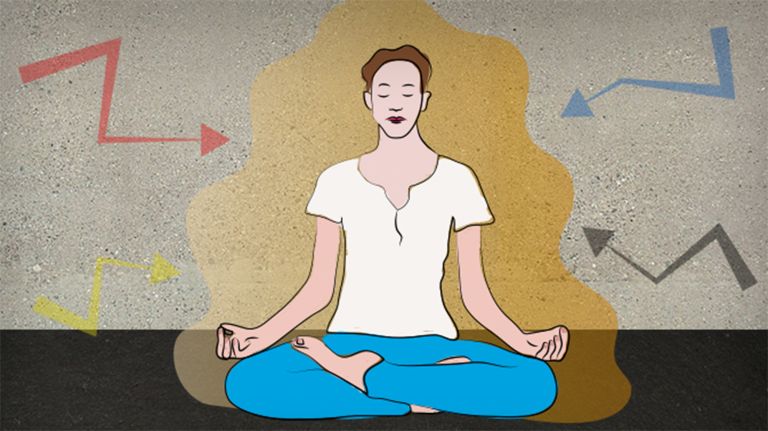
When thoughts and emotions slow down in deep inner stillness and become conscious, what remains? Deep insights, say meditators. Nonsense, scientists once retorted. Today, they report astonishing effects.
Scientific support: Olga Klimecki, Dr. Marc Wittmann
Published: 15.04.2014
Difficulty: intermediate
Meditation changes how we process Emotions. Consciously perceiving fears, for example, can alleviate them
A combination therapy of mindfulness meditation and group psychotherapy can even protect people with Depression from relapses
Meditators experience less pain than non-meditators. Their Insula – a region of the Cortex that processes pain, among other things – receives greater blood flow
The most spectacular recent finding: Meditation slows down brain aging. Gray and White matter are maintained at youthful levels
Emotions
Neuroscientists understand "emotions" to be complex response patterns that include experiential, physiological, and behavioral components. They arise in response to personally relevant or significant events and generate a willingness to act, through which the individual attempts to deal with the situation. Emotions typically occur with subjective experience (feeling), but differ from pure feeling in that they involve conscious or implicit engagement with the environment. Emotions arise in the limbic system, among other places, which is a phylogenetically ancient part of the brain. Psychologist Paul Ekman has defined six cross-cultural basic emotions that are reflected in characteristic facial expressions: joy, anger, fear, surprise, sadness, and disgust.
Depression
A mental illness whose main symptoms are sadness and a loss of joy, motivation, and interest. Current classification systems distinguish between different types of depression.
Insula
lobus insularis
The insula is a recessed part of the cortex (cerebral cortex) that is covered by the frontal, temporal, and parietal lobes. This overlay is called the opercula (lid). The insula influences the motor and sensory functions of the intestines and is considered to be the link between cognitive and emotional elements in pain processing. It is also involved in processes such as taste and physical self-awareness.
Cortex
cortex cerebri
Cortex refers to a collection of neurons, typically in the form of a thin surface. However, it usually refers to the cerebral cortex, the outermost layer of the cerebrum. It is 2.5 mm to 5 mm thick and rich in nerve cells. The cerebral cortex is heavily folded, comparable to a handkerchief in a cup. This creates numerous convolutions (gyri), fissures (fissurae), and sulci. Unfolded, the surface area of the cortex is approximately 1,800cm².
White matter
The white matter refers to the myelinated fibers of the nervous system that connect one neuron to another. The white color is caused by the myelin sheath surrounding the fibers.
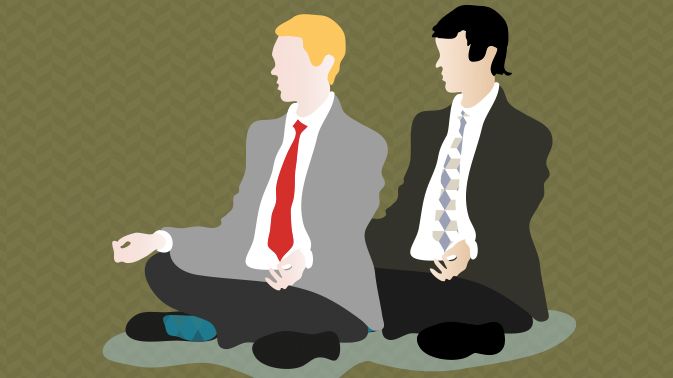
Meditation? For many, the word evokes a vague image: sitting still in the lotus position, eyes closed, and chanting “Om.” Meditators have long known that this tradition, which originated in Buddhism, is more than that. Researchers, however, were initially astonished by the sometimes astonishing effects. This spiritual practice alleviates anxiety disorders and depression, helps with smoking cessation and chronic pain, and lifts the spirits of the seriously ill. The latest findings – which show that long-term meditators do not age cognitively – are particularly sensational.
Meditation refers to a practice in which the mind is fully and continuously focused on the present moment. In this state of contemplation, the mind is focused – for example, by cultivating a feeling of loving-kindness. Beyond this focus, self-awareness and other insights may arise. There are probably as many different meditation practices as there are genres of music: from Zen to drumming to mindfulness meditation. ▸ Encyclopedia of “Esoteric Practices”
Scientific studies are mostly based on mindfulness meditation because it is particularly widespread and is often practiced outside of its original religious context. In this practice, the meditator focuses on momentary sensory impressions – often observing their own breath – in order to fully center themselves on the present moment. “Right now, I can feel myself pressing the phone receiver against my ear; I can feel my breath, and I can hear the wind and the noise from a construction site,” says Stefan Schmidt, a psychologist at the University Medical Center in Freiburg, giving an example. Furthermore, meditators practice refraining from judging these sensations. This enables a conscious awareness of the self.
Putting the carousel of thoughts on hold
In everyday life, subtle Perception is often overshadowed, as many impressions are processed simultaneously and many activities are carried out at the same time. While we read, we don’t feel our stiff neck, and while we taste, we don’t hear the music. Only extreme Emotions such as fear, anger, and joy sometimes take over the mind. Thoughts like “I’m afraid – oh no, I’m about to be unable to breathe” intensify these emotions and can escalate fear into panic. Meditators learn to recognize these thoughts. In the long term, this helps them reduce harmful thought patterns.
This affects how we process emotions – even in cases of pathological anxiety. Psychologist Britta Hölzel, then at the University of Giessen, divided 26 healthy individuals and an equal number of anxiety patients into two groups. She had one group take an eight-week course in stress management, while the other practiced mindfulness meditation. Both approaches reduced anxiety; the participants noticed this themselves. Furthermore, after the therapy, their Amygdala – which responds to fear – reacted less strongly than before to the sight of neutral faces.
However, something else happened among the meditators: the neural connections between the ventrolateral Prefrontal cortex and the amygdala strengthened. This was not the case for those who completed the stress management course. The connection between these two regions is only weakly developed in people with anxiety. Meditation strengthens this connection. Hölzel suspects there is a unique mechanism at work here: “The effect seems to stem from a conscious awareness of anxiety – this awareness is reflected in the stronger connectivity between the amygdala and the cortex.” Conventional therapies, by contrast, often aim to suppress anxiety, she explains. “Perceiving and accepting – this wisdom of meditation can have a therapeutic effect.”
Hölzel’s study is the first to subject patients to two different therapies under controlled conditions. However, less sophisticated studies had already shown that various forms of meditation alleviate anxiety – “with moderate to large effect sizes,” Schmidt summarizes. “Meditation is thus just as effective as psychotherapy and medication.”
Perception
The term describes the complex process of gathering and processing information from stimuli in the environment and from the internal states of a living being. The brain combines the information, which is perceived partly consciously and partly unconsciously, into a subjectively meaningful overall impression. If the data it receives from the sensory organs is insufficient for this, it supplements it with empirical values. This can lead to misinterpretations and explains why we succumb to optical illusions or fall for magic tricks.
Emotions
Neuroscientists understand "emotions" to be complex response patterns that include experiential, physiological, and behavioral components. They arise in response to personally relevant or significant events and generate a willingness to act, through which the individual attempts to deal with the situation. Emotions typically occur with subjective experience (feeling), but differ from pure feeling in that they involve conscious or implicit engagement with the environment. Emotions arise in the limbic system, among other places, which is a phylogenetically ancient part of the brain. Psychologist Paul Ekman has defined six cross-cultural basic emotions that are reflected in characteristic facial expressions: joy, anger, fear, surprise, sadness, and disgust.
Amygdala
corpus amygdaloideum
An important core area in the temporal lobe that is associated with emotions: it evaluates the emotional content of a situation and reacts particularly to threats. In this context, it is also activated by pain stimuli and plays an important role in the emotional evaluation of sensory stimuli. Inaddition, it is involved in linking emotions with memories, emotional learning ability, and social behavior. The amygdala is part of the limbic system.
Prefrontal cortex
Prefrontal cortex
The prefrontal cortex (PFC) forms the front part of the frontal lobe and is one of the brain's most important integration and control centers. It receives highly processed information from many other areas of the cortex and is responsible for planning, controlling, and flexibly adapting one's own behavior. Its central tasks include executive functions, working memory, emotion regulation, and decision-making. In addition, the PFC plays an important role in the cognitive evaluation and modulation of pain.
Here we go again
Meditators get to know their own emotional and mental world and, in the process, gain insight into their patterns of thought and behavior. This is likely one reason why a combination of mindfulness meditation and group psychotherapy – known as Mindfulness-Based Cognitive Therapy (MBCT) – helps people who have suffered from Depression avoid a relapse.
“Typically, 60 to 70 percent experience depression again,” reports Schmidt. The reason is that “at the slightest sign of stress, they think, ‘Oh no, here we go again.’” This “catastrophizing” causes stress and triggers the next depressive episode. Ultimately, then, it is one’s own thoughts that make a person sick. Mindfulness-based treatment draws Attention to this connection and helps break the cycle of thought. Participants learn to perceive thoughts as visitors – visitors who come, but also leave again. In six studies, this approach nearly halved relapse rates.
Researching meditation is like researching the placebo effect – an exploration of the mind’s impact on well-being. And mental strength is considerable in this regard. Researchers led by David Kearney of the University of Washington School of Medicine were even able to persuade war veterans with post-traumatic Stress disorder – who were suffering from depression and insomnia – to participate in a twelve-week course in compassion meditation. The course specifically focuses on developing compassion and appreciation for oneself and others. A quarter of the veterans dropped out over time, but the rest persevered. Their post-traumatic symptoms improved significantly. They slept more peacefully and felt more energetic.
Depression
A mental illness whose main symptoms are sadness and a loss of joy, motivation, and interest. Current classification systems distinguish between different types of depression.
Attention
Attention
Attention serves as a tool for consciously perceiving internal and external stimuli. We achieve this by focusing our mental resources on a limited number of stimuli or pieces of information. While some stimuli automatically attract our attention, we can select others in a controlled manner. The brain also unconsciously processes stimuli that are not currently the focus of our attention.
Stress disorder
In psychology, stress disorder refers to the pathological reaction to prolonged or short-term extreme stress, such as trauma. A distinction is made between acute stress disorder, also known as a nervous breakdown, and post-traumatic stress disorder. In both cases, the symptoms are the same, although in acute stress disorder they do not last longer than four weeks.
Embracing the pain
When something stings or aches, Westerners tend to tell themselves: “Grit your teeth!” They suppress the sensory impression in the brain – a strategy that can certainly be helpful in the short term. But meditation can alleviate pain in a different way.
Tim Gard, a psychologist at Harvard Medical School in Boston, applied electrical stimuli to mindfulness meditators as if they were being pricked in the forearm with a sharp needle. He subjected control subjects to the same treatment. The meditators experienced significantly less pain and also reacted with less anxiety to the recurring stimuli.
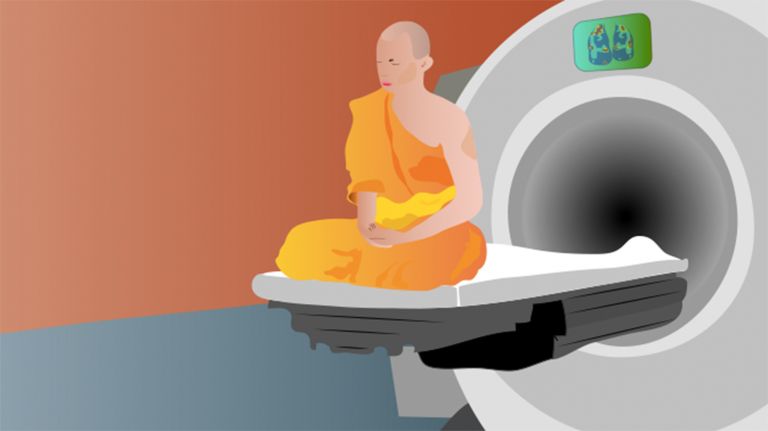
At the same time, Gard observed via MRI that the Insula – a region of the cerebral Cortex about the size of two euro coins – in particular had increased blood flow, presumably because the meditators were paying close Attention to their bodies. This region plays a key role in human consciousness and simultaneously processes sensations from all parts of the body. In contrast, the lateral Prefrontal cortex was much less active than in non-meditators. “This area of the cerebral cortex is responsible for reinterpreting pain. People who suppress pain likely reinterpret it,” explains Hölzel, a co-author of the study. “In traditional pain research, we always aim to reduce activation in the insula and increase it in the dorsolateral cortex. Meditators do the opposite – and are very successful at it.”
The findings of meditation research offer new approaches to treatment and fresh perspectives on diseases. “It’s often not the pain itself that causes the greatest suffering, but the accompanying behavioral and thought patterns,” explains Schmidt. “For example, people with chronic back pain tend to withdraw and become socially isolated. Then the pain gets worse.” Fighting against the pain – tensing up the entire body – can also intensify it. Research involving meditators now shows that pain is the body’s cry for attention and can become more bearable when you pay attention to it.
Insula
lobus insularis
The insula is a recessed part of the cortex (cerebral cortex) that is covered by the frontal, temporal, and parietal lobes. This overlay is called the opercula (lid). The insula influences the motor and sensory functions of the intestines and is considered to be the link between cognitive and emotional elements in pain processing. It is also involved in processes such as taste and physical self-awareness.
Cortex
cortex cerebri
Cortex refers to a collection of neurons, typically in the form of a thin surface. However, it usually refers to the cerebral cortex, the outermost layer of the cerebrum. It is 2.5 mm to 5 mm thick and rich in nerve cells. The cerebral cortex is heavily folded, comparable to a handkerchief in a cup. This creates numerous convolutions (gyri), fissures (fissurae), and sulci. Unfolded, the surface area of the cortex is approximately 1,800cm².
Attention
Attention
Attention serves as a tool for consciously perceiving internal and external stimuli. We achieve this by focusing our mental resources on a limited number of stimuli or pieces of information. While some stimuli automatically attract our attention, we can select others in a controlled manner. The brain also unconsciously processes stimuli that are not currently the focus of our attention.
lateral
A positional term – lateral means "towards the side." In relation to the nervous system, it refers to a direction at right angles to the neural axis, i.e., to the right or left.
Prefrontal cortex
Prefrontal cortex
The prefrontal cortex (PFC) forms the front part of the frontal lobe and is one of the brain's most important integration and control centers. It receives highly processed information from many other areas of the cortex and is responsible for planning, controlling, and flexibly adapting one's own behavior. Its central tasks include executive functions, working memory, emotion regulation, and decision-making. In addition, the PFC plays an important role in the cognitive evaluation and modulation of pain.


Young at heart
Is it any wonder, then, that most meditation researchers meditate themselves? Critics say this makes them positively biased. But conversely, it would be difficult to understand a spiritual practice if one has never encountered it. “That would be like me trying to describe what chocolate tastes like without ever having eaten it,” says Schmidt. Then you suddenly find yourself in a linguistic world that means nothing to the inexperienced. Meditation researchers struggle with this problem when they want to convey their findings to a lay audience that has never meditated.
Yet researchers have a great deal to share with curious laypeople: for example, findings on the cognitive state of experienced meditators. Sara Lazar, a neuroscientist at Harvard Medical School in Boston, broke new ground in 2005. She observed that the cerebral Cortex – which typically shrinks over the course of a lifetime – remained stable in long-term practitioners, particularly in the Prefrontal cortex It later became clear that Gray matter defies this decline. Now, new data from a total of 54 meditators and control subjects show that White matter – that is, the long nerve fibers that connect distant regions of the brain and typically diminish with age – remains highly developed in experienced meditators even in the second half of life. The researchers determined this using diffusion imaging, which tracks how water moves within the nerve fibers, creating a sort of connectivity map of the brain.
As early as 2009, researchers led by neuroscientist Sara van Leeuwen of the University of Frankfurt had already reported that older meditation experts effortlessly outperformed young students in an Attention test. Letters appeared in rapid succession on a screen. A number would appear between them, followed shortly afterward by a second number. The participants were asked to note both. However, they usually missed the second one because their brains were still preoccupied with the first. Meditators, on the other hand, were able to widen their window of attention considerably and mastered the task with flying colors, as van Leeuwen writes in the journal "Consciousness and Cognition".
Cortex
cortex cerebri
Cortex refers to a collection of neurons, typically in the form of a thin surface. However, it usually refers to the cerebral cortex, the outermost layer of the cerebrum. It is 2.5 mm to 5 mm thick and rich in nerve cells. The cerebral cortex is heavily folded, comparable to a handkerchief in a cup. This creates numerous convolutions (gyri), fissures (fissurae), and sulci. Unfolded, the surface area of the cortex is approximately 1,800cm².
Prefrontal cortex
Prefrontal cortex
The prefrontal cortex (PFC) forms the front part of the frontal lobe and is one of the brain's most important integration and control centers. It receives highly processed information from many other areas of the cortex and is responsible for planning, controlling, and flexibly adapting one's own behavior. Its central tasks include executive functions, working memory, emotion regulation, and decision-making. In addition, the PFC plays an important role in the cognitive evaluation and modulation of pain.
Gray matter
Grey matter refers to a collection of nerve cell bodies, such as those found in nuclei or in the cortex.
White matter
The white matter refers to the myelinated fibers of the nervous system that connect one neuron to another. The white color is caused by the myelin sheath surrounding the fibers.
Attention
Attention
Attention serves as a tool for consciously perceiving internal and external stimuli. We achieve this by focusing our mental resources on a limited number of stimuli or pieces of information. While some stimuli automatically attract our attention, we can select others in a controlled manner. The brain also unconsciously processes stimuli that are not currently the focus of our attention.
Meditation as a cure?
Researchers do not yet know exactly why this regular mental practice has such a healing effect and protects against aging. “There are many unanswered questions, and the activation of brain regions alone doesn’t ultimately explain much,” admits one of Germany’s leading meditation researchers, Ulrich Ott of the University of Giessen. “At the moment, meditation is something like a broad-spectrum antibiotic.” It has a beneficial effect on many ailments. Ott believes the future will belong to specific forms of meditation – a different exercise for anxiety disorders than for chronic pain.
First published on April 15, 2014
Last updated on September 4, 2026
Further reading
- Ott, Ulrich, *Meditation for Skeptics: A Neuroscientist Explains the Path to the Self*, Munich 2010
- Gard T et al, “Pain Attenuation through Mindfulness is Associated with Decreased Cognitive Control and Increased Sensory Processing in the Brain,” *Cerebral Cortex*, 22(11), 2012, Abstract
- Hölzel B et al, “Neural Mechanism of Symptom Improvements in Generalized Anxiety Disorder Following Mindfulness Training,” *NeuroImage: Clinical*, 2:228–458, 2013, Abstract
- Hölzel B et al, “How Does Mindfulness Meditation Work? Proposing Mechanisms of Action from a Conceptual and Neural Perspective,” Perspectives on Psychological Science, 6(6):537–559, 2011, Abstract
- Hölzel B et al, “Mindfulness practice leads to increases in regional brain Gray matter density,” *Psychiatry Research: Neuroimaging*, 191:36–43, 2011, Abstract
- Kearney D et al, “Loving-kindness meditation for posttraumatic Stress disorder a pilot study.” J Trauma Stress, 26(4):426–434 2013, Abstract
- Lazar S et al, “Meditation experience is associated with increased cortical thickness,” NeuroReport, 16(17):1893–1897 Nov 2005, Abstract
- Luders E et al, “Enhanced brain connectivity in long-term meditation practitioners,” *NeuroImage*, 57:1308–1316, 2011, Abstract
- Paganoni G, Cekic M: “Age effects on gray matter volume and attentional performance in Zen meditation.” Neurobiology of Aging, 28:1623–1627, July 2007, Abstract
- van Leeuwen S et al, Age effects on attentional blink performance in meditation, Consciousness and Cognition, 18(3):593–599, September 2009, Abstract
- Zeidan F et al, “Neural correlates of mindfulness meditation-related anxiety relief,” Social Cognitive and Affective Neuroscience, 2013, Abstract
Gray matter
Grey matter refers to a collection of nerve cell bodies, such as those found in nuclei or in the cortex.
Stress disorder
In psychology, stress disorder refers to the pathological reaction to prolonged or short-term extreme stress, such as trauma. A distinction is made between acute stress disorder, also known as a nervous breakdown, and post-traumatic stress disorder. In both cases, the symptoms are the same, although in acute stress disorder they do not last longer than four weeks.