It Takes More than Guts
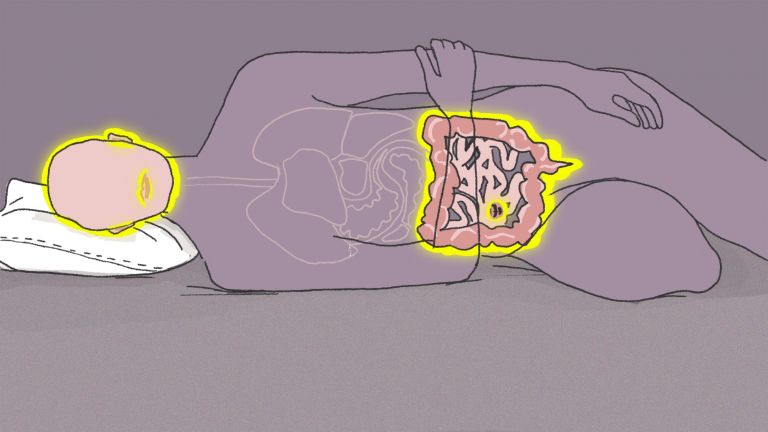
We are not alone – our microbiome contains more cells than our bodies. And it is likely to play a role in neurological diseases such as Alzheimer’s and mental disorders such as depression.
Scientific support: Prof. Dr. Petra Wahle
Published: 02.05.2023
Difficulty: easy
- According to current estimates, the so-called microbiome comprises about 39 trillion bacteria.
- A specific bacterium in the oral microbiome could play a role in Alzheimer’s.
- The gut microbiome also appears to play a role in Alzheimer’s.
- Parkinson’s disease may potentially originate in the gut.
- The composition of the gut microbiome influences our mood; an unfavorable mix can apparently contribute to depression.
Multiple sclerosis
encephalomyelitis disseminata
A common neurological disease that predominantly occurs in young adults. For reasons that are still unclear, the body's own cells attack and destroy the myelin sheaths of nerve cells. This can happen throughout the central nervous system, which is why two different multiple sclerosis patients can suffer from very different symptoms. Common symptoms include visual disturbances, numbness in the arms and legs, but also coordination problems, muscle weakness, and bladder problems.
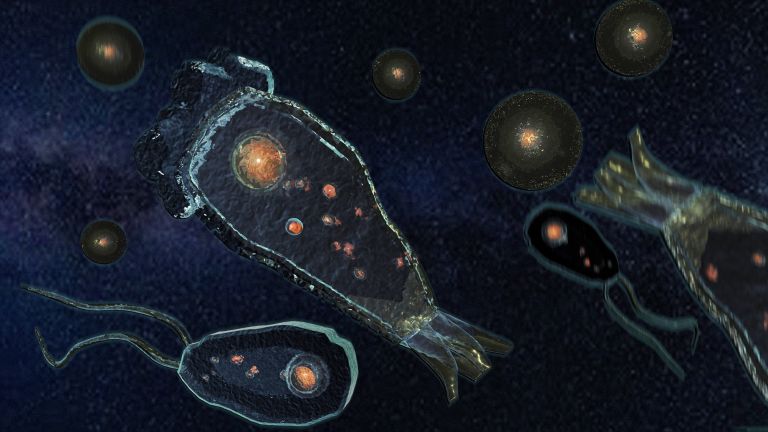
We never walk alone. Our body is like a giant shared living space: countless bacteria and fungi live on and inside it, side by side with human cells. According to current estimates, the so-called microbiome comprises about 39 trillion of these microorganisms. This is on the same order of magnitude as the number of cells in an average adult – 30 trillion. These microorganisms primarily colonize the gut, but they are also found on the skin, in the mouth, and in the vaginal area. The microbiome contributes an estimated 100 times more genes to the body than humans possess. The gut flora is important for digestion, defending against germs and toxins, and strengthening the immune system. It’s becoming increasingly clear that, just like in a shared apartment, having the right “roommates” in our bodies is key to our well-being. With the wrong “roommates,” or when the gut is out of balance, we’re more susceptible to mental or neurological disorders.
Before we turn to the gut, let’s take a quick look inside the mouth – where some astonishing findings await. Who would have thought that brushing your teeth might actually protect against Alzheimer’s? It sounds pretty far-fetched at first, but on second thought, it makes perfect sense. Here’s why: The bacterium Porphyromonas gingivalis is the culprit behind periodontitis, the most severe form of gum disease. Jan Potempa of Jagiellonian University in Kraków, Poland, and his colleagues have now compared brain samples from deceased individuals with and without Alzheimer’s who were roughly the same age at the time of their death. They found that P. gingivalis was more prevalent in samples from Alzheimer’s patients.
This was demonstrated by the bacterium’s DNA fingerprint and the presence of its toxin, gingipain. This toxin destroys nerve cells in the brain, which in turn leads to Memory loss and ultimately to Alzheimer’s disease. Studies in mice revealed that P. gingivalis can migrate from the mouth to the brain. When the researchers administered gingipain inhibitors orally to the mice, they prevented Neurodegeneration. Conclusion: The bacterium alone probably does not cause Alzheimer’s disease, but it can increase the risk of developing the disease and also accelerate its progression.
However, there are other pathways that can lead to Alzheimer’s. These, too, are related to the microbiome – specifically, the gut microbiome. Scientists have long suspected that immune-mediated inflammatory reactions in the brain may play a role in the development of Alzheimer’s disease. In people with the disease, elevated levels of pro-inflammatory substances are found in the blood, and activated forms of Microglia – the immune cells of the central nervous system – are present in the brain. This is where gut bacteria come into play, as they can influence the regulation of the immune system, for example, through lipopolysaccharides. These are proteins found in the outer cell membrane of certain bacteria that have pro-inflammatory properties. And it is precisely this protein that has been found in the past in amyloid Plaques – the insidious protein deposits in the brains of Alzheimer’s patients.
A study by researchers led by Moira Marizzoni at the IRCCS Istituto Centro San Giovanni di Dio Fatebenefratelli in Brescia, Italy, provided further insight. They examined 89 individuals between the ages of 65 and 85. Some suffered from Alzheimer’s disease or other neurodegenerative disorders that cause similar memory problems, while others had no memory problems. Using positron emission tomography, the scientists measured amyloid deposits. They then determined the presence of various inflammatory markers and proteins – such as lipopolysaccharides produced by gut bacteria – in the participants’ blood.
They found a link between certain bacterial products of the gut microbiome and the amount of amyloid plaques in the brain. High blood levels of lipopolysaccharides were associated with large amyloid deposits in the brain. The gut microbiome thus appears to play a role in Alzheimer’s disease. But that’s not all: The gut microbiome might also be involved in Parkinson’s disease.
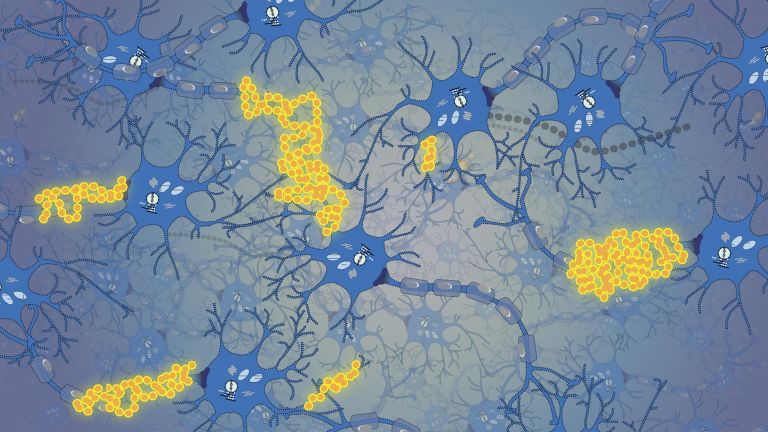
In 2003, it was just a bold hypothesis put forward by the German neuroanatomist Heiko Braak. His theory: Parkinson’s disease originates in the gut and gradually spreads to the brain. It’s important to note that in people with the disease, cells in the Substantia nigra of the brain die off, leading to a deficiency of the Neurotransmitter Dopamine. As a result, patients suffer from movement disorders such as tremors, stiff muscles, and slowed movements. Deposits of the protein alpha-synuclein in the brain had long been suspected. Heiko Braak now hypothesized that these clumps begin in the nerve cells of the gut and reach the brain via the vagus nerve, which facilitates communication between the gut and the brain.
Memory
Memory is a generic term for all types of information storage in the organism. In addition to pure retention, this also includes the absorption of information, its organization, and retrieval.
Neurodegeneration
Collective term for diseases in which nerve cells gradually lose their structure or function until they eventually die. In many cases, misfolded proteins are the trigger – such as certain forms of the proteins beta-amyloid and tau in the case of Alzheimer's disease. In other diseases, such as Parkinson's disease or Huntington's disease, proteins within the neurons are not broken down properly. As a result, toxic aggregates are deposited there, leading to the respective disease symptoms. While Huntington's disease is clearly genetic, in Parkinson's and Alzheimer's there appear to be certain gene variants that promote their development. None of these neurodegenerative diseases can be cured at present.
Microglia
The smallest type of glial cell is part of the cellular immune system and is responsible, among other things, for removing dead neurons. Microglia can move in an amoeba-like manner.
Plaques
Senile plaques
Senile plaques accumulate in the gray matter of the brain when a protein – known as amyloid precursor protein – is not broken down correctly. Inflammation and disorders of fat or sugar metabolism can promote plaque formation. On average, the deposits reach a diameter of 50 micrometers. The appearance of plaques is one of several anatomical changes in the brain that pathologists can use to diagnose Alzheimer's disease after death.
Substantia nigra
A nucleus complex in the ventral mesencephalon that plays a central role in initiating and modulating movement. It appears dark due to neuromelanin. Its dopaminergic neurons project via the nigrostriatal pathways to the putamen and caudate nucleus. Failure of these neurons leads to the typical symptoms of Parkinson's disease.
Neurotransmitter
A neurotransmitter is a chemical messenger, an intermediary substance. It is released by the sender neuron at the sites of cell-cell communication and has an excitatory or inhibitory effect on the receiver neuron.
Dopamine
Dopamine is an important neurotransmitter in the central nervous system that belongs to the catecholamine group. It plays a role in motor function, motivation, emotion, and cognitive processes. Disruptions in the function of this transmitter play a role in many brain disorders, such as schizophrenia, depression, Parkinson's disease, and substance dependence.
Parkinson’s: spread from the gut to the brain
In a 2019 study, researchers provided the clearest evidence to date for the Braak hypothesis. A team led by Ted Dawson of the Johns Hopkins University School of Medicine in Baltimore injected relatively high doses of protein components of misfolded alpha-synuclein into the muscle tissue of the small intestine and the pylorus of mice.
Later, the researchers were able to track the stages of the spread of pathological alpha-synuclein from the gastrointestinal tract into the brains of the experimental animals. At the same time, the small rodents also developed motor problems. However, when the researchers severed the vagus nerve in the mice, the toxic proteins were unable to reach the brain, and Parkinson’s-like symptoms did not develop.
“Because many Parkinson’s patients complain of gastrointestinal problems for years before the onset of motor disturbances, the idea arose that Parkinson’s disease might originate in the gut,” explains neuropathologist Walter Schulz-Schaeffer of Saarland University Hospital. “These gastrointestinal problems can occur years or even decades before the first symptoms of Parkinson’s disease appear.” Several years ago, Schulz-Schaeffer and his colleagues were able to show that in Parkinson’s patients, misfolded alpha-synuclein accumulates not only in the brain but also in sections of the gastrointestinal tract. However, it remains unclear what actually comes first: “Whether such accumulations first form in the brain and then spread to the periphery of the body, into the gastrointestinal system.” In fact, scientists have also observed this reverse pathway – from the brain to the gut. Or whether, conversely, the accumulations spread from the periphery to the brain.

Gut and brain: a cycle, not a one-way street
The interaction between the gut and the brain regarding Depression also works in both directions. “There is a body of evidence suggesting that the composition of gut bacteria influences the brain and our well-being,” says Gabriele Moser, a specialist in internal medicine and psychotherapist at the Medical University of Vienna. Gut bacteria produce neurotransmitters such as GABA and are responsible for Serotonin metabolism. “In this way, they influence the brain and thus mood. In a 2018 study, researchers examined more than 1,000 patients and found that bacteria such as Faecalibacterium and Coprococcus are associated with a better quality of life. If, on the other hand, they are present in smaller numbers, this is more frequently associated with anxiety and depression. The relationship between the gut and the brain is not a one-way street, but rather a cycle, says Gabriele Moser. “For example, people with anxiety disorders often have diarrhea, while patients with depression tend to have constipation. This is also related to the fact that, as a result of these conditions, people eat differently and engage in physical activity differently.”
Depression
A mental illness whose main symptoms are sadness and a loss of joy, motivation, and interest. Current classification systems distinguish between different types of depression.
GABA
GABA is an amino acid and the most important inhibitory neurotransmitter, which acts as a messenger in the transmission of information between neurons at their synapses.
Serotonin
A neurotransmitter that acts as a messenger in the transmission of information between neurons at their synapses. It is primarily produced in the raphe nuclei of the brain stem and plays a key role in sleep and alertness, as well as emotional well-being.
Better mood thanks to a new gut “roommate”
And just as the atmosphere in a shared apartment improves when an unwelcome resident moves out and a likeable newcomer moves in, a new composition of the gut microbiome can improve mental well-being. In one study, patients with Depression were given either a placebo or a probiotic – a supplement containing gut-friendly bacterial strains – for one month. Although depressive symptoms decreased in both groups thanks to general antidepressant treatment, the probiotic group benefited more from the treatment. An analysis of their stool at the end of treatment revealed an increase in lactic acid bacteria – an effect that was associated with a reduction in depressive symptoms.
Tweaking the composition of gut bacteria could therefore potentially help patients emerge from the dark abyss of depression. However, before people with depression rush to the drugstores to stock up on probiotics, there are two small caveats.
Over the following four weeks, the amount of beneficial gut bacteria declined again. Furthermore, this was only a small study and therefore of limited statistical significance.
It’s still too early for people with depression to celebrate. Nevertheless, it’s worth taking a closer look at the gut when it comes to mental and neurological disorders.
Depression
A mental illness whose main symptoms are sadness and a loss of joy, motivation, and interest. Current classification systems distinguish between different types of depression.
Further reading
- Kim, S. et al.: Transneuronal Propagation of Pathologic α-Synuclein from the Gut to the Brain Models Parkinson's Disease. Neuron 2019 Aug 21;103(4):627-641.e7. doi: 10.1016/j.neuron.2019.05.035.
- Marizzoni, Moira et al.: Short-Chain Fatty Acids and Lipopolysaccharide as Mediators Between Gut Dysbiosis and Amyloid Pathology in Alzheimer's Disease. J Alzheimers Dis. 2020;78(2):683-697. doi: 10.3233/JAD-200306