Foreign Creatures in the Head
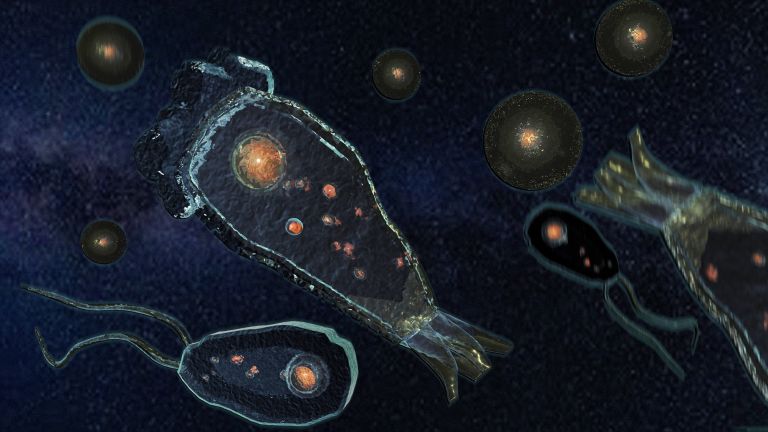
Viruses, bacteria, fungi, single-celled organisms, and worms: If they make it into the brain, they wreak a great deal of havoc there. While some invaders subtly alter personality, others immediately destroy the entire brain.
Scientific support: Prof. Dr. Petra Wahle
Published: 02.05.2023
Difficulty: easy
- Foreign forces in the brain aren’t just found in horror stories – they also exist in nature. Many microorganisms and parasites can influence the nervous system, causing their hosts to behave in ways that benefit the invaders.
- The insect kingdom provides particularly gruesome examples. Worms drive their host insects to their deaths; fungi and leeches cause ants to bite down on the tips of blades of grass; and wasp larvae take control of caterpillars.
- Numerous pathogens can cause encephalitis in humans. Tapeworm larvae can encyst in the brain, and there is even a brain-eating amoeba.
- · Sometimes behavior is also influenced; for example, by the rabies virus, which instills fear and terror in its victims by interfering with brain chemistry.
- The single-celled organism Toxoplasma gondii operates in a more subtle yet particularly successful manner. Since it can reproduce sexually only in cats as its definitive host, it causes its diverse intermediate hosts to behave more fearlessly, which makes them easier prey.
- Humans also become infected with T. gondii – in Germany, as many as one in two people. Except for unborn babies and people with weakened immune systems, who can suffer severe damage, hardly anyone notices it.
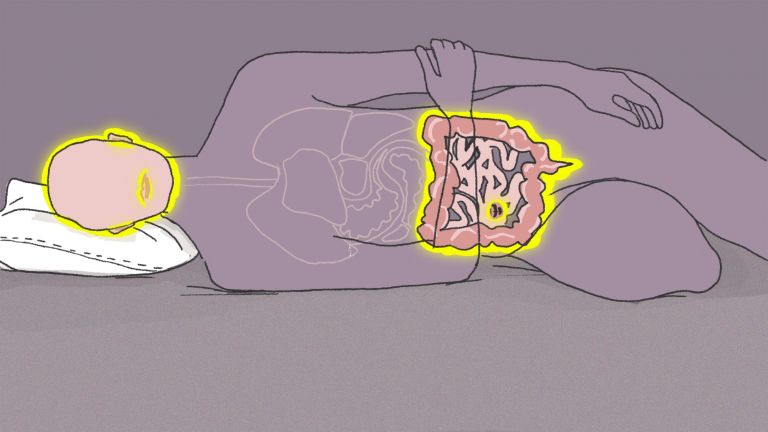
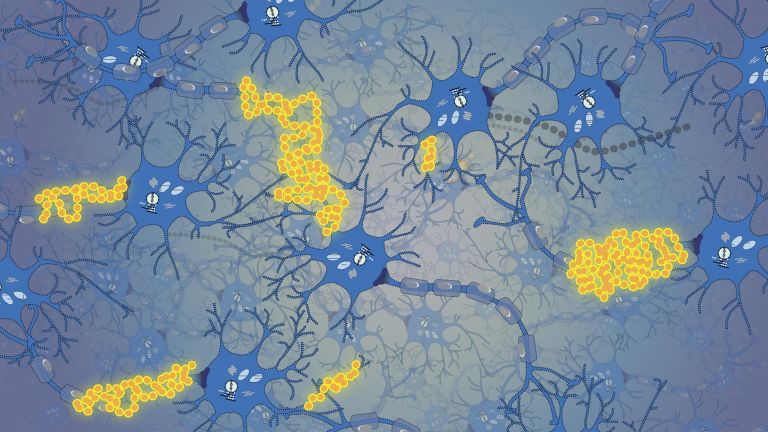
The risk of developing Alzheimer’s disease has been linked to viral or bacterial infections on multiple occasions. Some researchers suspect the bacterium Porphyromonas gingivalis, which can cause chronic gum inflammation. Several studies have provided evidence that it can penetrate the brain and cause damage there through neurotoxins. It affects two proteins involved in the development of Dementia: The Tau protein appears to be broken down under the influence of bacterial toxins, and certain protein fragments – known as beta-amyloids – are converted into variants that can more easily accumulate in the brain and thereby destroy nerve cells.
Dementia
Dementia
Dementia is an acquired deficit of cognitive, social, motor, and emotional abilities. The most well-known form is Alzheimer's disease. "De mentia" means "without mind" in English.
Tau protein
Tau proteins are particularly prevalent in the central nervous system. Their function is to stabilize microtubules – the structures that give cells their shape and support. Under certain circumstances, enzymes attach too many phosphate groups to tau proteins. As a result, the proteins are no longer broken down properly and form toxic aggregates within the neurons. Alongside senile plaques, aggregated tau proteins are considered a classic hallmark of Alzheimer's disease.
Humans are prone to obsession, no question about it. Our ability to think beyond the limits of our own existence has, since time immemorial, invited speculation that there might be other spiritual forces. And the idea that all manner of gods and demons might even invade the human brain directly provides fodder for horror stories and, in pre-scientific times, served as a plausible explanation for psychologically abnormal behavior.
Yet the concern about foreign forces in one’s mind cannot be relegated entirely to the realm of religious beliefs or figments of the imagination. Biology, in fact, provides a whole range of concrete evidence for possession that could hardly be more real. For example, praying mantises – which are naturally averse to water – are driven by threadworms to jump into the water so that the parasites can complete their life cycle there. To achieve this, the worm inside the insect simply secretes proteins that alter visual circuits in the host’s brain. From then on, the praying mantis is apparently magically drawn to the unique quality of light created when the sun reflects off water surfaces. The praying mantis becomes a “water-worshipper,” fearlessly plunging toward its own death – and thus guiding the threadworm into its wet bridal chamber.
The list of such creepy stories is long: there are fungi that use chemical signals to trick ants into climbing to the tips of blades of grass and biting down there, so that the wind can spread the fungi’s spores. Liver flukes use the same trick to lead infected ants closer to grazing sheep, in whose bile ducts they spend the next phase of their life cycle. Wasp larvae that grow inside caterpillars cause their host to perform a sort of devil’s dance at the end of its life to protect their pupating siblings from predators during metamorphosis. And parasitic barnacles, which lay their eggs inside crabs in a cuckoo-like manner, can even reverse the sexual roles of male crabs so that they behave like females and devote themselves to caring for their parasites’ offspring.
Humans, too, are not immune to intruders. Most of us carry thousands of tiny mites on our faces that feed on sebum without us noticing. Worms, single-celled organisms, bacteria, and viruses colonize our bodies. Many harm us by causing diseases, stealing nutrients, or destroying tissue. Others, however, contribute to our well-being or keep pests at bay. For example, the right mix of gut bacteria is not only important for healthy digestion and a strong immune system, but can also have a positive effect on the brain. Some bacteria produce or metabolize neurotransmitters, thereby helping to prevent or alleviate Depression and anxiety ▸ It Takes More than Guts
Depression
A mental illness whose main symptoms are sadness and a loss of joy, motivation, and interest. Current classification systems distinguish between different types of depression.
Invasion in the brain
Things get really creepy, however, when foreign organisms make their way directly into our brain. The amoeba-like single-celled organism Naegleria fowleri, which lives in contaminated freshwater, infects – albeit very rarely – the human nasal mucosa and migrates from there along the olfactory nerve into the brain. There, it divides and literally eats away at the brain. Victims first experience headaches, then hallucinations. Despite the use of a whole cocktail of antibiotics and other medications, 150 out of 154 known cases in the U.S. were fatal.
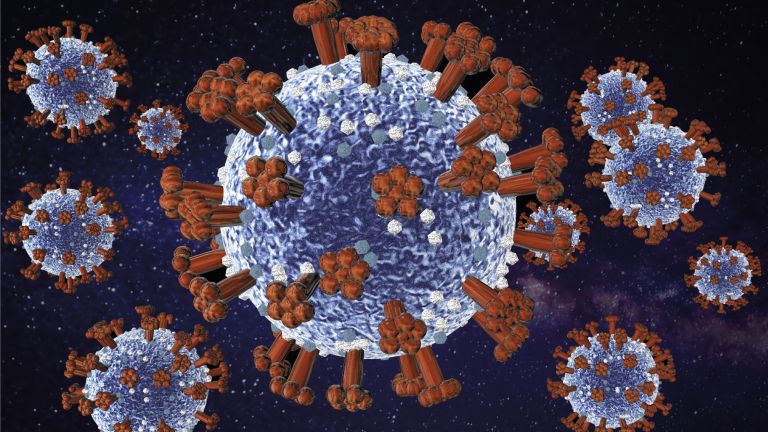
Much smaller than amoebas, but no less deadly, are the viruses that cause rabies. They travel through the bloodstream via wounds into the brain, where they preferentially infect nerve cells in the hippocampus, the hypothalamus, and the Amygdala – all regions that are important for emotional experience. The virus alters the function of the infected cells, causing those affected to experience intense fear, have fits of rage, scream, strike out, or bite. Since the virus primarily enters its next host through bites, this increases its chances of transmission. Worldwide, approximately 50,000 people die each year from rabies. However, a vaccine is available, and the virus is rare in Europe.
Trypanosomes, the pathogens that cause sleeping sickness, are also capable of invading the brain and causing behavioral changes. And even the larvae of pork tapeworms and similar parasites occasionally make their way into the human brain, where they encapsulate themselves and damage the surrounding tissue. A whole range of other microorganisms, including viruses such as “Corona” ▸ Long COVID, and even abnormally folded protein particles can also trigger brain inflammation accompanied by neurological symptoms and behavioral changes ▸ Prions: Proteins That Drive You Crazy. Meanwhile, there is growing evidence that infections may play a role in neurodegenerative processes such as Alzheimer’s or Parkinson’s disease (see box).
Among the eerie array of invaders capable of taking up residence in our brains, one stands out for its remarkable success: the single-celled organism Toxoplasma gondii. It alters the behavior of its intermediate host and, in humans, can even trigger schizophrenia-like symptoms or “rage disorder” if things go wrong.
Amygdala
corpus amygdaloideum
An important core area in the temporal lobe that is associated with emotions: it evaluates the emotional content of a situation and reacts particularly to threats. In this context, it is also activated by pain stimuli and plays an important role in the emotional evaluation of sensory stimuli. Inaddition, it is involved in linking emotions with memories, emotional learning ability, and social behavior. The amygdala is part of the limbic system.
Reckless against their will
These crescent-shaped minuscule organisms are only about five micrometers in size and are attracted to cats of all kinds. They can reproduce sexually only in members of this family of predators. When their eggs are released into the environment via cat feces, Toxoplasma hatches and thrives in a wide variety of intermediate hosts. Within their cells, the single-celled organisms rapidly multiply asexually, initially through cell division, and later form cysts – primarily in the muscles and brain – where they can survive for years.
Toxoplasma is also widespread in Germany. On average, one in two people carry the parasite; among those over 70, the figure is as high as nearly 80 percent. The high prevalence of infection in this country compared to other nations is likely due not only to Germans’ love of cats but also to their fondness for raw ground meat in dishes such as “Mettbrötchen” and “Hackepeter”, which contain live Toxoplasma cysts. Most people do not even notice an infection or experience only brief cold-like symptoms. People with weakened immune systems or unborn babies who become infected in the womb are at risk of more serious complications.
But what drives Toxoplasma into our brains? There is some disturbing evidence from the animal kingdom. Toxoplasma can only return to its definitive host if a cat eats the intermediate host – and the parasite is happy to lend a helping hand. Infected rodents, for example, lose their fear of the scent of cat urine and consequently no longer stay away from their predators as consistently. They are even sexually attracted to the smell or become, overall, more fearless, impulsive, and willing to take risks. Sooner or later, such a “hero mouse” will face a serious cat problem! Other intermediate hosts fare similarly. Infected hyena cubs behave so recklessly that they are eaten by lions more often than their uninfected counterparts. And even chimpanzees, whose only natural predator is the leopard, develop a preference for the scent of the spotted big cats’ urine after a Toxoplasma infection – thereby becoming easier prey.

Dramatic effect – but limited risk
Despite all this evidence, it remains controversial whether meat-eating, cat-loving people really need to fear the parasite. As with many other infections and diseases, this could depend on how specific variants of the pathogen interact with the genetic makeup and immune system of their respective hosts. Although one in two people in Germany carry Toxoplasmosis, the prevalence of mental health disorders is lower, suggesting that the effects are, on average, rather small. According to current estimates, for example, the probability of developing schizophrenia increases by a factor of two and a half due to a Toxoplasma infection. However, since the disease is very rare, the absolute risk also remains very low.
Anyone who still finds Toxoplasma unsettling should, above all, avoid eating raw meat. You don’t need to get rid of your cats, however, because they only shed infectious oocysts during the acute phase of infection – which usually occurs at a young age – and only in outdoor cats that hunt outside. However, the serious harm that Toxoplasma can cause to unborn babies cannot be dismissed. Pregnant women, therefore – provided they are not already among the infected half of the population – should take every precaution to avoid new infection and leave the cleaning of the litter box to other household members. Male housemates who are already infected are best suited for this task, since – at least according to Jaroslav Flegr – they actually find the smell of cat urine attractive.
Further reading
- Libersat F, Kaiser M, Emanuel S. Mind Control: How Parasites Manipulate Cognitive Functions in Their Insect Hosts. Front Psychol. 2018;9:572. ( zum Volltext ) URL: https://doi.org/10.3389/fpsyg.2018.00572
- Tong WH, Pavey C, O'Handley R, Vyas A. Behavioral biology of Toxoplasma gondii infection. Parasit Vectors. 2021;14(1):77. ( zum Volltext ) URL: https://doi.org/10.1186/s13071-020-04528-x
- Underwood, E. (2019): Reality check: Can cat poop cause mental illness? Science Magazine. ( zum Volltext ) URL: https://www.science.org/content/article/reality-check-can-cat-poop-cause-mental-illness