
Constant Stress on the Brain

Pollutants in the air, water, and food take a toll on the brain. They contribute to cognitive deficits early in life and dementia later in life.
Scientific support: Prof. Dr. Elvira Mass
Published: 02.05.2023
Difficulty: easy
- The brain is particularly sensitive to environmental influences early in life and later in life. While it initially develops, natural degenerative processes set in with age.
- Air pollution, especially exposure to fine particulate matter, is associated with the onset of dementia.
- Lead is a component of fine particulate matter. There is strong evidence that this heavy metal reduces Intelligence in children, even at the levels to which we are currently exposed.
- Pollutants reach the brain via the nose, the intestines, and the bloodstream, even though the brain is well protected.
- The activation of the brain’s immune cells (Microglia) leads to inflammation.
- Many other pollutants could impair the brain’s nerve cells: pesticides, heavy metals and other metals, plasticizers, and nanoparticles are among the suspects.
Dementia
Dementia
Dementia is an acquired deficit of cognitive, social, motor, and emotional abilities. The most well-known form is Alzheimer's disease. "De mentia" means "without mind" in English.
Intelligence
Intelligence
Collective term for human cognitive performance. According to British psychologist Charles Spearman, cognitive performance in different areas correlates with a general factor (g factor) of intelligence. This means that intelligence can be expressed as a single value. American psychologist Howard Gardner, among others, has developed a counter-concept to this, known as the "theory of multiple intelligences." According to this theory, intelligence develops independently in the following eight areas: linguistic, logical-mathematical, musical-rhythmic, visual-spatial, bodily-kinesthetic, naturalistic, intrapersonal, and interpersonal.
Microglia
The smallest type of glial cell is part of the cellular immune system and is responsible, among other things, for removing dead neurons. Microglia can move in an amoeba-like manner.
Even on sunny days, Mexico City is shrouded in a whitish-brown haze that its 21 million residents can only see when they leave the metropolitan area and look down on their city. Those who spend time in the city center, however, notice only one thing: after a day trip from the Zócalo to the Baroque cathedral, their skin and clothing are coated with a brownish film. Pediatrician and neuroscientist Lilian Calderón-Garcidueñas knows this all too well, as she works in both Mexico City and the United States. She had long suspected that the air, laden with fine particulate matter, was harmful to children. She was able to finally get to the bottom of this with a study. She compared the cognitive abilities of 55 children from the capital with those from a small town in the country. And indeed, the children from the big city performed significantly worse on the tests. In Magnetic resonance imaging (MRI) scans of the brain, Calderón-Garcidueñas discovered areas of inflammation in the Prefrontal cortex in 56 percent of the children. This region, located in the frontal lobe, integrates sensory perceptions, therefore playing a key role in planning actions, making decisions, and learning.
Does the polluted air cause the inflammation in the brain and cognitive deficits? In search of an answer, Calderón-Garcidueñas examined the brains of seven young dogs from Mexico City. And indeed, she found foci of inflammation in four of the animals. What’s more, she detected deposits of fine particulate matter and abnormal activation of microglia, the brain’s immune cells. “Air pollution impairs the maturing brain; it explains cognitive deficits in healthy children,” the pediatrician warned in 2008 in a widely acclaimed publication in the journal Brain and Cognition.
Since then, Mexico City has attracted researchers due to the pressing question of whether poor air quality damages the brain – and if so, how and to what extent. At the beginning and end of life, the brain may be particularly vulnerable because it is still maturing early on and naturally deteriorates later in life.
Magnetic resonance imaging
Magnetic resonance imaging scanner
A device used by medical professionals for magnetic resonance imaging (MRI). MRI is an imaging technique used to diagnose malformations in various tissues or organs of the body. This method is particularly effective for imaging parts of the body that contain a lot of water. Patients are placed in a tube (scanner) and exposed to a strong magnetic field. However, they are not exposed to X-rays or other forms of ionizing radiation.
Prefrontal cortex
Prefrontal cortex
The prefrontal cortex (PFC) forms the front part of the frontal lobe and is one of the brain's most important integration and control centers. It receives highly processed information from many other areas of the cortex and is responsible for planning, controlling, and flexibly adapting one's own behavior. Its central tasks include executive functions, working memory, emotion regulation, and decision-making. In addition, the PFC plays an important role in the cognitive evaluation and modulation of pain.
frontal
An anatomical position designation – frontal means "towards the forehead," i.e., at the front.
Air pollution and dementia go hand in hand
Although it is often claimed that neurodegenerative diseases – primarily dementias – are an inevitable consequence of the enormously long life expectancy in modern societies, more and more epidemiological studies are providing a compelling counterargument: The higher the levels of fine particulate matter in the air, the more prevalent dementias become. Data supporting this link comes from London, Quebec, northern Sweden, and Stockholm. There, researchers at the Karolinska Institute followed approximately 3,000 adults with an average age of 74 in 2020. Within 11 years, 364 of them developed Dementia. And although the air in the Swedish capital is considered clean, the institute’s neurobiologist Giulia Grande found that levels of fine particulate matter in the air near people’s homes influenced the risk of dementia. Other researchers estimated in 2021 that approximately 800,000 cases of dementia in Europe could be attributed to air pollution each year.
“These findings are very unpopular,” laments Bruce Lanphear, a health scientist at Simon Fraser University in Canada. “We’re supposed to focus our research on a treatment for Alzheimer’s – because that’s where the money is – rather than getting to the root of the causes. After all, if air pollution is to blame, that would require lowering the limit values. Neither politicians nor industry want to hear that.”
Dementia
Dementia
Dementia is an acquired deficit of cognitive, social, motor, and emotional abilities. The most well-known form is Alzheimer's disease. "De mentia" means "without mind" in English.
Lead robs the brain of intelligence
For many years, Lanphear has been studying one of the most potent brain-damaging pollutants: lead. This heavy metal is also present in fine particulate matter because it is found in aviation fuel, for example, and is thus churned up by jet engines. Above all, however, it is a substance whose danger to humans is well established, as it has been in use for many centuries. And even today, certain types of glass and plastics contain lead, as do buttons on clothing, paints, and pencils – and in some cases, even costume jewelry. While lead has been banned in various types of automotive fuel throughout the EU since the turn of the millennium, more precisely, however, this means that the permitted levels are merely low.
All over the world, toxicologists researching lead – such as Lanphear or the internationally renowned pediatrician and environmental physician Ruth Etzel from the U.S. – are outraged that lead is still not banned in many applications today. Exposure levels among children and infants remain too high, warns the German Federal Institute for Risk Assessment.
It has been proven that this heavy metal has a toxic effect on nerve cells. In particular, it impairs the development of the maturing brain. When the amount of lead rises from less than one microgram per deciliter of blood to ten micrograms per deciliter, children’s IQ drops by 6.9 points, Lanphear determined based on data from 1,300 children. Other studies have confirmed that lead impairs intelligence.
However, in Germany, toddlers between the ages of zero and three ingest 1.1 to 3.3 micrograms of lead daily through food and drink – and that doesn’t even take the air they breathe into account. “It’s a tragedy. With lead, we know better than with almost any other chemical just how harmful it is. But governments have not reduced exposure levels to an acceptable level,” Etzel concludes.
“The problem is,” says Lanphear, “that a five-point drop in IQ may not seem like much on an individual level. But at the population level, it has enormous effects when entire populations lose an average of about five IQ points.” The proportion of people with cognitive impairments who need help or special support is rising dramatically, and the proportion of highly gifted individuals is measurably declining.
Intelligence
Intelligence
Collective term for human cognitive performance. According to British psychologist Charles Spearman, cognitive performance in different areas correlates with a general factor (g factor) of intelligence. This means that intelligence can be expressed as a single value. American psychologist Howard Gardner, among others, has developed a counter-concept to this, known as the "theory of multiple intelligences." According to this theory, intelligence develops independently in the following eight areas: linguistic, logical-mathematical, musical-rhythmic, visual-spatial, bodily-kinesthetic, naturalistic, intrapersonal, and interpersonal.
Pollutant-induced dementia?
“Moreover, cognitive deficits at the start of life are never fully made up for,” argues Lanphear, in line with his research colleagues. Many suspect that the burden of lead in the body also contributes to Dementia later in life. The more of this heavy metal that is stored, the earlier dementia might set in. And because the evidence pointing in this direction is mounting, the Federal Environment Agency in Germany has recently begun investigating how pollutants fuel neurodegenerative diseases.
“For about thirty years, the incidence of dementia has been declining in the U.S. – even though the total number continues to rise sharply due to an aging population. During the same period, lead exposure declined because we were the first country in the world to ban leaded gasoline. I see a direct connection here: declining – though still too high – lead exposure on the one hand, and declining incidence of dementia on the other,” says Lanphear.
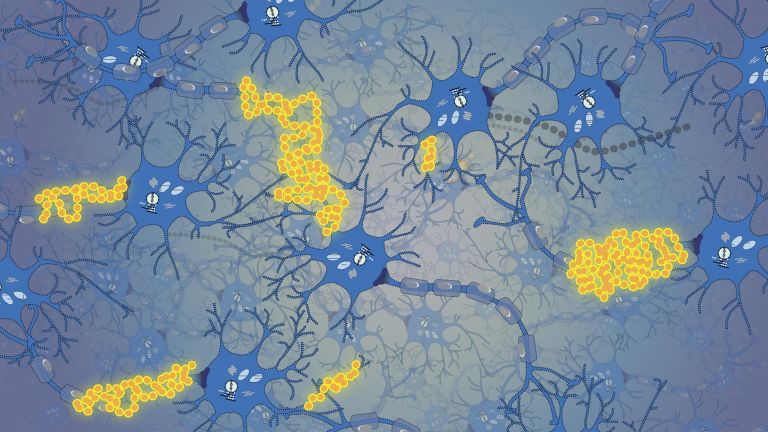
In the brain, lead disrupts the transmission of electrical signals between nerve cells. It hinders the formation and strengthening of synapses. Overall, this heavy metal thus fundamentally disrupts the brain’s ability to think, feel, and act. “But lead isn’t the only pollutant that damages the brain,” says neuroscientist Stephen Bondy of the University of California, Irvine. Polychlorinated biphenyls – which have been found in bicycle handlebars and on sports fields – aluminum, and copper are just three other suspects. Bondy himself gave a strain of mice water containing aluminum, similar to what typically comes out of the tap in Canada. The animals subsequently developed typical Alzheimer’s-like changes in the brain, he reports. A global research community is studying copper and has been able to show that the metal promotes the misfolding of proteins. Under the influence of copper, normal proteins turn into “rings of evil,” as researchers at the Swiss Federal Laboratories for Materials Science and Technology recently described.
Dementia
Dementia
Dementia is an acquired deficit of cognitive, social, motor, and emotional abilities. The most well-known form is Alzheimer's disease. "De mentia" means "without mind" in English.
Too much pollution to investigate what it does
Many thousands of pollutants circulate in the air, soil, and water. “When a substance is banned somewhere, a new one often comes onto the market about which we initially know nothing,” Bondy laments. Every research group must concede defeat in the face of this diversity and, out of necessity, focus its Attention on selected substances. Among the pesticides, plasticizers, and flame retardants are many candidates with cryptic names that impair nerve cells in culture or at the level of Gene expression. They could erode cognitive abilities and pave the way for autism, Alzheimer’s, and ADHD.
For example, the team led by Barbara Maher at Lancaster University discovered certain misfolded proteins in the brainstems of 186 young residents of Mexico City. She interpreted these as early harbingers of common age-related conditions, such as Dementia or Parkinson’s disease. In the damaged brainstems, Maher detected primarily manganese particles – presumably from road traffic – and nanoscale titanium particles among the fine dust deposits. The latter are a component of the controversial food additive E 171. Maher suspects they could originate from candy or toothpaste and penetrate from the gut into the brain.
Attention
Attention
Attention serves as a tool for consciously perceiving internal and external stimuli. We achieve this by focusing our mental resources on a limited number of stimuli or pieces of information. While some stimuli automatically attract our attention, we can select others in a controlled manner. The brain also unconsciously processes stimuli that are not currently the focus of our attention.
Gene
Information unit on DNA. Specialized enzymes translate the core component of a gene into ribonucleic acid (RNA). While some ribonucleic acids perform important functions in the cell themselves, others specify the order in which the cell should assemble individual amino acids into a specific protein. The gene thus provides the code for this protein. In addition, a gene also includes regulatory elements on the DNA that ensure that the gene is read exactly when the cell or organism actually needs its product.
Dementia
Dementia
Dementia is an acquired deficit of cognitive, social, motor, and emotional abilities. The most well-known form is Alzheimer's disease. "De mentia" means "without mind" in English.
Backdoors into the brain
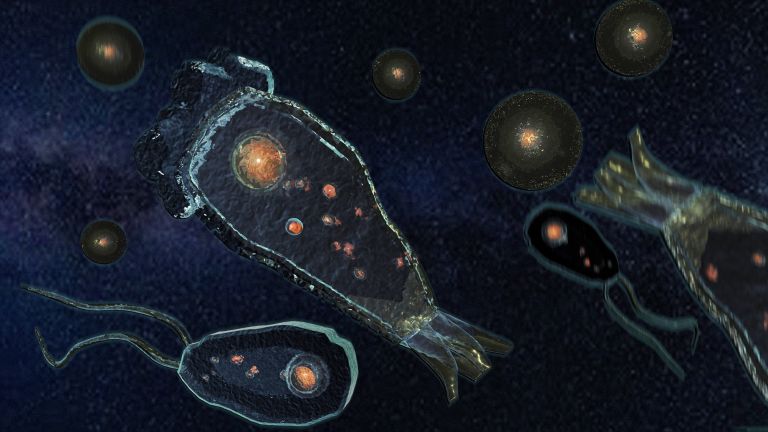
This raises the fundamental question of how harmful substances can penetrate the well-protected brain in the first place. After all, the Blood-brain barrier forms a barrier between the blood and the brain tissue. The fine blood vessels in the nervous tissue are densely lined with endothelial cells, which are closely linked to one another via so-called “tight junctions.” These prevent substances from easily crossing into the nervous tissue. The vessels are also surrounded by astrocytes, which likewise control the passage of hazardous substances.
And yet, medications, substances from cigarettes, and even various pollutants can bypass this checkpoint and enter the brain from the bloodstream. Small, fat-soluble molecules have an especially easy time of it. And solid particles such as lead can take a shortcut. They travel up through the Nose into the Olfactory bulb and, if they are small enough, are transported directly into the brain from there. Inhaled nanoparticles can thus be detected in animals and, more recently, using specialized optical techniques, even in the human brain. Barbara Maher’s team made the manganese and titanium particles in the brainstem of 186 study participants visible for the first time.
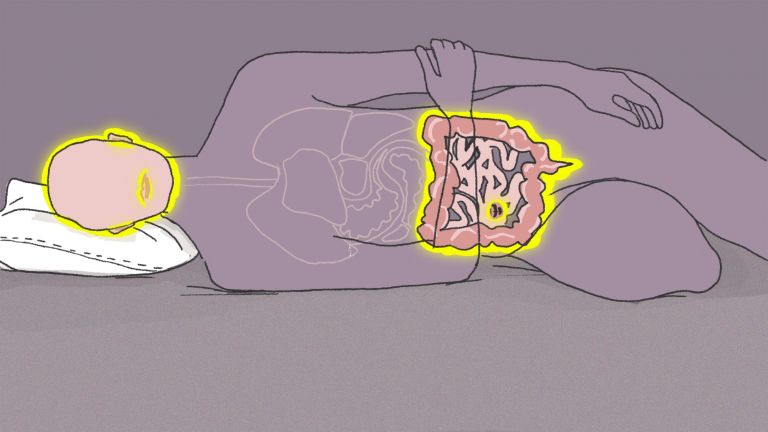
Numerous pollutants ingested with food encounter a community of hundreds of different species of microorganisms in the gut. If this “microbiome” is disrupted, it can impair the “disposal” of these substances and increase their transport into the bloodstream and then into the brain. And, of all things, the Western diet severely disrupts the flora of the 38 trillion microorganisms in the gut. Croissants and white bread with ham in the morning, pizza and chips in the evening – this diet causes the diversity in the gut to shrink and, in the worst case, makes it permeable. Researchers refer to this as “leaky gut.”
Blood-brain barrier
A selectively permeable membrane formed by cells in the walls of the capillary blood vessels in the brain. It protects the brain from harmful substances in the blood, but allows nutrients and oxygen to pass from the blood into the brain.
Nose
nasus
The olfactory organ of vertebrates. In the nasal cavity, the air is cleaned by cilia, and in the upper area is the olfactory epithelium, which detects odors.
Olfactory bulb
bulbus olfactorius
The anterior part of the brain that transmits information from the olfactory nerves to the olfactory brain (rhinencephalon) after initial processing via the olfactory tract.
Toxins in the brain cause inflammation and stress
Solid particles such as lead trigger the brain’s immune system – the Microglia – to respond as if to invading bacteria. “They are activated but can neither ‘kill’ the particles nor remove them. They don’t know what to do and keep fighting on and on. This leads to chronic inflammation, which is very harmful,” explains neuroscientist Stephen Bondy of the University of California, Irvine. Furthermore, metals such as aluminum and copper can catalyze the misfolding of proteins. Reactive oxygen species also form on their surfaces, attacking surrounding cells.
Many experts also suspect that pollutants indirectly harm the brain by weakening the heart and circulatory system. It is well known that fine particulate matter pollution in the air leads to strokes, heart attacks, and vascular damage. And when organs consequently receive a poorer supply of blood and nutrients, they suffer as well. Giulia Grande, a neurobiologist at the Karolinska Institute, believes that cardiovascular health is the key factor explaining why poorer air quality leads to increasing cases of dementia.
The effects of pollutants on the brain aren’t immediately noticeable, Bondy points out. “We don’t have to cough or gasp for air. But these effects are irreversible and insidious.” Against this backdrop, he can only advise spending plenty of time outdoors in the fresh air. This may come as a surprise, since that’s exactly where the cars that produce fine particulate matter are driving. But indoors, the air is orders of magnitude worse because pollutants are off-gassing from countless consumer goods.
Microglia
The smallest type of glial cell is part of the cellular immune system and is responsible, among other things, for removing dead neurons. Microglia can move in an amoeba-like manner.
vascular
The term refers to vessels in the body in which fluids such as blood or lymph circulate. In a narrower sense, doctors refer to the network of veins, arteries, and capillaries as the "vascular system." If the vascular system is blocked, for example as a result of a stroke, less blood reaches the brain. This means that it receives less oxygen and other nutrients. This can lead to impaired cognitive functions and the development of "vascular dementia." After degenerative forms of dementia such as Alzheimer's, vascular dementia is the second most common form of this group of diseases.
Further reading
- Oudin, A. et al.: Association between air pollution from residential wood burning and Dementia incidence in a longitudinal study in Northern Sweden. PLoS ONE, 2018, 13(6) URL: https://pubmed.ncbi.nlm.nih.gov/29897947/
- Smargiassi, A. et al.: Exposure to ambient air pollutants and the onset of dementia in Quebec, Canada. Environmental Research, 2020, 190 (109870) URL: https://pubmed.ncbi.nlm.nih.gov/32739624/
- Lanphear, B.: The Impact of Toxins on the Developing Brain. Annual Reviews of Public Health 2015, 36 (211–30) URL: https://pubmed.ncbi.nlm.nih.gov/25581143/
- You, R. et al.: The pathogenic effects of particulate matter on Neurodegeneration: a review. Journal of Biomedical Science, 2022, 29 (25), https://pubmed.ncbi.nlm.nih.gov/35189880/
- Calderón-Garcidueñas, L. et al.: Air pollution, cognitive deficits, and brain abnormalities: a pilot study with children and dogs. Brain and Cognition, 2008, 68 (2), https://pubmed.ncbi.nlm.nih.gov/18550243/
Dementia
Dementia
Dementia is an acquired deficit of cognitive, social, motor, and emotional abilities. The most well-known form is Alzheimer's disease. "De mentia" means "without mind" in English.
Neurodegeneration
Collective term for diseases in which nerve cells gradually lose their structure or function until they eventually die. In many cases, misfolded proteins are the trigger – such as certain forms of the proteins beta-amyloid and tau in the case of Alzheimer's disease. In other diseases, such as Parkinson's disease or Huntington's disease, proteins within the neurons are not broken down properly. As a result, toxic aggregates are deposited there, leading to the respective disease symptoms. While Huntington's disease is clearly genetic, in Parkinson's and Alzheimer's there appear to be certain gene variants that promote their development. None of these neurodegenerative diseases can be cured at present.