
SARS-CoV-2: A Virus Hitting the Brain, too
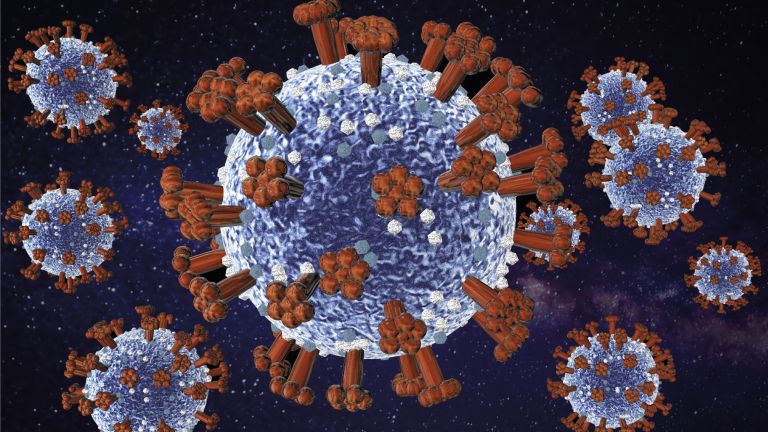
It affects the lungs, but also damages the brain and mental health. How the SARS-CoV-2 coronavirus affects the nervous system was unknown for a long time, but the mystery is slowly being unraveled.
Scientific support: Prof. Dr. Martin Korte
Published: 29.07.2026
Difficulty: easy
- COVID-19 is considered a respiratory disease. However, some patients also suffer from a wide range of neurological symptoms, from delirium, loss of sense of smell, or Memory problems to fatigue, depression, or anxiety disorders.
- Individuals who had psychiatric or neurological conditions prior to their COVID-19 infection may be more susceptible and are more likely to struggle with long-term effects of the viral disease.
- Some studies also suggest that the body’s inflammatory responses may play a decisive role. The administration of anti-inflammatory substances such as cortisone can counteract this.
Memory
Memory is a generic term for all types of information storage in the organism. In addition to pure retention, this also includes the absorption of information, its organization, and retrieval.
Since the fall of 2019, a mysterious virus from China has kept the world on edge. Exactly how it originated – whether it jumped to humans from bats or pangolins or even resulted from a laboratory accident – will likely never be determined with certainty. The fact is: “Severe acute respiratory syndrome coronavirus type 2” – abbreviated as SARS-CoV-2 and commonly known as “coronavirus” – has infected a large portion of the world’s population. According to estimates, 15 million people died in the first two years of the pandemic alone, both directly from the respiratory disease COVID-19 and from “collateral damage,” such as the partial breakdown of hospital and medical systems. The global trend toward ever-increasing life expectancy was broken after more than 100 years – only the 1918 influenza pandemic caused even more widespread devastation.
The virus has disappeared, but the symptoms remain
By now the focus is on the survivors. While most infected people experience acute symptoms such as fever, headaches, fatigue, and shortness of breath for only about a week, the virus appears to leave longer-lasting effects in nearly one in ten people. The long-term health effects of a COVID-19 infection, also known as “Long COVID,” are diverse. In addition to fatigue, exhaustion, and reduced stamina, the most common symptoms include shortness of breath, problems with concentration and memory, sleep disturbances, as well as muscle weakness and pain. In addition, some affected individuals report mental health issues such as depressive symptoms and anxiety, as well as disturbances in Taste and smell.
But how can this be, given that even the most precise detection methods fail to detect either proteins or genetic material from the pathogen in those affected?
Basically COVID-19 is a respiratory disease. SARS-CoV-2 is often spread through sneezing; it enters the mouth or nose, travels to the throat and upper respiratory tract, where it binds to receptors on mucosal cells, penetrates them, and replicates there. In severe cases, doctors therefore focus on preventing and treating damage to the lungs and the circulatory system. But even at the start of the pandemic, they noticed signs that the nervous system was also affected in many patients. Some patients fell into a state of delirium: they were confused, disoriented, and agitated. Many complained of a loss of smell or Memory problems; others were constantly tired, depressed, or plagued by anxiety disorders.
Benedict Michael, a neurologist at the University of Liverpool, was one of the first to systematically collect case reports on neurological complications associated with COVID-19. In October 2020, he reported on 125 such cases. According to his findings, nearly two-thirds of these patients had suffered strokes or cerebral hemorrhages. The others were confused, unconscious for extended periods, or psychotic. The weakness of this study, however, lies in the fact that Michael had called on his colleagues to report any abnormalities, and that no systematic comparison was made between infected and uninfected patients.
Taste
The sensory impression we refer to as "taste" results from the interaction between our senses of smell and taste. In terms of sensory physiology, however, "taste" is limited to the impression conveyed to us by the taste receptors on the tongue and in the surrounding mucous membranes. It is currently assumed that there are five different types of taste receptors that specialize in the taste qualities sweet, sour, salty, bitter, and umami. In 2005, scientists also identified possible taste receptors for fat, whose role as a distinct taste quality is still being investigated.
Memory
Memory is a generic term for all types of information storage in the organism. In addition to pure retention, this also includes the absorption of information, its organization, and retrieval.
From case collections to large-scale studies
In addition to a large number of organic diseases, toxins, and the consequences of accidents, viruses and bacteria are just one possible factor in damage to the brain and nervous system. However, when comparing COVID-19 with other infectious respiratory diseases, the risk of neuropsychiatric consequences appears to be elevated with SARS-CoV-2. This was discovered by researchers at the University of Oxford after they compared insurance data from three million U.S. patients. The analysis showed that, following COVID-19, cognitive deficits, dementia, psychotic disorders, and epilepsy were detectable for a longer period – up to two years – than, for example, after severe colds or influenza. Mood and anxiety disorders were also notably more common among SARS-CoV-2 patients, though their prevalence returned to baseline levels within two months.
In children, temporary cognitive impairments, insomnia, brain hemorrhages, strokes, disorders of the nerves and nerve roots, psychotic disorders, and epilepsy were found up to twice as frequently after COVID-19 compared to other respiratory infections.
Another finding of the study was that the variants of SARS-CoV-2 pose varying levels of danger. For example, complications and mortality increased significantly with the emergence of the Delta variant. While mortality declined just as sharply with the spread of the Omicron variant, the incidence of long-term neurological and psychiatric sequelae (known as Long COVID) remained largely unchanged.

Is it all just in the mind?
Professor Christoph Kleinschnitz of the Department of Neurology at the University of Essen caused a great deal of outrage with a study of 171 patients whom he and his team had examined at a specialized post-COVID outpatient clinic. The examinations included blood tests, Cerebrospinal fluid samples, and Magnetic resonance imaging In 9 out of 10 cases, however, nothing concrete was found. Furthermore, among the post-COVID patients, as was also the case in another study, a relatively high proportion had previously exhibited psychiatric symptoms. After Kleinschnitz, a frequent guest on talk shows, attributed post-COVID syndrome “primarily to psychosomatic causes,” he was heavily criticized not only in the popular press but also by colleagues. At the annual meeting of the German Society of Neurology, for example, its Secretary General, Professor Peter Berlit, emphasized that neurological symptoms following COVID-19 are by no means an “imaginary illness.” The fact that people who had previously experienced mental health issues are at increased risk for Long COVID can just as easily be explained by the fact that their brains are more vulnerable when the immune system is triggered by the virus.
“The exact pathophysiological mechanisms of post-COVID-19 syndrome are still unknown,” state the guidelines of the German Society of Neurology. However, research into the mechanisms of nerve damage resulting from COVID-19 remains in full swing.
Cerebrospinal fluid
liquor cerebrospinalis
A clear fluid that fills the ventricular system and bathes the brain and spinal cord in the subarachnoid space, protecting them from impact. Three to five times a day, 100 to 160 ml of fluid is renewed by the choroid plexus. Certain diseases are reflected in the composition of the cerebrospinal fluid.
Magnetic resonance imaging
Magnetic resonance imaging scanner
A device used by medical professionals for magnetic resonance imaging (MRI). MRI is an imaging technique used to diagnose malformations in various tissues or organs of the body. This method is particularly effective for imaging parts of the body that contain a lot of water. Patients are placed in a tube (scanner) and exposed to a strong magnetic field. However, they are not exposed to X-rays or other forms of ionizing radiation.
The immune system as a mediator of nerve damage
Starting in the respiratory tract, there is presumably an increased production of chemokines and other signaling molecules that reach the brain and cause neuroinflammation there. The brain’s own immune cells (Microglia) then apparently become active, leading to disruption in communication between different types of nerve cells and brain regions. Myelin formation is interrupted, Plasticity is altered, and neurogenesis in the Hippocampus is halted, as described by Michelle Monje, professor of neurology and neuro-oncology at Stanford University, and her colleague Akiko Iwasaki of Yale University in a review article. In addition, autoantibodies are associated with Long COVID. Recent findings show that a significant proportion of cases is triggered by antibodies that target the surface structures of the body’s own cells.
Ultimately, some neural circuits no longer function properly, leading to cognitive impairments and a decline in mental performance. These patients can develop a whole range of symptoms – a combination of confusion, headaches, and problems with Short-term memory – that is described as “brain fog.” Basic research has also yielded several approaches for new therapies, write Monje and Iwasaki. The researchers’ hypothesis that anti-inflammatory drugs such as cortisone could alleviate neurological complications associated with COVID-19 has even been proven correct. However, doctors made this discovery very early in the pandemic, without any basic research, simply by trying out plausible options.
Microglia
The smallest type of glial cell is part of the cellular immune system and is responsible, among other things, for removing dead neurons. Microglia can move in an amoeba-like manner.
Myelin
Myelin is a fatty substance produced by glial cells. It envelops the axons (long, fiber-like extensions) of nerve cells and insulates them, preventing messages from passing uncontrollably to neighboring nerve cells. This also greatly accelerates conduction velocity.
Plasticity
Neuroplasticity
The term neuroplasticity describes the ability of synapses, nerve cells, and entire areas of the brain to change structurally and functionally depending on the degree to which they are used. Synaptic plasticity refers to the adaptation of the signal transmission strength of synapses to the frequency and intensity of incoming stimuli, for example in the form of long-term potentiation or depression. In addition, the size, interconnection, and activity patterns of different areas of the brain also change depending on their use. This phenomenon is referred to as cortical plasticity when it specifically affects the cortex.
Hippocampus
The hippocampus is the largest part of the archicortex and an area in the temporal lobe. It is also an important part of the limbic system. Functionally, it is involved in memory processes, but also in spatial orientation and learning. It comprises the subiculum, the dentate gyrus, and the Ammon's horn with its four fields CA1-CA4.
Changes in the structure of the hippocampus due to stress are associated with chronic pain. The hippocampus also plays an important role in the amplification of pain through anxiety.
Short-term memory
Short-term memory is a type of temporary storage in the brain where information can be retained for a few seconds to a few minutes. Its capacity is very limited, at 7±2 units of information (chunks). These can be numbers, letters, or words, for example. Today, this memory is usually considered within the framework of the working memory model, which also emphasizes the active processing of content.
Further reading
Keyla Santos Guedes de Sá, Julio Silva, Rafael Bayarri-Olmos, Christopher A. Baker, Zhenni Lu, Wilson Gipson, Daxiang Na, Bandy Chen, Li Wenxue, Delyar Khosroabadi, Ryan Brinda, Robert Alec Rath Constable, Britney Omene, Patricia A. Colom Díaz, Dong-il Kwon, Gisele Rodrigues, Harald Heidecke, Kai Schulze-Forster, Amanda Gross, Tom Shneer, Amanda Clarke, Thomas Linnekin, Ashley Brate, Lev Brown, Henry Buda, Shashi Jatiani, Lenny Moise, Kerrie Greene, Sachin Bhagchandani, Bornali Bhattacharjee, Jeffrey Gehlhausen, Jamie Wood, Laura Tabacof, Carmen Scheibenbogen, Yansheng Liu, Leying Guan, Marc Schneeberger Pane, David Putrino, Tamas L. Horvath, Akiko Iwasaki, A causal link between autoantibodies and neurological symptoms in long COVID, Cell,Volume 189, Issue 11,2026,Pages 3214-3235.e37,ISSN 0092-8674, https://doi.org/10.1016/j.cell.2026.04.042.
First published on May 1, 2023
Last updated on July 29, 2026