The Roots of Emotions
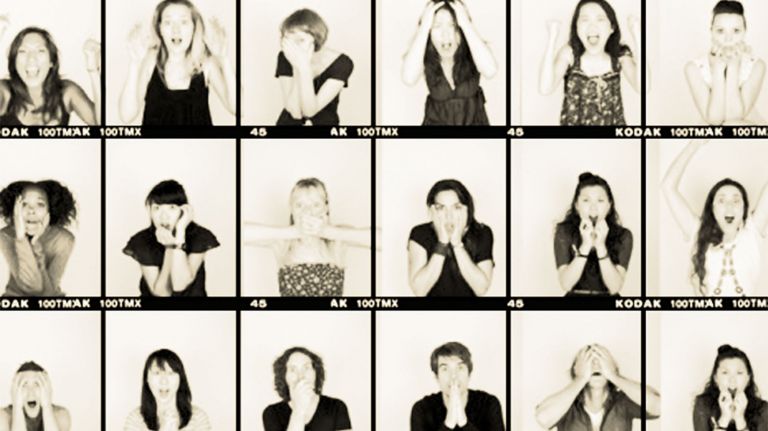
When people smile or cry, their brains run a program from the earliest times. This is because some emotions and their expression are just as innate to a manager in Tokyo as they are to an indigenous person in New Guinea.
Scientific support: Prof. Dr. Onur Güntürkün
Published: 25.10.2025
Difficulty: intermediate
- People around the world can show and recognize certain feelings, known as basic emotions.
- Since babies, indigenous peoples, and blind and deaf people also recognize basic emotions, these are probably innate.
- The intensity with which innate feelings are expressed is shaped by cultural rules.
The people with frizzy hair and dark skin knew nothing of cameras, radio, or television. They did not speak English, many covered their skin with nothing more than a loincloth, and some of their rituals were more than strange to outsiders: for example, members of the tribe who had been respected throughout their lives were eaten by the clan after their death. Even in the 1960s, the Fore tribe seemed to be from another time. And that is precisely why it was of interest to psychologist Paul Ekman. The American traveled to the indigenous people in Papua New Guinea in search of nothing less than the roots of human emotions.
Researchers debate emotions
Emotion scientists have long debated whether humans must first learn all emotions and how to express them. Or is there a basic set of emotions and corresponding facial expressions that a newborn in China knows just as well as a baby in America?
Even among the advocates of such primary emotions, there was disagreement. On the one hand, it was unclear what exactly constituted a so-called basic emotion. It had to not be learned, according to psychologist Orval Hobart Mowrer (1907−1982). Other scientists emphasized above all the readiness to act that should be triggered by a basic emotion, or its firm neural anchoring in the brain. The number of basic emotions was also controversial. Mowrer, for example, considered only pleasure and pain to be innate emotions, while other colleagues listed up to ten basic emotions.
Many years after his research trips, Ekman himself postulated criteria that reconciled the various approaches: basic emotions arise involuntarily and quickly and last only a short time. Each basic emotion is accompanied by a specific feeling, a typical physiological change, and a characteristic expression – worldwide and even in primates. Based on numerous studies by different research groups, it is now assumed that the spontaneous expression of primary emotions is primarily generated by the left prefrontal lobe, the cingulum, the amygdala, and parts of the thalamus and subcortical nuclei.
Reading faces in the jungle
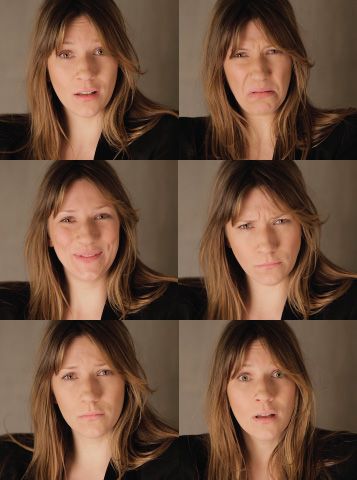
Ekman conducted extensive studies to prove the existence of innate emotions. He showed students from Japan, the US, Brazil, Chile, and Argentina photos of emotional faces and asked the test subjects to assign the appropriate emotion terms to the images. Ekman found six emotions whose facial expressions most students in different cultures could identify: anger, sadness, joy, fear, disgust, and surprise.
But was knowledge of these emotions really innate? It was possible that the students had learned the expressions from American films. Only a people like the Fore, who had lived cut off from other civilizations for centuries, could provide clarity here. So, Ekman traveled to Papua New Guinea and showed the photos to the Fore, as well. He told them a story that fit into the world of the indigenous people. Something like this: “A wild boar threatens to bite an unarmed man. The threatened man is alone in the village and afraid.” Most of the Fore, whether adults or children, pointed to the fearful face. They only had difficulty distinguishing it from the expression of surprise.
Ekman was still not satisfied. He asked the Fore to make facial expressions that matched the stories and filmed them doing so. He played the videos to American college students. The Americans were able to correctly identify the emotions depicted by the Fore with above-average frequency. “…the evidence suggests that the emotions of all normal members of our species are played on the same keyboard,” writes psychology professor Steven Pinker of Harvard University in his book The Blank Slate.


Evolution of emotion
Behavioral scientist Irenäus Eibl-Eibesfeldt was able to show in the 1970s that basic emotions are truly innate through studies of blind and deaf children. Although the children had never been able to observe the facial expressions of others, they also displayed primary emotions: they cried when they were sad and smiled when they were happy. However, their expressions were less nuanced than those of sighted children, and their facial expressions became less pronounced with age because the children lacked cultural role models for facial expressions.
From a phylogenetic perspective, the meaning of innate basic emotions is obvious: those who recognize fear in the face of another and run away may escape the bear or tiger. Tears call for comfort, disgust warns of spoiled food. This adaptive significance of basic emotions was also emphasized by emotion theorist and psychologist Robert Plutchik (1927−2006).
His theoretical model resembles a pointed cone, with eight primary emotions arranged on its lower surface like a pie chart. Towards the tip of the cone, the emotions decrease in intensity. All other feelings arise as mixtures of the basic emotions, comparable to the basic colors in a paint box. In fact, many people do not experience basic emotions in their pure form, but as a mixture of several, often contradictory, feelings at the same time.
Innate and learned
In addition, every culture has its own rules about how people show their feelings. Ekman was able to demonstrate how genetic and cultural factors interact in the expression of emotions by studying Japanese and American students. The scientist filmed the students while they watched a film about archaic circumcision rituals. When the subjects watched the film alone, they grimaced in similar horror. When the Japanese students watched the film together with the experimenter, unlike the American students, they showed little negative reaction but smiled instead. However, basic emotions cannot be completely masked: their expression in facial expressions is involuntary and partly unconscious.
People from industrialized nations, members of indigenous peoples, people born blind, and babies – they all apparently have the same basic emotions and facial expressions associated with them. Without having to learn facial expressions or emotions, they spontaneously display them in response to a few stimuli once their brains have reached a certain level of maturity. However, the question of the number of primary emotions has still not been conclusively answered. Researchers have been discussing a wide variety of emotions since the beginning of this millennium. Pride, contempt, and love are also considered possible candidates for additional basic human emotions.
First published on July 25, 2011
Last updated on October 25, 2025