Reason vs. Emotion?
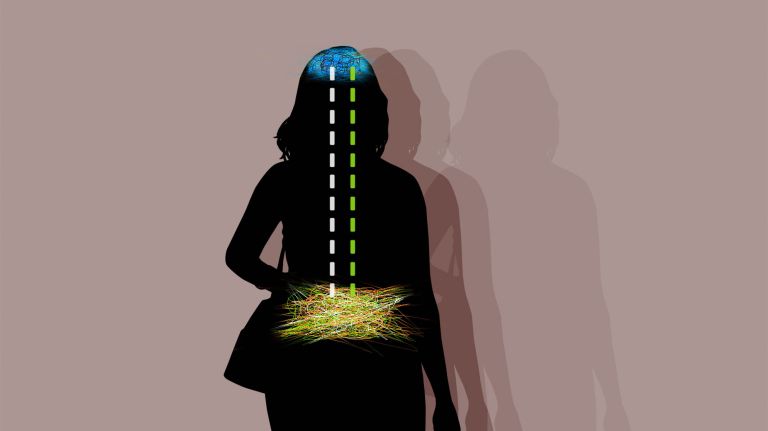
Humans are not machines; emotions control many of our actions. However, reason also has a say. If you want to make complex decisions, you should rely on your intuitive knowledge based on experience.
Scientific support: Prof. Dr. Alfons Hamm
Published: 11.09.2025
Difficulty: intermediate
- Our Emotions are anchored in the limbic system, which is also where affects arise. Our mind is located in the prefrontal cortex, where it weighs up the pros and cons rationally and plans our future actions.
- Although the mind can control emotions to a certain extent, in reality emotions usually control actions, even if people are not aware of this. Everyday life can often be mastered with simple rules of thumb.
- Brain researchers distinguish between purely spontaneous gut feelings and intuition, which processes experiential knowledge that has been stored over many years.
- Studies show that complex decisions that have to take many factors into account overwhelm our working memory In such cases, we should trust our intuition whenever possible.
Emotions
Neuroscientists understand "emotions" to be complex response patterns that include experiential, physiological, and behavioral components. They arise in response to personally relevant or significant events and generate a willingness to act, through which the individual attempts to deal with the situation. Emotions typically occur with subjective experience (feeling), but differ from pure feeling in that they involve conscious or implicit engagement with the environment. Emotions arise in the limbic system, among other places, which is a phylogenetically ancient part of the brain. Psychologist Paul Ekman has defined six cross-cultural basic emotions that are reflected in characteristic facial expressions: joy, anger, fear, surprise, sadness, and disgust.
working memory
Working memory
A form of memory, often used synonymously with the term "short-term memory." However, many theorists clearly distinguish between the two concepts with regard to the manipulation of information in working memory. It temporarily retains information, including newly acquired information and memory content from long-term memory that is associated with the new information. In the model developed by Alan Baddeley and Graham Hitch, it includes a central executive, a phonological loop, an episodic buffer, and a visuospatial sketchpad.
Portuguese neuroscientist António Damásio from the University of Southern California sees so-called somatic markers – essentially bodily signals – as the basis for all human decisions. The Prefrontal cortex is also home to the ability to perceive bodily sensations – and according to Damásio, these somatic markers help us think by making preliminary decisions and pushing us in a certain direction without us being aware of it.
Prefrontal cortex
Prefrontal cortex
The prefrontal cortex (PFC) forms the front part of the frontal lobe and is one of the brain's most important integration and control centers. It receives highly processed information from many other areas of the cortex and is responsible for planning, controlling, and flexibly adapting one's own behavior. Its central tasks include executive functions, working memory, emotion regulation, and decision-making. In addition, the PFC plays an important role in the cognitive evaluation and modulation of pain.
When it comes to decisions that involve a large number of different factors, it has been proven that the working memory in the Prefrontal cortex becomes overwhelmed. In a 2006 study by Dutch social scientist Ap Dijksterhuis from Radboud University Nijmegen, test subjects had to choose the best car from a large selection. If there were only four categories that played a role in the decision – such as fuel consumption, performance, or storage space – the test subjects made a better decision when they were able to think about it calmly. However, when twelve factors had to be taken into account, the test subjects made better decisions when they were distracted while thinking and therefore made more intuitive decisions.
working memory
Working memory
A form of memory, often used synonymously with the term "short-term memory." However, many theorists clearly distinguish between the two concepts with regard to the manipulation of information in working memory. It temporarily retains information, including newly acquired information and memory content from long-term memory that is associated with the new information. In the model developed by Alan Baddeley and Graham Hitch, it includes a central executive, a phonological loop, an episodic buffer, and a visuospatial sketchpad.
Prefrontal cortex
Prefrontal cortex
The prefrontal cortex (PFC) forms the front part of the frontal lobe and is one of the brain's most important integration and control centers. It receives highly processed information from many other areas of the cortex and is responsible for planning, controlling, and flexibly adapting one's own behavior. Its central tasks include executive functions, working memory, emotion regulation, and decision-making. In addition, the PFC plays an important role in the cognitive evaluation and modulation of pain.
“The heart has its reasons, which reason knows nothing of,” wrote the French mathematician and philosopher Blaise Pascal (1623-1662). And indeed, many of the decisions that humans make cannot be explained or understood by reason – usually not even by the person who made them. Did the head decide, the gut, or something else entirely?
Reason resides in the frontal lobe
When a person thinks rationally about a problem, weighs up the pros and cons, or plans their future, they use the Prefrontal cortex This area of the brain is connected to the limbic system, the seat of emotions, and can control Emotions – when it is reasonable to do so. The economic model of Homo economicus is based on the idea that every consumer thinks through the costs and benefits of their decisions purely rationally, and soberly attempts to maximize their profit. So, are humans purely rational beings controlled by their frontal lobe?
This model is now outdated: economists have simply overestimated the influence of rational decisions. No one acts purely rationally. Psychologist Gerd Gigerenzer from the Max Planck Institute for Human Development in Berlin puts it this way: “People make decisions – and now I'm going to say something radical, especially for us economists – mostly without calculating benefits and probabilities.”
For example, someone who blurts out “I quit!” to their boss in the heat of the moment has allowed themselves to be overwhelmed by their strong emotions. These emotions actually come, as the colloquial expression goes, partly from the gut (see info box). Such spontaneous emotional outbursts occur before one can properly identify the trigger (e.g., frustration with the boss) and the feeling. In fact, a mixture of feelings such as anger, guilt, disappointment, and sadness arise later.
Prefrontal cortex
Prefrontal cortex
The prefrontal cortex (PFC) forms the front part of the frontal lobe and is one of the brain's most important integration and control centers. It receives highly processed information from many other areas of the cortex and is responsible for planning, controlling, and flexibly adapting one's own behavior. Its central tasks include executive functions, working memory, emotion regulation, and decision-making. In addition, the PFC plays an important role in the cognitive evaluation and modulation of pain.
Emotions
Neuroscientists understand "emotions" to be complex response patterns that include experiential, physiological, and behavioral components. They arise in response to personally relevant or significant events and generate a willingness to act, through which the individual attempts to deal with the situation. Emotions typically occur with subjective experience (feeling), but differ from pure feeling in that they involve conscious or implicit engagement with the environment. Emotions arise in the limbic system, among other places, which is a phylogenetically ancient part of the brain. Psychologist Paul Ekman has defined six cross-cultural basic emotions that are reflected in characteristic facial expressions: joy, anger, fear, surprise, sadness, and disgust.
Homo economicus
A term from economics describing the idea that people always act according to the maxim of optimizing their own utility. However, the motive is not primarily selfish, but rather rational. This view of human nature contrasts with that of Homo reciprocans, which assumes that people prioritize cooperative behavior.
frontal
An anatomical position designation – frontal means "towards the forehead," i.e., at the front.
Fear of loss
A core area of the limbic system, the amygdala, fires especially when fear is involved, such as when there is a risk of losing something. In a study, Benedetto De Martino and his colleagues at University College London used Magnetic resonance imaging (MRI) to look into the brains of test subjects who were offered £50 and given a choice: if they opted out at the beginning of the game, they would receive £20; if they continued playing, they could either win the entire £50 or walk away empty-handed. The interesting thing was that the way the question was phrased had a decisive influence on the subjects' decision. 62 percent chose to take the risk when they were told, “You will lose £30 if you don't play.” When told, “You can keep £20,” only 43 percent risked their luck.
Scientists refer to this as the framing effect: when the same fact is phrased differently, people often make different decisions. The reason: the threat of losing £30 activates the Amygdala and motivates people to take the risk – after all, otherwise they will lose something. However, the amygdala does not fire when it comes to the prospect of earning £20 for sure – even though the result for the wallet is exactly the same.
In addition to the amygdala, the reward system in the brain is also an early indicator of decisions. This includes, among other things, the Nucleus accumbens In an experiment, Brian Knutson of Stanford University offered his subjects chocolates for actual purchase in an MRI scanner. When the subjects reached for the chocolates, the nucleus accumbens was stimulated even before the subjects were aware that they were consenting. If the treat was too expensive, however, the insular Cortex fired, obviously vetoing the purchase.
Magnetic resonance imaging
Magnetic resonance imaging scanner
A device used by medical professionals for magnetic resonance imaging (MRI). MRI is an imaging technique used to diagnose malformations in various tissues or organs of the body. This method is particularly effective for imaging parts of the body that contain a lot of water. Patients are placed in a tube (scanner) and exposed to a strong magnetic field. However, they are not exposed to X-rays or other forms of ionizing radiation.
Amygdala
corpus amygdaloideum
An important core area in the temporal lobe that is associated with emotions: it evaluates the emotional content of a situation and reacts particularly to threats. In this context, it is also activated by pain stimuli and plays an important role in the emotional evaluation of sensory stimuli. Inaddition, it is involved in linking emotions with memories, emotional learning ability, and social behavior. The amygdala is part of the limbic system.
Nucleus
In cell biology, the nucleus in a cell is the cell nucleus, which contains the chromosomes, among other things. In neuroanatomy, the nucleus in the nervous system refers to a collection of cell bodies – known as gray matter in the central nervous system and ganglia in the peripheral nervous system.
Nucleus accumbens
The nucleus accumbens is a nucleus in the basal ganglia that receives dopaminergic (dopamine-responsive) inputs from the ventral tegmental area. It is associated with reward and attention, but also with addiction. In pain processing, it is involved in motivational aspects of pain (reward, pain reduction) and in the effect of placebos.
Cortex
cortex cerebri
Cortex refers to a collection of neurons, typically in the form of a thin surface. However, it usually refers to the cerebral cortex, the outermost layer of the cerebrum. It is 2.5 mm to 5 mm thick and rich in nerve cells. The cerebral cortex is heavily folded, comparable to a handkerchief in a cup. This creates numerous convolutions (gyri), fissures (fissurae), and sulci. Unfolded, the surface area of the cortex is approximately 1,800cm².






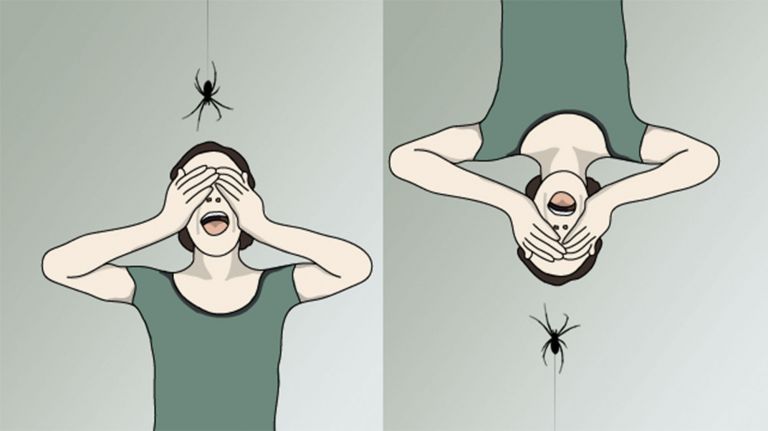



Emotions are often stronger than reason
However, many test subjects indignantly rejected unfair offers. This stimulated the insular cortex, cingulate gyrus, and Prefrontal cortex in the brain. The researchers interpreted this as emotional conflict: the prefrontal Cortex fired to overcome the negative feelings from the other two areas of the brain and persuade the test subjects to accept the unfair offer anyway. The prefrontal cortex therefore attempts to control and override emotions, but this does not always work.
The late brain researcher Gerhard Roth from the University of Bremen puts it even more radically: it is not reason that primarily guides our actions, but rather affects and emotions. This often happens unconsciously. “And so it happens that when asked, ‘Why did you just make that decision?’, we make something up because we simply have no access to our unconscious motives and impulses.” However, this does not mean that the mind cannot counteract this, said Roth. This tends to happen indirectly: the mind is only able to influence our plans for action by coupling opposing feelings. For example, if you feel like having chocolate spread for breakfast in the morning, even though you actually want to lose weight, reason can ensure that you leave the fatty food alone. According to Gerhard Roth, there are no rational decisions, only rational considerations.
Emotions
Neuroscientists understand "emotions" to be complex response patterns that include experiential, physiological, and behavioral components. They arise in response to personally relevant or significant events and generate a willingness to act, through which the individual attempts to deal with the situation. Emotions typically occur with subjective experience (feeling), but differ from pure feeling in that they involve conscious or implicit engagement with the environment. Emotions arise in the limbic system, among other places, which is a phylogenetically ancient part of the brain. Psychologist Paul Ekman has defined six cross-cultural basic emotions that are reflected in characteristic facial expressions: joy, anger, fear, surprise, sadness, and disgust.
Prefrontal cortex
Prefrontal cortex
The prefrontal cortex (PFC) forms the front part of the frontal lobe and is one of the brain's most important integration and control centers. It receives highly processed information from many other areas of the cortex and is responsible for planning, controlling, and flexibly adapting one's own behavior. Its central tasks include executive functions, working memory, emotion regulation, and decision-making. In addition, the PFC plays an important role in the cognitive evaluation and modulation of pain.
Cortex
cortex cerebri
Cortex refers to a collection of neurons, typically in the form of a thin surface. However, it usually refers to the cerebral cortex, the outermost layer of the cerebrum. It is 2.5 mm to 5 mm thick and rich in nerve cells. The cerebral cortex is heavily folded, comparable to a handkerchief in a cup. This creates numerous convolutions (gyri), fissures (fissurae), and sulci. Unfolded, the surface area of the cortex is approximately 1,800cm².
Trust your intuition
But it's not always feelings that guide us, says psychologist Gerd Gigerenzer: Many “gut decisions” are often based on simple rules of thumb and experience that greatly simplify life. As an example, he cites the attempt to catch a ball: No one would calculate the ball's point of impact based on its trajectory, air resistance, wind direction, and so on. Instead, you fix your eyes on the ball and try to keep your angle of vision constant while running. This automatically reveals the position at which the ball must be caught. Even preschoolers have this “empirical knowledge” (intuitive physics), as they can effortlessly catch a ball rolling down an inclined plane without being able to explain why the ball must land exactly where they put their hand. But even buying the same brand of cat food every time, or deciding to follow the advice of close friends, is based on such experiential knowledge.
We are often not really aware of this experiential knowledge “because it is stored in a different data format, so to speak,” as Gerhard Roth says. However, it can be activated during decision-making, preferably while sleeping, or at least by temporarily switching off the mind: “Then all previous experiences are scanned, and they receive a kind of average assessment. This then manifests itself as a vague feeling, something like: Yes, I should do that,” says Roth. Especially when it comes to complex decisions, this form of intuition seems to be superior to rational consideration (see info box).
Intuition ha
probably saved many a cyclist from falling: When someone suddenly starts to skid on their bike, they intuitively decide to steer in the opposite direction based on their experience – without knowing the laws of physics or thinking through the consequences. However, if you ask people in advance what they would do in such a situation, they usually give completely wrong answers, the implementation of which would inevitably lead to a fall.
First published on February 20, 2012
Last updated on September 11, 2025