
Learning the Meaning of Fear
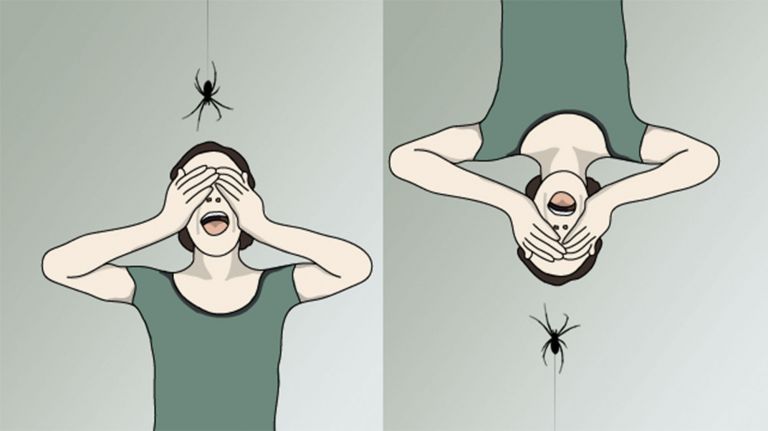
People are not born afraid of bosses, dogs, or spiders – we learn many fears over the course of our lives. The brain is ideally equipped for this: everything it fears, it remembers particularly well.
Scientific support: Assistant Professor Dr. Thomas Seidenbecher
Published: 21.08.2025
Difficulty: intermediate
- In fear conditioning, a threatening stimulus is linked to a previously neutral stimulus in the amygdala.
- The amygdala, in conjunction with other brain regions such as the Hippocampus and prefrontal cortex, is responsible for linking memories with emotions.
- Emotional events are burned particularly deeply into our Memory thanks to various neurotransmitters released by the brain.
Amygdala
corpus amygdaloideum
An important core area in the temporal lobe that is associated with emotions: it evaluates the emotional content of a situation and reacts particularly to threats. In this context, it is also activated by pain stimuli and plays an important role in the emotional evaluation of sensory stimuli. Inaddition, it is involved in linking emotions with memories, emotional learning ability, and social behavior. The amygdala is part of the limbic system.
Hippocampus
The hippocampus is the largest part of the archicortex and an area in the temporal lobe. It is also an important part of the limbic system. Functionally, it is involved in memory processes, but also in spatial orientation and learning. It comprises the subiculum, the dentate gyrus, and the Ammon's horn with its four fields CA1-CA4.
Changes in the structure of the hippocampus due to stress are associated with chronic pain. The hippocampus also plays an important role in the amplification of pain through anxiety.
Emotions
Neuroscientists understand "emotions" to be complex response patterns that include experiential, physiological, and behavioral components. They arise in response to personally relevant or significant events and generate a willingness to act, through which the individual attempts to deal with the situation. Emotions typically occur with subjective experience (feeling), but differ from pure feeling in that they involve conscious or implicit engagement with the environment. Emotions arise in the limbic system, among other places, which is a phylogenetically ancient part of the brain. Psychologist Paul Ekman has defined six cross-cultural basic emotions that are reflected in characteristic facial expressions: joy, anger, fear, surprise, sadness, and disgust.
Memory
Memory is a generic term for all types of information storage in the organism. In addition to pure retention, this also includes the absorption of information, its organization, and retrieval.
“I should like to learn how to shudder” longs the boy in a fairy tale by the Brothers Grimm, titled “The story of the youth who went forth to learn what fear was” – a wish familiar to patients with Urbach-Wiethe desease. This is because the vessels within the Amygdala calcify in those affected, causing the surrounding cells to die. As a result, their sense of fear is usually severely impaired.
In the journal “Current Biology”, Justin Feinstein and colleagues from the University of Iowa reported on a patient (abbreviated SM): In a pet store, she reached out with interest to snakes and would have liked to touch a tarantula. Neither the tunnel of horror nor the movie “The Silence of the Lambs” frightened SM. “The unique case of patient SM offers a rare insight into the adverse consequences of living without a functioning amygdala. For SM, the consequences were severe,” wrote the neuroscientists. Because she did not recognize danger, SM was the victim of numerous crimes. Patients without a functioning amygdala often suffer from another deficit: they cannot remember emotional content any better than neutral content.
Amygdala
corpus amygdaloideum
An important core area in the temporal lobe that is associated with emotions: it evaluates the emotional content of a situation and reacts particularly to threats. In this context, it is also activated by pain stimuli and plays an important role in the emotional evaluation of sensory stimuli. Inaddition, it is involved in linking emotions with memories, emotional learning ability, and social behavior. The amygdala is part of the limbic system.
Watson's experiment with Little Albert has often been criticized. Not only because of some methodological shortcomings – Watson only struck the iron bar when Albert reached for the rat – but also because Watson did not cure Little Albert of his fear. At the end of the experiment, Albert was afraid not only of white rats, but also of Santa Claus beards, rabbits, and dogs. However, Albert left the clinic where Watson had discovered him before the psychologist could erase the fear from Albert's emotional memory.
Psychologists and neuroscientists refer to the unlearning of fear as Extinction. In extinction, the repeatedly presented conditioned stimulus is not followed by an unpleasant stimulus. Watson would therefore have had to show Albert the white rat several times without simultaneous noise. This is an independent learning process involving the Ventromedial prefrontal cortex Cells from this area of the Cortex send fibers to inhibitory cells in the Lateral nucleus of the Amygdala. In fact, the fear is not erased but merely inhibited. This is why fears can spontaneously reappear, especially under stress.
Memory
Memory is a generic term for all types of information storage in the organism. In addition to pure retention, this also includes the absorption of information, its organization, and retrieval.
Extinction
In extinction, a previously conditioned stimulus is presented several times without the originally paired reinforcement until the conditioned response subsides. For example, a dog has learned that the ringing of a bell announces food (conditioned stimulus → conditioned salivation response). In extinction, the bell is now rung several times without food following. After a few repetitions, the dog stops drooling when the bell rings: the conditioned response subsides. This decrease in response can also be detected at the synaptic level, for example, by a reduction in neurotransmitter release.
Ventromedial prefrontal cortex
Cortex praefrontalis ventromedialis/ventromedial prefrontal cortex
Anatomically, the ventromedial prefrontal cortex belongs to the frontal lobe of the cerebral cortex. In some patients with decision-making problems, neuroscientists find lesions in this region of the brain. The ventromedial prefrontal cortex also becomes active when we try to suppress negative emotions such as feelings of guilt. It receives signals from many other areas of the brain and innervates the amygdala, hypothalamus, and several areas of the cortex.
Cortex
cortex cerebri
Cortex refers to a collection of neurons, typically in the form of a thin surface. However, it usually refers to the cerebral cortex, the outermost layer of the cerebrum. It is 2.5 mm to 5 mm thick and rich in nerve cells. The cerebral cortex is heavily folded, comparable to a handkerchief in a cup. This creates numerous convolutions (gyri), fissures (fissurae), and sulci. Unfolded, the surface area of the cortex is approximately 1,800cm².
lateral
A positional term – lateral means "towards the side." In relation to the nervous system, it refers to a direction at right angles to the neural axis, i.e., to the right or left.
Lateral nucleus
nucleus lateralis
The lateral nucleus belongs to the basolateral nucleus group of the amygdala. The basolateral amygdala is the largest part of the amygdala. It receives sensory information from the temporal lobe and neuromodulatory signals from the VTA, locus coeruleus, and basal forebrain, processes them, and sends them to the central nucleus. It is important for emotional learning and fear conditioning.
Amygdala
corpus amygdaloideum
An important core area in the temporal lobe that is associated with emotions: it evaluates the emotional content of a situation and reacts particularly to threats. In this context, it is also activated by pain stimuli and plays an important role in the emotional evaluation of sensory stimuli. Inaddition, it is involved in linking emotions with memories, emotional learning ability, and social behavior. The amygdala is part of the limbic system.
N-methyl-D-aspartate receptors, or NMDA receptors for short, in the Amygdala are crucial for emotional Memory. If the NMDA receptors in the amygdala are blocked in animals, they cannot acquire new fears through conditioning. What is special about these receptors is that they do not respond when stimulated by a single impulse, but only when a second impulse follows shortly thereafter. Calcium and sodium ions flow into the cell interior through the open receptors, making the cell more sensitive to incoming stimuli. If only the sound occurs the next time, it alone can excite the cell, a process in which so-called Long-term potentiation is important.
The excitation of the cells in the Lateral nucleus travels via various other nuclei to the exit of the amygdala: the Central nucleus Like a general, the central Nucleus issues commands to various structures of the Diencephalon and Brain stem that trigger innate fear responses to prepare the animal for flight or fight.
Amygdala
corpus amygdaloideum
An important core area in the temporal lobe that is associated with emotions: it evaluates the emotional content of a situation and reacts particularly to threats. In this context, it is also activated by pain stimuli and plays an important role in the emotional evaluation of sensory stimuli. Inaddition, it is involved in linking emotions with memories, emotional learning ability, and social behavior. The amygdala is part of the limbic system.
Memory
Memory is a generic term for all types of information storage in the organism. In addition to pure retention, this also includes the absorption of information, its organization, and retrieval.
Long-term potentiation
Long-term potentiation is a central mechanism for learning and memory formation. It is based on improved communication between two cells, referred to as strengthening the connection. This strengthening can occur, for example, through an enlargement of the connection point, the installation of new channels, or an increased release of transmitters (messenger substances).
lateral
A positional term – lateral means "towards the side." In relation to the nervous system, it refers to a direction at right angles to the neural axis, i.e., to the right or left.
Lateral nucleus
nucleus lateralis
The lateral nucleus belongs to the basolateral nucleus group of the amygdala. The basolateral amygdala is the largest part of the amygdala. It receives sensory information from the temporal lobe and neuromodulatory signals from the VTA, locus coeruleus, and basal forebrain, processes them, and sends them to the central nucleus. It is important for emotional learning and fear conditioning.
Central nucleus
nucleus centralis
The nucleus centralis belongs to the centromedial nucleus group of the amygdala. It has connections to the hypothalamus and nuclei of the brain stem and is involved in autonomous emotional responses such as fear reactions.
Nucleus
In cell biology, the nucleus in a cell is the cell nucleus, which contains the chromosomes, among other things. In neuroanatomy, the nucleus in the nervous system refers to a collection of cell bodies – known as gray matter in the central nervous system and ganglia in the peripheral nervous system.
Diencephalon
The diencephalon (midbrain) includes the thalamus and hypothalamus, among other structures. Together with the cerebrum, it forms the forebrain. The diencephalon contains centers for sensory perception, emotion, and the control of vital functions such as hunger and thirst.
Brain stem
truncus cerebri
The "trunk" of the brain, to which all other brain structures are "attached," so to speak. From bottom to top, it comprises the medulla oblongata, the pons, and the mesencephalon. It transitions into the spinal cord below. It is a center for vital functions such as breathing and heartbeat and contains ascending and descending pathways between the cerebrum, cerebellum, and spinal cord.
Albert screams. The infant turns to the left, falls forward, scrambles to his feet – and finally crawls away as fast as he can. A white rat has frightened the eleven-month-old toddler. Just two months earlier, Albert had trustingly reached out his hand to the animal. But then, in 1920, the little boy became a test subject for psychologist John B. Watson of Johns Hopkins University. Watson would strike an iron bar with a Hammer whenever he showed Albert the white rat – until the mere sight of the animal made little Albert cry and flee. Watson had succeeded in teaching Albert to be afraid.
Hammer
maleus
The first of the small ossicles in the middle ear. It is connected to the eardrum and transmits the vibrations caused by sound waves via the other two ossicles (incus, stapes) to the cochlea, where the stimulus is converted into a neural signal.

Fear conditioning
The linking of a neutral stimulus to a stimulus that triggers fear – for example, first a soft sound, then a loud, frightening noise. After conditioning, the presentation of the neutral stimulus alone triggers fear.
In search of fear
The method, which today seems hardly child-friendly, was already known as Fear conditioning from animal experiments: if a fear-inducing stimulus occurs often shortly after or together with a second stimulus, the previously neutral stimulus also generates fear. “I know of no animal that cannot be conditioned,” writes neuroscientist Joseph LeDoux of New York University. Apparently, learned fear has proven useful in evolution – even in humans. The child who fears the stove after getting burned for the first time benefits from this ancient mechanism just as much as the cat that is frightened by the neighbor's dog barking.
Some fears can be learned particularly quickly, such as the fear of snakes: Even in early times, primitive humans were more likely to survive if they feared everything that slithered. But most of today's dangers did not threaten anyone thousands of years ago. If humans were not able to learn fear, they might already be extinct: run over by trains, hit by cars, or killed by electric shocks.
Neuroscientist Joseph LeDoux studied what happens in the brain when we learn and remember fear in rats. He placed the rodents in an experimental box equipped with a loudspeaker and a metal grid floor. When a sound was emitted, the rat simultaneously felt a slight but unpleasant electric shock through the metal grid. As expected, after a short time it reacted to the sound with great fear.
Fear conditioning
The linking of a neutral stimulus to a stimulus that triggers fear – for example, first a soft sound, then a loud, frightening noise. After conditioning, the presentation of the neutral stimulus alone triggers fear.
Emotional memory: the amygdala
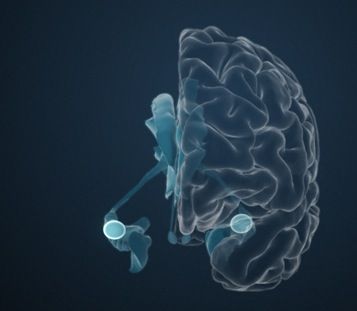
However, when the fear researcher destroyed the rodent's amygdala, the animal suddenly showed no fear. Test animals with damaged amygdalae were unable to learn fear in the first place. In humans with Amygdala disorders, it was also found that this area is essential for learning fear (see info box). This area of the brain, also known as the amygdala due to its anatomical structure, is a collection of nuclei deep in the left and right temporal lobes, in close proximity to the hippocampus.
Using imaging techniques, neuroscientists have now also been able to show in humans that the amygdala exhibits increased activity when cold sweat breaks out and the pulse rises. “A rat would never have a panic attack at the news of a stock market crash,” says LeDoux, “and a human being does not normally fear a cat. But the way our bodies react to the news of a stock market crash is very similar to the reaction of a rat when it sees a cat.”
But what exactly happens in the nuclei that make up the amygdala? The thalamus, the sensory control center of the brain, informs the Lateral nucleus of the amygdala about both the presentation of the tone and the unpleasant foot shock. At the gate of the amygdala, the information about the signal tone and the electrical stimulus are linked. The cells there are multimodal. This means that they can process information from different sensory organs – i.e., what is seen, heard, but also pain or touch. The fact that the electrical stimulus follows the tone is engraved in the “memory” of the amygdala. (see info box)
Amygdala
corpus amygdaloideum
An important core area in the temporal lobe that is associated with emotions: it evaluates the emotional content of a situation and reacts particularly to threats. In this context, it is also activated by pain stimuli and plays an important role in the emotional evaluation of sensory stimuli. Inaddition, it is involved in linking emotions with memories, emotional learning ability, and social behavior. The amygdala is part of the limbic system.
Hippocampus
The hippocampus is the largest part of the archicortex and an area in the temporal lobe. It is also an important part of the limbic system. Functionally, it is involved in memory processes, but also in spatial orientation and learning. It comprises the subiculum, the dentate gyrus, and the Ammon's horn with its four fields CA1-CA4.
Changes in the structure of the hippocampus due to stress are associated with chronic pain. The hippocampus also plays an important role in the amplification of pain through anxiety.
lateral
A positional term – lateral means "towards the side." In relation to the nervous system, it refers to a direction at right angles to the neural axis, i.e., to the right or left.
Lateral nucleus
nucleus lateralis
The lateral nucleus belongs to the basolateral nucleus group of the amygdala. The basolateral amygdala is the largest part of the amygdala. It receives sensory information from the temporal lobe and neuromodulatory signals from the VTA, locus coeruleus, and basal forebrain, processes them, and sends them to the central nucleus. It is important for emotional learning and fear conditioning.
Amygdala
corpus amygdaloideum
An important core area in the temporal lobe that is associated with emotions: it evaluates the emotional content of a situation and reacts particularly to threats. In this context, it is also activated by pain stimuli and plays an important role in the emotional evaluation of sensory stimuli. Inaddition, it is involved in linking emotions with memories, emotional learning ability, and social behavior. The amygdala is part of the limbic system.
Temporal lobe
Lobus temporalis
The temporal lobe is one of the four lobes of the cerebrum and is located laterally (on the side) at the bottom. It contains important areas such as the auditory cortex and parts of Wernicke's area, as well as areas for higher visual processing; deep within it lies the medial temporal lobe with structures such as the hippocampus.
Emotions
Neuroscientists understand "emotions" to be complex response patterns that include experiential, physiological, and behavioral components. They arise in response to personally relevant or significant events and generate a willingness to act, through which the individual attempts to deal with the situation. Emotions typically occur with subjective experience (feeling), but differ from pure feeling in that they involve conscious or implicit engagement with the environment. Emotions arise in the limbic system, among other places, which is a phylogenetically ancient part of the brain. Psychologist Paul Ekman has defined six cross-cultural basic emotions that are reflected in characteristic facial expressions: joy, anger, fear, surprise, sadness, and disgust.
Limbic system
The limbic system is a functional unit in the brain. It consists of interconnected structures, primarily in the cerebrum and diencephalon. The structures assigned to the system vary depending on the source, but the most important components are the hippocampus, amygdala, cingulate gyrus, septum, and mammillary bodies. The limbic system is involved in autonomic and visceral processes as well as in mechanisms of emotion, memory, and learning. Some authors mistakenly reduce the limbic system to the emotional world by referring to it as the "emotional brain."









Fear in correction mode
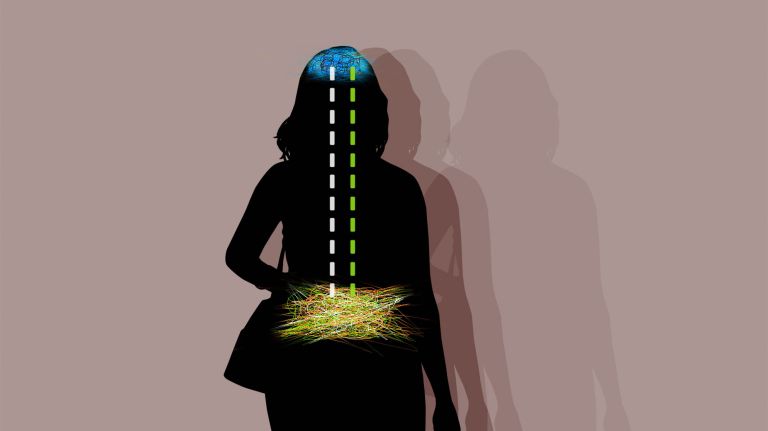
The unpleasant feeling when the tone sounds, the emotional memory, thus arises in the Amygdala. However, humans need other brain regions for conscious fear: the respective sensory cortex, the unimodal and polymodal association cortex, and the Hippocampus. Like the amygdala, these areas also receive their information from the thalamus. But instead of a rough sketch of what is happening, the Cortex receives and processes a detailed recording of the situation. In this way, it can distinguish between similar but differently threatening stimuli, such as two different tones. Sometimes, the cortex's analysis reveals that the fear already welling up in the amygdala is a false alarm: the burglar at the open balcony door was just the curtain blowing in the wind.
Once fears have developed, they usually persist for a long time. This is because fear not only arises in the brain, it also changes it. However, it is also possible to reduce the fear again – with a kind of reverse conditioning (see info box).
When the brain learns a fear, it not only stores precise information about the fear-inducing stimulus, but also remembers the context. After all, a snake on the forest floor is more dangerous than a snake behind glass. The hippocampus in the temporal lobe, which plays an important role in remembering and recalling facts, ensures that we memorize such contextual information.
Amygdala
corpus amygdaloideum
An important core area in the temporal lobe that is associated with emotions: it evaluates the emotional content of a situation and reacts particularly to threats. In this context, it is also activated by pain stimuli and plays an important role in the emotional evaluation of sensory stimuli. Inaddition, it is involved in linking emotions with memories, emotional learning ability, and social behavior. The amygdala is part of the limbic system.
Hippocampus
The hippocampus is the largest part of the archicortex and an area in the temporal lobe. It is also an important part of the limbic system. Functionally, it is involved in memory processes, but also in spatial orientation and learning. It comprises the subiculum, the dentate gyrus, and the Ammon's horn with its four fields CA1-CA4.
Changes in the structure of the hippocampus due to stress are associated with chronic pain. The hippocampus also plays an important role in the amplification of pain through anxiety.
Cortex
cortex cerebri
Cortex refers to a collection of neurons, typically in the form of a thin surface. However, it usually refers to the cerebral cortex, the outermost layer of the cerebrum. It is 2.5 mm to 5 mm thick and rich in nerve cells. The cerebral cortex is heavily folded, comparable to a handkerchief in a cup. This creates numerous convolutions (gyri), fissures (fissurae), and sulci. Unfolded, the surface area of the cortex is approximately 1,800cm².
Emotional memories stick better
There is a reason for linking emotion with Memory: the Amygdala stamps memories as “important.” That is why people can remember emotionally charged memories better. Remembering frightening experiences is particularly important. After all, avoiding heights, snakes, or brutal fellow human beings can save your life. Therefore, in a frightening situation, the central core of the amygdala activates not only the fight-or-flight system, but also emotional memory. By stimulating the Basal nucleus in the basal forebrain, the amygdala causes the Neurotransmitter Acetylcholine to be released in almost all structures of the Cortex. This neurotransmitter helps the brain to absorb as many sensory impressions as possible. In addition, the amygdala ensures that various stress hormones are released. These play an important role when people memorize or remember emotional experiences.
The fact that Albert remembered the clanging of the iron bar as soon as he saw the rat is therefore a mechanism that is as complex as it is vital. In order to learn to fear rats, dogs, or even bosses, humans need not only a malleable amygdala, but also various areas of the cortex and the Hippocampus. Only then can we distinguish a dachshund from a Rottweiler, consciously feel fear of dogs, and remember how a Rottweiler once bit our calf.
Memory
Memory is a generic term for all types of information storage in the organism. In addition to pure retention, this also includes the absorption of information, its organization, and retrieval.
Amygdala
corpus amygdaloideum
An important core area in the temporal lobe that is associated with emotions: it evaluates the emotional content of a situation and reacts particularly to threats. In this context, it is also activated by pain stimuli and plays an important role in the emotional evaluation of sensory stimuli. Inaddition, it is involved in linking emotions with memories, emotional learning ability, and social behavior. The amygdala is part of the limbic system.
Basal nucleus
nucleus basalis/nucleus basalis of Meynert
A collection of nerve cells in the basal region of the telencephalon. The basal ganglia are considered to be an important producer of the neurotransmitter acetylcholine. In Alzheimer's patients and, in some cases, Parkinson's patients, the basal ganglia degenerate. As a result, they produce less and less acetylcholine, which neurologists associate with some of the symptoms of these diseases.
Neurotransmitter
A neurotransmitter is a chemical messenger, an intermediary substance. It is released by the sender neuron at the sites of cell-cell communication and has an excitatory or inhibitory effect on the receiver neuron.
Acetylcholine
Acetylcholine is one of the most important neurotransmitters in the nervous system. In the central nervous system, it is involved in attention, learning, and memory; in the peripheral nervous system, it transmits excitation from nerves to muscles at the neuromuscular end plates and controls processes of the autonomic nervous system, i.e., the sympathetic and parasympathetic parts. Areas in which acetylcholine acts as a messenger substance are called cholinergic. It was the first neurotransmitter to be discovered, identified in 1921 by Otto Loewi in the heart of a frog.
Cortex
cortex cerebri
Cortex refers to a collection of neurons, typically in the form of a thin surface. However, it usually refers to the cerebral cortex, the outermost layer of the cerebrum. It is 2.5 mm to 5 mm thick and rich in nerve cells. The cerebral cortex is heavily folded, comparable to a handkerchief in a cup. This creates numerous convolutions (gyri), fissures (fissurae), and sulci. Unfolded, the surface area of the cortex is approximately 1,800cm².
Hippocampus
The hippocampus is the largest part of the archicortex and an area in the temporal lobe. It is also an important part of the limbic system. Functionally, it is involved in memory processes, but also in spatial orientation and learning. It comprises the subiculum, the dentate gyrus, and the Ammon's horn with its four fields CA1-CA4.
Changes in the structure of the hippocampus due to stress are associated with chronic pain. The hippocampus also plays an important role in the amplification of pain through anxiety.
First published on February 23, 2012
Last updated on August 21, 2025