Addicted to Love

When you're in love, your world is turned upside down. Neurobiologists and anthropologists are researching how much love influences our feelings. They have discovered that love is not only blind, but also addictive. And with good reason.
Scientific support: Prof. Dr. Ute Habel
Published: 20.12.2011
Difficulty: intermediate
- Neuroscientists believe that love can be compared to an addiction. At least, similar processes take place in the bodies and brains of people in love.
- The pain of a person who has been abandoned can also be compared to withdrawal symptoms.
- The Neurotransmitter Dopamine and the hormones vasopressin and Oxytocin are released in increased amounts in people who are in love.
- When we see a loved one, the reward system is particularly active. Areas of the brain responsible for fear or critical evaluation, on the other hand, show reduced activity.
Neurotransmitter
A neurotransmitter is a chemical messenger, an intermediary substance. It is released by the sender neuron at the sites of cell-cell communication and has an excitatory or inhibitory effect on the receiver neuron.
Dopamine
Dopamine is an important neurotransmitter in the central nervous system that belongs to the catecholamine group. It plays a role in motor function, motivation, emotion, and cognitive processes. Disruptions in the function of this transmitter play a role in many brain disorders, such as schizophrenia, depression, Parkinson's disease, and substance dependence.
Oxytocin
Oxytocin
Oxytocin is a hormone produced in the paraventricular nucleus and supraoptic nucleus of the hypothalamus and released into the blood via the posterior lobe of the pituitary gland. It initiates contractions during childbirth and supports the milk ejection reflex during breastfeeding. It is also released during orgasm. Oxytocin can promote trust and strengthen pair bonding, but recent findings show that its effects are more complex and, in certain contexts, can also promote separation from out-groups.
Researchers have identified the feeling of love in 170 societies; to date, there is no known population group that does not experience this emotion. Nevertheless, until the 1960s, love was not the subject of empirical research: studying the topic was considered frivolous. It was not until 1957 that psychologist Harry Harlow ventured into the field of love – albeit with controversial experiments. He raised young rhesus monkeys without mothers and proved that the absence of a mother bond leads to severe behavioral problems. The role of the bonding Hormone Oxytocin has also been proven in animal studies. The preferred study subject is the vole: while American prairie voles are very sociable and live in stable monogamous relationships, their relatives, the mountain voles, are extremely unsociable but have numerous sexual partners. The differences in the animals' behavior are due to a different number of receptors for the bonding hormones oxytocin and vasopressin – and can be manipulated by administering the hormones.
Hormone
Hormones are chemical messengers in the body. They serve to transmit information between organs and cells, usually slowly, e.g., to regulate blood sugar levels. Many hormones are produced in glandular cells and released into the blood. At their destination, e.g., an organ, they dock at binding sites and trigger processes inside the cell. Hormones have a broader effect than neurotransmitters; they can influence various functions in many cells of the body.
Oxytocin
Oxytocin
Oxytocin is a hormone produced in the paraventricular nucleus and supraoptic nucleus of the hypothalamus and released into the blood via the posterior lobe of the pituitary gland. It initiates contractions during childbirth and supports the milk ejection reflex during breastfeeding. It is also released during orgasm. Oxytocin can promote trust and strengthen pair bonding, but recent findings show that its effects are more complex and, in certain contexts, can also promote separation from out-groups.
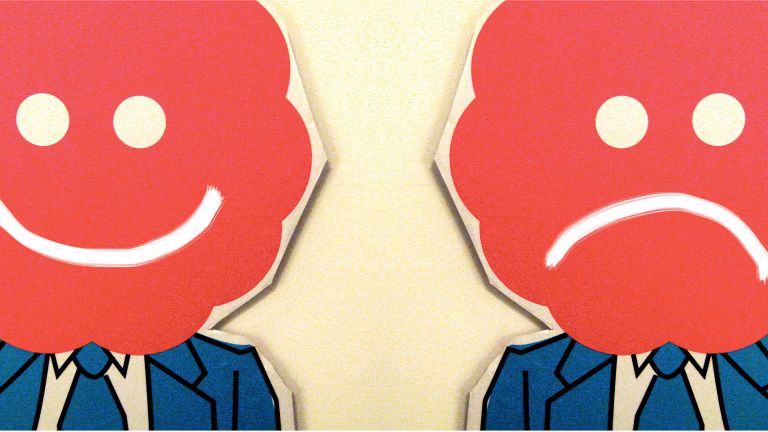
Your heart races, your sense of time disappears, and your thoughts revolve around only one person – when we are in love, the world is turned upside down. “Love is a serious mental illness,” Plato is said to have remarked. Anthropologist Helen Fisher of Rutgers University in New Jersey, one of the most renowned researchers in the field of love, puts it more conciliatorily: “Romantic love is one of the most powerful Emotions in the world”.
But what actually happens to us when we fall in love? Researchers like Fisher have been searching for an answer to this question for several years by studying the brain activity of study participants who are in love. In 2000, neurobiologists Andreas Bartels and Semir Zeki from University College London sent 17 people who were newly in love into an MRI scanner and measured their brain activity while the subjects looked at photos of their loved ones and friends.
Emotions
Neuroscientists understand "emotions" to be complex response patterns that include experiential, physiological, and behavioral components. They arise in response to personally relevant or significant events and generate a willingness to act, through which the individual attempts to deal with the situation. Emotions typically occur with subjective experience (feeling), but differ from pure feeling in that they involve conscious or implicit engagement with the environment. Emotions arise in the limbic system, among other places, which is a phylogenetically ancient part of the brain. Psychologist Paul Ekman has defined six cross-cultural basic emotions that are reflected in characteristic facial expressions: joy, anger, fear, surprise, sadness, and disgust.
Love really is blind
The results were astonishing: when the subjects looked at pictures of their loved ones, different areas of the brain were active than when they looked at their friends. Particularly interesting was the activity of the hippocampus, Nucleus caudatus, putamen, and Nucleus accumbens These areas of the brain play an important role in the brain's reward system.
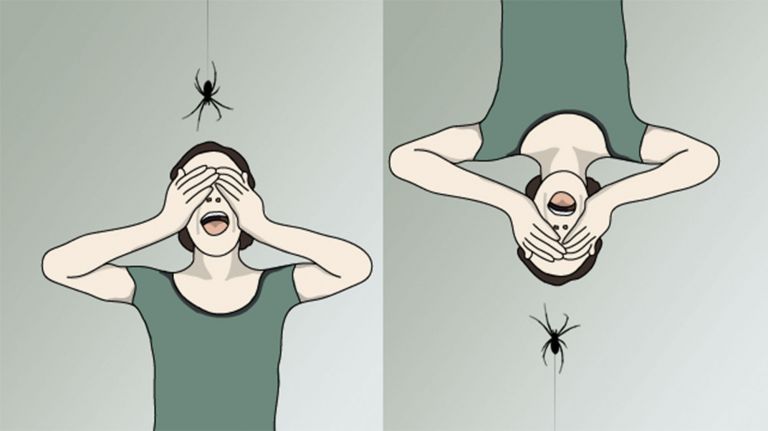
However, brain regions responsible for the Perception of fear or for the critical evaluation of others were less supplied with blood than usual when looking at the loved one. “It is not surprising that we are often surprised by the choice of partner that others make and wonder if they have lost their minds,” writes Zeki. "In fact, they have. Love is often irrational because rational decisions are suspended or no longer applied with the usual rigor”. Perhaps love really does make you blind.
Nucleus
In cell biology, the nucleus in a cell is the cell nucleus, which contains the chromosomes, among other things. In neuroanatomy, the nucleus in the nervous system refers to a collection of cell bodies – known as gray matter in the central nervous system and ganglia in the peripheral nervous system.
Nucleus accumbens
The nucleus accumbens is a nucleus in the basal ganglia that receives dopaminergic (dopamine-responsive) inputs from the ventral tegmental area. It is associated with reward and attention, but also with addiction. In pain processing, it is involved in motivational aspects of pain (reward, pain reduction) and in the effect of placebos.
Perception
The term describes the complex process of gathering and processing information from stimuli in the environment and from the internal states of a living being. The brain combines the information, which is perceived partly consciously and partly unconsciously, into a subjectively meaningful overall impression. If the data it receives from the sensory organs is insufficient for this, it supplements it with empirical values. This can lead to misinterpretations and explains why we succumb to optical illusions or fall for magic tricks.







Addicted to love
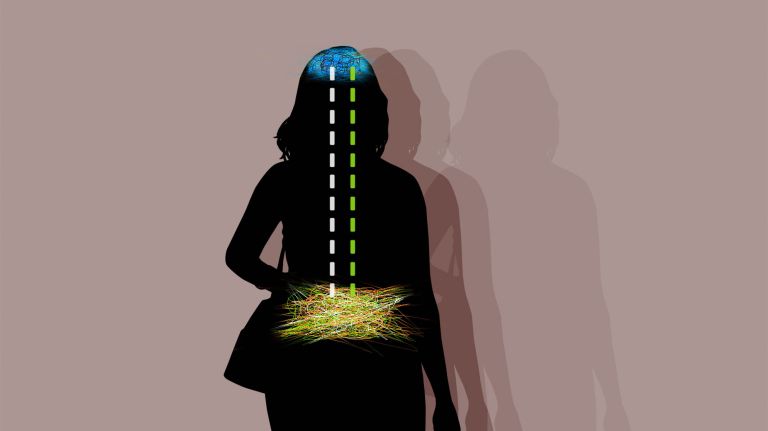
The altered Perception of the beloved is also due to a very special cocktail of hormones and neurotransmitters that are released in the brains of people in love. Dopamine plays a central role in this. The neurotransmitter, known to many as the “happiness hormone,” makes us feel good and is associated with reward, euphoria, but also addiction. In fact, in their studies, Zeki and Bartels found that people in love or those who are infatuated react to images of their loved ones in the brain in a similar way to cocaine addicts or alcoholics reacting to an image of their drug. “When you interpret the data, you can definitely compare love to an obsession or addiction,” says Andreas Bartels, who now works at the Center for Integrative Neurosciences at the University of Tübingen.
According to Helen Fisher, lovers react to being abandoned in the same way as addicts going through withdrawal: they suffer pain, become depressed, and try intensely to win back their beloved partner. This is because the reward center is still active in lovers who have been abandoned, as Fisher recently demonstrated using brain scans of abandoned partners: “The reward system for desire, for wishes, becomes more active when we don't get what we want”, says Fisher.
Perception
The term describes the complex process of gathering and processing information from stimuli in the environment and from the internal states of a living being. The brain combines the information, which is perceived partly consciously and partly unconsciously, into a subjectively meaningful overall impression. If the data it receives from the sensory organs is insufficient for this, it supplements it with empirical values. This can lead to misinterpretations and explains why we succumb to optical illusions or fall for magic tricks.
Dopamine
Dopamine is an important neurotransmitter in the central nervous system that belongs to the catecholamine group. It plays a role in motor function, motivation, emotion, and cognitive processes. Disruptions in the function of this transmitter play a role in many brain disorders, such as schizophrenia, depression, Parkinson's disease, and substance dependence.
Hormones promote social learning
In addition to dopamine, however, two other hormones play an important role: vasopressin and Oxytocin are also released in greater quantities in people who are in love. Both are considered bonding hormones, among other things. Vasopressin has mainly been studied in animals in this function. There, a connection with bonding ability in males is suspected.
The function of oxytocin is better understood. The Hormone reduces anxiety and stress and helps us to trust other people. Or not – oxytocin primarily strengthens bonds within one's own group, while it can exclude others. But at this point, we are talking about love. And here, oxytocin also ensures the intimate closeness of parents and children and is responsible for the bond between couples. It is released in greater quantities when mothers breastfeed their children, when we experience pleasant touch or an orgasm – or when we look into the eyes of a loved one. “It is assumed that oxytocin triggers a certain learning ability, but one that is specific to social learning,” explains Bartels. There is a close interaction with the happiness hormone Dopamine: “The child or partner is positively associated, triggers a reward in the brain, and you bond with the individual”.
However, it is also true that hormones cannot be reduced to one single effect. Vasopressin, for example, is involved in aggression, especially in animals. Even the “cuddle hormone” oxytocin has different effects depending on the context, such as whether or not a person is a member of our group – or not. The social salience hypothesis attempts to do justice to this. According to this hypothesis, it is a matter of strengthening the Perception of social stimuli, but with different effects depending on the context.
Oxytocin
Oxytocin
Oxytocin is a hormone produced in the paraventricular nucleus and supraoptic nucleus of the hypothalamus and released into the blood via the posterior lobe of the pituitary gland. It initiates contractions during childbirth and supports the milk ejection reflex during breastfeeding. It is also released during orgasm. Oxytocin can promote trust and strengthen pair bonding, but recent findings show that its effects are more complex and, in certain contexts, can also promote separation from out-groups.
Hormone
Hormones are chemical messengers in the body. They serve to transmit information between organs and cells, usually slowly, e.g., to regulate blood sugar levels. Many hormones are produced in glandular cells and released into the blood. At their destination, e.g., an organ, they dock at binding sites and trigger processes inside the cell. Hormones have a broader effect than neurotransmitters; they can influence various functions in many cells of the body.
Dopamine
Dopamine is an important neurotransmitter in the central nervous system that belongs to the catecholamine group. It plays a role in motor function, motivation, emotion, and cognitive processes. Disruptions in the function of this transmitter play a role in many brain disorders, such as schizophrenia, depression, Parkinson's disease, and substance dependence.
Perception
The term describes the complex process of gathering and processing information from stimuli in the environment and from the internal states of a living being. The brain combines the information, which is perceived partly consciously and partly unconsciously, into a subjectively meaningful overall impression. If the data it receives from the sensory organs is insufficient for this, it supplements it with empirical values. This can lead to misinterpretations and explains why we succumb to optical illusions or fall for magic tricks.
You’re the one!
However, scientists have not yet been able to clarify the criteria we use to select the people we fall in love with. The only thing that is certain is that romantic love is a fundamental biological mechanism that helps us form long-term partnerships and raise our children. “Love is a need, an urge like hunger or thirst”, says Helen Fisher. “It is impossible to eradicate it”.
Love – reduced to evolutionary tasks, Hormone surges, and brain activity: Are researchers demystifying the most beautiful feeling on earth with their studies? Andreas Bartels, at least, continues to believe in the magic of love: “Knowing how it arises does not diminish the feeling,” he says. “We would be no less fascinated by a Picasso painting if we saw how he painted it”.
Hormone
Hormones are chemical messengers in the body. They serve to transmit information between organs and cells, usually slowly, e.g., to regulate blood sugar levels. Many hormones are produced in glandular cells and released into the blood. At their destination, e.g., an organ, they dock at binding sites and trigger processes inside the cell. Hormones have a broader effect than neurotransmitters; they can influence various functions in many cells of the body.
First published on December 20, 2011
Last updated on December 9, 2025