
The Nervous System – A Master of Adaptation
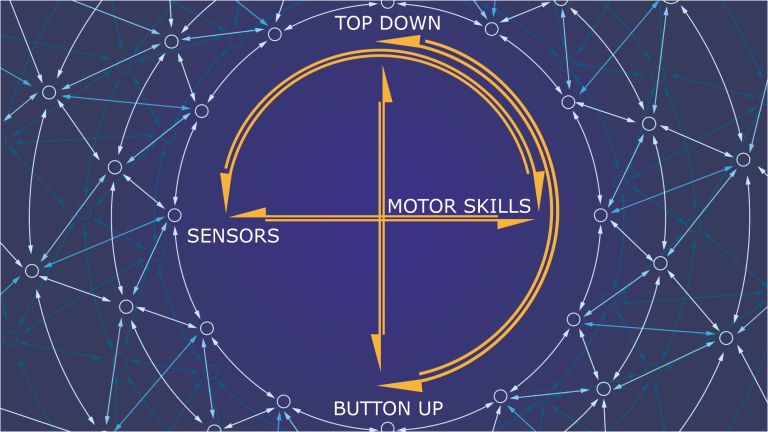
Whether individual nerve cells or entire networks: The brain is extremely adaptable, enabling us to learn and adjust to new environmental conditions.
Scientific support: Prof. Dr. Constanze Seidenbecher
Published: 05.05.2026
Difficulty: intermediate
- For a long time, researchers considered the adult brain to be a fairly rigid structure. But it has long been clear that our brain is constantly being remodeled and adapted to new demands.
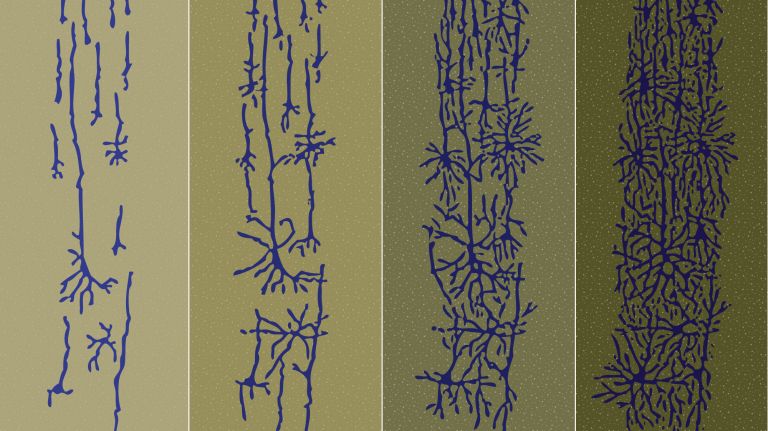
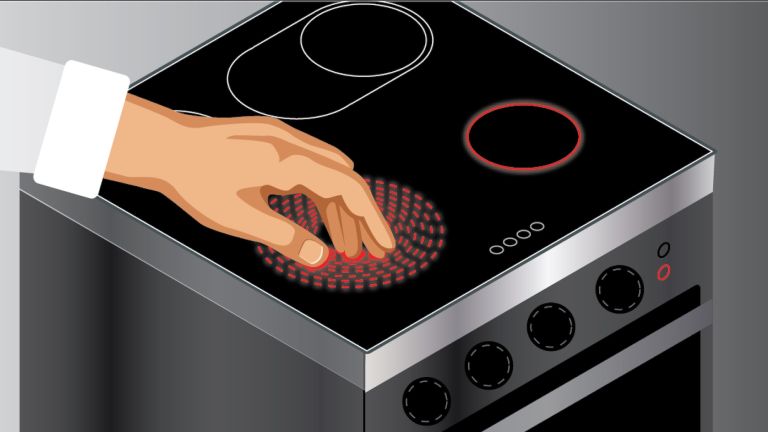
- During learning, tiny extensions called Dendritic spines grow on nerve cells. This is where connections to other neurons form. The most important principle of Plasticity is Hebb’s learning rule: “Neurons that fire together wire together.”
- If one Eye is covered for a certain period of time in mice, the visual cortex’s response to light stimuli from the uncovered eye is enhanced. This is likely due to the formation of additional synapses.
- The “running sushi” model could explain why, during learning, one Synapse of a nerve cell changes while others remain unchanged: Only when a synapse signals that it is currently learning can it retrieve the DNA transcript from the cellular “sushi belt.” The DNA transcript is unpacked and translated into a protein that contributes to the synapse’s remodeling.
Dendritic spines
Mushroom- or button-shaped protrusions on dendrites, at the tip of which there is usually a synapse, which is the site of communication between two nerve cells. The spines increase the surface area of dendrites, which thus have space for additional synapses. They play an important role in synaptic plasticity. The dendritic spines can swell and shrink depending on activation.
Plasticity
Neuroplasticity
The term neuroplasticity describes the ability of synapses, nerve cells, and entire areas of the brain to change structurally and functionally depending on the degree to which they are used. Synaptic plasticity refers to the adaptation of the signal transmission strength of synapses to the frequency and intensity of incoming stimuli, for example in the form of long-term potentiation or depression. In addition, the size, interconnection, and activity patterns of different areas of the brain also change depending on their use. This phenomenon is referred to as cortical plasticity when it specifically affects the cortex.
Eye
bulbus oculi
The eye is the sensory organ responsible for perceiving light stimuli – electromagnetic radiation within a specific frequency range. The light visible to humans lies in the range between 380 and 780 nanometers.
Synapse
A synapse is a connection between two neurons and serves as a means of communication between them. It consists of a presynaptic region – the terminal button of the sender neuron – and a postsynaptic region – the region of the receiver neuron with its receptors. Between them lies the synaptic cleft.
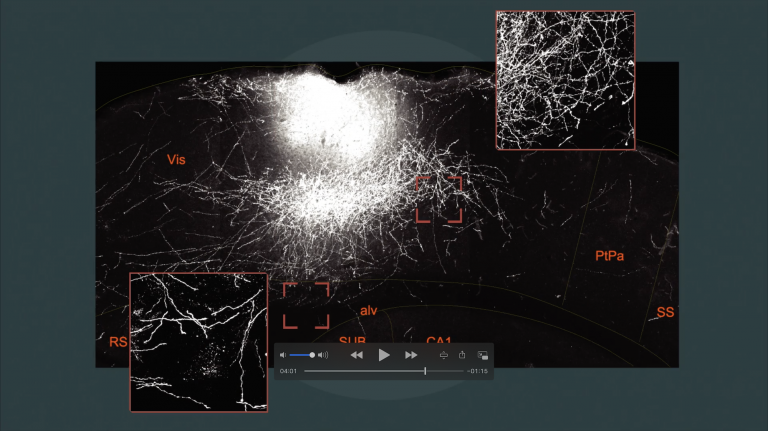
According to a long-held view, the thalamus is merely a kind of relay station between the Eye and the Visual cortex – one that does not change and is not involved in learning. To their own surprise, Mark Hübener and Tobias Rose at the Max Planck Institute for Neurobiology (now the MPI for Biological Intelligence) in Martinsried nevertheless observed changes after they had covered one eye of adult mice for a period of time: The nerve fibers of the thalamus responded more strongly to the information from the eye that remained uncovered. The dogma of a static relay station is therefore untenable. But it’s also clear that some kind of change must take place; otherwise, a learning process wouldn’t be possible. The researchers therefore suspect that the change in information transmission occurs elsewhere – namely, at some of the numerous synapses located between the eye and the thalamus.
Eye
bulbus oculi
The eye is the sensory organ responsible for perceiving light stimuli – electromagnetic radiation within a specific frequency range. The light visible to humans lies in the range between 380 and 780 nanometers.
Visual cortex
The visual cortex refers to the areas of the occipital lobe that are involved in processing visual information. These include the primary visual cortex and the associative visual cortices V1 to V5. According to Brodmann, the visual cortex comprises areas 17, 18, and 19.
Intelligence
Intelligence
Collective term for human cognitive performance. According to British psychologist Charles Spearman, cognitive performance in different areas correlates with a general factor (g factor) of intelligence. This means that intelligence can be expressed as a single value. American psychologist Howard Gardner, among others, has developed a counter-concept to this, known as the "theory of multiple intelligences." According to this theory, intelligence develops independently in the following eight areas: linguistic, logical-mathematical, musical-rhythmic, visual-spatial, bodily-kinesthetic, naturalistic, intrapersonal, and interpersonal.
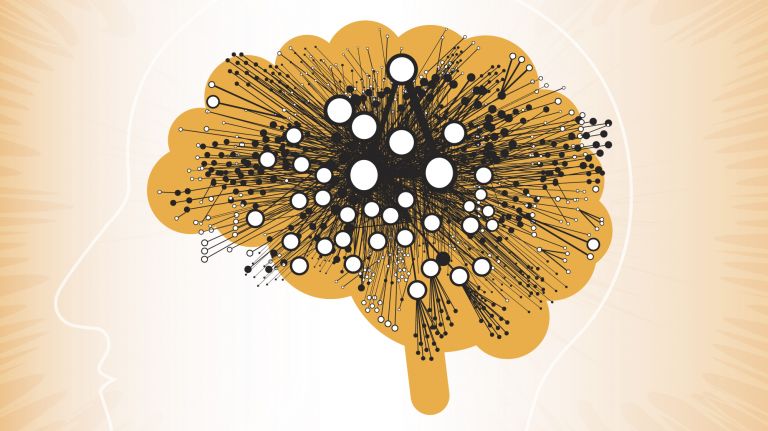
After reading this text, you truly won’t be the same person anymore. Sounds pretty immodest? Certainly. But it’s true. Scientifically true. For a long time, researchers considered the adult brain to be a rather rigid entity. Just like a computer, our Gray matter was thought to be firmly connected. But it has long been clear: Our brain is not rigidly wired like a computer. It is constantly being restructured and adapted to new demands, for example when new information flows into it and we learn something new, as is the case when reading this article. Each of the roughly 86 billion nerve cells in our brain is connected to its neighboring cells via thousands of contact points – the synapses. Absorbing new information, learning, and remembering are only possible because these connections are plastic and are constantly being formed and remodeled. That is why synapses have increasingly come into the spotlight for researchers.
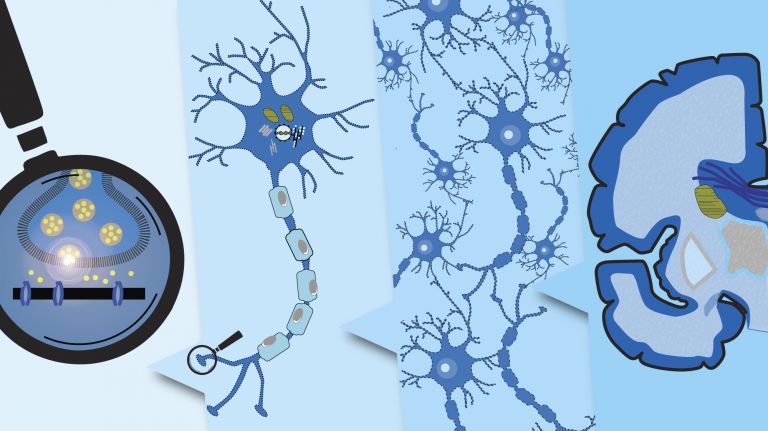
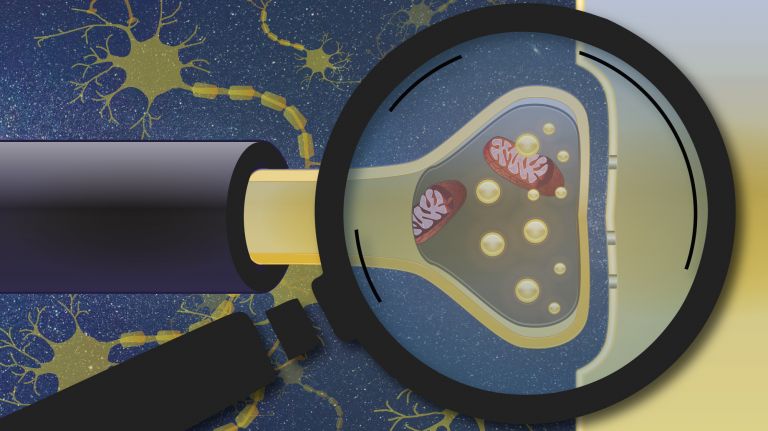
During learning, nerve cells grow extensions a few thousandths of a millimeter long, known as Dendritic spines These are structures that receive stimuli from upstream nerve cells. To establish a synaptic connection, these very fine extensions develop into mushroom-like structures consisting of a stem and a Terminal button These terminal buttons enable the exchange of information between nerve cells.
In addition to the formation of new synapses, another mechanism plays a very important role: “We believe that learning and Memory occur primarily through changes in the transmission strength of synapses,” says neurobiologist Tobias Rose of the Max Planck Institute for Neurobiology in Martinsried (now the MPI for Biological Intelligence; Rose is now at the University of Bonn). A Synapse becomes stronger when the upstream nerve cell releases more neurotransmitters or when more receptors for neurotransmitters are formed in the dendritic spines. “If a synapse suddenly becomes stronger, it’s possible that a cell that previously had no influence on a second cell suddenly gains a major influence on that second cell,” says Rose. “And this strengthening allows information to be stored.”
The most important principle of Plasticity is Hebb’s learning rule: neurons that fire together wire together. “We know that the simultaneous activation of cells strengthens the synapses between them,” says Rose. In recent years, the neurobiologist has repeatedly observed just how plastic the adult brain still is. Together with Mark Hübener, Rose has been closely examining the Visual cortex in adult mice in Martinsried. It has long been known that if you cover one Eye in an animal for a certain period of time and then uncover it again, the visual cortex’s response to light stimuli from the eye that remained uncovered is strengthened. The cells thus respond more strongly to the eye that remained open – and at the same time more weakly to the eye that was covered for a while.
Gray matter
Grey matter refers to a collection of nerve cell bodies, such as those found in nuclei or in the cortex.
Dendritic spines
Mushroom- or button-shaped protrusions on dendrites, at the tip of which there is usually a synapse, which is the site of communication between two nerve cells. The spines increase the surface area of dendrites, which thus have space for additional synapses. They play an important role in synaptic plasticity. The dendritic spines can swell and shrink depending on activation.
Terminal button
The end of an axon (long, fiber-like extension) of a nerve cell is called a terminal bouton if it is the presynaptic part of a synapse. The terminal bouton is a spherical thickening containing vesicles (small sacs) that store neurotransmitters (chemical messengers in the brain).
Memory
Memory is a generic term for all types of information storage in the organism. In addition to pure retention, this also includes the absorption of information, its organization, and retrieval.
Synapse
A synapse is a connection between two neurons and serves as a means of communication between them. It consists of a presynaptic region – the terminal button of the sender neuron – and a postsynaptic region – the region of the receiver neuron with its receptors. Between them lies the synaptic cleft.
Plasticity
Neuroplasticity
The term neuroplasticity describes the ability of synapses, nerve cells, and entire areas of the brain to change structurally and functionally depending on the degree to which they are used. Synaptic plasticity refers to the adaptation of the signal transmission strength of synapses to the frequency and intensity of incoming stimuli, for example in the form of long-term potentiation or depression. In addition, the size, interconnection, and activity patterns of different areas of the brain also change depending on their use. This phenomenon is referred to as cortical plasticity when it specifically affects the cortex.
Visual cortex
The visual cortex refers to the areas of the occipital lobe that are involved in processing visual information. These include the primary visual cortex and the associative visual cortices V1 to V5. According to Brodmann, the visual cortex comprises areas 17, 18, and 19.
Eye
bulbus oculi
The eye is the sensory organ responsible for perceiving light stimuli – electromagnetic radiation within a specific frequency range. The light visible to humans lies in the range between 380 and 780 nanometers.
Remembering old connections
As Hübener and Rose observed through the microscope, new Dendritic spines – and thus new synapses – formed on pyramidal cells, a type of particularly large nerve cell. “We suspect that these additional neural connections were the reason for these stronger responses,” says neurobiologist Hübener. One thing was particularly surprising to the researchers: “In the cortex, the cells returned to their original activity as soon as they began receiving information again from the Eye that had previously been covered for an extended period.” It almost seemed as if the individual cells could “remember” which connections they had formed before the eye was covered, in order to reestablish precisely those connections. In this way, the adult brain might be able to adapt to changing environmental conditions without completely altering its “basic wiring.”
So it is clear, in any case, that synapses are remodeled during learning. But how is it that a specific Synapse of a nerve cell is altered in the process, while others remain unchanged? After all, every cell has dozens of extensions, each of which has 100 to 1,000 of these contact points. Let’s take Pavlovian conditioning as an example. In this process a Neuron learns to associate a sound with food. More precisely, a specific synapse learns this association. Once this happens a few times, the specific sound alone is enough for that synapse to associate the sound with food. As part of the learning process, the synapse is restructured in both function and structure with the help of new proteins.
Dendritic spines
Mushroom- or button-shaped protrusions on dendrites, at the tip of which there is usually a synapse, which is the site of communication between two nerve cells. The spines increase the surface area of dendrites, which thus have space for additional synapses. They play an important role in synaptic plasticity. The dendritic spines can swell and shrink depending on activation.
Eye
bulbus oculi
The eye is the sensory organ responsible for perceiving light stimuli – electromagnetic radiation within a specific frequency range. The light visible to humans lies in the range between 380 and 780 nanometers.
Synapse
A synapse is a connection between two neurons and serves as a means of communication between them. It consists of a presynaptic region – the terminal button of the sender neuron – and a postsynaptic region – the region of the receiver neuron with its receptors. Between them lies the synaptic cleft.
Neuron
A neuron is a specialized cell in the nervous system that is responsible for processing and transmitting information. It receives signals via its dendrites and transmits them via its axon. Transmission occurs electrically within the neuron and, between neurons, usually chemically via synapses.
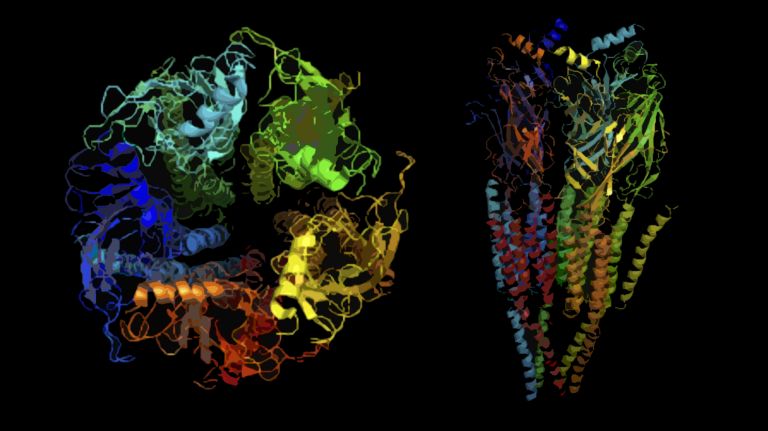
Running sushi
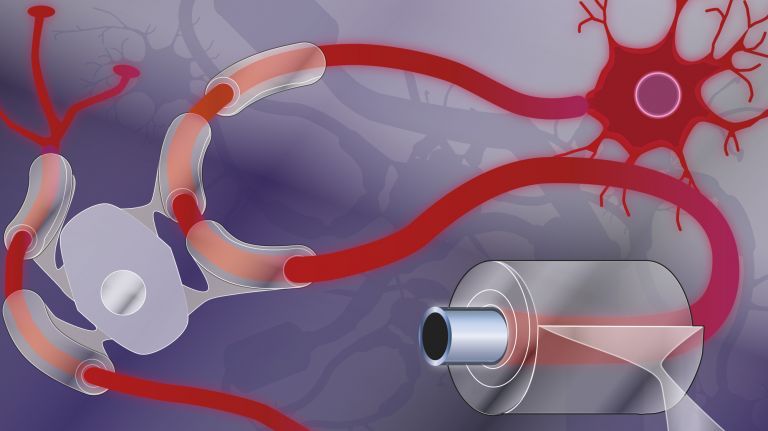
To produce the necessary proteins, sections of DNA must be translated into proteins. What is unique about nerve cells is that a portion of the RNA – the transcript of the DNA – is translated into proteins not only in the cell body but also directly on-site, that is, in the dendrites. To do this, special protein molecules attach themselves to a portion of the RNA and package it into specific particles, known as RNA granules, which are then transported to the dendrites.
Michael Kiebler, LMU Munich, likes to refer to this as “Running Sushi.” “With Running Sushi, the food from the kitchen passes by every seat in the restaurant,” says the biochemist. “In much the same way, the granules carrying the RNA travel from the cell body to all the synapses and offer the ‘sushi’ – the RNA.” In a restaurant, you can’t just reach for the sushi right away because it’s often covered by a lid. It’s similar at the cell’s extensions, says Kiebler. “Only when a Synapse signals that it is currently learning can it ‘take the RNA off the conveyor belt’; the RNA is unpacked on the spot and translated into a protein.” This ensures, at the molecular level, that only the learning synapse is remodeled and not other synapses of the nerve cell as well.
Whether RNA is translated into proteins depends on specific binding proteins contained within the granules. One of these, called Staufen 2, apparently binds to the RNA to prevent it from being translated while it is being transported to the synapses. In the future, Kiebler hopes above all to answer one question: “How can an actively learning synapse influence the binding protein Staufen 2 in such a way that it detaches from the RNA, allowing the RNA to be unpacked from the RNA granules and subsequently translated into proteins directly at the learning synapse?”
Synapse
A synapse is a connection between two neurons and serves as a means of communication between them. It consists of a presynaptic region – the terminal button of the sender neuron – and a postsynaptic region – the region of the receiver neuron with its receptors. Between them lies the synaptic cleft.
Memory paralyzed
It is quite clear to Kiebler that Staufen 2 plays a role in learning. In an experiment, he and his colleagues genetically engineered rats so that they lacked Staufen 2 in the nerve cells of the Hippocampus. This region plays a key role in Long-term memory The result: The general long-term Memory of the genetically modified rats still functioned. For example, the rats learned where a food source was located. But when the information they had learned was retrieved only after longer waiting periods, the mutants’ memory performance was significantly worse than that of the wild-type rats. “These experiments thus demonstrate the importance of Staufen 2 in certain long-term memory processes and provide initial insights into the underlying mechanisms of learning,” Kiebler concludes.
The nervous system is thus a true master of transformation – whether on a small scale, at the level of synapses between individual neurons, or on a large scale, at the level of entire networks. And reading this article has certainly led to some restructuring in your own brain as well.
Hippocampus
The hippocampus is the largest part of the archicortex and an area in the temporal lobe. It is also an important part of the limbic system. Functionally, it is involved in memory processes, but also in spatial orientation and learning. It comprises the subiculum, the dentate gyrus, and the Ammon's horn with its four fields CA1-CA4.
Changes in the structure of the hippocampus due to stress are associated with chronic pain. The hippocampus also plays an important role in the amplification of pain through anxiety.
Long-term memory
Long-term memory stores information about events, facts, or skills over long periods of time, often for a lifetime. Different types of memory are stored in different areas of the brain. The cellular basis for these learning processes is based, among other things, on improved communication between two cells and is called long-term potentiation.
Memory
Memory is a generic term for all types of information storage in the organism. In addition to pure retention, this also includes the absorption of information, its organization, and retrieval.
Further reading
- Jaepel J et al.: Lateral geniculate neurons projecting to primary visual cortex show ocular dominance plasticity in adult mice. Nat Neurosci.2017 Dec;20(12):1708-1714. doi: 10.1038/s41593-017-0021-0. Epub 2017 Nov 13.
- Berger SM et al.:.Forebrain-specific, conditional silencing of Staufen2 alters synaptic plasticity, learning, and memory in rats. Genome Biol.2017 Nov 17;18(1):222. doi: 10.1186/s13059-017-1350-8.
First published on April 30, 2020
Last updated on May 5, 2026