The Effects of Exercise on the Brain
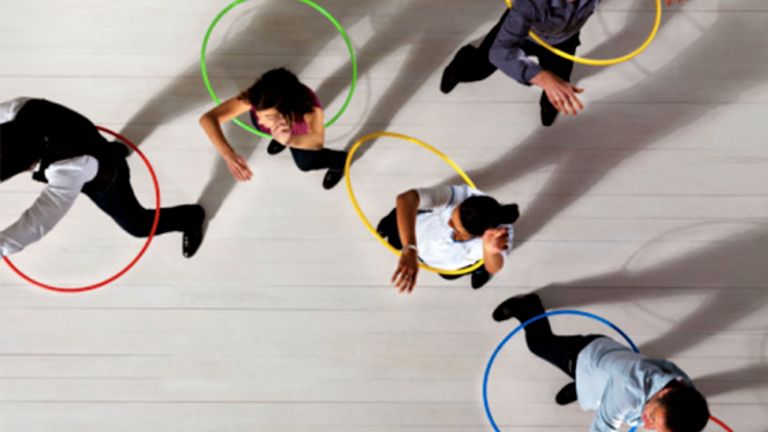
Exercise puts you in a good mood and clears your head. Stefan Schneider from the German Sport University Cologne is investigating how exercise affects the brain. His message: exercise is not only good for the body, but also for the mind.
Scientific support: Prof. Dr. Alexander Gail
Published: 05.02.2026
Difficulty: easy
- Studies show that exercise has a positive effect on mood and mental performance.
- Movement neuroscientists use EEG measurements to explore what happens in the brain during exercise.
- Exercise can apparently relieve the areas of the Cortex responsible for cognitive processes – but the type and intensity of exercise required for this probably depends on individual factors.
EEG
An electroencephalogram, or EEG for short, is a recording of the brain's electrical activity (brain waves). Brain waves are measured on the surface of the head or using electrodes implanted in the brain itself. The time resolution is in the millisecond range, but the spatial resolution is very poor. The discoverer of electrical brain waves and EEG is the neurologist Hans Berger (1873−1941) from Jena.
Cortex
cortex cerebri
Cortex refers to a collection of neurons, typically in the form of a thin surface. However, it usually refers to the cerebral cortex, the outermost layer of the cerebrum. It is 2.5 mm to 5 mm thick and rich in nerve cells. The cerebral cortex is heavily folded, comparable to a handkerchief in a cup. This creates numerous convolutions (gyri), fissures (fissurae), and sulci. Unfolded, the surface area of the cortex is approximately 1,800cm².
Stefan Schneider has also investigated how exercise can help maintain mood and performance in the extreme psychological situation of a simulated flight to Mars: In the Mars 500 project, six volunteers lived cut off from the outside world in a complex in Russia from mid-2010 to the end of 2011. Their hermit-like existence lasted 520 days and was designed to simulate the isolation and monotony of an 18-month manned mission to Mars. The environment and daily routine were designed to be as close as possible to a real trip to the neighboring planet.
Sports were also part of the daily program. Before and after their regular training sessions, which alternated between different sports, the crew members independently recorded EEGs, documented their well-being, and demonstrated their cognitive performance in mental exercises on a smartphone. The results support the assumption that sport can increase cognitive performance when it is accompanied by a flow-like immersion in physical activity.
When Stefan Schneider goes jogging in his free time, he experiences firsthand what he is painstakingly trying to research as a scientist: sport is good for you – not only for the body, but also for the soul. Exercise reduces stress and clears the mind for new intellectual challenges. The neuroscientist has also observed this in schoolchildren: “If you let them out to let off steam, you can work with them in a completely different way afterwards.”
Schneider researches the positive effects of exercise on the body and mind at the Institute for Movement and Neuroscience at the German Sport University in Cologne. And he is not alone in this: numerous studies in recent years have confirmed that sport has such effects. For example, neuroscientists in Ulm led by Sanna Stroth, who now conducts research at Heinrich Heine University in Düsseldorf, subjected young adults to several weeks of endurance running training. The result: improvements in visual-spatial memory, concentration, and mood. “Running makes you smart” was the title of the researchers' study. And the long-term study “Bewegtes Alter” (Active Aging) at Jacobs University Bremen found that regular exercise can significantly increase the brain performance of seniors.
Other studies have come to similar conclusions. There is broad consensus that exercise helps in the treatment of Depression. And the cognitive performance-enhancing effect of physical training was confirmed by a meta-analysis in 2010, which evaluated nearly 30 previously published individual studies on the effects of endurance training. According to this, regular exercise leads to a slight improvement in attention, processing speed, and memory.
Depression
A mental illness whose main symptoms are sadness and a loss of joy, motivation, and interest. Current classification systems distinguish between different types of depression.
Memory
Memory is a generic term for all types of information storage in the organism. In addition to pure retention, this also includes the absorption of information, its organization, and retrieval.
Measurements under extreme conditions
However, neuroscientist Stefan Schneider wants to achieve more than just identifying such positive effects – he wants to find out why and how exercise affects the brain. Methodologically, this is not easy. “Brain research is always associated with colorful images from MRI scanners,” explains the movement researcher. “The only problem is that you have to lie still in the tube. You can't examine anything more than hand movements.” In addition, the images can only be taken where there is an MRI machine with its heavy magnets – and these are usually found in hospitals.
Schneider, on the other hand, wants to take measurements where sports are normally practiced. “When it comes to mental well-being, it makes a difference whether you're jogging on a treadmill in a lab or in the woods at sunset,” he says. Schneider therefore relies primarily on EEG measurements, which record electrical activity in the brain using electrodes on the scalp. All the equipment needed for this – including special infrared sensors that also measure blood flow in the outer layers of the brain – fits into a transport box no larger than a large suitcase. A sticker reveals that the devices have already been used on parabolic flights by the German Aerospace Center to record brain waves in zero gravity.
EEG
An electroencephalogram, or EEG for short, is a recording of the brain's electrical activity (brain waves). Brain waves are measured on the surface of the head or using electrodes implanted in the brain itself. The time resolution is in the millisecond range, but the spatial resolution is very poor. The discoverer of electrical brain waves and EEG is the neurologist Hans Berger (1873−1941) from Jena.
EEG
An electroencephalogram, or EEG for short, is a recording of the brain's electrical activity (brain waves). Brain waves are measured on the surface of the head or using electrodes implanted in the brain itself. The time resolution is in the millisecond range, but the spatial resolution is very poor. The discoverer of electrical brain waves and EEG is the neurologist Hans Berger (1873−1941) from Jena.
Wired swimming cap uses GPS principle
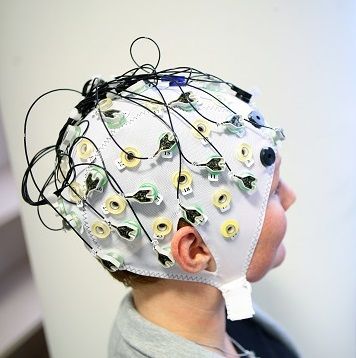
Once the test subject's head has been measured, an EEG can be recorded relatively quickly: The test subject puts on a kind of white rubber swimming cap with integrated electrodes. Gel is injected under the cap at each electrode using a syringe until a green light-emitting diode signals sufficient electrical contact with the scalp.
When the electrode measures voltage fluctuations on the scalp, it transmits a corresponding signal to one of numerous tiny switch boxes that cover the outside of the swimming cap. The electronic circuits amplify the signals directly at the electrode rather than at the other end of the cable, as is the case with conventional EEG devices. This prevents any movement of the head and cables from causing unwanted spikes in the measurement curve.
A software process called “electrotomography” helps with the analysis of the data. “Using the same principle as GPS, which calculates your position on Earth using multiple satellites, the many electrodes allow you to not only measure electrical activity, but also determine where in the brain something is happening,” says Schneider. This gives the researcher not only shaky EEG curves, but also three-dimensional activation images of the brain.
EEG
An electroencephalogram, or EEG for short, is a recording of the brain's electrical activity (brain waves). Brain waves are measured on the surface of the head or using electrodes implanted in the brain itself. The time resolution is in the millisecond range, but the spatial resolution is very poor. The discoverer of electrical brain waves and EEG is the neurologist Hans Berger (1873−1941) from Jena.



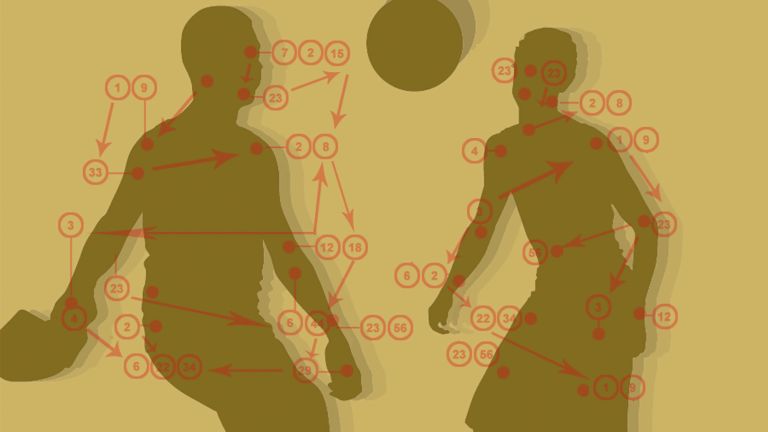

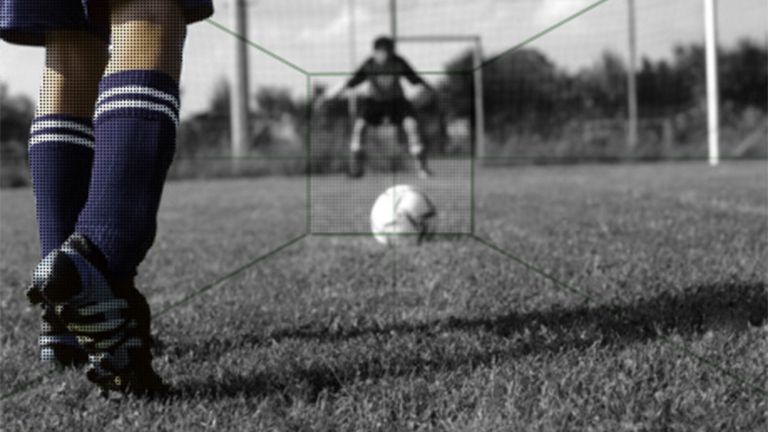
A reset for the stressed brain
Schneider and his colleagues placed the rubber caps on younger joggers while, for example, they ran on a treadmill, pedaled on an exercise bike, and exerted themselves on an arm crank ergometer. In the case of the joggers, the images produced show that the intensity of the Beta waves of the EEG in certain areas of the prefrontal cortex is significantly reduced after exercise, meaning that mental activity in this area is reduced.
This is consistent with theories that assume that exertion shifts the center of activity in the Cortex. Instead of being used for cognitive and emotional processes, resources are increasingly needed in regions responsible for muscles, breathing, and body perception, for example. “You can imagine it like a Windows computer when too many processes have accumulated in the memory,” explains Schneider: “The only way to get it running smoothly again is to shut it down and restart it.”
The researcher points to another possible explanation: the decrease in activity in the prefrontal cortex is related to the flow state known from Motivation research. Psychologists understand “flow” to mean the pleasant immersion in an activity, a kind of energetic creative rush that leads one along the narrow line between under- and over-challenge.
Beta waves
Electrical activity of the brain (brain waves) measured on the surface of the head or using electrodes implanted in the brain itself. If the frequency range of the measured activity is between 13 and 30 Hz, these are called beta waves. They are associated with normal waking states and alertness.
EEG
An electroencephalogram, or EEG for short, is a recording of the brain's electrical activity (brain waves). Brain waves are measured on the surface of the head or using electrodes implanted in the brain itself. The time resolution is in the millisecond range, but the spatial resolution is very poor. The discoverer of electrical brain waves and EEG is the neurologist Hans Berger (1873−1941) from Jena.
prefrontal cortex
Prefrontal cortex
The prefrontal cortex (PFC) forms the front part of the frontal lobe and is one of the brain's most important integration and control centers. It receives highly processed information from many other areas of the cortex and is responsible for planning, controlling, and flexibly adapting one's own behavior. Its central tasks include executive functions, working memory, emotion regulation, and decision-making. In addition, the PFC plays an important role in the cognitive evaluation and modulation of pain.
Cortex
cortex cerebri
Cortex refers to a collection of neurons, typically in the form of a thin surface. However, it usually refers to the cerebral cortex, the outermost layer of the cerebrum. It is 2.5 mm to 5 mm thick and rich in nerve cells. The cerebral cortex is heavily folded, comparable to a handkerchief in a cup. This creates numerous convolutions (gyri), fissures (fissurae), and sulci. Unfolded, the surface area of the cortex is approximately 1,800cm².
Motivation
A motive is a reason. When this motive takes effect, the living being feels motivation – it strives to satisfy its need. For example, for food, protection, or reproduction. Motivation can be intrinsic (from within, e.g., curiosity) or extrinsic (from outside, e.g., reward).
Is it all a question of individual preferences?
However, the relief effect described only occurred in the experiment when running – and only when the test subjects exerted themselves relatively strongly. Slower running and other sports did not produce the same effect. Schneider sees this as confirmation of his assumption that whether positive psychological effects occur and can be demonstrated ultimately depends on the individual test person, their preferences, and their performance, i.e., on a large number of parameters.
This would not only explain why experiments by movement neuroscientists seem to have yielded contradictory results so far. It would also underscore that Stefan Schneider is on the right track with the long-term goal of his research. The neuroscientist, who studied sports and theology, is concerned about the consequences of today's widespread lack of exercise. “Obesity, cardiovascular disease, diabetes, even mental illness – all of these have increased significantly since people have been doing less and less physical work,” says Schneider. But although everyone is aware of the health benefits, many people have not yet been able to motivate themselves to exercise on a long-term basis: “If you don't enjoy it, you'll quickly give up.”
Schneider envisions using neurophysiological parameters such as EEG to determine an individual's exercise profile – “a diagnostic tool to tell a person in advance what type and intensity of exercise will be really good for them, mentally as well.” In this way, scientific and technological developments, after having largely eliminated physical activity, may one day ensure that people get enough exercise again.
EEG
An electroencephalogram, or EEG for short, is a recording of the brain's electrical activity (brain waves). Brain waves are measured on the surface of the head or using electrodes implanted in the brain itself. The time resolution is in the millisecond range, but the spatial resolution is very poor. The discoverer of electrical brain waves and EEG is the neurologist Hans Berger (1873−1941) from Jena.
Further reading:
- German Sport University Cologne; URL: https://www.dshs-koeln.de/english/ [as of February 2, 2026]
First published on July 30, 2013
Last updated on February 5, 2026