“It's nerve-wracking”
Relatives of Alzheimer's patients face difficult decisions. One of them is: Should their father go into a nursing home, or can he continue to be cared for at home? For some, a shared apartment can be an alternative. We present a model from Berlin.
Published: 20.09.2013
Difficulty: intermediate
- Lejla Hodzic's father has Alzheimer's disease She and her family resist sending him away from home for a long time. Only when they realize that they can no longer cope with his care do they make the decision: their father will go into a nursing home.
- Jörg Wellenkötter makes a different decision: when both his parents develop Alzheimer's disease, he and his sister set up a Dementia shared apartment. There, the patients are treated very differently than in normal social institutions.
- Lejla Hodzic's father is in the final stages of Alzheimer's disease. He has to be fed artificially, no longer recognizes his loved ones, and can no longer speak. His daughter hopes for an end to his suffering and prays for his death.
Alzheimer's disease
Morbus Alzheimer
Alzheimer's disease is a progressive neurodegenerative disorder characterized by cortical atrophy, nerve cell loss, synapse loss, and deposits of amyloid plaques and neurofibrillary tangles, leading to dementia and loss of function. Early symptoms include memory problems, speech disorders, executive deficits, depressive moods, and subtle personality changes. As the disease progresses, global cognitive impairment, aphasia, agnosia, apraxia, and behavioral abnormalities such as apathy, restlessness, and sleep disorders occur. The disease was first described in 1907 by Alois Alzheimer.
Dementia
Dementia
Dementia is an acquired deficit of cognitive, social, motor, and emotional abilities. The most well-known form is Alzheimer's disease. "De mentia" means "without mind" in English.
She resisted for a long time, but at some point it became clear to Lejla Hodzic (name changed by the editors): Things cannot go on like this – Dad can no longer stay at home with Mom.
The Alzheimer's diagnosis came three years ago. At first, they took turns caring for him: her mother, her brother, and her, Lejla. “When are you picking up the little one from kindergarten?” her father asks, referring to his grandson, Lejla's son. She says “at four,” but shortly after, he asks the same question again. And again and again, every five minutes, and every time he gets an answer. “It was nerve-wracking,” Lejla Hodzic recalls today, three years later. “I could go home and have some peace and quiet, but for my mother, it never ended.” And then there's the thing with the keys: her father is afraid of burglars. He constantly hides the keys and then forgets where. So they are always looking for the keys.
Within a few days, her father deteriorates even further. A few months ago, he was still able to visit Lejla at home, which is only five minutes away from her parents' house. But now he can no longer find his way there. He collapses more and more often, and when her mother is alone with him, she can no longer help him up because he weighs 120 kilos. He cries a lot. At night, he wets himself and sometimes defecates.
When the father was diagnosed with Alzheimer's, the family's decision was clear: we will take care of him at home, we will never send him away! They come from Bosnia, where no one goes into a nursing home. The family takes care of him, no matter how difficult it is. But his mother, brother, and Lejla are at the end of their tether. They finally decide that their father must go into a nursing home. (Helpful tips for family members of Alzheimer's patients can also be found in the article ▸ "And now he has Alzheimer's" ... A guide for relatives)
Art Nouveau instead of a youth hostel
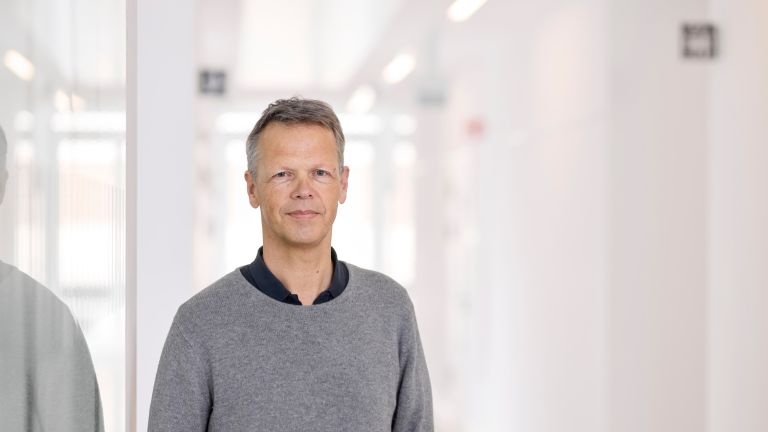
“Many relatives are already extremely exhausted psychologically before they hand over their relatives,” says Jörg Wellenkötter, founder of a shared apartment for Dementia patients in Berlin-Charlottenburg, not far from Ku’damm, where organic food stores alternate with neat cafés and the turn-of-the-century houses look particularly stately. A quiet but urban residential area. The shared apartment is located on the second floor of one of these buildings, which is also accessible by elevator.
High ceilings, parquet flooring, long corridors, lots of light. The furniture does not have the practical youth hostel look in spruce that is usually found in social institutions. “Our residents can furnish their rooms themselves,” says Jörg Wellenkötter. And that's what they do, with Art Nouveau wardrobes and Biedermeier sofas.
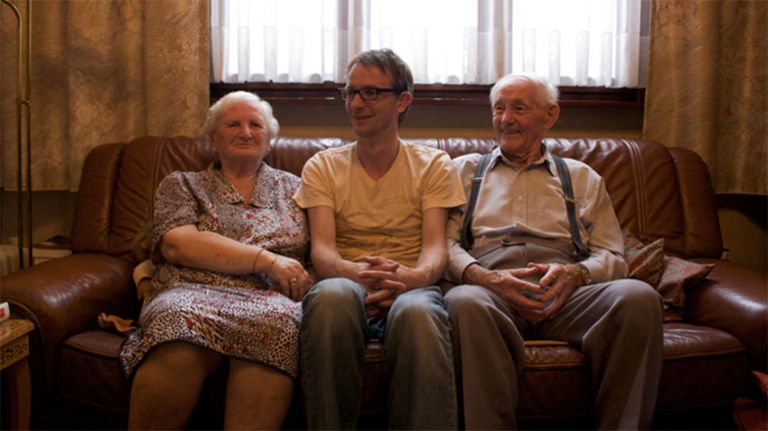
Jörg Wellenkötter and his sister, Karin, have created this small, bright world, which at first glance seems to have nothing to do with the sad Stigma of a dementia diagnosis. First their father developed Alzheimer's, then their mother. They were placed in a traditional nursing home, but their children realized soon that this was not good for their parents. So they made a radical decision: they looked for a large flat and founded the dementia shared apartment. Nursing staff were hired, other patients moved in. Eight dementia patients can live in the Charlottenburg apartment. “We just wanted to create a good home for our parents,” says Jörg Wellenkötter. His father stayed there until shortly before his death – “he was still walking around and stealing chocolate cookies until the very end” – and died in hospital of pneumonia. Jörg Wellenkötter says of his father: “He had a good life until the end, we had a beautiful farewell.”
They base their care of the dementia-stricken residents on Montessori pedagogy, a concept that was actually developed 100 years ago for children and young people: they should learn freely, based on their own Motivation. The motto is: “Help me to do it myself.” The Wellenkötter siblings apply this approach to care: “No one is stewarded here; we provide activating care,” says Jörg Wellenkötter. The elderly are not just served everything; they help with cooking, baking, and clearing the table. “We give them the feeling of being needed – and that does them good.” Their concept was successful, and in November 2013, they opened a second shared apartment in Berlin-Friedenau.
Dementia
Dementia
Dementia is an acquired deficit of cognitive, social, motor, and emotional abilities. The most well-known form is Alzheimer's disease. "De mentia" means "without mind" in English.
Stigma
The term refers to a characteristic that is viewed negatively by society or a group and leads to the discrediting of individuals who possess this characteristic. Stigmas can refer, for example, to members of certain ethnic groups or marginalized social groups. Even a diagnosis of a mental disorder or an illness such as AIDS can be accompanied by stigmatization, depending on the social environment.
Motivation
A motive is a reason. When this motive takes effect, the living being feels motivation – it strives to satisfy its need. For example, for food, protection, or reproduction. Motivation can be intrinsic (from within, e.g., curiosity) or extrinsic (from outside, e.g., reward).



“For me, he is no longer here; he has already left.”
Lejla Hodzic is familiar with the Dementia shared apartment; she is even on the board of a Montessori friends' association. But she knows that it would not be right for her father; he is going into a traditional nursing home. “The staff there are loving and take good care of him,” she says. For two years, the disease does not progress – but then it progresses rapidly. He loses his speech and recognizes the people around him less and less often. His grandson he remembers the longest, always calling him “Pile,” which means “chick” in Bosnian.
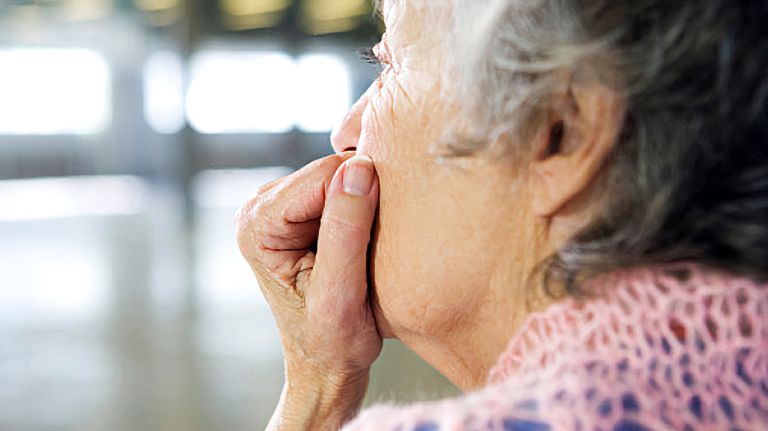
“It's this helplessness, you can't do anything about the disease, that hurts,” says Lejla Hodzic with tears in her eyes. “For me, he's no longer here, he's already gone.” Sometimes she is angry with her father: he shouldn't have given up so quickly, he should have fought harder. But her mind tells her that Alzheimer's disease could not have been stopped. And she is sad: her father achieved prosperity as a guest worker in Germany, but now he can no longer enjoy his good pension and see his other grandchildren: Lejla has since had two more children, and her brother has one child.
She is no longer able to visit her father regularly. “My son can't stand it when I cry.” So she only goes there every two or three weeks, “only when I am strong enough to hide my grief”. His appearance has changed dramatically; he has lost weight and his scalp is flaky. He usually lacks the swallowing reflex and has to be fed artificially. “If he were lucid for a moment, it would be torture for him to see himself like this,” says Lejla. When she visits him, she often hears him screaming on the first floor of the nursing home, even though he is on the third floor. Finally, Lejla Hodzic says, “I pray to God every day that he will take my father to him. That would be best for him and for us.”
Dementia
Dementia
Dementia is an acquired deficit of cognitive, social, motor, and emotional abilities. The most well-known form is Alzheimer's disease. "De mentia" means "without mind" in English.
Alzheimer's disease
Morbus Alzheimer
Alzheimer's disease is a progressive neurodegenerative disorder characterized by cortical atrophy, nerve cell loss, synapse loss, and deposits of amyloid plaques and neurofibrillary tangles, leading to dementia and loss of function. Early symptoms include memory problems, speech disorders, executive deficits, depressive moods, and subtle personality changes. As the disease progresses, global cognitive impairment, aphasia, agnosia, apraxia, and behavioral abnormalities such as apathy, restlessness, and sleep disorders occur. The disease was first described in 1907 by Alois Alzheimer.
“Oh yes, that's right, chicken.”
Lunch has just finished in the Dementia shared apartment. Jörg Wellenkötter's mother is still sitting in the large dining room, along with five or six of her roommates and almost as many caregivers. Her son sits down next to her and strokes her forearm. “How are you?” he asks. “I'm quite content, and when you're near me, I feel even better,” his mother replies. “How was the food?” “It tasted quite good. It was...” – she turns to the nurse: “I can't remember what it was, what was it?” “It was chicken,” says the nurse. “Oh yes, chicken.”
Despite this slight confusion, the mother does not seem uncertain. She appears to be at peace with herself. She looks at her son with an open, clear gaze. “That can change quickly, and then she becomes disoriented and believes her husband is still alive,” says Jörg Wellenkötter. But now the mother is discussing her plans for the afternoon with her son: they want to go to the café around the corner.
Dementia
Dementia
Dementia is an acquired deficit of cognitive, social, motor, and emotional abilities. The most well-known form is Alzheimer's disease. "De mentia" means "without mind" in English.
Further reading:
- Montessori senior living communities (German) URL: https://montessori-pflegedienst.com/wohngemeinschaften/ [as of 10/14/2025]; to the website.
First published on September 20, 2013
Last updated on November 11, 2025