Dementia worry: The Bogeyman of old Age
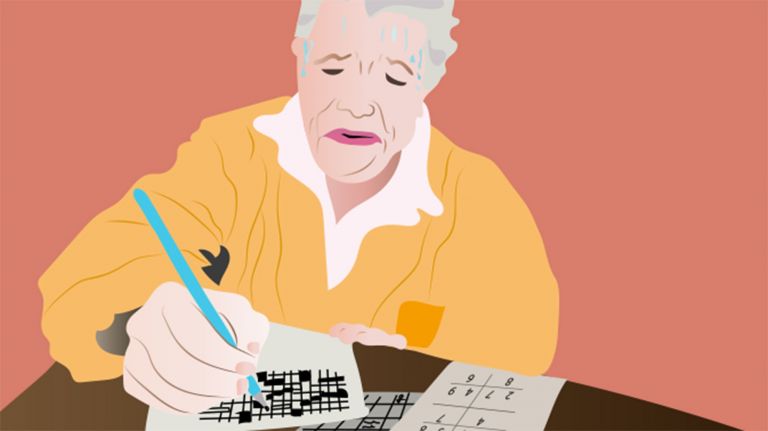
Whether through the media or personal experience with friends and relatives, the topic of Alzheimer's and dementia has become a central issue in society. Concerns about developing dementia oneself are now also widespread.
Scientific support: Prof. Dr. Peter Falkai
Published: 11.11.2025
Difficulty: intermediate
- According to international studies, dementia worry is widespread, at least in Western countries: around 40 percent of respondents reported moderate to severe concerns about dementia.
- Media coverage and personal experiences with relatives and friends with dementia probably explain why such concerns are so widespread.
- Concerns about dementia vary greatly in intensity: some people do not worry about it at all, while others behave like hypochondriacs in this regard.
- People who are generally more psychologically stressed, anxious, or depressed tend to have greater concerns about dementia.
- Presumably, many people imagine life with dementia to be even more negative than it actually is for those affected.
- Concerns about dementia have two sides. They can lead to sensible preventive behavior, but they can also have a negative impact on quality of life.
“I'm going to show you a list of words,” says Marc Borner. The psychologist from Charité Berlin places a folder on the table in front of Hans Bertram (81, name changed by the editors). “Please say each word on the list aloud and then memorize it,” Borner continues. “Then repeat the words from memory.” After reading aloud, Mr. Bertram begins the memory exercise: “Pepper, fork, star...” As he tries to remember, he gazes thoughtfully into the distance and scratches his beard when he has difficulty. He remembers some of the words, but by no means all of them. The test is repeated several times. “Oh, yes! Rope, harp!” says Hans Bertram as he looks at the list again.
The former engineer has his memory tested every year over a period of five years. The aim of this long-term study is to find as yet unknown differences between normal and pathological aging. Previous memory tests had actually given Hans Bertram the all-clear: no signs of early dementia or mild cognitive impairment. “After the first tests, I was very relieved that I had done so well and that my memory was now officially still functioning well,” says Hans Bertram. His brother has Alzheimer's disease. “That was the main reason for visiting the memory clinic here.” The study is now an opportunity for him to find out earlier if dementia is developing.
People's fears of dementia are increasingly being addressed in aging research in Germany. And there is a technical term for it: dementia worry. “Dementia worry is the emotional reaction to the perceived threat of developing dementia at some point in the future,” says Eva-Marie Kessler, a gerontological psychologist at Heidelberg University (now a professor of gerontopsychology at the Medical School Berlin). On the one hand, this worry is accompanied by thoughts, ruminations, and certain images in the mind. “For example, you imagine living in a nursing home with Alzheimer's, being dependent on others.” On the other hand, dementia worry is also accompanied by feelings such as fear.
“Dementia worry” is widespread
International studies suggest that dementia worry is widespread, at least in Western countries. For a long time, there were no figures specifically for Germany. In an initial German study in 2014, Eva-Marie Kessler and her colleagues surveyed around 200 people. The results were similar to those from international surveys: around 40 percent of respondents reported moderate to severe dementia worry. According to health insurance data, dementia is the most feared disease after cancer. And in a recent survey of 4,000 middle-aged people (average age 55), 34 percent were somewhat afraid and 13 percent were very afraid.
Concerns about dementia vary greatly in intensity. “There are many people who don't worry about it at all, or only when asked about it,” says Kessler. But there are also people who behave like hypochondriacs, only they don't have an exaggerated and unjustified fear of cancer or a heart attack: “They constantly need reassurance from other people that everything is still okay in their heads.”
Hans Bertram often struggles with his memory. He frequently can't remember people's names or the names of things. “Just yesterday, I was standing on the balcony and couldn't remember the name of a spice plant,” he says. “That worries me because I don't know if that's normal at the age of 81.” However, he is not yet seeking confirmation from others that his memory is still functioning.
Increasing media coverage
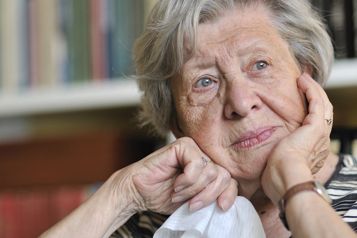
“The widespread concern about dementia is obviously linked to the fact that people are increasingly confronted with the issue,” suspects Eva-Marie Kessler. The phenomenon is familiar from other diseases. In the 1980s, for example, the phenomenon of AIDS phobia arose as a result of extensive media coverage. Psychologist Marc Borner also says that, although media attention does not necessarily mean that more people visit his memory clinic, “it is quite noticeable that after a major media report, we see a wave of patients who are concerned by the coverage.”
Personal experiences can also trigger fears and concerns. “After all, more and more people have relatives and friends who are suffering from dementia,” explains Eva-Marie Kessler. Indeed, studies show that such personal experiences are associated with greater concerns about dementia. In a Canadian study involving almost 120 older adults, caring for a relative was associated with personal fears of dementia if the relative had been diagnosed with dementia.
Hans Bertram has also had experience with Alzheimer's, and not just through his brother: “I witnessed the disease in a friend of mine until the bitter end, so I have an idea of where it leads.” What worries him most is how those around him deal with a relative's illness. The people affected themselves often do not seem to be doing too badly despite their limitations. “But for their relatives, it must be a disaster when a person has completely lost their identity and is no longer the person they knew or even loved.”

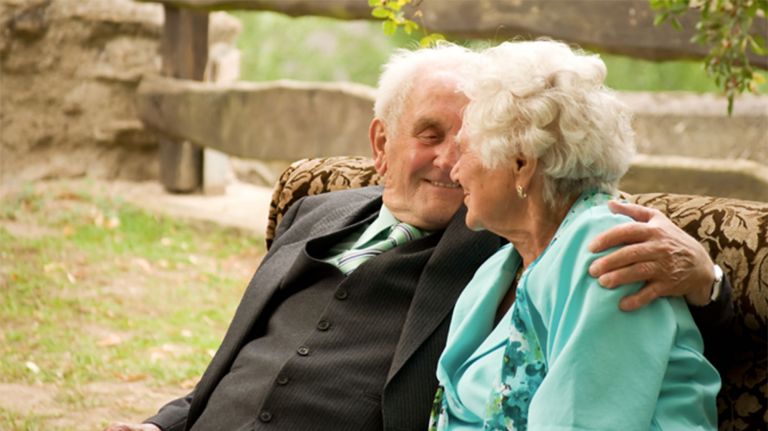
Exaggerated negative image of dementia patients
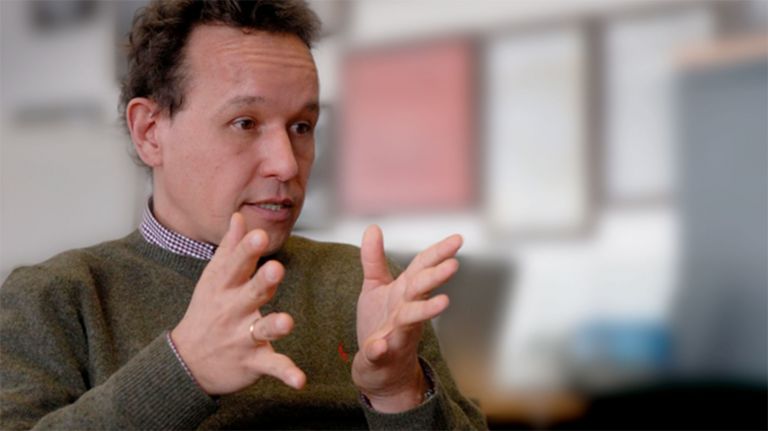
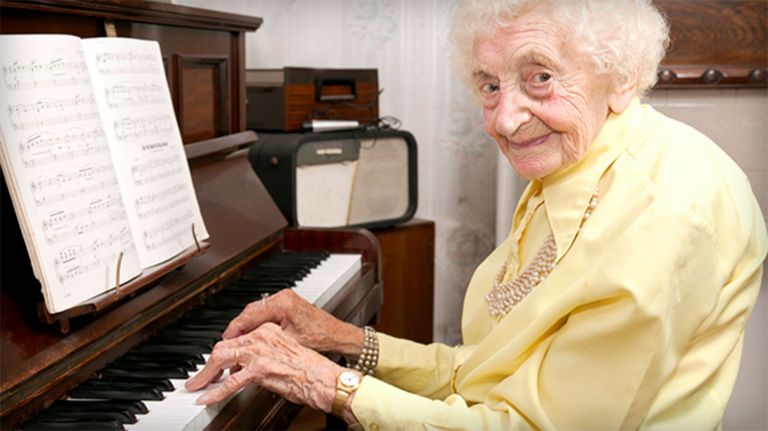
A large proportion of older people experience a decline in their memory. But not all of them develop fears of dementia as a result. “People who are generally more psychologically stressed, anxious or depressed are also more prone to dementia concerns,” says Eva-Marie Kessler. In such cases, psychotherapeutic treatment can also be helpful. Kessler suspects that many people imagine life with dementia to be more negative than it actually is for those affected, especially in the early stages. “Dementia is the specter of old age par excellence.” In various studies, at least some of the respondents imagine life with dementia to be very stressful and believe that those affected can no longer enjoy life.
In fact, the risk of depression is increased in people with dementia. But not as much as outsiders often assume. “As humans, we have amazing resources to deal with even the most difficult situations in life,” says the gerontological psychologist.
The two sides of dementia worry
There are two sides to dementia worry: moderate concern can lead to sensible preventive behavior. If you experience increasing memory lapses and others around you confirm this, you are more likely to visit your family doctor or even a memory clinic – and then, if necessary, get help to delay the onset of dementia. “But excessive dementia concerns can, of course, also have a negative impact on quality of life and cloud the view of normal, positive aging,” says Kessler. “It can increase the fear of aging in general.”
How can society address concerns about dementia? Probably not primarily through more scientific findings about dementia in the media, believes Kessler. “Rather, we need new cultural models for a more positive approach to dementia that enable individuals to articulate and realize their needs and concerns, even in this borderline situation of life.”
Despite his fundamental concern about developing dementia, Hans Bertram has a positive attitude. The tests in the long-term study may reveal earlier than expected that he will develop dementia at some point. “Then I'll just have to face the situation and make the best of it.” In any case, Hans Bertram doesn't need to worry yet, even though he is 81 years old: In today's memory test, he performed very well for his age, apart from a few careless mistakes.
Further reading
- Meyer JL et al: Fear of Dementia among Middle-Aged and Older Adults in Germany. Dement Geriatr Cogn Dis Extra. 2024;14(1):96-105 (zum Text).
First published on August 28, 2017
Last updated on November 11, 2025