Full Blast to the Ears

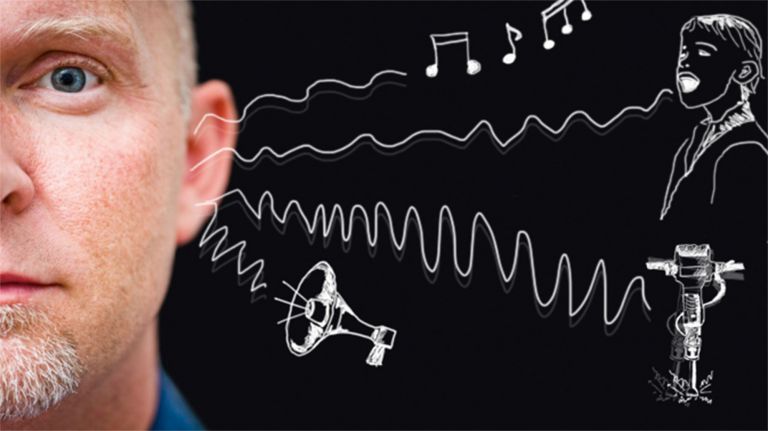
Whether in the subway, in a café, or outside on the street – noise is everywhere. But this constant acoustic companion is not only stressful and harmful to our hearing and health; it also damages the brain.
Wissenschaftliche Betreuung: Prof. Dr. Eckhard Friauf
Veröffentlicht: 18.11.2025
Niveau: schwer
- Lärm kann die feinen Härchen der Haarsinneszellen in der Schnecke zerstören und damit das Gehör schädigen.
- Lärm macht krank. Nicht nur, aber vor allem, wenn er dauerhaft und nachts auftritt. Als chronischer Stressor zieht er das Herz-Kreislauf-System in Mitleidenschaft, ist ein Risikofaktor für Hypertonie, koronare Herzkrankheiten und Schlaganfall. Auch das Risiko auf Stoffwechselstörungen, psychische Erkrankungen und Demenz steigt.
- Lärm beeinträchtigt die Gehirnentwicklung. Dabei ist gerade die Hörrinde betroffen.
- Auch kognitive Leistungen leiden unter permanenter Beschallung.
Demenz
Demenz/Dementia/dementia
Demenz ist ein erworbenes Defizit kognitiver, aber auch sozialer, motorischer und emotionaler Fähigkeiten. Die bekannteste Form ist Alzheimer. „De mentia“ bedeutet auf Deutsch „ohne Geist“.
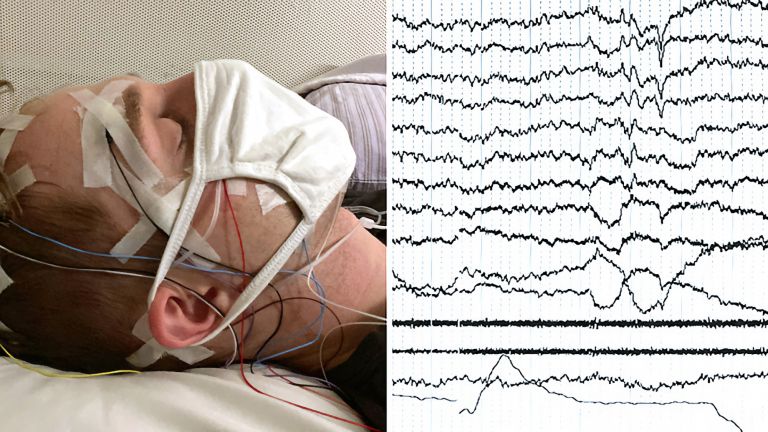
Nicht alle Menschen sind gleichermaßen lärmempfindlich. US-Wissenschaftler der Harvard Medical School in Boston sind diesem Phänomen auf den Grund gegangen. Sie baten 12 Probanden zum Schlafen ins Labor und stellten fest: Wie unbeeinträchtigt jemand schläft, scheint von der Zahl der so genannten Schlafspindeln abzuhängen. Das sind hochfrequente Wellenmuster im EEG, die das Gehirn beim Schlummern produziert. Je häufiger diese Schlafspindeln im EEG auftraten, desto weniger ließen sich die Probanden im Schlaf stören. Vermutlich spiegeln die Schlafspindeln eine Blockade zwischen Hörcortex und Thalamus wider. Und die Schaltzentrale des Thalamus muss die akustische Information passieren, bevor sie im Hörcortex verarbeitet wird. Demnach wirken regelmäßige, rhythmische Schlafspindeln wie neurobiologische Ohrenstöpsel.
How wonderful, this silence! Anyone who has the opportunity to travel to the desert can look forward to a very special experience: a silence beyond imagination – completely unfamiliar to most ears. Because everyday life is characterized by a constant backdrop of noise: traffic, a train rattling by, aircraft noise, a television playing here, a radio blaring there, cell phone chatter everywhere, a dog barking, and a group of retirees chatting away over coffee at the next table.
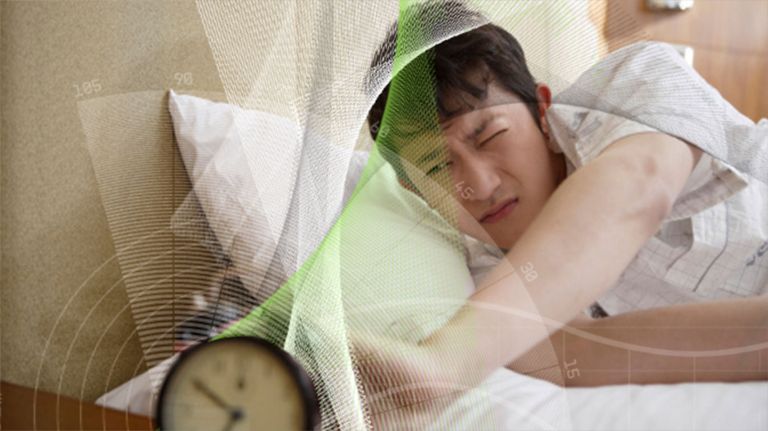
This constant noise level is not a modern invention. Historical sources report that ancient Rome was already plagued by terrible noise. And according to the satirist Juvenal (around 100 AD), it robbed many people of their sleep – some even became so ill from the constant din that they died.
Noise makes you ill
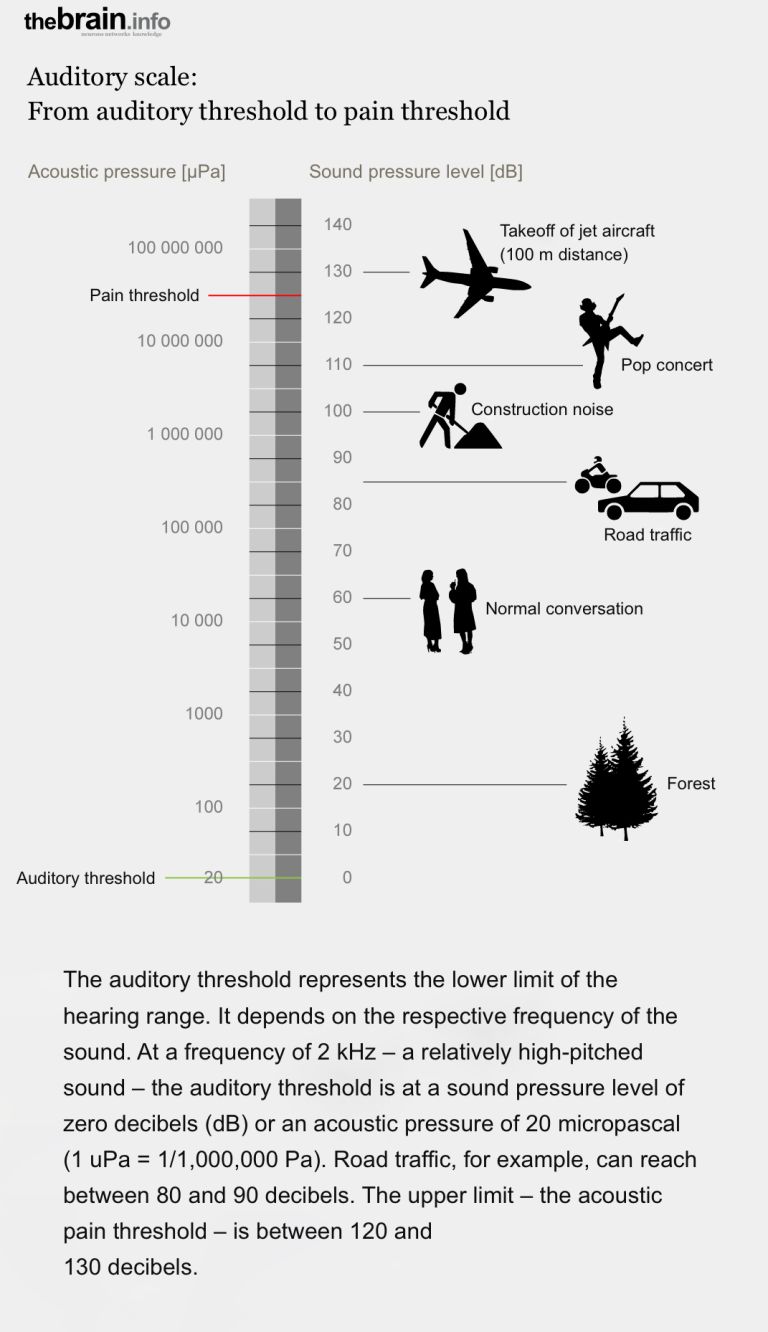
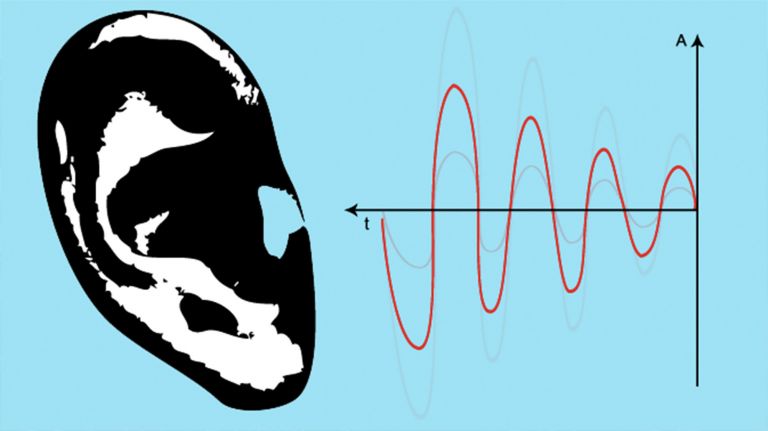
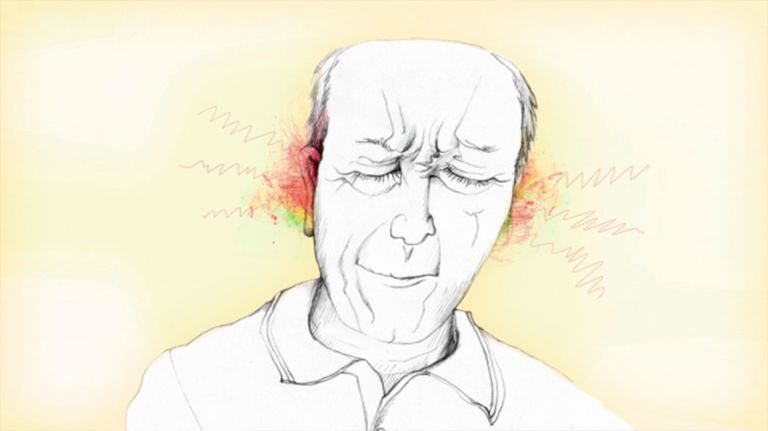
Then as now, noise is a nuisance, can make you ill, and can impair cognitive performance. And it damages your hearing. If there is a loud bang, for example when a New Year's Eve firecracker explodes nearby, the sound vibrations can bend or even break the fine hairs of the hair cells in the inner ear (stereocilia). Because it is the stereocilia that pick up sound so that it can ultimately be transmitted to the brain as a neural signal, the affected person becomes hard of hearing and usually experiences a soft hissing or whistling sound in their ear. With a little luck, the hairs will straighten up again and hearing will recover. However, if the damage is more severe or the noise pollution is constant, the problem becomes permanent.
The pain threshold for noise is between 120 and 130 decibels. At this level, people instinctively cover their ears. But even continuous exposure to 85 decibels, such as from a busy road, leaves its mark on the hearing. Scientists have also discovered that noise is harmful to health. High blood pressure, arteriosclerosis, heart attacks, stomach ulcers – all of these can be attributed to prolonged noise pollution. For example, the risk of heart attack is higher for men living in noisy residential areas – with average daytime street noise levels of more than 65 decibels – than for men living in quieter areas. This was shown in a study by the German Federal Environment Agency in 2004. Even the youngest children are affected, as the agency's staff discovered in a study conducted in 2009: children whose rooms face a busy road tend to have slightly higher blood pressure.
The reason: noise is a stressor. More than 90 decibels trigger a fight-or-flight response. The body releases increased amounts of the stress hormones adrenaline and noradrenaline and activates energy reserves. When it gets really loud, i.e., above 120 decibels, cortisol is also released in people who are awake. In people who are asleep, the stress response occurs much earlier, with consequences for the cardiovascular system. A 2003 study by the German Federal Environment Agency found that people who must endure an average noise level of 55 decibels or more outside their bedroom window at night have almost twice the risk of high blood pressure as those whose noise level was below 50 decibels.


Noise damages the brain
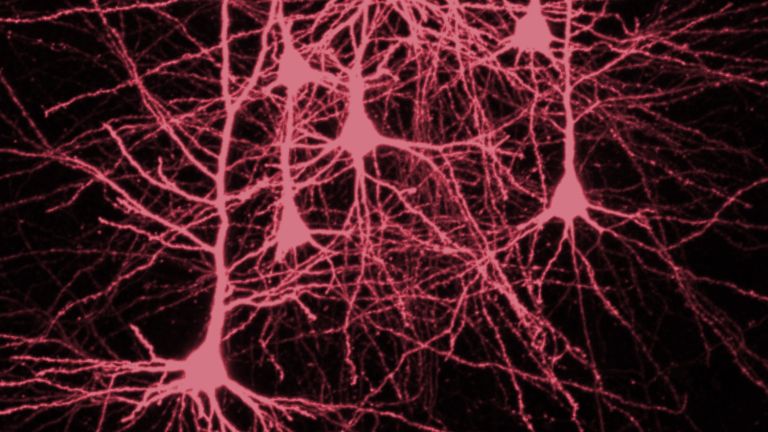
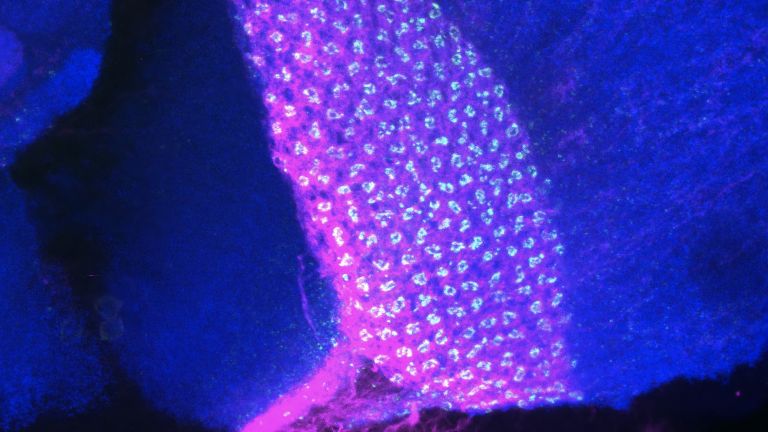
Noise also leaves its mark on the brain. This was proven in 2003 by neuroscientists Edward Chang and Michael M. Merzenich from the University of California, San Francisco. The US researchers exposed newborn rats to broadband noise for several months, which, according to the scientists, can be compared to normal ambient noise (unstructured continuous noise) in everyday life. Although this did not cause any direct damage to the hearing of the baby rats, it did delay the development of their auditory cortex. During the first month of life, neuron clusters form in this area that react selectively to certain sound patterns and frequencies. In the rodents that were exposed to continuous noise, this maturation process was still not complete even after several months. Admittedly, such massive exposure is anything but typical. However, later, less extreme studies confirmed the negative effects on brain maturation – even in the prefrontal cortex!
“The negative aspect is that noise can have serious effects on brain development,” Chang commented on his publication. Although rats are not humans, it is conceivable that similar circumstances could also leave lasting marks on human babies. But the researchers did not only have bad news. “On the positive side, the period during which affected children can be treated and catch up seems to be longer” than previously assumed. Once the young rats were relieved of the constant noise, they soon caught up in their maturation process – even as adult animals.
Nevertheless, great caution is advised when it comes to constant noise exposure. A whole series of studies has shown that it also impairs cognitive performance in schoolchildren and adults. In 2008, scientists at RWTH Aachen University asked test subjects to take part in a test in a simulated office. They played sounds through headphones to the volunteers that corresponded to the murmur of a conversation in the next room – sometimes at a volume as if it were coming through a thick wall, sometimes through a thin one. At the same time, the test subjects were asked to memorize numbers and later reproduce them in the order they had memorized them. As a control, they listened to the conversation at full volume in further rounds, and on another occasion, they were allowed to memorize without disturbance.
The result: the test subjects found all background conversations disturbing. This was also reflected in their cognitive performance: the test subjects' memory was impaired, regardless of whether the conversation was whispered or at normal volume. Schoolchildren are already disturbed by acoustically unfavorable rooms that echo, as researchers in Aachen discovered in another study in 2010.
Young people in particular, but also older people, are considered to be particularly sensitive to noise. And even age-related hearing loss does not protect against noise. It is true that as hearing loss progresses, the threshold at which a person perceives sound at all and can therefore perceive it as noise increases. But in the range in which they can hear, older people are actually more sensitive. “The dynamic range becomes smaller. The range in which hearing begins is higher, but the pain threshold decreases,” says hearing researcher Holger Schulze, professor of experimental otolaryngology at the University of Erlangen-Nuremberg. And every bit of damage contributes to progressive hearing loss. Reason enough, then, to appreciate and protect our hearing and its extraordinary capabilities. Silence, by the way, has a distinctly healing effect. It relaxes and strengthens the psyche, allowing us to reconnect with ourselves. It doesn't necessarily have to be in the desert; a local forest works just as well.
Further reading:
- Homma et al; Auditory Cortical Plasticity Dependent on Environmental Noise Statistics; Cell Rep 2020; https://doi.org/10.1016/j.celrep.2020.03.014
- Bures et al; The influence of developmental noise exposure on the temporal processing of acoustical signals in the auditory cortex of rats; Hearing Research 2021; https://doi.org/10.1016/j.heares.2021.108306
- Hayes et al; Neurophysiological, structural, and molecular alterations in the prefrontal and auditory cortices following noise-induced hearing loss; Neurobiology of disease 2024; https://doi.org/10.1016/j.nbd.2024.106619
- Gheller et al; The effects of noise on children‘s cognitive performance; Environment and Behavior (EAB) 2023; https://doi.org/10.1177/00139165241245
- Jafari et al; The effect of noise exposure on cognitive performance and brain activity patterns; Macedonian Journal of Medical Sciences 2019; https://doi.org/10.3889/oamjms.2019.742
First published on July 19, 2012
Last updated on November 18, 2025