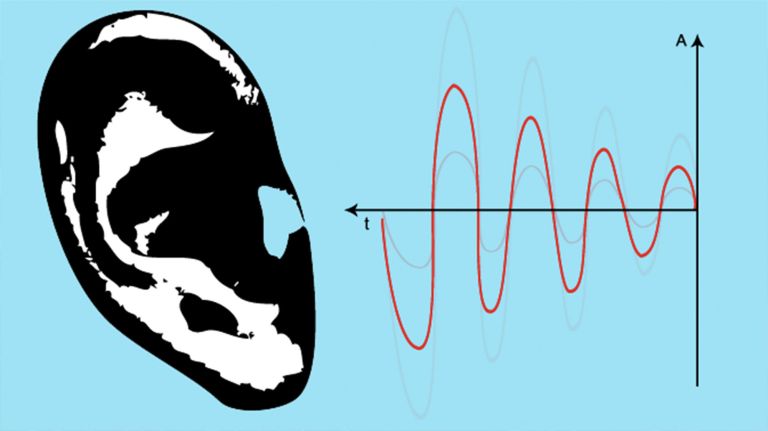
Hearing: Structure of the Ear
Published: 23.10.2025
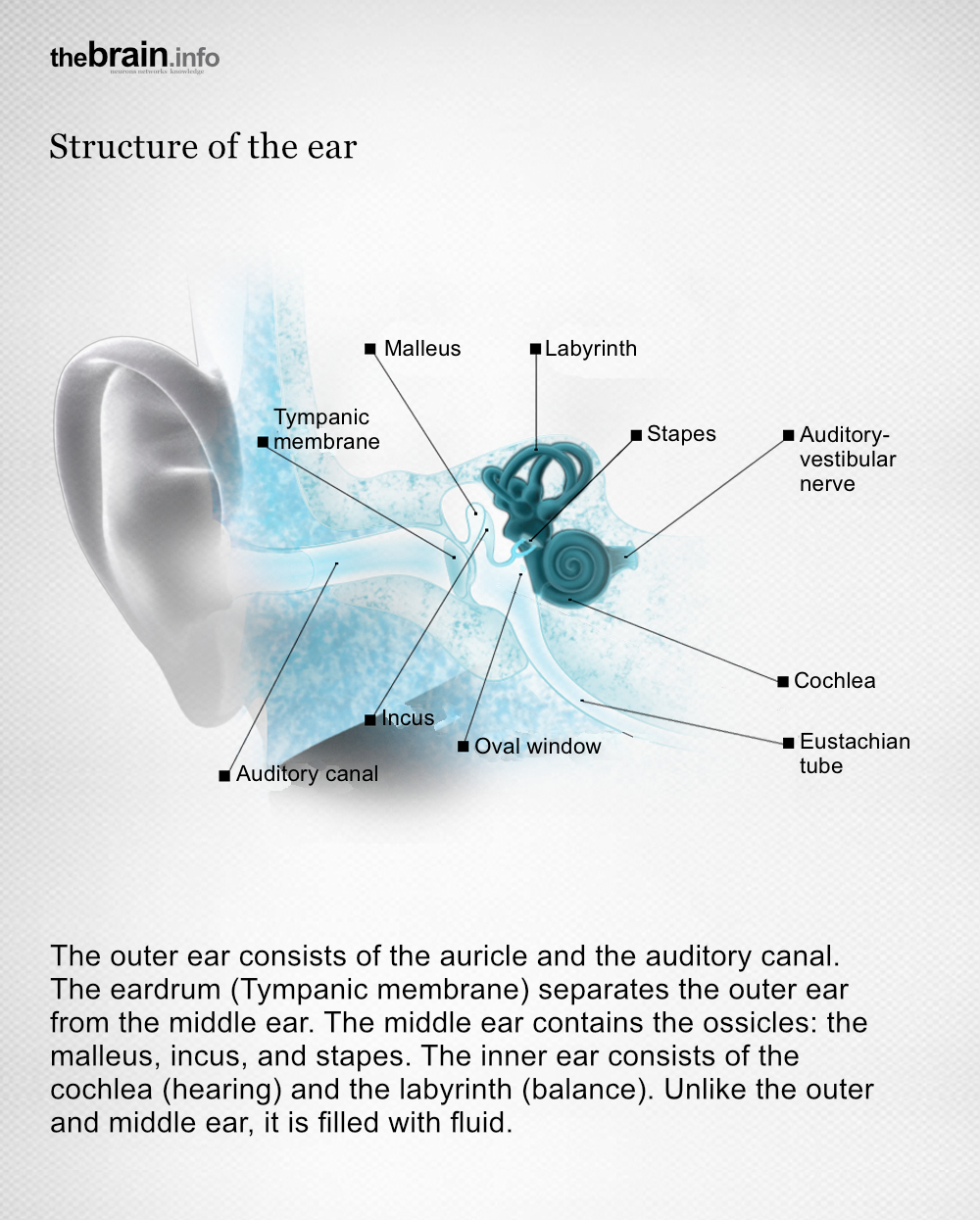
Diagram of the Ear: The outer and Middle Ear conduct sound waves to the inner ear. There, the Cochlea converts the acoustic signals into electrical impulses.
You can read more in our article by Dr. Christian Wolf ▸ Hearing – More than just Sound and Vibration
Ear
auris
The ear is not only the organ of hearing, but also of balance. A distinction is made between the outer ear with the auricle and external auditory canal, the Middle ear with the eardrum and ossicles, and the actual hearing and balance organ, the inner ear with the Cochlea and semicircular canals.
Middle ear
auris media
The eardrum forms the boundary between the outer ear and the middle ear. The Ossicles – the malleus, incus, and stapes – transmit the vibration of the eardrum to the inner ear via the oval window. The middle ear is filled with air.
Cochlea
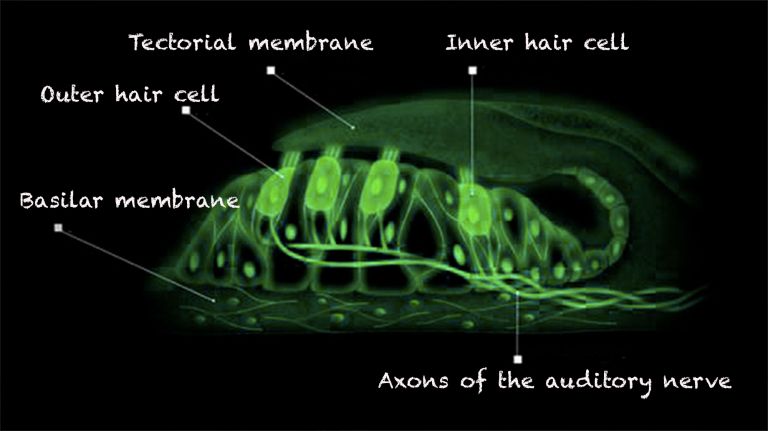
The cochlea is the part of the inner ear that contains the organ of Corti, which is responsible for converting acoustic signals into nerve impulses.
Ear
auris
The ear is not only the organ of hearing, but also of balance. A distinction is made between the outer ear with the auricle and external auditory canal, the middle ear with the eardrum and ossicles, and the actual hearing and balance organ, the inner ear with the cochlea and semicircular canals.
Middle ear
auris media
The eardrum forms the boundary between the outer ear and the middle ear. The ossicles – the malleus, incus, and stapes – transmit the vibration of the eardrum to the inner ear via the oval window. The middle ear is filled with air.
Cochlea
The cochlea is the part of the inner ear that contains the organ of Corti, which is responsible for converting acoustic signals into nerve impulses.
Ossicles
The three bones located in the middle ear – the stapes, malleus, and incus – are known as the ossicles. These are the smallest bones in the human body. They mechanically transmit sound waves from the eardrum to the cochlea.