Successful aging

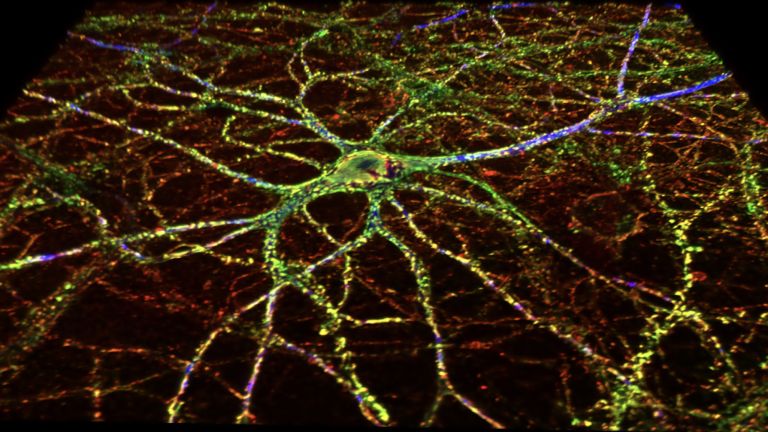
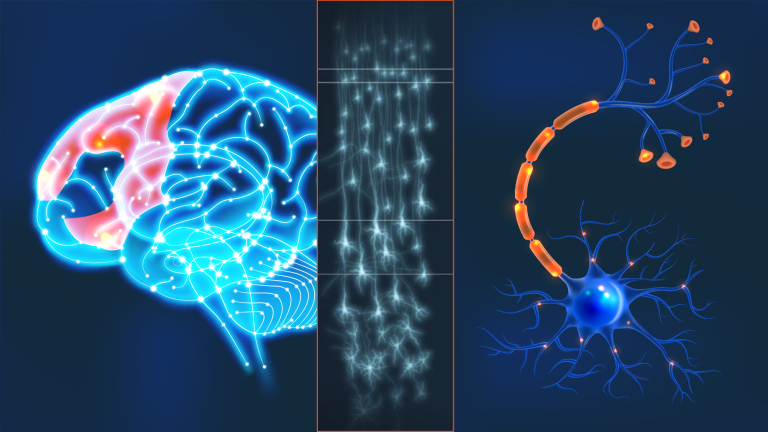
Our brain: billions of neurons and glial cells, interlocked with blood vessels and extracellular matrix, finely wrought in function and structure, enabling all our percieving, thinking, and acting. For most of us, this works very well. And that's what really matters when it comes to all the proteins, ion channels, and molecules: our brain has to work.
Unfortunately, it comes with a built-in half-life: at some point, our reflexes slow down, our memory first develops gaps, then cracks, and some of us will eventually forget our own personalities. But some are lucky: so-called superagers, who even in old age still have the cognitive abilities of a 50- or 60-year-old – just as if their brains were a good 30 years younger than their date of birth suggests. The DFG Collaborative Research Center 1436 has succeeded in persuading a large group of these superagers to participate in its research. After all, they are not only of interest to science, but to each and every one of us.
In this topic, you will learn what makes a superager – beyond the genetic lottery. We can reveal one thing here: effort plays an important role. Or, as Nora Schultz puts it in her article ▸ The Old, Healthy Brain: if you want to stay young, behave that way.