Living with, not despite, Multiple Sclerosis
A diagnosis of multiple sclerosis is initially a shock. However, there are many things you can do to take control. Don't let yourself be discouraged.
Scientific support: Prof. Dr. Ralf Gold
Published: 15.10.2025
Difficulty: easy
- Multiple sclerosis is an inflammatory disease of the nervous system characterized by the progressive damage of the insulating layer around nerve fibers. The medical cause of MS has not yet been fully clarified.
- Multiple sclerosis varies greatly in its progression between individual patients. However, the initial symptoms often include sensory disturbances in the arms or legs, as well as visual disturbances, coordination problems, or balance issues. In most cases, MS progresses in episodes. This is characterized by so-called relapses followed by remission and symptom-free intervals.
- Despite significant medical advances, there is currently no therapy that can cure multiple sclerosis. However, a variety of available immunological treatment options can help you live your life as unaffected by the disease as possible. Your neurologist can recommend the best therapy for you.
- Stay active and exercise. However, make sure you find the right sport for you and do not overexert yourself. During a flare-up, however, you should refrain from physical activity, apart from physical therapy.
- MS can often cause periods of Depression and anxiety, which can greatly reduce your quality of life. Discuss this with your doctor and seek help.
- Involve your loved ones in your life and discuss your concerns, fears, and needs openly and honestly. Make it clear what you want and how this can be integrated into everyday life. This way, everyone can be more responsive to each other and conflicts and disappointment can be avoided in advance.
Multiple sclerosis
encephalomyelitis disseminata
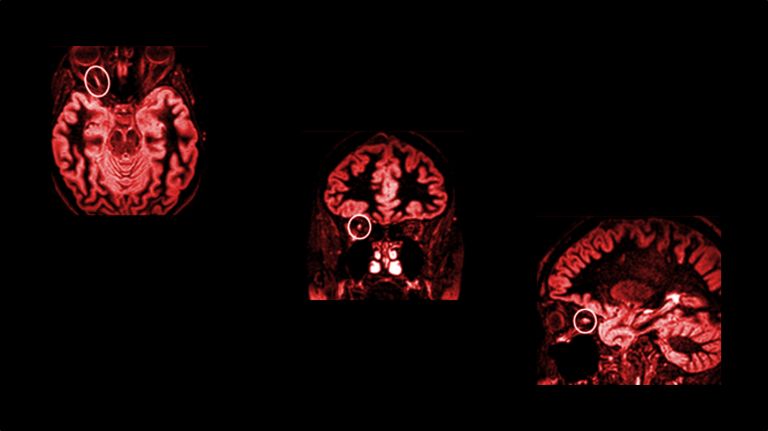
A common neurological disease that predominantly occurs in young adults. For reasons that are still unclear, the body's own cells attack and destroy the myelin sheaths of nerve cells. This can happen throughout the central nervous system, which is why two different multiple sclerosis patients can suffer from very different symptoms. Common symptoms include visual disturbances, numbness in the arms and legs, but also coordination problems, muscle weakness, and bladder problems.
Depression
A mental illness whose main symptoms are sadness and a loss of joy, motivation, and interest. Current classification systems distinguish between different types of depression.
A diagnosis of Multiple sclerosis is not something you can just “shrug off.” You are bound to feel a great deal of uncertainty and fear, and you may be angry and frustrated. But life with MS is possible and feasible!
Multiple sclerosis
encephalomyelitis disseminata
A common neurological disease that predominantly occurs in young adults. For reasons that are still unclear, the body's own cells attack and destroy the myelin sheaths of nerve cells. This can happen throughout the central nervous system, which is why two different multiple sclerosis patients can suffer from very different symptoms. Common symptoms include visual disturbances, numbness in the arms and legs, but also coordination problems, muscle weakness, and bladder problems.
What is multiple sclerosis?
Sensory disturbances (sensory symptoms) and disturbances of muscle function (motor symptoms) are common. The first group includes visual disturbances, numbness, tingling, and other unusual sensations, as well as lightheadedness and dizziness, and difficulties achieving optimal sexual function in both sexes. Motor symptoms include difficulty walking or maintaining balance, tremors, weakness, stiffness, constipation, and problems controlling urine and stool (incontinence).
All of these symptoms are often difficult or impossible to predict, and episodes (known as relapses) can occur out of the blue. These usually subside within days or weeks, leading to partial or complete recovery (remission). However, in some cases, remission may not occur, and the impairment may remain. In general, there is great variability between individual patients in terms of the severity, duration, and frequency of relapses and remission. This means that your individual case cannot be compared with that of other patients.
Multiple sclerosis is a multifaceted disease that can progress differently in each person affected. While the majority of patients experience a relapsing-remitting course characterized by acute deterioration followed by improvement (remission), approximately ten percent have a progressive form of the disease that is accompanied by steady – sometimes barely noticeable – deterioration. Learn about the different forms of MS and familiarize yourself with the various treatment options. Even though multiple sclerosis is currently incurable, there are several ways to positively influence its course and thus your quality of life. The relapsing form of multiple sclerosis in particular can now be treated very effectively. Together with other medical advances, this has meant that patients with MS can now live to almost the same age as those without the disease.
Multiple sclerosis
encephalomyelitis disseminata
A common neurological disease that predominantly occurs in young adults. For reasons that are still unclear, the body's own cells attack and destroy the myelin sheaths of nerve cells. This can happen throughout the central nervous system, which is why two different multiple sclerosis patients can suffer from very different symptoms. Common symptoms include visual disturbances, numbness in the arms and legs, but also coordination problems, muscle weakness, and bladder problems.
Myelin
Myelin is a fatty substance produced by glial cells. It envelops the axons (long, fiber-like extensions) of nerve cells and insulates them, preventing messages from passing uncontrollably to neighboring nerve cells. This also greatly accelerates conduction velocity.






What can be done about multiple sclerosis?
Despite major medical advances, there is currently no medication that can cure Multiple sclerosis However, there are ways to positively influence the course of the disease in order to enable you to enjoy the highest possible degree of independence and quality of life.
In the vast majority of cases, once MS has been diagnosed, basic/long-term therapy is recommended to slow down the progression of the disease: nowadays, the tendency is to use highly effective drugs at an early stage. Your neurologist will discuss the best therapy for you and work with you to determine an individual treatment approach. Many patients find it irritating that they have to take medication and tolerate side effects even though they have relatively few symptoms. Regular treatment can also make the disease a greater focus of their lives, which means additional stress. However, high adherence to therapy is essential for optimal effectiveness, which is why you should always follow your doctor's recommendations.
In the last decade, doctors recommended interferon-beta or glatiramer acetate for relapsing-remitting MS, or newer oral therapies such as dimethyl fumarate and teriflunomide. Today, more highly active drugs are used at an early stage, such as natalizumab, fingolimod, ocrelizumab, cladribine, or alemtuzumab. If secondary progressive MS with disease activity is present, the (German) guidelines recommend siponimod, interferon-beta, or cladribine, or CD20 antibodies such as ocrelizumab.
In addition to medication, exercise and physical activity have become established as ways in which you can influence MS yourself. Exercise also has a positive effect on your mood, well-being, and zest for life. So, stay active wherever you can: take the stairs instead of the elevator, walk or ride your bike instead of taking the car or bus. Get involved in sports clubs and take up a new sport you've always dreamed of trying. Of course, you should not lose sight of your MS and respect your limits. It is best to ask your neurologist and also find out about physiotherapy, occupational therapy, and speech therapy services.
Multiple sclerosis
encephalomyelitis disseminata
A common neurological disease that predominantly occurs in young adults. For reasons that are still unclear, the body's own cells attack and destroy the myelin sheaths of nerve cells. This can happen throughout the central nervous system, which is why two different multiple sclerosis patients can suffer from very different symptoms. Common symptoms include visual disturbances, numbness in the arms and legs, but also coordination problems, muscle weakness, and bladder problems.
A life worth living with MS – is that possible?
Many patients with Multiple sclerosis experience phases in which they feel very depressed and anxious. If you notice that this is beginning to limit your everyday life and your zest for life, then it is time to discuss this with your doctor or neurologist. You may also experience increased exhaustion and chronic fatigue, which you should also discuss with your doctor. Do not hesitate to mention any other symptoms that are affecting your quality of life – do not be ashamed of your worries and fears but maintain an open and honest relationship with your doctor and your family. This is the only way to ensure that you receive the best possible help.
Learn about multiple sclerosis and try to network with other people affected by the disease. Good places to start are the national MS societies, and in many cities, there are also MS networks that meet regularly. Often, simply getting to know other patients can alleviate your own fears and show you new ways of dealing with the disease.
Expert advice from Dr. Judith Bellmann-Strobl (specialist in neurology), head of the University Outpatient Clinic for Neuroimmunology, Charité Universitätsmedizin Berlin.
Multiple sclerosis
encephalomyelitis disseminata
A common neurological disease that predominantly occurs in young adults. For reasons that are still unclear, the body's own cells attack and destroy the myelin sheaths of nerve cells. This can happen throughout the central nervous system, which is why two different multiple sclerosis patients can suffer from very different symptoms. Common symptoms include visual disturbances, numbness in the arms and legs, but also coordination problems, muscle weakness, and bladder problems.
Further reading
- T. J. Murray & Nancy J. Holland: Multiple sclerosis A Guide for the Newly Diagnosed.
- Rosalind Kalb: MS for Dummies.
- Multiple Sclerosis Trust (UK). URL: https://mstrust.org.uk/ [as of 06/15/2025]
Multiple sclerosis
encephalomyelitis disseminata
A common neurological disease that predominantly occurs in young adults. For reasons that are still unclear, the body's own cells attack and destroy the myelin sheaths of nerve cells. This can happen throughout the central nervous system, which is why two different multiple sclerosis patients can suffer from very different symptoms. Common symptoms include visual disturbances, numbness in the arms and legs, but also coordination problems, muscle weakness, and bladder problems.
First published on January 30, 2017
Last updated on October 15, 2025