Structure and Function of Neural Networks
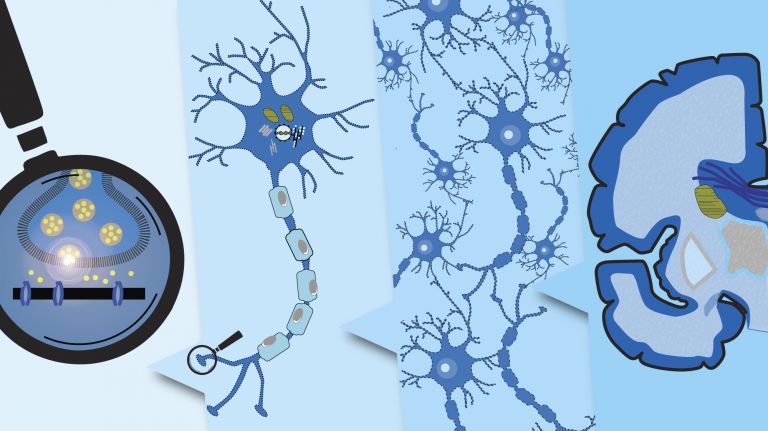
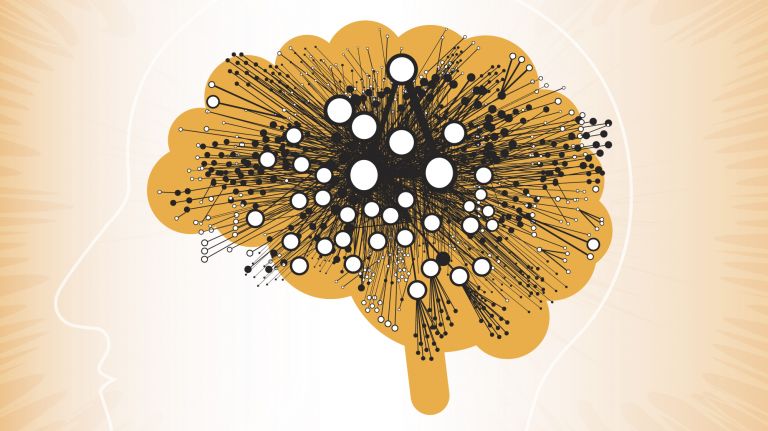
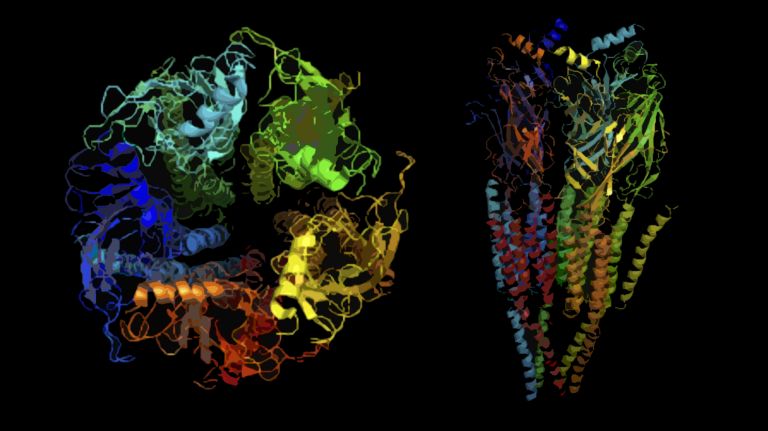
The problem with the brain is that its organization is so incredibly complex. There’s the level of brain regions and structures – the Visual cortex here, the Basal ganglia there. Then there are the individual cells with their complex communication at the Synapse. And then these cells form networks in all sorts of shapes and sizes that pay no heed to structures or regions. There are still many blank spots on our map of the brain – often just the size of a molecule, and yet crucial to our overall understanding.
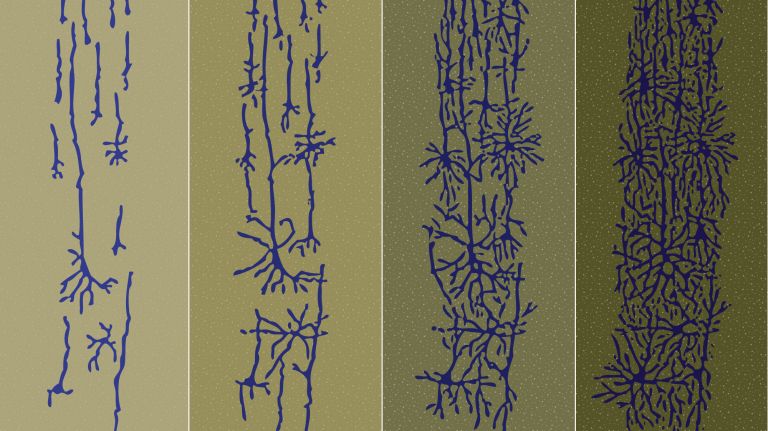
So what do these networks look like? How are they organized? How do they regenerate when damaged? How flexible are they? How is the fate of each individual fetal cell determined? And how does all of this ultimately give rise to our behavior?
Questions like these take us deep into the engine room of the nervous system – into its structures and functions. The processes here are small-scale and mechanistic, yet also highly dynamic and complex. Taken together, this is where we find the foundations for the miracle of life.
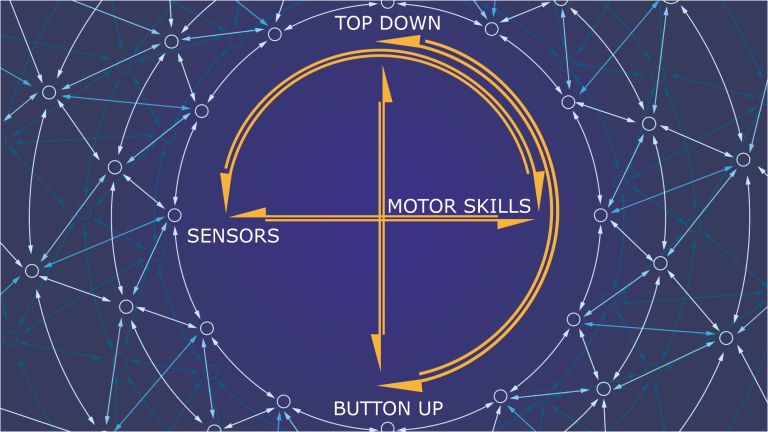
Collaborative Research Center 870 operated precisely there, within the dynamic processes somewhere between sensory and motor functions, bottom-up and top-down, function and assembly. It is a vast field that we are exploring step by step in three phases:
- Phase 1 examines the flexible nervous system, with the introduction ▸ Well-Connected by Janosch Deeg.
- Phase 2 focuses on the individual cell – how it works, what it can do, and why, after all, more than one is needed. Nora Schulz introduces the topic with the text ▸ The Secret to Success: Communication.
- In Phase 3, we’ll explore a new perspective on the brain – one that challenges existing textbook knowledge. Nora Schulz offers a glimpse into this in her article ▸ Senses and Actions.
The article ▸ The Wonders of Life provides a broader picture of these questions. We hope you enjoy exploring a topic that’s right at the heart of life.
Visual cortex
The visual cortex refers to the areas of the occipital lobe that are involved in processing visual information. These include the primary visual cortex and the associative visual cortices V1 to V5. According to Brodmann, the visual cortex comprises areas 17, 18, and 19.
Basal ganglia
Nuclei basales
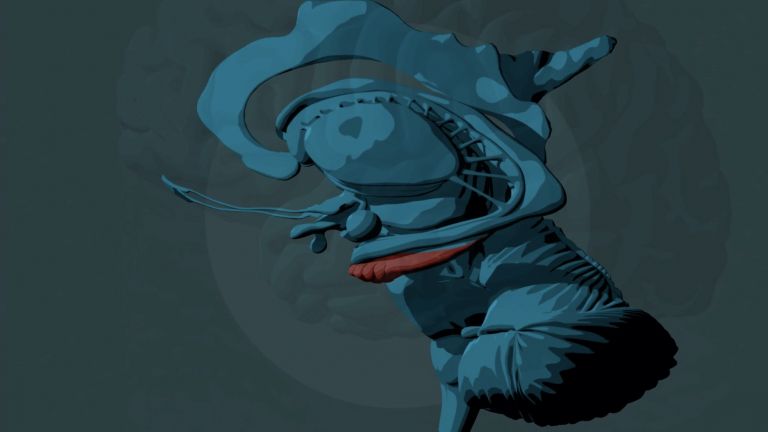
The basal ganglia are a group of subcortical nuclei (located beneath the cerebral cortex) in the telencephalon. The basal ganglia include the globus pallidus and the striatum, and, depending on the author, other structures such as the substantia nigra and the subthalamic nucleus. The basal ganglia are primarily associated with voluntary motor function, but they also influence motivation, learning, and emotion.
Synapse
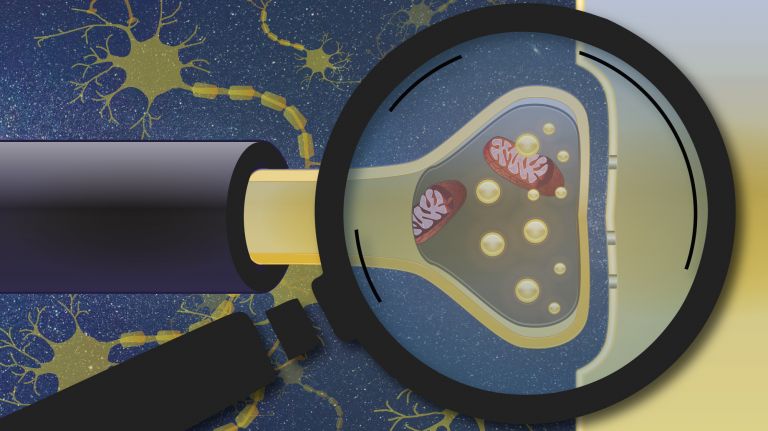
A synapse is a connection between two neurons and serves as a means of communication between them. It consists of a presynaptic region – the terminal button of the sender neuron – and a postsynaptic region – the region of the receiver neuron with its receptors. Between them lies the synaptic cleft.