Structure of a Neuron
Published: 07.05.2012
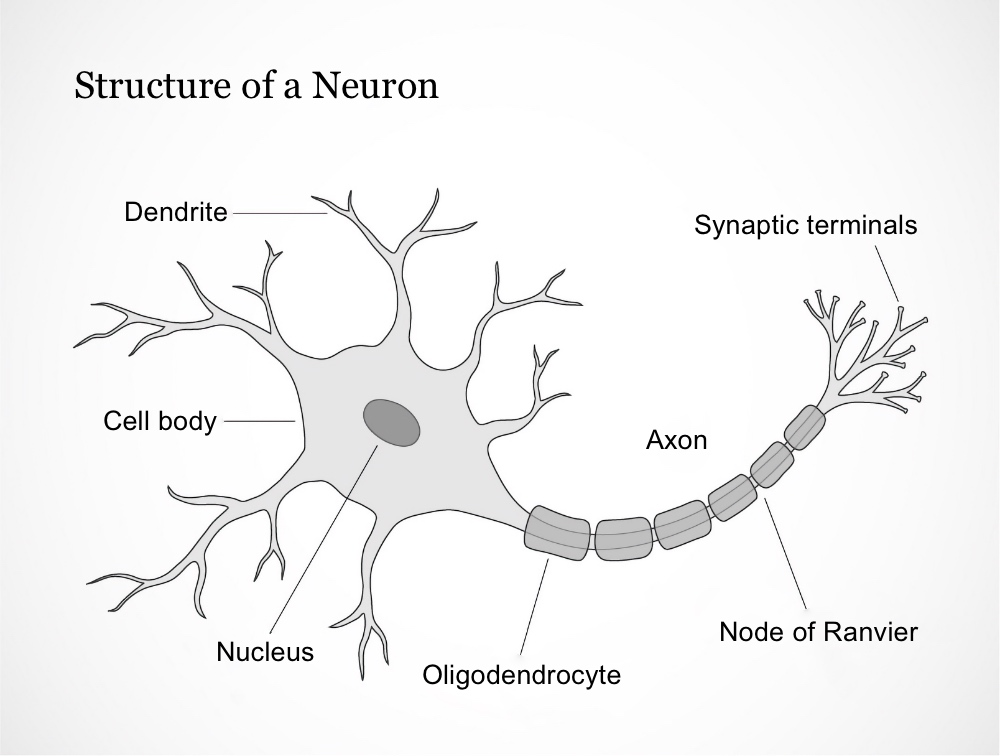
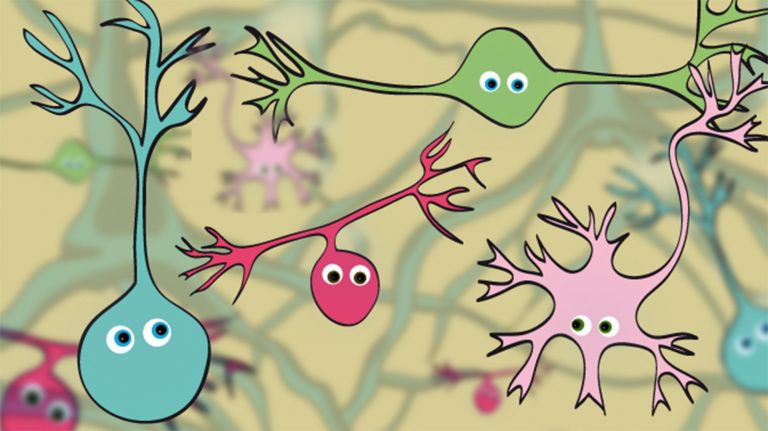
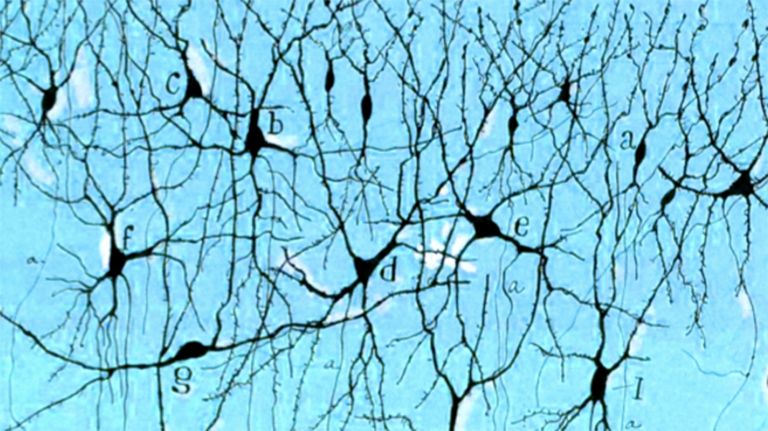
A Neuron consists of a cell body – like all other cells – but it also has extensions. Receiving extensions are called dendrites, while sending extensions are called axons.
You can find more information on nerve cells and how they communicate in our article by Anna Corves. ▸ Nerve cells in conversation
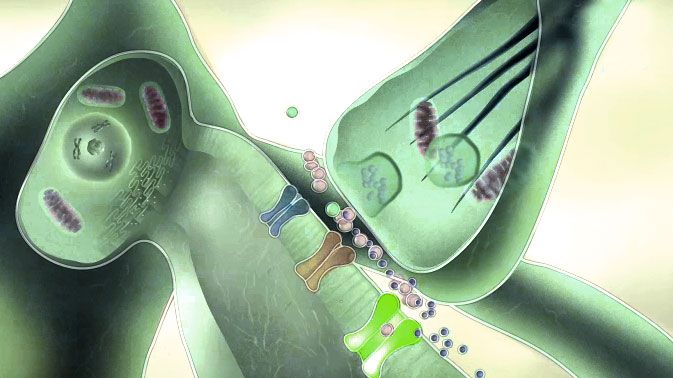
A neuron is a specialized cell in the nervous system that is responsible for processing and transmitting information. It receives signals via its dendrites and transmits them via its Axon. Transmission occurs electrically within the neuron and, between neurons, usually chemically via synapses.
Neuron
A neuron is a specialized cell in the nervous system that is responsible for processing and transmitting information. It receives signals via its dendrites and transmits them via its axon. Transmission occurs electrically within the neuron and, between neurons, usually chemically via synapses.
Axon
axon
The axon is the extension of the nerve cell that is responsible for conducting nerve impulses to the next cell. An axon can branch out many times, reaching a large number of downstream nerve cells. It can be more than a meter long. The axon ends in one or more synapses.