Consciousness in a Physical World

How is consciousness related to neural activity in the brain? And how can consciousness even exist in a physical world? For millennia, people have been trying to solve these mysteries. Philosopher Michael Pauen provides an overview of the various theories.
Published: 31.12.2025
Difficulty: intermediate
- For millennia, people have been pondering how body and mind are connected; today, the focus is on how we can use knowledge about neural activity in the brain to explain consciousness.
- In philosophy, two distinct approaches to the mind-body problem have emerged: monism and dualism. According to dualism, material and mental things are two completely different phenomena. Monism, on the other hand, assumes that there is only one kind of thing and process and that the mind is also a physical phenomenon.
- The different variants of dualism differ primarily in their assumptions regarding whether mental processes are causally effective. Interactionist dualism affirms this. According to this position, body and mind interact with one another. Epiphenomenalist dualism denies this. According to it, only the brain is causally effective; consciousness is merely an ineffective byproduct.
- Monists deny that material and mental things or processes differ from one another in principle. Radical materialists claim that ultimately only material processes matter. The eliminative materialists go the furthest in this regard. They deny that there is such a thing as consciousness at all. Identity theorists, on the other hand, accept the existence of consciousness but believe that conscious processes are identical to physical activities in the brain.
- Functionalism and panpsychism represent two further important approaches: The former asserts that conscious processes are fundamentally to be understood through their functional role – that is, their typical causes and effects. This would mean, for example, that intelligent computers could also be conscious, provided their information-processing processes have the same function as the corresponding processes in the human brain. Panpsychists believe that ultimately all material processes are simultaneously mental processes.
- In recent years, the question of whether – and, if so, how – neuroscientific findings can also contribute to explaining qualitative aspects of conscious experiences, such as pain or color perceptions, has played an increasingly important role. In many cases, however, an insurmountable “explanatory gap” or a “difficult problem of consciousness” is perceived here.
Prof. Dr. Michael Pauen is one of Germany’s most renowned philosophers in the field of philosophy of mind. He studied in Marburg, Frankfurt am Main, and Hamburg, and served as a visiting professor at the Institute for Advanced Study in Amherst, Massachusetts, as well as a fellow at Cornell University and the Hanse-Wissenschaftskolleg in Delmenhorst. In 1997, he received the Ernst Bloch Award. Michael Pauen leads a research group on the philosophy of mind at the Berlin School of Mind and Brain at HU Berlin.
Dualism
Evidence of an interest in problems of the mind can already be found in the oldest surviving documents of human culture, e.g., in the cave paintings of Lascaux, in Egyptian Books of the Dead, or in the biblical story of creation. In most cases, the underlying conceptions are dualistic; the mind is imagined, for example, as a soul independent of the body, taking the form of a breath or a bird. Such conceptions of the soul are also found in many non-European cultures.
They are intended not only to explain mental faculties but also the animacy of the human body; souls are also attributed the ability to detach themselves from the body and survive it. The first philosophical attempts at clarification can then be found in classical Greek philosophy, in Neoplatonism, in Augustine, and later in Descartes.
Interactionist Dualism: The Interaction of Mind and Matter
Descartes systematizes the dualism of his predecessors by viewing mind and body as fundamentally different substances. On the one hand are the “res extensae,” the extended material things, which include the human body; on the other hand is the mind as an immaterial and non-extended “res cogitans,” characterized by the capacity for thought.
Despite all their differences, both substances are supposed to interact with one another: mental phenomena such as acts of will can influence the brain and body; conversely, physical activities affect the mind through the sense organs. This interactionist dualism appears intuitively plausible at first glance. In fact, however, even Descartes’ contemporaries had problems with the interaction of mind and brain. For interaction presupposes that non-physical processes influence the physical world, yet this is precisely what is ruled out by the law of conservation of energy, which Descartes himself accepted.
Epiphenomenalism: Consciousness as an Ineffective Side Effect
Epiphenomenalists deny that the mind has any influence on physical processes at all and thus believe they are sidestepping the problems associated with the interaction of mind and brain. In their view, only physical processes are effective; consciousness is a mere side effect, an epiphenomenon of brain processes.
The English biologist and epiphenomenalist Thomas H. Huxley (1825–1895) compares consciousness to the whistle of a steam locomotive: triggered by the locomotive’s steam, the whistle signals the departure but does not itself contribute causally to the departure. Similarly, sensations of pain depend on activity in the brain; however, they themselves have no effect on either our thinking or our behavior. Even our pain-contorted face is explained not by the experience of pain, but solely by physical processes.
Epiphenomenalists have attempted to cite some findings of modern brain research as evidence for their theory. One example is the experiments of the American neurophysiologist Benjamin Libet (1916–2007), who sought to show that our conscious volitional decisions are not among the causes of our actions: at the moment of the supposed decision, our actions have long since been initiated by neural processes.
It is unclear, however, whether Libet’s experiments can support epiphenomenalism. For one thing, the experiments do not demonstrate the general ineffectiveness of acts of will; moreover, the experiments themselves are controversial.
Epiphenomenalism itself also has many critics. By claiming that mental processes are ineffective, it undermines important opportunities to gain empirical knowledge about mental states. Since mental states are ineffective, their absence cannot make a difference either. No conceivable experiment can therefore dispel doubts about the existence of mental states. On the other hand, the question arises as to what evolutionary advantage consciousness can still offer given its ineffectiveness.
Monism
Monists are convinced that there is only one kind of thing. Historically, there have been both idealistic and materialistic forms of monism; today, most monists hold materialistic positions.




Eliminative Materialism: Consciousness as an Illusion
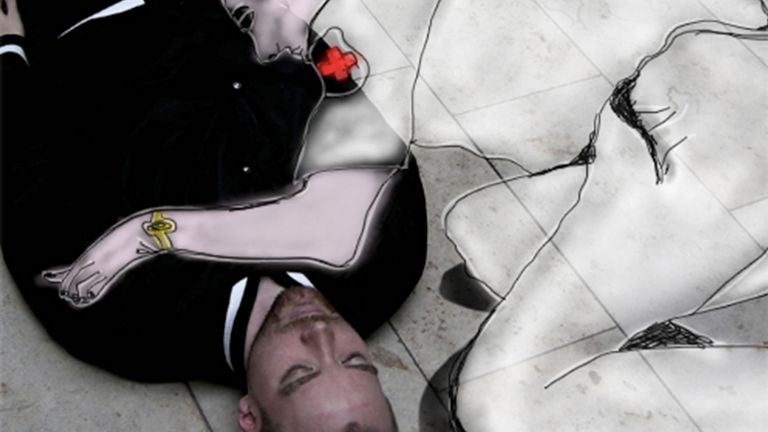
Eliminative materialists advocate a particularly radical form of monistic materialism. They accept only the existence of physical things and processes; conscious states, on the other hand, are mere illusions in their view.
The Canadian philosopher Paul Churchland of the University of San Diego, for example, regards states of consciousness as postulates of a pre-scientific everyday psychology that is about as credible as earlier speculations about the light-carrying ether, the legendary phlogiston, or the substance of heat. Our ancestors acted in a similarly speculative manner when they attributed feelings, thoughts, beliefs, and intentions to their fellow human beings in order to explain and predict their behavior. And at some point, they had internalized this everyday psychology to such an extent that they applied this theory to themselves as well and eventually came to feel as though they were experiencing these states themselves. But just as speculations about phlogiston, calor, and ether were ultimately replaced by better scientific theories, so too will everyday psychology be replaced in the future by a scientific theory of the brain. According to eliminativists, this theory will not only provide better explanations and predictions but will also ensure that our descendants no longer speculate about supposed mental states, but instead speak of facts concerning the brain.
Eliminative materialism enjoyed remarkable popularity in the 1980s and 1990s; since then, things have quieted down around this theory. This may also be due to a number of problems that eliminativists have so far failed to resolve. For instance, it seems difficult to imagine that our subjective experience of pain, colors, or Emotions is based on mere illusion. Furthermore, one might ask, for example, whether the postulate of mental states could have provided a plausible explanation for our ancestors, given that they did not know these states from their own experience.
Emotions
Neuroscientists understand "emotions" to be complex response patterns that include experiential, physiological, and behavioral components. They arise in response to personally relevant or significant events and generate a willingness to act, through which the individual attempts to deal with the situation. Emotions typically occur with subjective experience (feeling), but differ from pure feeling in that they involve conscious or implicit engagement with the environment. Emotions arise in the limbic system, among other places, which is a phylogenetically ancient part of the brain. Psychologist Paul Ekman has defined six cross-cultural basic emotions that are reflected in characteristic facial expressions: joy, anger, fear, surprise, sadness, and disgust.
Identity Theory: Consciousness is identical to brain processes
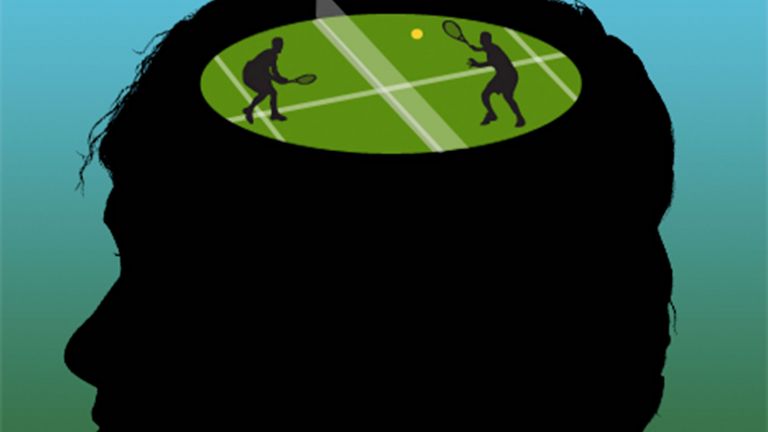
Identity theory is arguably the most important variant of monism; its earliest forms can be found as early as the 17th century in Spinoza, from whom the theory can be traced through Gustav Theodor Fechner and so-called psychophysical parallelism to the modern approaches of authors such as U.T. Place, J.J.C. Smart, Herbert Feigl, and David Armstrong. Contemporary identity theorists fundamentally assume that mental processes are biological processes in the brain – according to current knowledge, states of activity in neural networks.
But how can the activity of relatively simple nerve cells simultaneously be something as complex as a conscious sensation of pain or a thought about a scientific theory? To understand the answer to this question, one should first consider how an identity claim works. It is not a matter of two different things being identical to one another – which is impossible – or of a thing being identical to itself – which is trivially true. Rather, identity claims come into play when we believe that two different observations or descriptions refer to one and the same thing or event: For example, I can hear and see a guitar at the same time. The auditory experience of the guitar is not similar to the visual one, yet both can refer to one and the same object.
Similarly, the identity of the experience of pain and the underlying brain activity can be explained by the fact that in one case I have direct access to the subjective experience, whereas in the other I have objective access through the methods of brain research. Whether both approaches actually refer to the same process must be decided on a case-by-case basis. Furthermore, the reference to different approaches only makes it understandable why, despite all the differences, we can speak of a single object or process here. The question of why we experience a certain brain activity in a very specific way is not thereby answered.
Whether the identity theory is truly valid also depends on empirical data. However, the findings available so far support this theory. There are also theoretical objections. The most serious objection likely stems from the aforementioned problem of explanatory gaps. If we truly cannot explain consciousness through neural activity, this would be a serious objection to the assumption that consciousness is identical to neural activity. This problem is discussed further below.
Panpsychism: Everything is imbued with consciousness
An alternative to the identity theory is panpsychism, as advocated by, among others, the Australian philosopher David Chalmers. According to panpsychism, subjective experience is a fundamental building block in the structure of our world, similar to matter or gravity. This would mean that elements of consciousness must be present not only in every living being but also in inanimate objects. It is generally assumed that the degree of consciousness depends on the complexity of the object in question; thus, blades of grass would have a lower degree of consciousness than the human brain.
One objection is obvious: if one must rely on the complexity of the brain to explain human-like consciousness anyway, then panpsychism faces problems very similar to those of materialism. Critics therefore argue that the postulate of the ubiquity of consciousness does not help.
Functionalism: Computers with Consciousness
Many materialists assume that mental processes and consciousness can be described based on their function, i.e., their typical causes and effects. Such functions can be realized in different ways – just as an artificial hip joint made of metal can fulfill the same function as its natural counterpart made of bone and connective tissue.
So if consciousness can be understood in terms of its function, it should in principle be possible for an artificial neural network to attain consciousness – provided it accurately replicates the relevant functions of human consciousness. However, these functions are currently still largely unknown.
Admittedly, the question of consciousness does not yet really arise in the context of today’s AI systems. Yet the rapid advances in large language models and object recognition systems show that we must always expect surprises in the development of artificial Intelligence. In this respect, clearer criteria for consciousness and other higher cognitive functions would certainly be useful.
Intelligence
Intelligence
Collective term for human cognitive performance. According to British psychologist Charles Spearman, cognitive performance in different areas correlates with a general factor (g factor) of intelligence. This means that intelligence can be expressed as a single value. American psychologist Howard Gardner, among others, has developed a counter-concept to this, known as the "theory of multiple intelligences." According to this theory, intelligence develops independently in the following eight areas: linguistic, logical-mathematical, musical-rhythmic, visual-spatial, bodily-kinesthetic, naturalistic, intrapersonal, and interpersonal.
The difficult problem of consciousness: What is it like to be a bat?
In recent years, alongside the classic discussion of whether consciousness is a physical process, a second debate has emerged, as mentioned above: Can neuroscientific knowledge explain the qualitative nature of consciousness; can it thus make it understandable why we experience one form of neural activity as pain, while another as pleasure?
Many philosophers believe this is impossible in principle. In their view, nothing we can discover about neural activity can provide an answer to the question of why conscious experience has a certain qualitative character.
They cite a whole series of thought experiments intended to demonstrate this “hard problem of consciousness” or the “explanatory gap”: For instance, we can easily imagine so-called “philosophical zombies.” These zombies are physically and functionally identical copies of conscious people, yet they themselves possess no consciousness. Since unconscious zombies do not differ in any way from conscious people, even complete knowledge of the brain would not enable us to distinguish zombies from conscious people or to explain consciousness in any way. So is consciousness truly beyond scientific grasp?
Admittedly: Such thought experiments are very suggestive. And as long as we lack a reasonably satisfactory theory of the brain and consciousness, little will change in this regard. Yet in many other areas of science, there have been similarly skeptical intuitions in the past, as long as no solutions were in sight: For example, changes in the states of matter, human language ability, the difference between animate and inanimate nature, and even the “essence” of matter and force were once considered inexplicable. Eventually, solutions were found nonetheless, and afterward, the skeptical intuitions were quickly forgotten.
Of course, these considerations do not imply that we will eventually solve the truly extremely difficult problem of consciousness. But they should caution us against predicting the failure of future scientific approaches before we even know what those approaches are. Furthermore, the arguments of the explanatory skeptics contain a whole series of gaps and contradictions, as critics noted very early on. For example, if zombies – apart from consciousness – do not differ from conscious humans, then they too must be convinced that they possess consciousness, and their memories must correspond to ours. But if that is the case, how can I be sure that I have not spent my entire life so far as a zombie? My memories and beliefs would then be the same. But in doing so, the explanatory skeptics undermine our access to precisely those qualitative experiences that are at the heart of their approach.
As I said: None of this proves that we will ever truly be able to understand our brain – that is, one of the most complex systems known to us. But it does show that we should not confuse our current ignorance of central connections with the fundamental incomprehensibility of these connections. Perhaps, surprisingly, there are tricks that even we do not yet know.