Search
-
- Glossary
Beta-amyloid
A peptide consisting of 36 to 42 amino acids that is considered the main component of senile plaques and is believed to be responsible for the development of Alzheimer's disease. The starting product is the amyloid precursor protein (APP). Certain enzymes in the cell membrane cut the precursor protein into peptides of various sizes. Amyloids consisting of 40 and 42 amino acids are found in senile plaques, with the 42-amino-acid product forming aggregates particularly quickly, at least in the Petri dish. The normal function of beta-amyloid has not yet been conclusively clarified.
-
- Glossary
Beta waves
Electrical activity of the brain (brain waves) measured on the surface of the head or using electrodes implanted in the brain itself. If the frequency range of the measured activity is between 13 and 30 Hz, these are called beta waves. They are associated with normal waking states and alertness.
-
- Glossary
Betz giant cells
Betz giant cells are particularly large pyramidal cells in the primary motor cortex (area 4). They have very large cell bodies with a diameter of 100 µm and heavily myelinated axons that project directly into the spinal cord. This makes them part of the corticospinal neurons of the pyramidal tract. Although they make up only a small portion of the fibers of the pyramidal tract, they are functionally important for the control of voluntary movements, especially fine motor skills.
-
- Glossary
Biomarker
In medicine, a biomarker is a substance that provides information about the physiological state of an organism. Biomarkers can either be produced in the body itself or describe chemical compounds that doctors introduce into the body to test certain physiological functions. Several indicators, for example, are being discussed as possible biomarkers for Alzheimer's disease. These include the concentration of soluble amyloid precursor protein in the blood and the activity of the enzyme that cleaves the precursor protein to produce plaque-forming beta-amyloid. Disease-related changes detected by imaging techniques are also often referred to as biomarkers. For example, the breakdown of brain tissue can be detected by MRI.
-
- Glossary
Bipolar cells
The bipolar cell is a bipolar neuron, i.e., a neuron with one axon and one dendrite located in the middle layer of the retina. It transmits sensory information from the photoreceptors to the ganglion cells.
-
- Glossary
Bitter receptors
One of several groups of sensors that specialize in perceiving a specific taste quality. The sensory cells in which the taste receptors perform their function are located in the taste buds on the tongue and in the surrounding mucous membranes. Bitter receptors belong to the family of G protein-coupled receptors. A single cell can contain several different bitter receptors. As a result, it responds to different bitter substances with the same signal. This makes it very difficult for us to distinguish between individual bitter substances in terms of taste.
-
- Glossary
Blind spot
A blind spot in visual perception caused by the anatomy of the eye: since the optic nerve leaves the eye at the optic disc, there are no photoreceptors there – and no perception can occur. This blind spot is not consciously perceived.
-
- Glossary
Blood-brain barrier
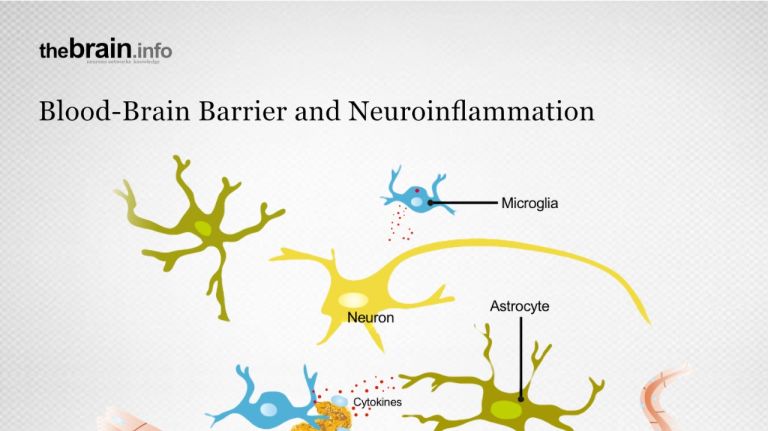
A selectively permeable membrane formed by cells in the walls of the capillary blood vessels in the brain. It protects the brain from harmful substances in the blood, but allows nutrients and oxygen to pass from the blood into the brain.
-
- Glossary
Semicircular canals
The three semicircular canals per ear are interconnected, fluid-filled tubes that are positioned almost at right angles to each other and belong to the balance organ in the inner ear (vestibular apparatus). They serve to register angular accelerations, i.e., rotational movements of the head.
-
- Glossary
Brain-computer interface
A direct interface between the brain and a computer. There are various approaches to developing brain-computer interfaces: invasive – via an electrode in the brain – as well as non-invasive – via EEG. They enable locked-in patients, for example, to communicate again. Another area of application is the control of arm or leg prostheses via peripheral nerves.