Search
-
- Glossary
Amacrine cells
Amacrine cells are interneurons of the retina. They are located between photoreceptors and bipolar cells on the one hand and ganglion cells on the other. The name was coined by Ramón y Cajal and means "without axon."
-
- Glossary
Anvil
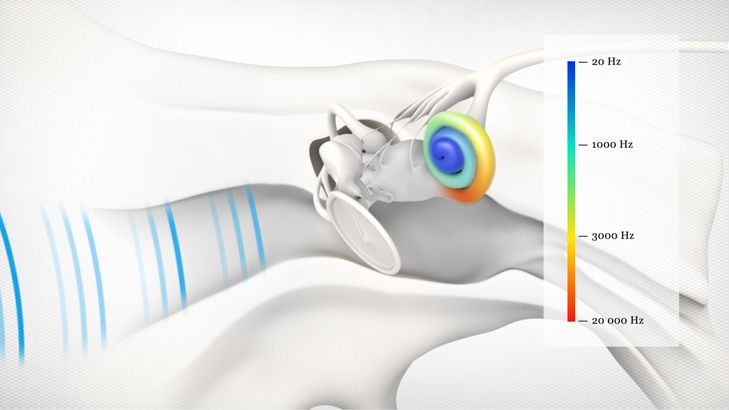
The middle of the three ossicles in the middle ear transmits the vibration from the malleus to the stapes.
-
- Glossary
Amnesia
A form of memory disorder that affects the memory for facts and events. The unconscious memory for, for example, sensorimotor skills such as driving a car or riding a bike remains intact.
-
- Glossary
Ampakine
A group of active substances that belong to the "neuroenhancers" and can improve cognitive performance. Among other things, they increase attention span, promote memory, and facilitate learning processes. Their effect is based on binding to AMPA receptors in the brain, which facilitates synaptic transmission at glutamatergic synapses and enhances overall neuronal signal transmission.
-
- Glossary
Amygdala
An important core area in the temporal lobe that is associated with emotions: it evaluates the emotional content of a situation and reacts particularly to threats. In this context, it is also activated by pain stimuli and plays an important role in the emotional evaluation of sensory stimuli. Inaddition, it is involved in linking emotions with memories, emotional learning ability, and social behavior. The amygdala is part of the limbic system.
-
- Glossary
Anosognosia
Literally, the term from Greek means "not recognizing" one's own neurological disease – for example, hemiplegia or deafness. Instead, patients confabulate (invent) reasons for the disorder or deny the disease altogether. Anosognosia usually occurs after damage to the right hemisphere in the fronto-parietal and insular areas and usually resolves after a few months.
-
- Glossary
Antagonist
Due to the lock-and-key principle, transmitters (messenger substances) can only bind to specific receptors. An antagonist can be so similar to this transmitter that it can bind to this receptor. It thus prevents the actual transmitter from activating the receptor and becoming effective. There are also antagonists that do not bind directly to the receptor but alter the "lock," i.e., the receptor, so that the key no longer fits.
-
- Glossary
Anterior cingulate cortex
The anterior cingulate cortex (cingulate gyrus) plays a role not only in autonomic functions such as blood pressure and heart rate regulation, but also in rational processes such as decision-making. This area of the brain is also involved in emotional processes, such as impulse control. Anatomically, the anterior cingulate cortex (ACC) is characterized by a large number of spindle neurons (Von Economo neurons). These special nerve cells have a long, spindle-shaped structure and have so far only been found in mammals such as primates, elephants, and some whale and dolphin species. Spindle neurons contribute to higher social and emotional processes such as self-awareness, empathy, and quick emotional decisions. In pain perception, it is particularly associated with the affective component of pain – including social pain, such as that experienced through exclusion.
-
- Glossary
Anterograde amnesia
A form of memory disorder in which the formation of new memories – i.e., the storage of new information – is no longer possible from the time of the damage. Memories from before that time can still be recalled. Those affected usually also forget their forgetfulness.
-
- Glossary
Apraxia
Difficulty performing a purposeful movement, such as grasping a glass or cutting with scissors. Depending on the form of apraxia, speech or facial expressions may also be affected. The cause is not muscle weakness or paralysis, but damage to one or more areas of the brain, e.g., as a result of a stroke. In other cases, however, it is congenital.