When Heart and Brain Suffer Together

The fact that the heart and the brain are closely linked is nothing new. Everyone knows that our brain must always be well supplied with oxygen and nutrients, which the heart delivers via the bloodstream. But the connection between the two runs deeper and also affects the psyche. If we are not doing well mentally, the heart can suffer, and conversely, heart disease can lead to mental illness.
Scientific support: Prof. Dr. Thomas C. Baghai
Published: 01.10.2022
Difficulty: easy
- Mental illness can put a strain on the heart, and vice versa.
- Examples include depression, anxiety disorders, post-traumatic stress disorder, dementia, and “broken heart syndrome.”
- The mechanisms of this mutual influence are diverse: key factors include inflammation, the autonomic nervous system, and stress cycles.
- In practice, patients should be treated as holistically as possible; unfortunately, this has not yet been sufficiently implemented.
There are a wide variety of studies examining the impact of exercise as an intervention for mental illness. Regular physical activity appears to be particularly helpful for anxiety disorders and Depression. It is important to note that exercise should not replace treatment with medication and/or psychotherapy but rather complement it, potentially enhancing the effects of these therapies. While it is not entirely clear which of the many sports are particularly effective, a combination of strength and endurance training yields the best results.
Looking ahead, exercise could also strengthen our cognitive abilities and lead to less cognitive decline in old age. However, studies have not yet been able to conclusively determine whether this can also prevent or treat dementia.
Depression
A mental illness whose main symptoms are sadness and a loss of joy, motivation, and interest. Current classification systems distinguish between different types of depression.
Dementia
Dementia
Dementia is an acquired deficit of cognitive, social, motor, and emotional abilities. The most well-known form is Alzheimer's disease. "De mentia" means "without mind" in English.
What does it actually mean to maintain a so-called healthy lifestyle? Although various professional organizations do not agree on this point entirely, the current state of research is quite well reflected in the tips compiled by the World Health Organization (WHO):
- Eat a healthy diet: Combine different types of foods, including fruits, vegetables, legumes, nuts, and whole grains, in sufficient quantities.
- Limit salt and sugar intake
- Reduce consumption of harmful fats (saturated and trans fats)
- Avoid harmful alcohol consumption
- Do not smoke
- Be physically active
- Check your blood pressure regularly
- Get tested for various diseases (such as HIV and tuberculosis, though the latter is less common, at least in Germany)
- Get vaccinated
- Practice safe sex
Studies have frequently shown that a Mediterranean diet and reduced consumption of red meat are beneficial. Some organizations and professional associations also recommend mental stimulation and continuing education, social engagement, and adequate sleep. It is also important to avoid stressors that contribute to illness and to work on managing your own stress. A strong social network can help by providing support during stressful situations. If you already have heart disease, diabetes, or similar conditions, these should, of course, be properly treated and monitored.
Even with clear guidelines, however, it’s not easy to actually put these tips into practice. Knowledge alone isn’t necessarily enough, and we find it difficult to change our habits.
The fact that the heart and the brain are closely linked is nothing new. Everyone knows that our brain must always be well supplied with oxygen and nutrients, which the heart delivers via the bloodstream. But the connection between the two runs deeper and also affects our mental health. If we’re not doing well mentally, our heart can suffer, and conversely, heart disease can lead to mental health conditions.
Anxiety and depression take a toll on the heart
According to a study by the European Society of Cardiology, about one-fifth of all patients in rehabilitation facilities for heart patients suffered from depression, anxiety disorders, or stress. This, in turn, affected the rehabilitation program itself, as patients with mental health issues often adhered less closely to the treatment plan. As a result, those affected quickly find themselves in a vicious cycle.
Conversely, a large-scale study led by Scott Lear at Simon Fraser University in Burnaby, Canada, shows that people who exhibit four or more symptoms of Depression have a 20 percent higher risk of heart disease and premature death. Nearly 150,000 people from 21 countries were followed over a nine-year period in this study.
Our cognitive abilities can also suffer when the heart is not healthy. While Alzheimer’s disease is the most common and best-known of the “memory disorders,” “vascular” dementias rank second, accounting for all or part of one-third of all cases. They arise, for example, when the brain is not supplied with enough blood. Blood pressure is a critical factor. If blood pressure is too high in early adulthood, the risk of pathological changes in brain structure increases decades later. This was a finding of the British Insight 46 study. More than 500 people born in 1946 were medically monitored throughout their lives for this study and were ultimately examined at age 70 using magnetic resonance imaging.
Depression
A mental illness whose main symptoms are sadness and a loss of joy, motivation, and interest. Current classification systems distinguish between different types of depression.
Broken heart syndrome – a drama straight out of a movie
One of the most dramatic examples of the interaction between the mind and the heart is broken heart syndrome. The symptoms resemble those of a heart attack, but there are no blockages in the arteries that could cause a heart attack. Instead, the left ventricle is enlarged for no apparent reason, which can lead to acute heart failure. In fact, the syndrome is not always recognized quickly, as its triggers can be varied. In movies and TV shows, it’s often portrayed this way: A patient has heart problems that cannot be explained by standard tests. At some point, a clever doctor realizes that it is the anniversary of a loved one’s death – and finally, the diagnosis is made.
In fact, in a large proportion of patients (depending on the study, approximately one-third to one-half), broken heart syndrome is triggered by physical stress, such as surgery or acute respiratory failure. However, these physically stressful situations are also accompanied by mental stress, which makes it difficult to clearly identify the triggers. Purely emotional causes are found in about one-third of those affected. These include the death of a loved one, as well as relationship conflicts, anxiety, or anger. For the remaining patients, the trigger cannot be identified at all. The good news: About 95 percent of those affected make a full recovery.
How the brain strains the heart
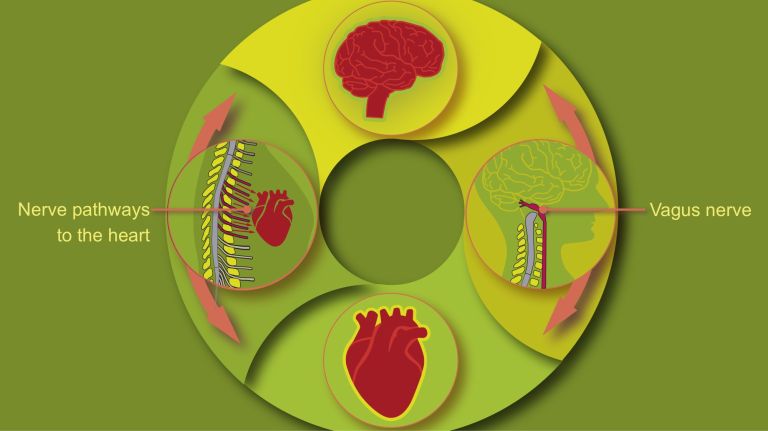
But how is it even possible that the mind can make the heart sick – and vice versa? One mechanism involves the autonomic nervous system, which causes the heart to beat faster during times of excitement. These physiological reactions are actually quite normal, but they can become unbalanced due to mental health conditions or chronic stressors. “If, for example, blood pressure remains chronically elevated, it can damage the coronary arteries and the heart muscle,” explains Prof. Dr. Christoph Herrmann-Lingen, Director of the Department of Psychosomatic Medicine and Psychotherapy at the University Medical Center Göttingen.
That would be the most direct way in which the heart is affected. In addition, there is the possibility that, in the course of a mental illness, stress hormones are released more frequently and chronically. These hormones affect not only the heart but also metabolism, causing, among other things, more lipids (fats) to be deposited in the coronary arteries. Furthermore, the body may enter a kind of permanent “fight-or-flight” state. This causes platelets to become more active and increases the tendency for blood to clot. In a fight-or-flight situation, this would be beneficial to stop bleeding more quickly if necessary. However, if this “state of readiness” persists over a longer period, it increases the risk of developing heart disease.
In addition, people experiencing psychological stress are at higher risk for unhealthy behaviors, such as smoking, using drugs, eating an unhealthy diet, or not getting enough exercise. Sleep can also play a role – sleep problems are among the symptoms of various mental disorders.



How the heart affects mental health
Even in the reverse scenario – namely, the impact of heart disease on mental health – not all mechanisms are yet fully understood. Part of the effect likely stems from the psychological Perception of heart disease. “The heart holds great symbolic significance for us as a source of strength and vitality,” says Herrmann-Lingen. “When it is damaged – by a heart attack, an arrhythmia, or other conditions – it represents a real threat.” This isn’t necessarily problematic at first and can even help us pay closer Attention to our health. However, if genuine anxiety disorders develop, this can lead to increased self-monitoring and, as a result, to more doctor visits, unnecessary medical tests, and consequently even greater anxiety.
It is clear that inflammatory reactions, depression, and heart disease share not only various symptoms but also common biological factors, such as inflammatory substances, hormonal imbalances, and genetic factors. Like heart disease, Depression can be fueled by an inflammatory reaction in the body, which in turn can lead to a reduction in social contact.
“One pathway we still know too little about involves the microbiome,” adds Herrmann-Lingen. It is well known that the microorganisms in our bodies influence the brain. However, the brain could also be altered by heart disease, which may also contribute to the development of depression.
Perception
The term describes the complex process of gathering and processing information from stimuli in the environment and from the internal states of a living being. The brain combines the information, which is perceived partly consciously and partly unconsciously, into a subjectively meaningful overall impression. If the data it receives from the sensory organs is insufficient for this, it supplements it with empirical values. This can lead to misinterpretations and explains why we succumb to optical illusions or fall for magic tricks.
Attention
Attention
Attention serves as a tool for consciously perceiving internal and external stimuli. We achieve this by focusing our mental resources on a limited number of stimuli or pieces of information. While some stimuli automatically attract our attention, we can select others in a controlled manner. The brain also unconsciously processes stimuli that are not currently the focus of our attention.
Depression
A mental illness whose main symptoms are sadness and a loss of joy, motivation, and interest. Current classification systems distinguish between different types of depression.
So what can be done?
It’s not always clear which problems arise first. And recognizing the connection is a challenge. In theory, all doctors should be aware of the possible interactions – the relevant guidelines on mental health and heart disease include information on this. “In practice, however, many doctors still focus on their core competencies and rarely look beyond their immediate scope,” says Herrmann-Lingen. This is understandable, if only due to a lack of time and financial constraints. Even in hospitals, it is difficult to finance psychiatric or psychological care in addition to cardiac treatment.
On a positive note, there are continuing education and training programs in which, for example, cardiologists and psychotherapists learn together and are thus prepared to address both areas. According to Herrmann-Lingen, this is still the minority, but at least it’s a start.
In any case, it is clear that patients must be treated as holistically as possible. If mental illness goes unaddressed, it can lead to patients failing to take their heart medications regularly or to heart disease being exacerbated or perpetuated through other mechanisms. Conversely, psychotherapy is only of limited help if patients are on the verge of a heart attack.
Doctors therefore advocate viewing patients as whole people and working together toward overall health – both physical and mental – rather than merely treating individual symptoms.
Further reading
- 20 Health Tips for 2020; https://www.who.int/philippines/news/feature-stories/detail/20-health-tips-for-2020 [Accessed October 31, 2026].