Serotonin
Published: 07.05.2012
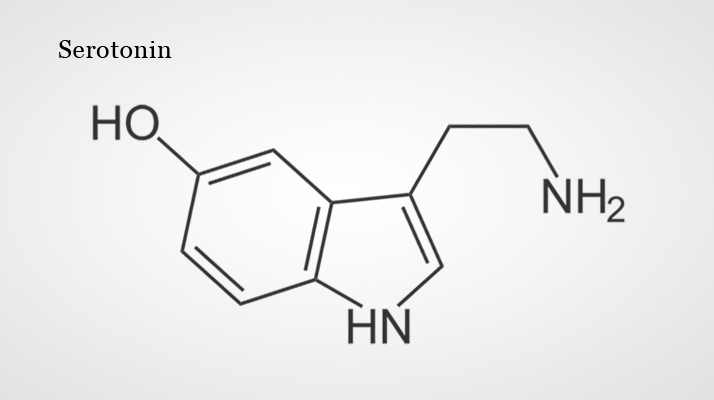
You can find out more about neurotransmitters in the brain in our article by Ulrich Pontes. ▸ Neurotransmitters – Messenger Molecules in the Brain
Serotonin
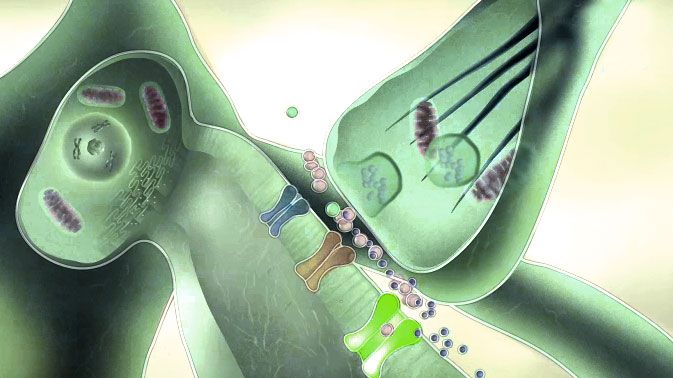
A Neurotransmitter that acts as a messenger in the transmission of information between neurons at their synapses. It is primarily produced in the Raphe nuclei of the Brain stem and plays a key role in sleep and alertness, as well as emotional well-being.
Neurotransmitter
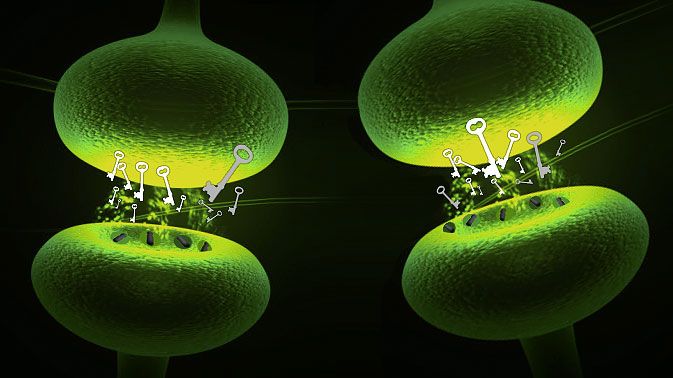
A neurotransmitter is a chemical messenger, an intermediary substance. It is released by the sender Neuron at the sites of cell-cell communication and has an excitatory or inhibitory effect on the receiver neuron.
Serotonin
A neurotransmitter that acts as a messenger in the transmission of information between neurons at their synapses. It is primarily produced in the raphe nuclei of the brain stem and plays a key role in sleep and alertness, as well as emotional well-being.
Neurotransmitter
A neurotransmitter is a chemical messenger, an intermediary substance. It is released by the sender neuron at the sites of cell-cell communication and has an excitatory or inhibitory effect on the receiver neuron.
Raphe nuclei
The raphe nuclei are located in the reticular system and are distributed throughout the brain stem. They belong to the ascending reticular activating system (ARAS) and are the site of serotonin production.
Brain stem
truncus cerebri
The "trunk" of the brain, to which all other brain structures are "attached," so to speak. From bottom to top, it comprises the medulla oblongata, the pons, and the mesencephalon. It transitions into the spinal cord below. It is a center for vital functions such as breathing and heartbeat and contains ascending and descending pathways between the cerebrum, cerebellum, and spinal cord.
Neuron
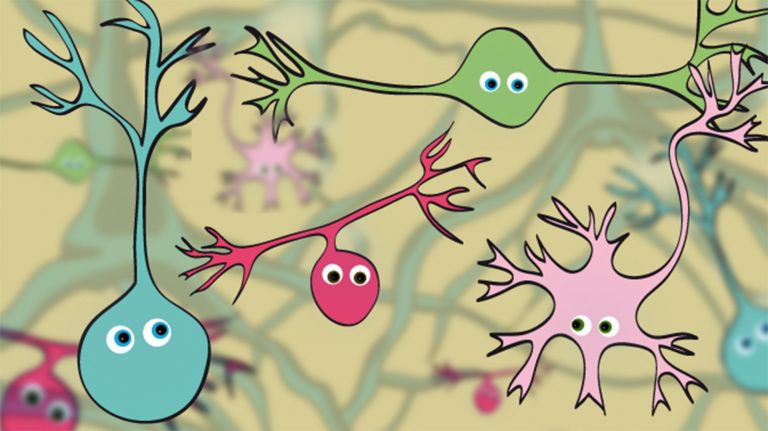
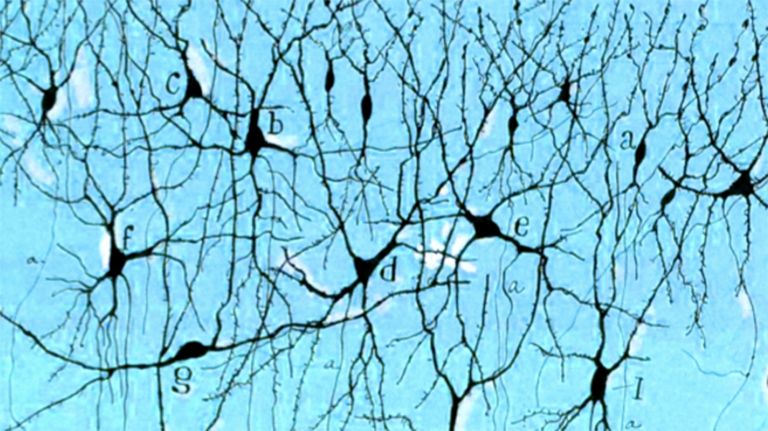
A neuron is a specialized cell in the nervous system that is responsible for processing and transmitting information. It receives signals via its dendrites and transmits them via its axon. Transmission occurs electrically within the neuron and, between neurons, usually chemically via synapses.
excitatory
Exciting synapses are described as excitatory when they depolarize the subsequent cell membrane and can thus lead to the formation of an action potential. An excitatory effect is usually produced by an exciting transmitter (messenger substance), such as glutamate. The opposite is an inhibitory synapse.