Search
-
- News from the Institutes
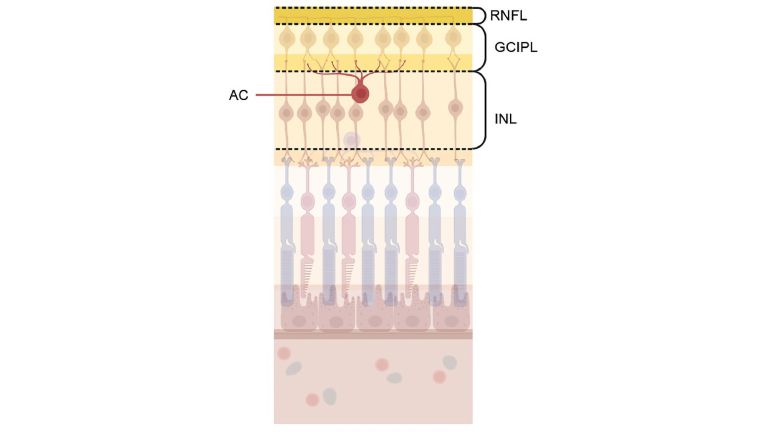
Insight into schizophrenia disease mechanisms found in the eye
Impaired neuronal connectivity in the retina
17.02.2025
-
- News from the Institutes
How saccades enable mammals to simultaneously chase prey and navigate through complex environments
How do predators use their eyesight while pursuing their prey, which is running for its life, even in completely unclear terrain?
04.02.2025
-
- Glossary
Retinal
A chemical synthesized from vitamin A. Together with opsin, it forms rhodopsin.
-
- News from the Institutes
The brain begins preparing for vision while still in the womb
As early as the 21st week of pregnancy, the visual cortex of the human brain is organized in its basic structure just as it is in adults.
07.10.2026
-
- Basics
- Time
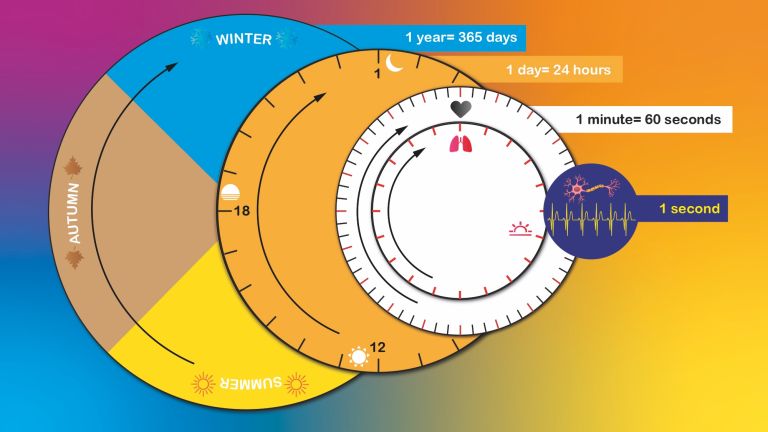
Perfect Timing
Chronobiology: from firing neurons to the nature of time
02.05.2024
-
- Glossary
Electrooculogram
The electrooculogram is a recording of the electrical potential of the eyes. It is measured by electrodes placed on the skin around the eye. A method for measuring retinal function and, indirectly, eye movement.
-
- Glossary
Color blindness
The inability to perceive colors. Instead, those affected only see brightness. This can be caused by hereditary cone blindness or a retinal disease, for example, but also by damage to the optic nerves or visual association areas.
-
- Glossary
Suprachiasmatic nucleus
A nucleus of the hypothalamus that plays a central role in circadian rhythms, including the sleep-wake cycle. It is the master clock, the body's most important internal clock, controlling melatonin production in the epiphysis. It receives direct input from the retinal ganglion cells.
-
- Glossary
Opsin
Opsins are light-sensitive proteins in the retina that, together with the chromophore retinal, absorb light and convert it into electrical signals. The following opsins occur in humans: rhodopsin in rods, for twilight vision, S-opsin → short-wave cones (blue), M-opsin → medium-wave cones (green), L-opsin → long-wave cones (red). These three cone opsins enable color vision.
-
- Glossary
Visual pathway
The visual pathway refers to the network of nerve cells involved in visual perception. In mammals, it runs from the retinal ganglion cells in the eye – as the optic nerve to the optic chiasm, then as the visual tract – via the only switching point in the lateral geniculate nucleus to the primary visual cortex.