Search
-
- News
- Question to the brain
What is the Autonomic Nervous System?
Why do we actually need an autonomic nervous system? Isn't one nervous system enough for everything?
16.06.2024
-
- Glossary
Parasympathetic nervous system
The parasympathetic nervous system is part of the vegetative or autonomic nervous system. The latter term refers to the fact that this part of the nervous system is not subject to voluntary control. It controls the activities of most of the internal organs as well as the heartbeat. In contrast to its counterpart, the sympathetic nervous system, the parasympathetic nervous system is most active when the body is at rest. Among other things, it controls digestion and urination. Acetylcholine serves as the messenger substance for signal transmission within the parasympathetic nervous system.
-
- Basics
- Communication of Cells
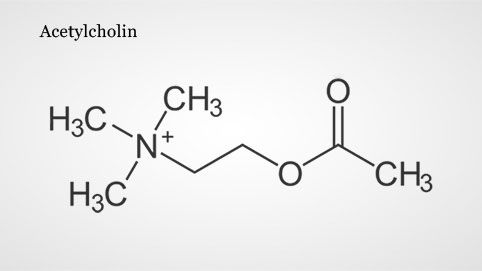
Acetylcholine
Acetylcholine was the first neurotransmitter to be discovered.
07.05.2012
-
- Basics
- Communication of Cells
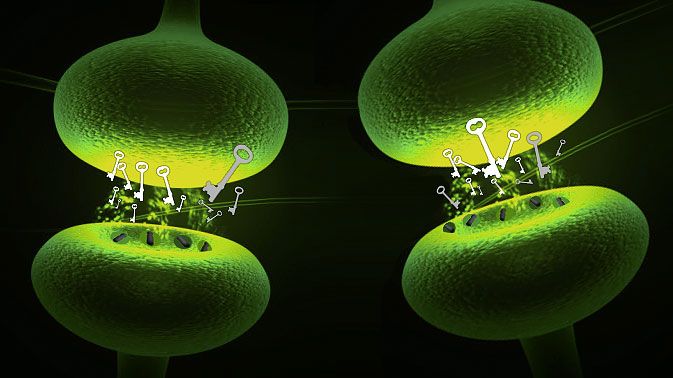
Neurotransmitters: Messenger Molecules in the Brain
“Happy hormone” & Co.: Without neurotransmitters, nerve cells would not be able to communicate.
05.08.2025
-
- Glossary
Autonomic nervous system
The part of the nervous system that primarily controls unconscious vital functions such as breathing, heartbeat, and blood pressure. The autonomic nervous system is divided into the sympathetic nervous system, which is active in performance and stress situations, and the parasympathetic nervous system, which is active during rest and recovery phases. In some cases, the enteric nervous system, which is responsible for gastrointestinal functions, is also considered part of the autonomic nervous system.
-
- Glossary
Sympathetic nervous system
Part of the autonomic nervous system, whereby the sympathetic nervous system primarily transmits excitatory impulses – in contrast to its counterpart, the parasympathetic nervous system. For example, the sympathetic nervous system activates respiration, the heart, and circulation, but it also affects the smooth muscles of all internal organs. The sympathetic nervous system uses the neurotransmitters acetylcholine and norepinephrine.
-
- News from the Institutes
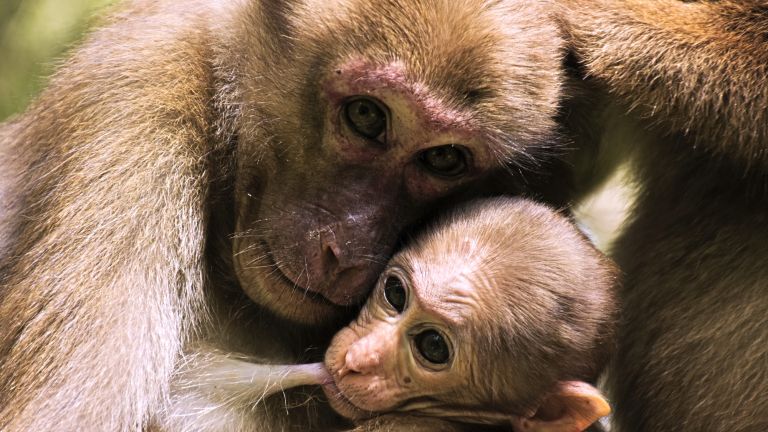
Stress during early pregnancy affects offspring into adulthood
Long-term study on wild monkeys in Thailand reveals health risks and opportunities for intervention
22.01.2025
-
- News
- Question to the brain
Why is it soothing to pet Animals?
Many people find petting an animal soothing. Is there a neurobiological explanation for this?
08.12.2024
-
- Glossary
Stress hormone system
During the stress response, the sympathetic nervous system and a number of hormone glands – the hypothalamus, pituitary gland, and adrenal cortex – work together to prepare the body for increased demands. The sympathetic nervous system uses the hormones adrenaline and noradrenaline as messenger substances. Their activity increases breathing and heart rate while improving blood flow to the muscles. During the stress response, the adrenal cortex releases the hormone cortisol. It acts via negative feedback on the hypothalamus and pituitary gland, thereby slowing down further cortisol release. When the stressor subsides and the sympathetic tone decreases, the parasympathetic nervous system can regain the upper hand and bring the organism into a state of rest.
-
- Glossary
Acetylcholine
Acetylcholine is one of the most important neurotransmitters in the nervous system. In the central nervous system, it is involved in attention, learning, and memory; in the peripheral nervous system, it transmits excitation from nerves to muscles at the neuromuscular end plates and controls processes of the autonomic nervous system, i.e., the sympathetic and parasympathetic parts. Areas in which acetylcholine acts as a messenger substance are called cholinergic. It was the first neurotransmitter to be discovered, identified in 1921 by Otto Loewi in the heart of a frog.