Maiken Nedergaard – The Glymphatic System
Published: 28.11.2024
Published: 28.11.2024
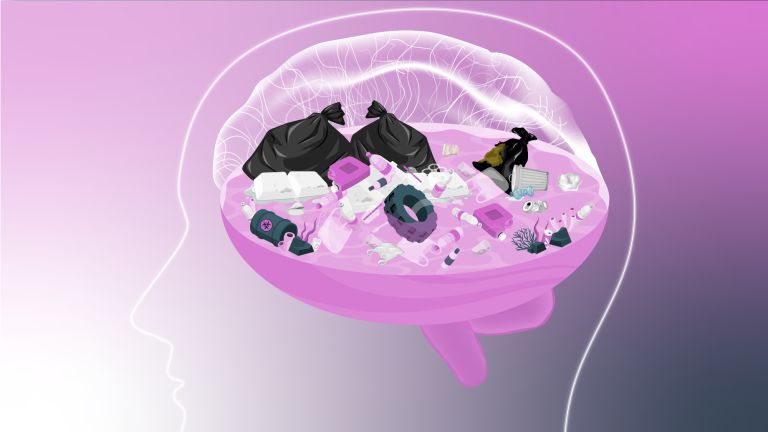
The brain does not have a lymphatic system to remove its waste. But it does have something very similar: the glymphatic system. Why we overlooked it for so long, what Glial cells have to do with it, how ingeniously it’s designed, how it relates to Alzheimer’s, and what role sleep plays ... its discoverer, Maiken Nedergaard, explains all of this to us here.
Glial cells
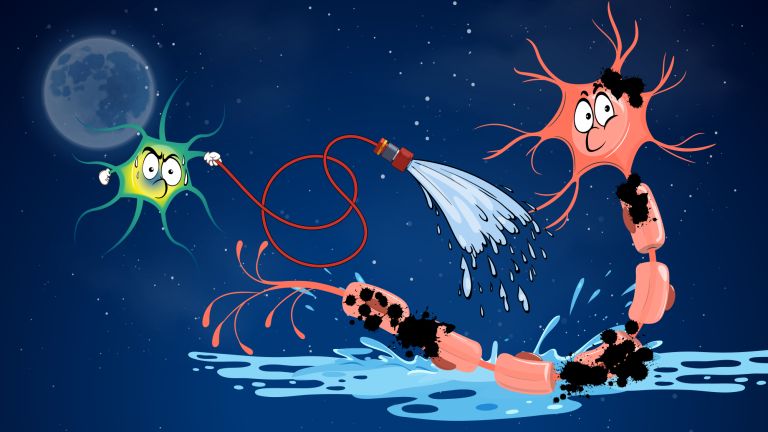
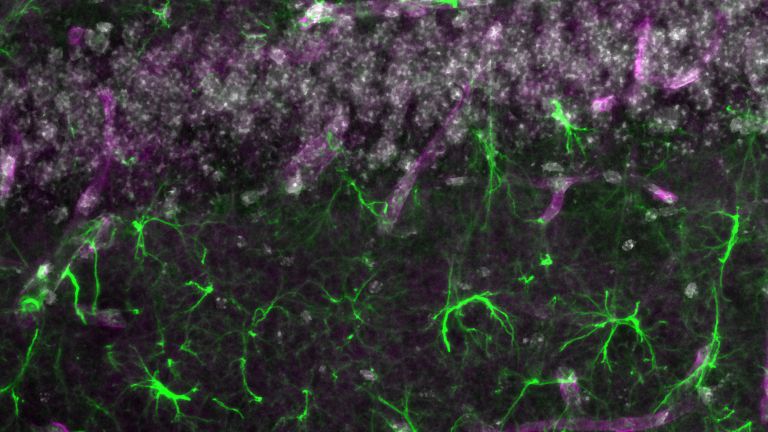
Glia cells are the second largest group of cells in the brain after neurons. For a long time, they were considered inactive elements of the brain, referred to as "nerve cement." Today, we know that the different types of glia cells (astrocytes, oligodendrocytes, and Microglia in the CNS; Schwann cells in the PNS) perform clearly defined tasks in the nervous system. For example, they respond to pathogens, play an important role in nourishing nerve cells, and insulate nerve fibers. They account for slightly more than 50 percent of the brain's cells, compared to neurons.
Microglia
The smallest type of glial cell is part of the cellular immune system and is responsible, among other things, for removing dead neurons. Microglia can move in an amoeba-like manner.
Subjects
Tags
Author
License Terms
This content is available under the following conditions of use.