Clickbaiting
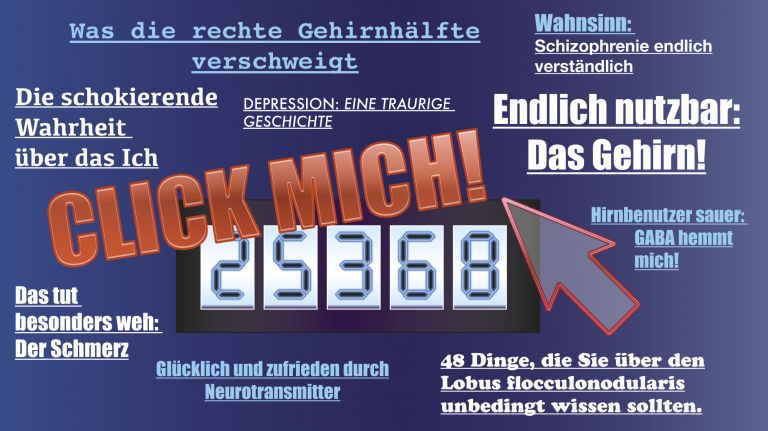
You'll never believe which celebrity is standing at the stove here... Simply brilliant: Which feature (insert your favorite smartphone manufacturer here) is planning next... The 10 most common causes of death: This is what people die of... Admit it, at least in the last example, even your mouse hand twitched. Ours did too. That's completely natural, because the headline is bait, pushing us into a curiosity trap that we want to escape from. The linked content is often banal, but in any case short and concise, making our complex lives simple and manageable again.
This concept has made some website operators very rich. Because clicks mean reach and reach means paying advertising customers. This doesn't always have anything to do with serious journalism, but it works. No wonder some editors at reputable publishing houses are writhing in agony: clickbaits are the lowest form of journalism, yet one of the few ways to make money on the internet.
We don't need to make money, but we are now engaging in clickbaiting. In times when the content on the internet is becoming increasingly shallow, we are playing with this principle in a kind of journalistic kung fu: we are turning our opponent's strength against them. Humorously and substantively. And we hope you enjoy it. Let us know what you think when you get a chance.
Michael Simm explains how it works – and why we are psychologically powerless against it – here.