Newly identified group of nerve cells in the brain regulates bodyweight
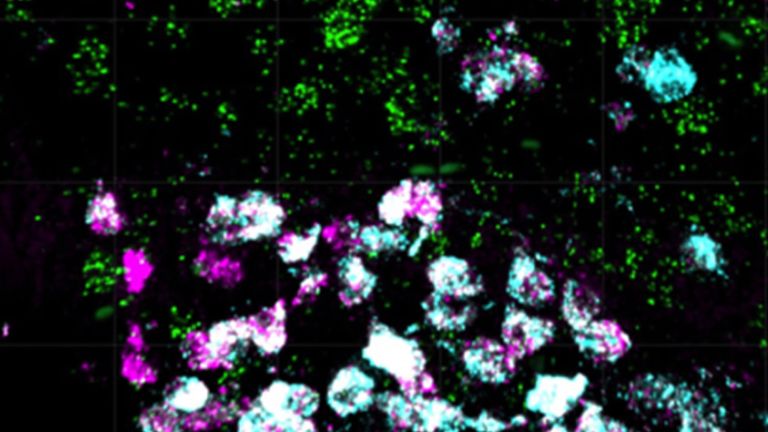
Obesity is a global health problem that affects many people. In recent years, very promising anti-obesity drugs have been developed. Despite these successes, there are patients who do not respond to these drugs or suffer from side effects. Therefore, there is still an unmet need for therapies. Researchers at the Max Planck Institute for Metabolism Research have now discovered a small group of nerve cells in the hypothalamus of mice brain that influence eating behavior and weight gain. This discovery could pave the way for the development of targeted anti-obesity drugs.
Published: 26.05.2025
- Researchers have discovered a specific group of nerve cells in the Hypothalamus of the brain that influences eating behavior and weight gain.
- These nerve cells are controlled by the Hormone leptin, which suppresses appetite
- Discovery offers the potential to develop further targeted treatments for obesity
Hypothalamus
The hypothalamus is considered the center of the autonomic nervous system, meaning it controls many motivational states and regulates vegetative aspects such as hunger, thirst, and sexual behavior. As an endocrine gland (which, unlike an exocrine gland, releases its hormones directly into the blood without a duct), it produces numerous hormones, some of which inhibit or stimulate the pituitary gland to release hormones into the blood.In this function, it also plays an important role in the response to pain and is involved in pain modulation.
Hormone
Hormones are chemical messengers in the body. They serve to transmit information between organs and cells, usually slowly, e.g., to regulate blood sugar levels. Many hormones are produced in glandular cells and released into the blood. At their destination, e.g., an organ, they dock at binding sites and trigger processes inside the cell. Hormones have a broader effect than neurotransmitters; they can influence various functions in many cells of the body.
The research group identified the so-called PNOC/NPY nerve cells in the brains of mice. When activated, these cells increase food intake and lead to obesity. Interestingly, these nerve cells are also present in the human brain. Using novel genetic and molecular biological tools, the researchers were able to analyze the neurons at the single cell level and divide them into different clusters. Within this large group of nerve cells, only one cluster is responsible for the observed eating behavior.
Removing Leptin Receptors
Previous studies have shown that PNOC neurons in the Hypothalamus are particularly active when mice are fed a high-fat diet. In further analyses, the researchers found that around 10% of these nerve cells have a Receptor for the Hormone leptin. Leptin is produced in adipose tissue and suppresses appetite in the brain. If the leptin receptor in this cluster of PNOC nerve cells was removed, the mice ate more and became overweight.
“It was surprising that such a small group of nerve cells specifically leads to obesity,” explains Marie Holm Solheim, first author of the study.
The researchers plan to continue studying these nerve cells to identify additional specific targets for potential drugs and to make them amenable to pharmacological intervention.
We hope that drugs that act on this specialized group of nerve cells will offer promising alternative therapies,” says Jens Brüning, head of the study. “However, there is still a long way to go before these can be used.”
Original publication
Marie H. Solheim, Sima Stroganov, Weiyi Chen, P. Sicilia Subagia, Corinna A. Bauder, Daria Wnuk-Lipinski, Almudena Del Río-Martín, Tamara Sotelo-Hitschfeld, Cait A. Beddows, Paul Klemm, Garron T. Dodd, Sofia Lundh, Anna Secher, F. Thomas Wunderlich, Lukas Steuernagel, Jens C. Brüning, Hypothalamic PNOC/NPY neurons constitute mediators of leptin-controlled energy Homeostasis. Cell, June 2025
Hypothalamus
The hypothalamus is considered the center of the autonomic nervous system, meaning it controls many motivational states and regulates vegetative aspects such as hunger, thirst, and sexual behavior. As an endocrine gland (which, unlike an exocrine gland, releases its hormones directly into the blood without a duct), it produces numerous hormones, some of which inhibit or stimulate the pituitary gland to release hormones into the blood.In this function, it also plays an important role in the response to pain and is involved in pain modulation.
Receptor
A receptor is a protein, usually located in the cell membrane or inside the cell, that recognizes a specific external signal (e.g., a neurotransmitter, hormone, or other ligand) and causes the cell to trigger a defined response. Depending on the type of receptor, this response can be excitatory, inhibitory, or modulatory.
Hormone
Hormones are chemical messengers in the body. They serve to transmit information between organs and cells, usually slowly, e.g., to regulate blood sugar levels. Many hormones are produced in glandular cells and released into the blood. At their destination, e.g., an organ, they dock at binding sites and trigger processes inside the cell. Hormones have a broader effect than neurotransmitters; they can influence various functions in many cells of the body.
Homeostasis
Homeostasis is the ability of an organism to maintain internal conditions such as metabolism, body temperature, blood pressure, etc. at a relatively constant level. The maintenance of homeostasis is controlled by the autonomic nervous system, meaning that humans cannot directly influence its regulation at will.