Search
-
- Percieve
- Hearing
A Labyrinth for Balance
A sophisticated labyrinth in the ear keeps our body balanced: the vestibular system.
17.10.2025
-
- Glossary
Semicircular canals
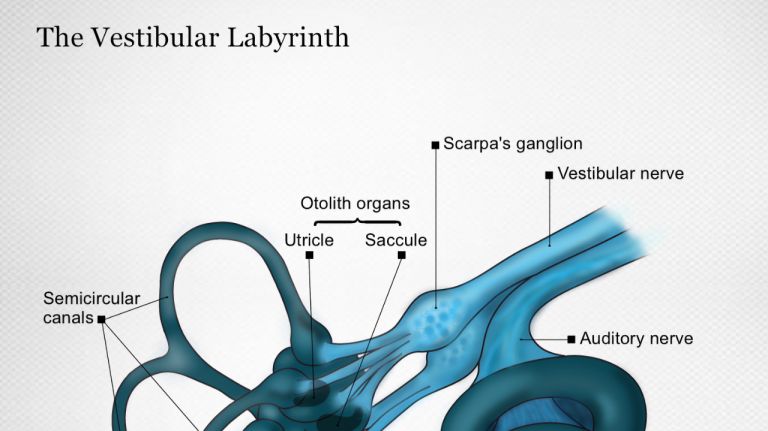
The three semicircular canals per ear are interconnected, fluid-filled tubes that are positioned almost at right angles to each other and belong to the balance organ in the inner ear (vestibular apparatus). They serve to register angular accelerations, i.e., rotational movements of the head.
-
- Percieve
- Hearing
From Wiggling to the wonderful Variety of Sounds
It is a long way from purely mechanical vibrations to the world of sounds and tones.
17.10.2025
-
- Percieve
- Hearing
Ringing in the Ears
Tinnitus: The annoying whistling and buzzing does not originate in the ear, but in the brain.
28.10.2025
-
- Percieve
- Hearing
Balance: The vestibular Labyrinth
A labyrinth for balance: The vestibular system ensures equilibrium.
23.10.2025
-
- Basics
- Structure and Function
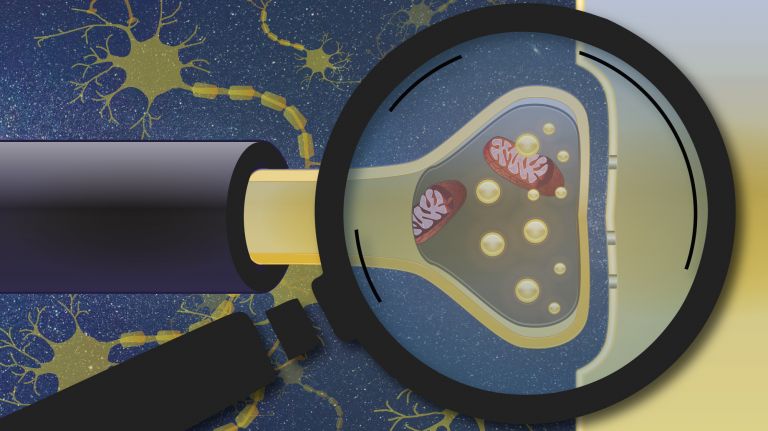
Connecting Nerves
Learning is as spiny path – as synapses vividly illustrate.
01.12.2020
-
- Basics
- Structure and Function
Senses with Purpose
They’re old, but not outdated: sight and hearing are full of amazing evolutionary tricks.
25.04.2026
-
- Glossary
Ear
The ear is not only the organ of hearing, but also of balance. A distinction is made between the outer ear with the auricle and external auditory canal, the middle ear with the eardrum and ossicles, and the actual hearing and balance organ, the inner ear with the cochlea and semicircular canals.
-
- Glossary
Macular organs
Together with the semicircular canals, the macular organs form the vestibular system in the inner ear of vertebrates. They consist of two structures positioned perpendicular to each other, the saccule and the utricle. This alignment enables the macular organs to perceive linear accelerations of the body in space along all three spatial axes: up-down, front-back, left and right.
-
- Glossary
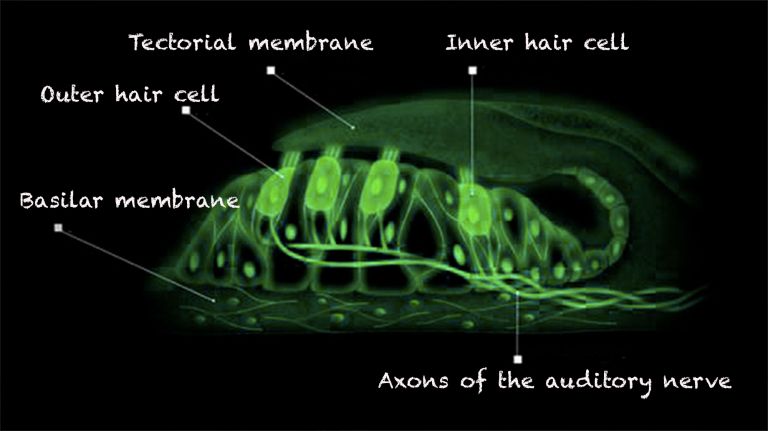
Hair cells
Sensory cells in the inner ear located in the organ of Corti and the semicircular canals. The hair cells in the organ of Corti are responsible for transducing (converting) the vibrations into electrical potentials. Each of these sensory cells has hair-like protrusions of varying lengths, called stereocilia. These are interconnected. The movement of these stereocilia caused by the vibrations is the key to signal transduction in the hair cells.