Search
-
- News
- Question to the brain
What is the Autonomic Nervous System?
Why do we actually need an autonomic nervous system? Isn't one nervous system enough for everything?
16.06.2024
-
- Basics
- Heart
Insight into Stress Levels: Heart Rate Variability
Every smartwatch measures HRV. But what does it tell us? And why is it important? And... is there maybe a life hack? Spoiler: yes.
14.07.2026
-
- Basics
- Heart
The Heart-Brain Connection
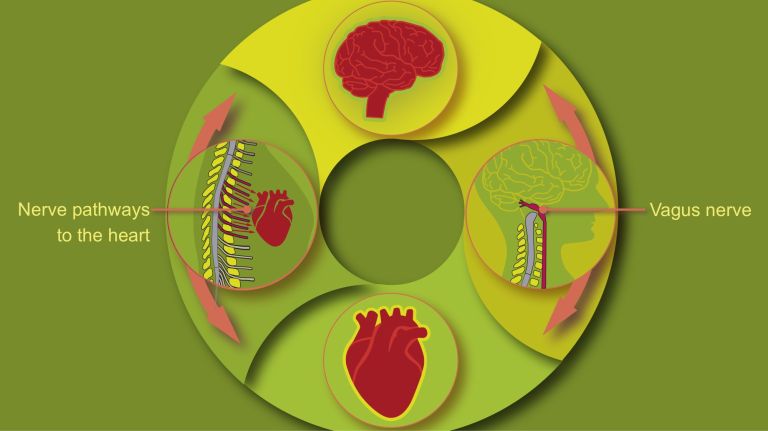
Our heartbeat adjusts in a fraction of a second, whether we're making a vow of love or facing a dangerous situation. And it influences our perception.
01.10.2022
-
- Basics
- Heart
More Than Just a Pump
The heart is the hardest-working muscle in the body. And it uses similar tricks to the brain.
01.10.2022
-
- Basics
- Communication of Cells
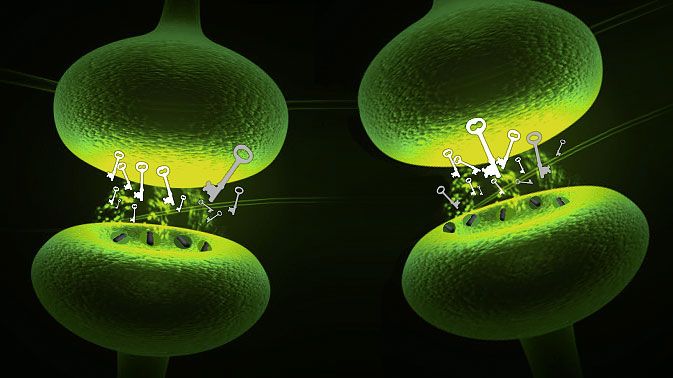
Acetylcholine
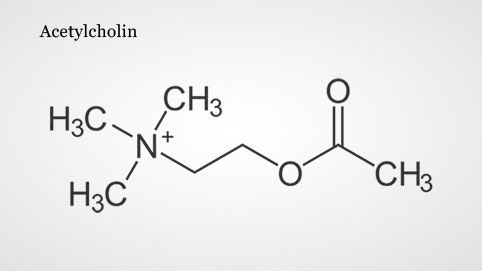
Acetylcholine was the first neurotransmitter to be discovered.
07.05.2012
-
- Glossary
Autonomic nervous system
The part of the nervous system that primarily controls unconscious vital functions such as breathing, heartbeat, and blood pressure. The autonomic nervous system is divided into the sympathetic nervous system, which is active in performance and stress situations, and the parasympathetic nervous system, which is active during rest and recovery phases. In some cases, the enteric nervous system, which is responsible for gastrointestinal functions, is also considered part of the autonomic nervous system.
-
- Basics
- Communication of Cells
Neurotransmitters: Messenger Molecules in the Brain
“Happy hormone” & Co.: Without neurotransmitters, nerve cells would not be able to communicate.
05.08.2025
-
- Basics
- Anatomy
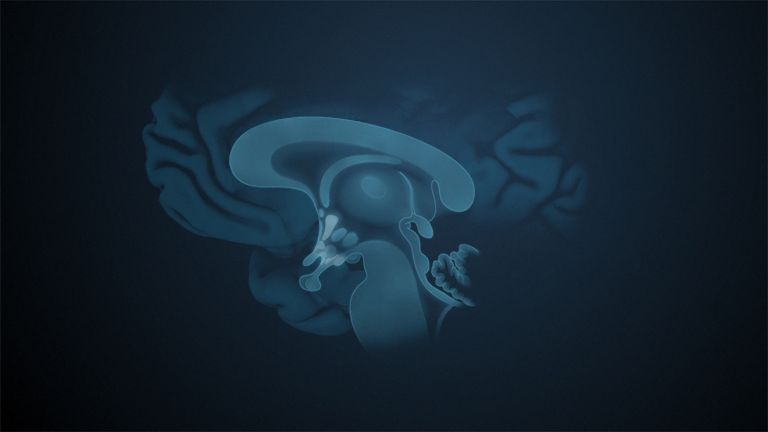
The Hypothalamus
Nutrition and reproduction – these activities are controlled by the hypothalamus at the neural and hormonal levels.
01.07.2025
-
- Act
- Meditation
A Short Lexicon of “Esoteric” Practices
Meditation and yoga are no longer considered esoteric nonsense. Other things, however, still are.
07.09.2026
-
- Glossary
Parasympathetic nervous system
The parasympathetic nervous system is part of the vegetative or autonomic nervous system. The latter term refers to the fact that this part of the nervous system is not subject to voluntary control. It controls the activities of most of the internal organs as well as the heartbeat. In contrast to its counterpart, the sympathetic nervous system, the parasympathetic nervous system is most active when the body is at rest. Among other things, it controls digestion and urination. Acetylcholine serves as the messenger substance for signal transmission within the parasympathetic nervous system.