Search
-
- Diseases
- Multiple sclerosis
Multiple Sclerosis – a Medical Challenge
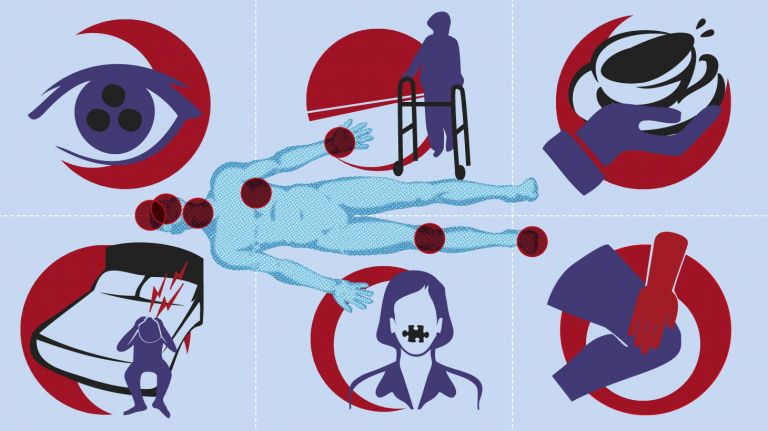
Multiple sclerosis is incurable, but there are a variety of treatment options available.
20.02.2026
-
- Page
Home
24.02.2017
-
- Basics
- The Developing Brain
The invisible Bond
Emotional bond – the essential connection between children and parents.
18.03.2026
-
- Basics
- The Developing Brain
How Thinking develops
Rapid development: how the brain and mind develop in early childhood
18.03.2026
-
- Basics
- Heart
The Heart-Brain Connection
Our heartbeat adjusts in a fraction of a second, whether we're making a vow of love or facing a dangerous situation. And it influences our perception.
01.10.2022
-
- Think
- Emotions
Signals from Within
Emotions shape our lives. That's why we're so good at recognizing and empathizing with them.
18.12.2025
-
- Basics
- Structure and Function
Future Regeneration
The brain is amazing, but vulnerable – which makes effective treatments all the more important. In fact, there is hope: stem cell therapy works in mice.
30.04.2020
-
- Glossary
Lateral geniculate nucleus
The lateral geniculate nucleus is the section of the thalamus (the largest part of the diencephalon) where around 90% of the optic nerve axons terminate. It has a characteristic stratification into six cell layers. The nerve cells of the lateral geniculate nucleus send their projections to the visual cortex. Together with the medial geniculate nucleus, it forms the metathalamus.
-
- Glossary
Cortical blindness
When the primary visual cortex is destroyed, those affected are effectively blind, even though their eyes are undamaged. However, they are often unconsciously able to grasp and catch objects and even name them when asked to guess. This effect is known as blind sight.
-
- Glossary
Hypercomplex cell
A nerve cell in the primary visual cortex that responds most strongly to short, moving lines or corners in its receptive field. It exhibits end-stopping, meaning that the response strength decreases when the stimulus becomes longer than optimal. Hypercomplex cells are sensitive to the orientation and direction of movement of the stimulus and contribute to the perception of edges, corners, and curves.